BOOKS: “Best Literary Translations 2024” ed. by Jane Hirschfield, et. al.

Best Literary Translations 2024Best Literary Translations 2024 by Jane Hirshfield
My rating: 5 of 5 stars

Publisher Site

This “best of” annual celebrates the unsung translator. Many of the original works are recent but some are old or even ancient; it is these translations to English that are in all cases recent. Spanish and Arabic translations are well-represented, but with respect to the twenty or so languages included, almost all are the sole representative for that particular source language. Poetry makes up the bulk of the collection (including prose poems,) but there are several pieces of short fiction and a piece of creative nonfiction or two.

Among my favorites were: “Grazing Land” (Greek,) “The Snail’s Spiral” (Spanish,) “The Lion” (Kurdish,) “Deterioration” (Persian,) “Graceless” (Chinese,) “Our Village” (Tigrinya,) and “The Sea Krait” (Tagalog.) But, as one would expect of a carefully curated “best of” collection, there were no stinkers in the batch.

If you enjoy literature in translation, this book is well worth investigating.

View all my reviews

“Finely Woven” [Poetry Style #14] by Sikong Tu [w/ Audio]

The building blocks of everything --
Too fine to feel or see or smell --
Dance their way into hardened shapes
Via forces, invisible.
And so water flows, flowers bud,
But - also - dew evaporates.
This expansive path stretches on --
It's slow-going through dark lands.
It can't be spoken of smartly.
It can't be pondered fruitfully.
It's Early Spring green in sunlight,
Or like the snow seen by moonlight.

NOTE: The late Tang Dynasty poet, Sikong Tu (a.k.a. Ssŭ-k‘ung T‘u,) wrote an ars poetica entitled Twenty-Four Styles of Poetry. It presents twenty-four poems that are each in a different tone, reflecting varied concepts from Taoist philosophy and aesthetics. Above is a translation of the fourteenth of the twenty-four poems. Translated titles vary: Giles calls it “Close Woven” and others have titled it, “Fine.”

BOOKS: “The Pass of the Persecuted” by Guram Odisharia

The Pass of the PersecutedThe Pass of the Persecuted by Guram Odisharia
My rating: 5 of 5 stars

Prospero’s Books

I picked up this book at Prospero’s Books in Tbilisi as part of my continuing effort to consume literature from every place I visit. It’s one of those books that’s small in page count (less than 100pp.) but massive in emotional impact. It tells of the author’s flight from Abkhazia (a contested region between Georgia and Russia on the Black Sea) on foot over a high mountain pass in the early 1990’s. It shines a harsh light on the refugee experience (though I don’t know that the term “refugee” is technically correct as Odisharia was both leaving from and going to a country to which he was a citizen.)

Besides being a visceral story of hardship, this thin book is weighty with powerful language, and it offers some vivid philosophical insights — e.g. “Miserable is the country where a bullet is valued more than a kind word, where hatred means more than love.” or “Mountains are like great love. Great love makes a kind man kinder, and a wicked man more wicked, a niggardly man more niggardly, a greedy man greedier, a cowardly man more cowardly, a naive man more naive…”

I found this book to be well worth reading.

View all my reviews

“Inversnaid” by Gerard Manley Hopkins [w/ Audio]

This darksome burn, horseback brown,
His rollback highroad roaring down,
In coop and in comb the fleece of his foam
Flutes and low to the lake falls home.

A windpuff-bonnet of fawn-froth
Turns and twindles over the broth
Of a pool so pitchblack, fell frowning,
It rounds and rounds Despair and drowning.

Degged with dew, dappled with dew
Are the groins of the braes that the brook threads through.
Wiry heathpacks, flitches of fern,
And the beadbonny ash that sits over the burn.

What would the world be, once bereft
Of wet and of wildness? Let them be left,
O let them be left, wildness and wet;
Long live the weeds and the wilderness yet.

“Beginning My Studies” by Walt Whitman [w/ Audio]

Beginning my studies, the first step pleas'd me so much,
The mere fact, consciousness -- these forms -- the power of motion,
The least insect or animal -- the senses -- eyesight -- love;
The first step, I say, aw'd me and pleas'd me so much,
I have hardly gone, and hardly wish'd to go, any further,
But stop and loiter all the time, to sing it in ecstatic songs.

“Tacit” [Poetry Style #12] by Sikong Tu [w/ Audio]

Without a word,
The gist is grasped.
With no wails or soft sobs,
Sadness spreads heart-to-heart.
There is an enigmatic Prime Mover
With whom each of us either sinks or floats.
Dregs of rustic wine in a fine strainer.
Buds on the cusp of bloom turned back by cold.
Dust motes spreading by Brownian motion.
Sea spume floating and tumbling onto shore.
Shallow, deep, cohering, or scattering.
Of ten thousand, any sample will do.

NOTE: The late Tang Dynasty poet, Sikong Tu (a.k.a. Ssŭ-k‘ung T‘u,) wrote an ars poetica entitled Twenty-Four Styles of Poetry. It presents twenty-four poems that are each in a different tone, reflecting varied concepts from Taoist philosophy and aesthetics. Above is a translation of the twelfth of the twenty-four poems. Translated titles vary: Herbert Giles entitled this one “Conservation,” whereas Tony Barnstone and Chou Ping called it “The Implicit Style.”

BOOKS: “Gothic Tales” by Marquis de Sade [Trans. by Margaret Crossland]

Gothic TalesGothic Tales by Marquis de Sade
My rating: 5 of 5 stars

Amazon.in Page

Release Date: September 3, 2024

This collection of short fiction is an excellent entry point for the reader wishing to be introduced to the philosophy and literary stylings of the Marquis de Sade. It is less visceral and explicitly violent than the works for which Sade is most famous (i.e. Justine, 120 Days of Sodom, and Philosophy in the Boudoir.) While it does deal in libidinal issues throughout and has a few stories that are explicitly erotica (notably the last couple pieces,) it never ventures up to or over whatever thin line separates erotica from pornography.

While all the pieces share Sade’s signature philosophy and interests, it is in other ways a quite diverse collection of writings. The first piece, “Eugenie De Franval,” is a novella that takes up about half the book, and it is followed by a piece that, in today’s parlance, might be called flash fiction, “The Horse-Chestnut Flower.” Pieces such as “Eugenie De Franval” and “Florville and Courval” are tragedies while the comedies include: “Emilie De Tourville,”[granted with grim elements] “The Husband Who Played Priest,” “Room for Two,” and “The Self-Made Cuckold.” Those last three – as well as “The Horse-Chestnut Flower”– are comedic in a modern sense, not just the literary sense.

I can’t say how much of the difference in tone and intensity of these pieces from Sade’s other stories is owed to the selected source material and how much is owed to translation and editorial decisions, but it makes for a read that is more intriguing in story and less shocking and disturbing than many other translations of Sade’s work.

I enjoyed these stories. They had many clever twists and turns that I don’t recall experiencing in Sade’s novels. Several stories rely on a great deal of deus ex machina coincidences, but I think that works just fine — particularly in the more humorous stories. I’d highly recommend this for readers looking to ease into the work of the Marquis de Sade.

View all my reviews

“The Sick Rose” by William Blake [w/ Audio]

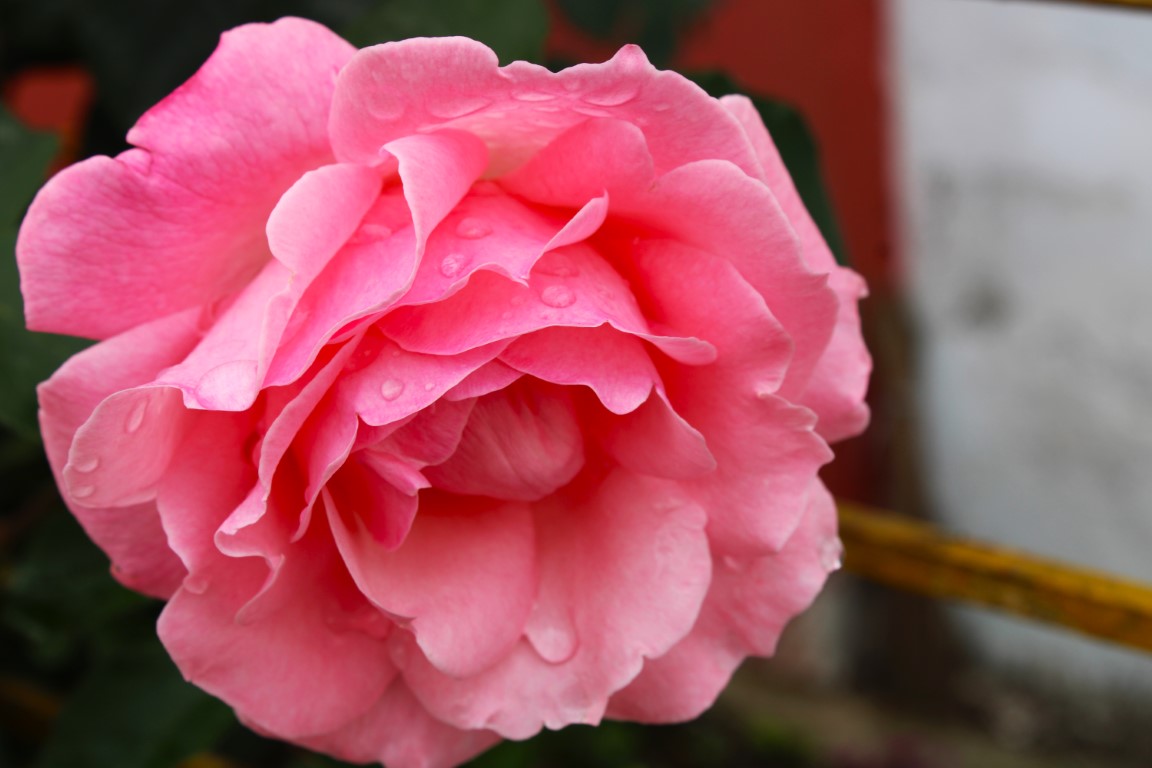
O Rose thou art sick.
The invisible worm
That flies in the night
In the howling storm,

Has found out thy bed
Of crimson joy:
And his dark secret love
Does thy life destroy.

“Be Not Afeard” [from The Tempest] by William Shakespeare [w/ Audio]

Be not afeard: the isle is full of noises,
Sound and sweet airs, that give delight, and hurt not.
Sometimes a thousand twangling instruments
Will hum about mine ears; and sometimes voices,
That, if I then had wak'd after long sleep,
Will make me sleep again: and then, in dreaming,
The clouds methought would open and show riches
Ready to drop upon me; that, when I wak'd
I cried to dream again.

NOTE: In The Tempest, Act III: Scene 2, Caliban speaks these words to Stephano and Trinculo.

“Renunciant’s Song” by Su Shi [w/ Audio]

The night is clear, even pristine --
A nightscape in silver moonlight.
"Yes, please! Pour me a bowl of wine.
Don't skimp! take it up to the brim."

And why should I chase wealth and fame
When it is sure to end in vain?
Events pass like a horse's sigh,
A spark on stone, or dream travel.
I can put out my ideas,
But who'll accept them as the truth?
Why shouldn't I just live happily
And innocently, like a child?
I could go back to carefree days
When life's trifles weren't torturesome.
Just me, my lute, a pot of wine,
And the stories drawn by the clouds.

NOTES: Song Dynasty Poet, Su Shi, was also known as Su Dongpo. The translated title of this poem also varies. In Deep, Deep the Courtyard, translated by Xu Yuanchong, it is entitled, “Song of Pilgrimage.”