BOOK: “The Future of Humanity” by Michio Kaku

The Future of Humanity: Terraforming Mars, Interstellar Travel, Immortality and Our Destiny Beyond EarthThe Future of Humanity: Terraforming Mars, Interstellar Travel, Immortality and Our Destiny Beyond Earth by Michio Kaku
My rating: 4 of 5 stars

Author Booksite

As the title suggests, this is one of the books for which theoretical physicist Michio Kaku dons his futurist cap to speculate about what is to come. Other of his books that might be included in this “series” are: Visions, Physics of the Future, The Future of the Mind, and Physics of the Impossible. This particular book focuses on how humanity will spread beyond the planet (and, perhaps, beyond the universe) to survive the (probably distant, but – also – inevitable) threats to the species. While there are other topics discussed, such as the search for immortality and transhumanism, those topics are often framed as necessities of interstellar expansion.

As one would expect of a physicist, the book is highly focused on the physics of the subject. There is little discussion of the psychological difficulties, nor of biological issues such as the fact that humanity is not so lone wolf as we think, and taking off to other planets and living in space without the Earthly life we are interdependent on would involve challenges we have difficult fathoming. All of the challenges that are usually treated with handwaves in science fiction are also handwaved off here.

The book is fun and interesting reading. It’s probably more insightful of science fiction than of our future, but that doesn’t make it less compelling. The seven years since this book was published have seen a lot of change, and there may be a book on this subject that has more of a finger on the pulse, but I still enjoyed reading it. [The downside of writing about the future, even with a focus on the distant future, is that one risks becoming obsolete rather quickly.]

If you’re interested in how humanity might survive into the future, I’d recommend this book. If you enjoy popular science and / or science fiction, you’ll probably find it intriguing.

View all my reviews

BOOK: “How to be an Alien” by George Mikes

How to Be an Alien: A Handbook for Beginners and Advanced PupilsHow to Be an Alien: A Handbook for Beginners and Advanced Pupils by George Mikes
My rating: 5 of 5 stars

Publisher Site – Penguin

This book is hilarious… unless you’re British — in which case it probably reads like a swift kick in the crotch. Well, if you’re from continental Europe, many of the comparisons with Britian are no more favorable to Europe and are just as comically searing. But if you’re American, it’s a laugh riot. Well, except for when it delivers reminders of the absurdity of xenophobia, triggering realizations that one’s own country is in the midst of a crisis of that malady. However, the book is not primarily a rebuke of xenophobia, but rather an accounting of what immigrants to Britain find strange and unwieldy about their new country.

George Mikes, born Mikes György, was a journalist and humorist of Hungarian birth who lived most of his life in England, and it’s this experience that the author draws upon to describe of what immigrants to Britain must accustom themselves.

Among Mikes’ prolific body of writings, there are a number that take this form — humor disguised as a how-to guide. The first one that I read was How to Be God, which was his last such book. The book under review was his first and continues to be the most popular.

I’d highly recommend this book for humor readers… unless you’re British… or European… or are experiencing dread over the Pheonix-like rebirth of xenophobia in the world. If there’s any one left after that who reads in English, this is the book for you.

View all my reviews

BOOK: “Long for this World” by Jonathan Weiner

Long For This World: The Strange Science of ImmortalityLong For This World: The Strange Science of Immortality by Jonathan Weiner
My rating: 4 of 5 stars

Author’s book site

This book considers the science around the question: will there come a day when human beings live forever (or at least considerably longer than we’ve achieved to date? — i.e. hundreds or thousands of years.) A secondary question, explored in the last of the book’s three parts, is should we want to?

It was a courageous decision to write this book because it focuses heavily on the ideas of one particularly controversial figure, Aubrey de Grey. And by “controversial” I don’t mean to the general public, a public which has limited understanding of the science involved, but rather a man who is controversial to many (perhaps, most) of his peers. Of course, with a Pulitzer under one’s belt, one can afford to take a few chances. (Weiner won in 1997 for The Beak of the Finch, a popular science work on evolutionary biology.) To be fair, Weiner does not present Grey’s ideas from the perspective of an acolyte. On the contrary, he is clearly skeptical and not shy about presenting the countervailing arguments put out by others in the gerontological field.

I can see several reasons why Weiner chose to focus on Aubrey de Grey. First, De Grey is an eccentric figure, and that makes for more interesting reading. Second, De Grey also takes the boldest possible stance on the topic (i.e. that there is no reason humanity won’t be able to overcome aging and death, given sufficient time and effort.) Finally, De Grey has a readily digestible roadmap for eliminating aging. De Grey identifies seven problems that must be solved, arguing that the last — i.e. defeating cancer — is the only one that will present a true challenge in the long run.

While I wasn’t converted to a belief that immortality is inevitable (and that wasn’t the book’s objective, though it may be de Gray’s,) the book does offer interesting food-for-thought, both on the scientific question of what it would take and on the philosophical question of whether we should want to.

If you’re interested in aging and mortality, I’d recommend reading this book.

View all my reviews

BOOK: “The Mind Electric” by Pria Anand

The Mind Electric: A Neurologist on the Strangeness and Wonder of Our BrainsThe Mind Electric: A Neurologist on the Strangeness and Wonder of Our Brains by Pria Anand
My rating: 5 of 5 stars

Publisher Site — Simon & Schuster

There are A LOT of pop neuroscience books out there that reflect upon what we know about the brain from what goes wrong with it. I thought I was done reading such books because, while the first few are fascinating, they tend to retell the same stories.

That said, I’m glad I read this one, and what made it worth reading was that the science was explored in a very personal way, and I don’t just mean that the author recited her own personal experiences or those of her patients (though she does both,) but rather that the whole book is imbued with her worldview. She relates maladies of the mind to works of literature, of Greek and Hindu mythology, and to other aspects of culture in a relatable manner.

Another factor that sets this book apart is that its author shows a passion for language. In that sense, it reminded me of the works of Oliver Sacks (who she references a number of times,) rather than your average — articulate but linguistically conservative — neuroscientist.

I’d recommend this book for any readers interested in neuroscience, particularly anyone looking for a book that sets itself apart from the crowd. (I don’t recall it even mentioning Phineas Gage, which I thought was a requirement of all such books.)

View all my reviews

BOOK: “Hell’s Angels” by Hunter S. Thompson

Hell's AngelsHell’s Angels by Hunter S. Thompson
My rating: 5 of 5 stars

Publisher Site – Penguin

This, the first published book of Hunter S. Thompson, is said to be from his pre-Gonzo period, but it bears many of the hallmarks Thompson would later be famous for: inventive colorful language, immersion in scenes of debauchery, and insight into the American cultural landscape.

The book is part exposé of the Hell’s Angels motorcycle gang, an organization shrouded in a reputation that was as much myth as reality and whose tightknit inner circle made obtaining an accurate picture a challenge. It would take someone as fearless / crazy as Thompson to get close enough to learn about the gang and then to tell enough truth to make at least some of the members unhappy.

The book also takes the temperature of America and reports on what ails the country. One might think this would not be worth reading, given that its insight of America is from the late sixties (it came out in ’67.) However, as I read the penultimate chapter, I was surprised to find how much of what was being said could be seen as prophetic. Thompson wrote about the Angels not as a romantic throwback to wild west outlaws (as many saw them,) but as a class of people who were ill-equipped to make a living in an ever more technologically advanced America, leaving them with little money and loads of resentment. He wrote of them as “prototypes,” and his description connects up to the latest model. It was at that point that I started seeing Thompson not only as a brilliant creative writer, but — perhaps — as a prophet.

I’d highly recommend this book for anyone curious about the Hell’s Angels or American outlaws, more generally.

View all my reviews
BOOK: “The Poetry of Zen” Ed. / Trans. Sam Hamill & J.P. Seaton

The Poetry of ZenThe Poetry of Zen by Sam Hamill
My rating: 5 of 5 stars

Publisher Site – Shambhala

This poetry anthology consists of translations of Chinese and Japanese poetry that play in the Zen aesthetic. They are not Zen Buddhist poetry in the sense of being sutras or sutra-like expositions on Buddhist philosophy or theology (at least, not mostly.) And while there are many monks and Buddhist layperson poets represented, not all of those included were Buddhists. (In fact, there is even some verse from the Daodejing included, though Taoism is certainly philosophically related to Zen.)

About half the book is Chinese poetry, including pieces from Han Shan, Li Bai, Bai Juyi, Wang Wei, Du Fu, and many other greats of Chinese poetry. (Note: my spellings of author names varies from those used in the book because Hamill and Seaton use Wade-Giles spellings.) The other half of the book consists of works by Japanese poets, including: Saigyo, Dogen, Basho, Ryokan, Buson, Issa, and others. The Japanese part includes a few haibun (prose poems interspersed with haiku,) adaptations of Chinese-style poems, as well as the various Japanese fixed form styles (i.e.. haiku, tanka, etc.)

The two translators, Sam Hamill and J.P. Seaton, initial the poems that each translated (some were dually translated and others singularly.) I enjoyed the translations and felt they were fine reading in their own right. With haiku and tanka, the translators stuck fairly close to the traditional form (in as much as the aesthetic could be maintained doing so,) but with Chinese lyric styles they often took a freer approach to form.

If you’re interested in poetry that conveys Zen sentiment, this book is worth investigating.

View all my reviews

BOOKS: “A Journey to Inner Peace and Joy” by Zhang Jianfeng [Trans. by Tony Blishen]

A Journey to Inner Peace and Joy: Tracing Contemporary Chinese Hermits by Zhang Jianfeng (2015-04-07)A Journey to Inner Peace and Joy: Tracing Contemporary Chinese Hermits by Zhang Jianfeng by Unknown Author
My rating: 5 of 5 stars

Publisher Site

In 1993, Bill Porter (a.k.a. Red Pine) came out with a book called “Road to Heaven” that documented his experiences meeting with hermits in rural China. For many, both in and certainly out of China, the continued existence of this lifestyle might have come as a surprise. This book follows up over twenty years later, showing that Buddhists and Daoist hermits are still alive and well in the mountains of interior China.

The book not only offers beautiful descriptions of the lands where these men and women live, but also insight into their mindsets and how they live such minimalist lives. It’s a light and compelling look at individuals like those one might read of in “Outlaws of the Marsh,” only living in the present day (though living lives not unlike their historical counterparts did more than a thousand years ago.)

The book offers many color photos of the hermits and the landscapes in which they live.

I’d highly recommend this book for anyone interested in the way of reclusive existence.

View all my reviews

BOOK: “Old Master Q Chinese Idioms LOL 5” by Wong Chak

Old Master Q Chinese Idioms LOL 5Old Master Q Chinese Idioms LOL 5 by Wong Chak
My rating: 4 of 5 stars

Publisher Instagram – Ng Hing Kee

This collection of chengyu (four-character Chinese idioms) are presented by means of humorous comic strips. Each idiom takes up one page, which includes: the chengyu in both Traditional Chinese characters and pinyin (Romanized phoneticization,) very brief literal and colloquial definitions as well as a statement of the general circumstances under which the idiom might be used, and a four to six panel comic strip that shows the reader a humorous scenario for which the idiom is applicable.

The book is divided into five parts, and at the end of each part there are a few pages of exercises to test the reader’s understanding of that section’s material. (Answer keys are provided — upside-down at the end of each quiz.)

As someone learning Chinese, I found this book to be useful. However, it doesn’t require any Chinese literacy to learn. If you’re interested in compact bits of wisdom or quotes, you may find this book worthwhile.

View all my reviews

BOOKS: “Rise of the Monkey King” ed. / trans. Jeff Pepper & Xiao Hui Wang

The Rise of the Monkey King: A Story in Simplified Chinese and Pinyin, 600 Word Vocabulary Level (Chinese Edition)The Rise of the Monkey King: A Story in Simplified Chinese and Pinyin, 600 Word Vocabulary Level by Jeff Pepper
My rating: 5 of 5 stars

Publisher Site – Imagin8

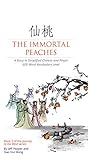
This is an abridged and linguistically simplified telling of the first two chapters of Journey to the West. It contains the birth story of Sun Wukong (i.e. the Monkey King) and describes his studies with a sage in an attempt to become immortal.

As someone learning Chinese but at a point where I can only read grammatically and lexically simple content, it’s not easy to find reading material that is both fun to read and readable. The discovery of this series was a godsend. It’s hard to get more thrilling than the story of the Monkey King, and it helps that I’ve already read translations – and so have a bit of context to piece together challenging sentences and to avoid the misunderstandings that can arise when reading a new language. It’s much easier to be a disciplined reader when reading something that is neither a children’s book nor the life story of a preternaturally typical person [which is the usual adult equivalent of a beginner level reader.]

I was pleased by how this book was laid out. Often reading material for learners puts the Chinese characters (hanzi,) the Romanized phonetics (pinyin,) and the English translation all in adjacent rows. While this has its advantages, it also makes it too easy to cheat by eye saccade and not be reading as well as one thinks one is. This book does have all three elements, but it alternates paragraphs of hanzi and pinyin but then puts the translation in an unbroken format after the Mandarin. The book also has a glossary of the book’s vocabulary.

Whether you’ve already read Journey to the West or not, if you’re just learning to read Simplified Chinese, I’d highly recommend this book.

View all my reviews

BOOKS: “Lost in the Twentieth Century” by Albert Szent-Györgyi

Lost in the Twentieth Century (Annual Review of Biochemistry Book 32)Lost in the Twentieth Century by Albert Szent-Györgyi
My rating: 5 of 5 stars

Available Online – NIH National Library of Medicine

This is the very brief autobiography of a fascinating man. Szent-Györgyi is most famous for work in biochemistry involving Vitamin C, work that won him a Nobel Prize. However, his life is not only notable for science before and after the Nobel (after he worked on the physiology of muscular activity, on electron activity in physiology, and on cancer.) He also performed important works outside the laboratory, notably he conducted an espionage / diplomatic mission during the Second World War (“Espionage” in that he traveled to Turkey under false pretenses, under cover of giving a lecture at a university, “diplomatic” in that the trip’s true objective was to negotiate with the Allied powers.)

Szent-Györgyi has some interesting quips and insights that make it worth reading this pamphlet-scale book, even though his Wikipedia page probably contains as much information. He had an interesting way of thinking about matters, both scientific and not, and was politically and socially engaged in the world.

If you’re curious about Szent-Györgyi or enjoy biographies, in general, I’d highly recommend reading this one.

View all my reviews