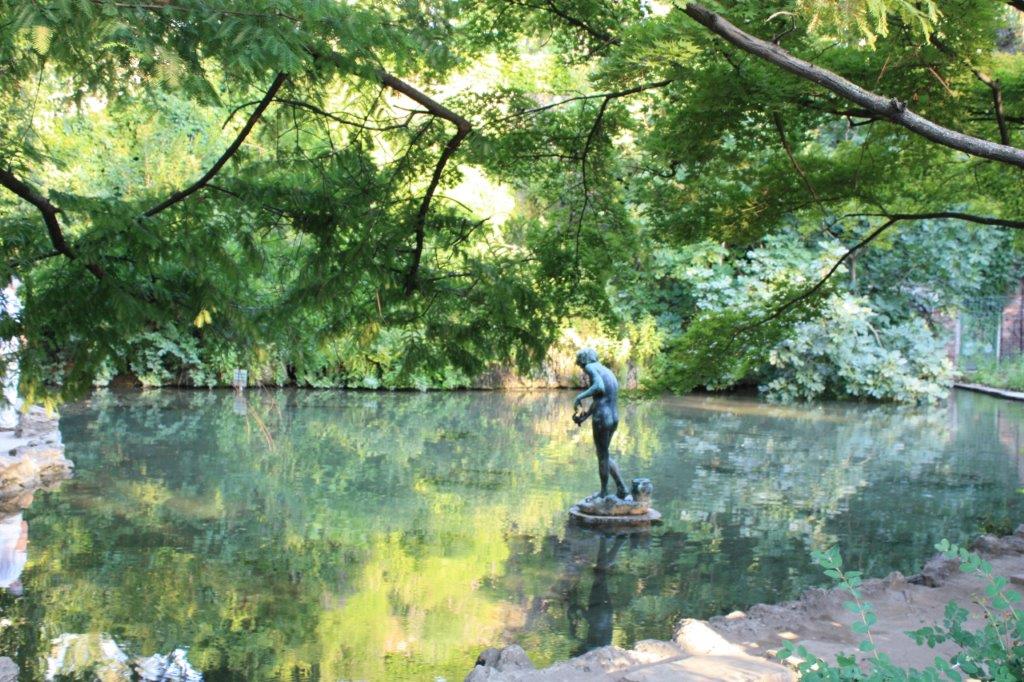
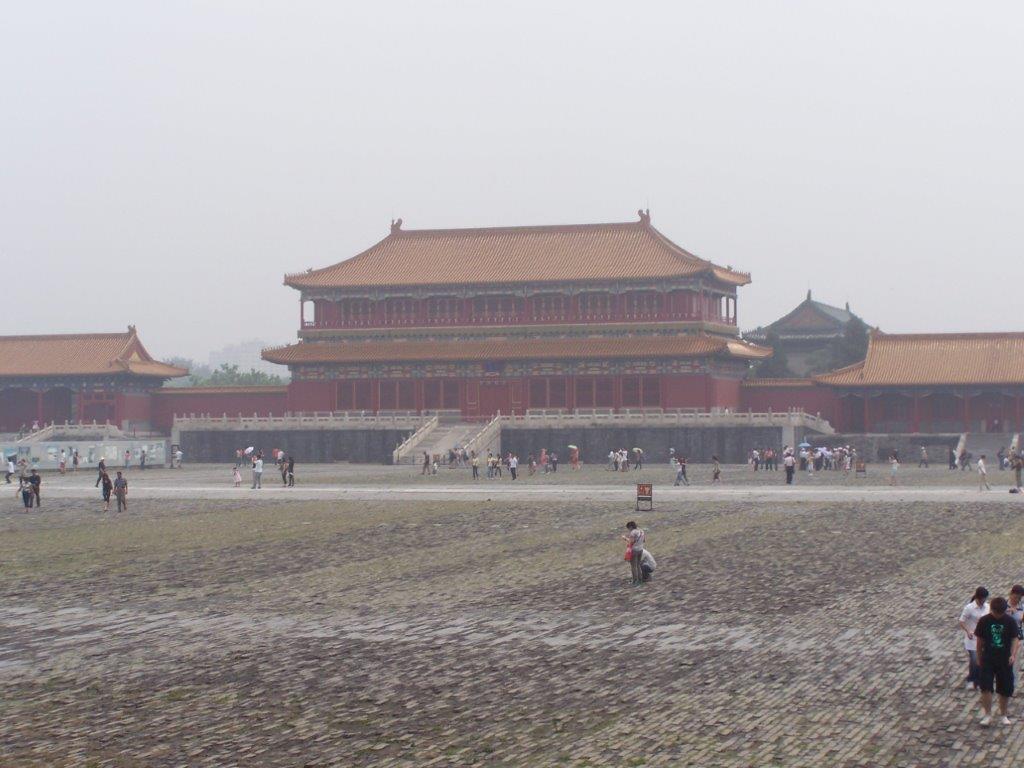
clouds drift
amid the lily pads:
pagoda pond.
Fish Wu Wei [Haiku]
DAILY PHOTO: Wolmido Cultural Street
“To the River” by Edgar Allan Poe [w/ Audio]
Fair river! in thy bright, clear flow
Of crystal, wandering water,
Thou art an emblem of the glow
Of beauty—the unhidden heart—
The playful maziness of art
In old Alberto’s daughter;
But when within thy wave she looks—
Which glistens then, and trembles—
Why, then, the prettiest of brooks
Her worshipper resembles;
For in my heart, as in thy stream,
Her image deeply lies—
His heart which trembles at the beam
Of her soul-searching eyes.
PROMPT: Future Travel
I plan to travel to the future one minute at a time.
At least until they invent a time machine that can transport something bigger than a subatomic particle, and only milliseconds into the future at that.
Goblin [Free Verse]

After dark —-
A city park —-
There runs the thing
That comes to life
By night.
Caged in stillness
Through sunlit hours.
Its night persona
Is blurred movement
Seen only from the
Corner of an eye.
It stays near deep shadow,
Beyond the lamp lit arcs.
Where is it?
No one knows,
But if one were to
Check the cathedral
Spire, you’d find
Only an impenetrable
Void…
until sunup.
DAILY PHOTO: Cheomseongdae Observatory, Gyeongju
BOOKS: “Lost in the Twentieth Century” by Albert Szent-Györgyi
Lost in the Twentieth Century by Albert Szent-GyörgyiMy rating: 5 of 5 stars
Available Online – NIH National Library of Medicine
This is the very brief autobiography of a fascinating man. Szent-Györgyi is most famous for work in biochemistry involving Vitamin C, work that won him a Nobel Prize. However, his life is not only notable for science before and after the Nobel (after he worked on the physiology of muscular activity, on electron activity in physiology, and on cancer.) He also performed important works outside the laboratory, notably he conducted an espionage / diplomatic mission during the Second World War (“Espionage” in that he traveled to Turkey under false pretenses, under cover of giving a lecture at a university, “diplomatic” in that the trip’s true objective was to negotiate with the Allied powers.)
Szent-Györgyi has some interesting quips and insights that make it worth reading this pamphlet-scale book, even though his Wikipedia page probably contains as much information. He had an interesting way of thinking about matters, both scientific and not, and was politically and socially engaged in the world.
If you’re curious about Szent-Györgyi or enjoy biographies, in general, I’d highly recommend reading this one.
View all my reviews
“Weichuan Farmers” [渭川田家] by Wang Wei [王维] [w/ Audio]
Low, warm light lands on the village.
Cattle and sheep trapsing farmward.
Farmer mulls a missing shepherd,
Leaning on his staff, still on guard.
Pheasants cluck, wheat heads are heavy,
Silkworms dormant, mulberry leaves few.
Farmers stand, hoes on their shoulders,
Telling old tales, as if they were new.
How I envy the idle time --
To chat about mankind's decline.
This is poem #16 of the 300 Tang Poems [唐诗三百首.] The original poem in Simplified Chinese is:
斜光照墟落, 穷巷牛羊归。
野老念牧童, 倚杖候荆扉。
雉雊麦苗秀, 蚕眠桑叶稀。
田夫荷锄立, 相见语依依。
即此羡闲逸, 怅然吟式微。
PROMPT: Modern Society
In short, I think we need to foster emotional intelligence and not just academic intelligence, and we need to rebuild social interaction in a super-tribal world (i.e. a world too big for everyone to know everyone else.) [But do the latter without the xenophobia.]
To elaborate:
First, I think we need some true coming-of-age experience that facilitates a sense of self-empowerment. This would not just be collecting envelopes of cash and dancing a dance or reciting a prayer, but something more akin to being dropped in the woods for a week. Of course, this would require engaged parenting and skill acquisition and not just leaving kids with video games and social media. It seems like a lot of our present problems result from people with no sense of empowerment or the emotional intelligence that comes therefrom. Such people may have passed all the tests but still have “imposter syndrome” and the like.
Second, we need some sort of way to build tribal-scale groups in which people interact with a small group of others repeatedly — in person and face-to-face. The challenge is that this needs to be done without increasing xenophobia, which is already trending the wrong way. I think there is a problematic tendency to be virtually engaged but not personally engaged with others in humanity. Even in I, who am intensely introverted, the social impulse remains, but we live in a world where people can successfully dropout.
Some people get one or both of these experiences in any number of ways, but it seems like an ever-increasing segment of the population lacks confidence (even if they had a 4.0 gpa the whole way through their formal education,) and lacks human interaction (even if they have 2000 social media “friends.”)