PROMPT: Screentime

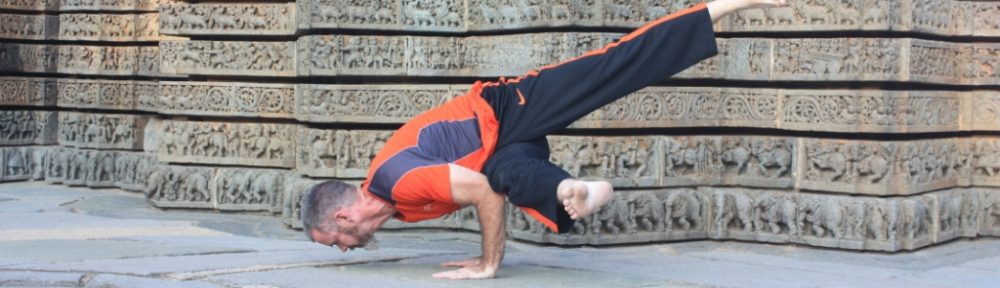
How do you manage screen time for yourself?

Many ways, really: e.g. Go for a walk or otherwise move. Forget it exists. When the WiFi goes down, take it as a sign from the universe. Juggle. Do something productive.

PROMPT: Time Wasters

How do you waste the most time every day?

YouTube. I usually go there in a productive pursuit, but then fall into the rabbit hole.

BOOKS: “The Comedians” by Kliph Nesteroff

The Comedians: Drunks, Thieves, Scoundrels, and the History of American ComedyThe Comedians: Drunks, Thieves, Scoundrels, and the History of American Comedy by Kliph Nesteroff
My rating: 5 of 5 stars

Amazon.in Page

This book presents a fascinating history of standup comedy and the various ancillary activities that comedians have taken on to make ends meet, to advance their careers, and – in a surprising number of cases – to pay for drugs — e.g. from writing to radio and television performances to hosting interview shows. The book’s exploration runs from the days of Vuadville to today’s world of Twitter and podcasts.

The book reveals a great deal about which readers may be unaware. If you, like me, watched The Marvelous Mrs. Maisel and wondered whether the mob was really that involved in the entertainment industry, turns out, they were. In fact, Nesteroff addresses the violence and threats experienced by comedians in a way that is much more explicit than in that TV show. There are tales of early insult comedians running afoul of wiseguys who were in the audience unbeknownst to the comedian. There is even a chapter devoted to the building of Las Vegas to meet certain needs of organized crime, as well as discussion of the mob’s decline (or, perhaps, legitimization) in the industry.

Another discovery that was interesting to me was how wild some of the early comedians were, both in their stage and in their personal lives. There were a number of names that were familiar to me from re-runs of highly censored network television programs. I’d wrongly assumed that these individuals were as bland and wholesome as their on-air personas. Buddy Hackett is a prime example of someone who wasn’t at all what I expected.

It’s remarkable to see how many ups and down standup comedy has had in its relatively short life span — cycles of boom and bust.

If you’re interested in standup comedy and how comedy has progressed as a form of entertainment in America, I’d highly recommend this book.

View all my reviews

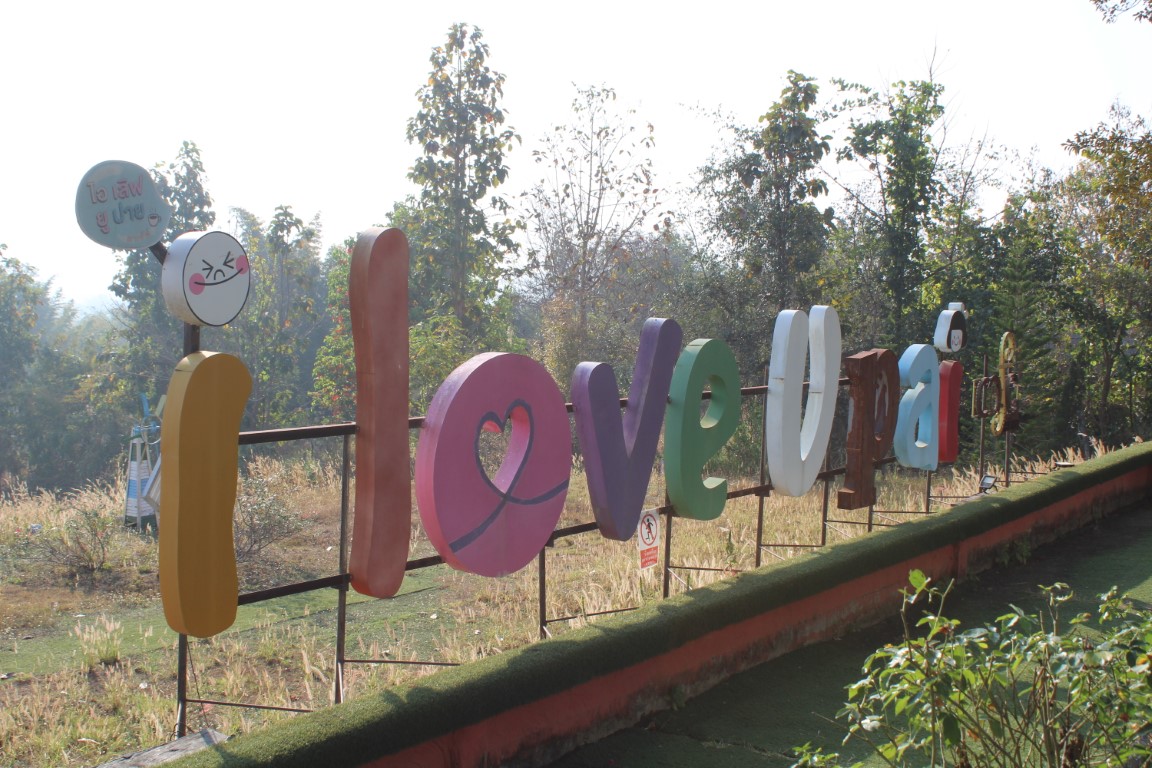
DAILY PHOTO: Pai’s Instagramable Places

PROMPT: Less

Daily writing prompt
What could you do less of?

Truth be told, the answer is reading, but as hardcore addictions go, the side-effects are better than with heroin or meth (and almost completely opposite, though it does sometimes make me sleepy.) So, I think I’ll go with social media, which I probably do less of than average, but that’s still way too much.

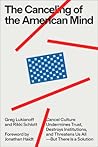
BOOKS: The Canceling of the American Mind by Greg Lukianoff & Rikki Schlott

The Canceling of the American Mind: Cancel Culture Undermines Trust and Threatens Us All―But There Is a SolutionThe Canceling of the American Mind: Cancel Culture Undermines Trust and Threatens Us All―But There Is a Solution by Greg Lukianoff
My rating: 5 of 5 stars

Amazon.in Page

This book presents an in-depth exploration of cancel culture in its many varied manifestations, from both the left and the right of the American political spectrum. The biggest part of the discussion is with respect to the educational system, and particularly higher education. Sadly, this is because the institutions that used to be among the most formidable bulwarks of free speech, expression, and academic freedom have increasingly become untenable to multiple points of view. (The authors point out that there have been more dismissals of faculty members for cancel culture speech and expression issues than there were during the McCarthy era for political stance.)

However, the book doesn’t restrict itself to education, but also investigates cancelations in journalism, publishing, the scientific community, standup comedy, and the medical and psychiatric communities. The authors also present cases of the effect that wokeness and other expression limiting activities are having in these areas. One of the most disturbing revelations to me was the role of wokeness in psychotherapy and the negative effect it may have on people getting the help they need.

The book presents a series of cases in detail to advance the discussion. It also has a couple chapters that examine the tactics that are used to apparently “win” debates by silencing / demoralizing the opposition while avoiding any actual contest of ideas. The authors go through tactics favored by the Right as well as those by the Left. (Though it’s clear that, in a race to the bottom, both sides adopt the approaches of the other side that seem to be effective. e.g. the Left is getting into book banning (historically a Conservative tactic) and the Right is getting into cancelling and shout-downs (usually Progressive tactics.)) I think it was smart to have two authors, one from the left and one from the right, in order to help ensure balance in the project. That said, as the Left has been in the cancel culture vanguard, they come up more often.

Some have called this a sequel to “The Coddling of the American Mind,” with which it shares a co-author, Greg Lukianoff. I don’t know that I’d think of it that way. While it does address some of the same issues as background, psychology and child development are not at the fore in this book (Jonathan Haidt – the other co-author of “Coddling” is a psychologist,) but rather are the legal, cultural, and political issues.  

This is probably the most important book I’ve read this year (and, being late November, it’s likely to retain that status) and I’d highly recommend it for all readers.

View all my reviews

BOOK REVIEW: The Power of Podcasting by Siobhan McHugh

The Power of Podcasting: Telling stories through soundThe Power of Podcasting: Telling stories through sound by Siobhan McHugh
My rating: 5 of 5 stars

Amazon.in Page

This book is in part a how-to guide, and in part a history of podcasting’s rise, though a history that tries to look from within rather than from a distance as much as possible. The two major thrusts of the book are story and sound. Of the many varieties of podcasts that exist today, the focus of this book is on ones that are story-centric, be they non-fiction or fiction. [Of course, there’s an argument that all podcasts should employ story to some degree, even if they aren’t of a format that facilitates an overarching story.] McHugh, herself, uses stories and what I’d call meta-stories (i.e. the stories of how various podcast-delivered stories got told) extensively throughout the book.

With respect to sound, there’s a lot of background sound and music that makes the difference between a professional sounding podcast and one that’s not. This is a particularly difficult subject to grasp because – while one often experiences background sound and music drawing one deeper into the story (or – perhaps more accurately – one feels its absence as a vague sense of detachment,) one tends not to be aware of this background audio on a conscious level. Therefore, discussions that point out the thinking about background audio choices can be profoundly eye-opening for a neophyte, such as myself.

When I say that the book has a podcasting how-to aspect, I should emphasize it doesn’t get into the technical aspects (i.e. what kind of mic to buy and how to use it,) but rather it discusses such topics as scripting, interviewing, editing / reorganizing for effect, and starting out. The book also has chapters at the end about increasing diversity in what has been an extremely Caucasian-centric industry as well as offering insight into potential future directions of audio storytelling. Throughout. there are short interviews with individuals with expertise in the industry, and there’s an extensive appendix, listing podcasts and podcasting resources.

If you’re interested in starting a podcast or learning more about podcasting, I’d highly recommend this book.


View all my reviews

Anti-Social Media [Limerick]

Fuseli’s “The Nightmare” (1781)
There once was an evil internet troll
who spouted like the proverbial blowhole.
He snarked to the void
like a flaming hemorrhoid,
but remained an anonymous A-hole.

Influencer Limerick

There once was a YouTube Influencer
who always ran afoul of the censor.
Her most common wrong
was stealing pop songs,
but redacting wardrobe malfunctions incensed her.

The Internet [Verse in Tetrameter]

We've reached the place where screams aren't heard.
You'd think they'd build into a din,
but one can't grasp a single word.
It has become silent as sin.

The angry words are shot to black -
that inky void that's unpatrolled,
It's silent, yet all're struck by flak.
Still, no one admits being sold.

But each life 's a product consumed.
They wail away the night and day,
pretending they're not rightly doomed.
Some will say that it's here to stay...

True, but are we?