PROMPT: Perspective

Daily writing prompt
How do significant life events or the passage of time influence your perspective on life?

I’m getting more at ease with Death by the day. In a broader sense, it’s progressively easier to not get worked up over the everchanging and unpredictable nature of the world.

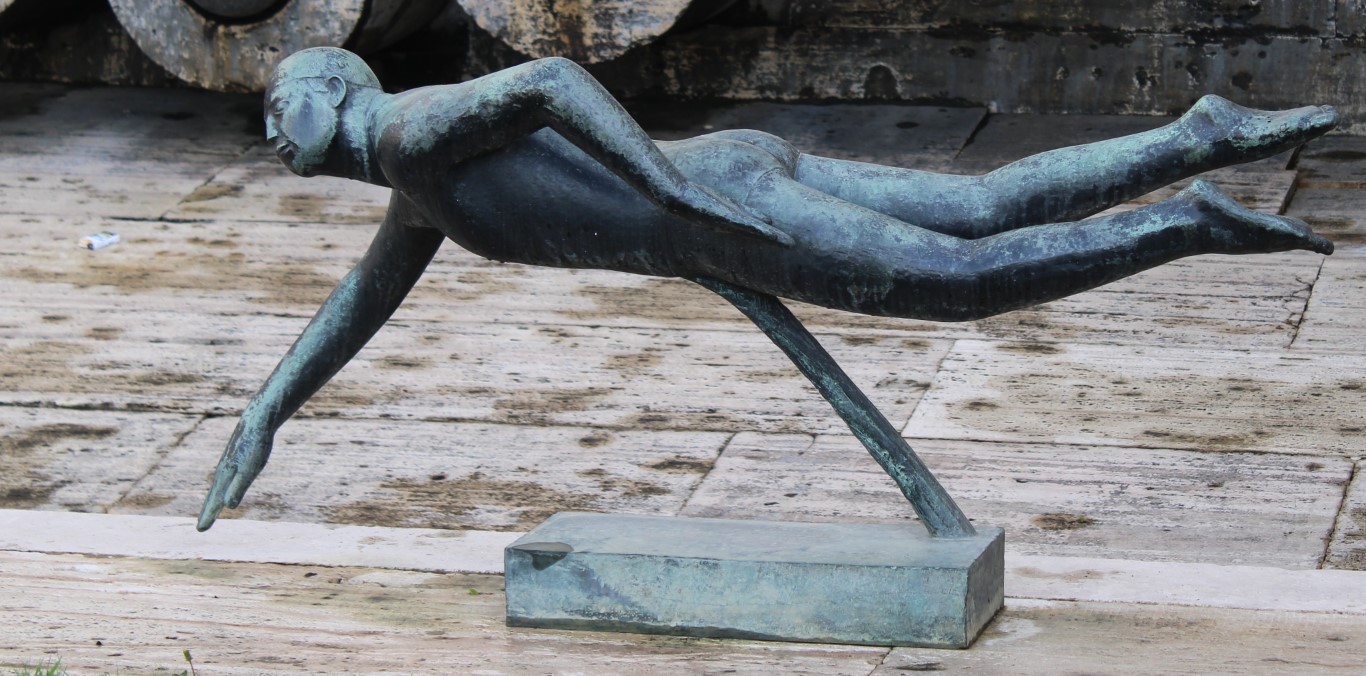
Swimmingly [Free Verse]

Swim through the world
- effortlessly -
Don't crave speed;
Maximize the glide.

With each stroke,
Sail as far as the limbs
will send one.

Don't thrash. Don't splash.
Don't gasp.

Feel the catch. Feel the pull.
Don't let short, wild motions
exhaust one.

Breathe!

Be wary of drag.
Put less effort
into propulsion,
And more into streamlining --
Shoot through the void,
without struggle.

Never lose sight of the value
of a good glide.

“Sometimes with One I Love” by Walt Whitman

Sometimes with one I love I fill myself with
rage for fear I effuse unreturn'd love,
But now I think there is no unreturn'd love,
the pay is certain one way or another
(I loved a certain person ardently and my
love was not return'd,
Yet out of that I have written these songs).

PROMPT: Complain

Daily writing prompt
What do you complain about the most?

People. They’re the worst. Or, possibly, technology. It’s a close runner up, at least. Of course, on some level, it’s all one shitstorm. Humans are the technological animal, and technology facilitates the making of comfort junkies who avoid deep thought at all costs. (Which is at the core of my beef.)

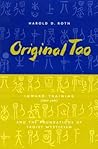
BOOKS: “Original Tao” by Harold D. Roth

Original Tao: Inward Training (Nei-yeh) and the Foundations of Taoist Mysticism (Translations from the Asian Classics)Original Tao: Inward Training (Nei-yeh) and the Foundations of Taoist Mysticism by Harold D. Roth
My rating: 5 of 5 stars

Publisher site – Columbia University Press

This book is built around a translation of an old Taoist manual called “Inward Training” (i.e. 内业,) and the book serves not only to elaborate the meaning of the twenty-six poems that make up the manual, but also to put this work in a context with respect to its place in early Taoist mysticism — which raises further questions as to what constitutes early Taoism and early Taoist mysticism. (Just as the earliest followers of Jesus didn’t think of themselves as “Christians” – at least not as we understand that term – it’s an open question as to when people started to think of themselves as Taoists and how that start relates to when people began holding a set of proto-beliefs that formed the basis of the school(s) of philosophy.)

“Inward Training” presents breathwork and meditational exercises that Roth calls “inner cultivation” — or what some have called “inner alchemy.” The book does contain the entire manual both in Traditional Chinese and an English translation, as well as a much more extensive elaboration of the teachings of the manual. The latter is necessary because, like many old manuals, sparse description, archaic language, and assumptions about common knowledge du jour make it difficult for the layman to get any depth of understanding from the manual, itself.

This is a scholarly work, which means that its readability isn’t the highest and it does dive into matters that will be arcana for non-expert readers. That said, particularly as works of academic philosophy go, its readability isn’t bad. The book is heavily annotated and offers and extensive bibliography.

If you are interested in Taoist practices of breath, meditation, and alignment, this book is well worth investigating.

View all my reviews

BOOKS: “Magic: A Very Short Introduction” by Owen Davies

Magic: A Very Short IntroductionMagic: A Very Short Introduction by Owen Davies
My rating: 5 of 5 stars

Publisher Site – OUP

The first thing that a potential reader should be aware of is that this book isn’t about stage magic or sleight of hand, and that form of magic — in which all parties are aware that techniques are being used to exploit perceptual limitations so as to create the illusion of a supernatural occurrence — doesn’t even really come up as an aside. This book is about magic that (at least some) people believe is a demonstration of actual supernatural happenings in the world.

The book looks at the topic largely from a historical viewpoint; though special emphasis is given to the relationship between religion and magic, in both its congruous and adversarial aspects. That said, for the most part, it’s not arranged historically but rather topically. It does have one chapter on historical perspectives (ch. 3) and one that addresses the ways and degrees to which magical thinking still exists in the modern world (ch. 6.) But it also has chapters on the anthropology of magic (ch.1,) the shifting landscape of thinking about what magic actually is (given that it’s clearly something to many people but isn’t likely the actual exploitation of loopholes in the laws governing the physical world that believers feel it to be — ch. 3,) the role of language in magic (ch. 4,) and the practices of magic (ch. 5.)

The book does focus heavily on the Abrahamic world (Judeo-Christian-Islamic) and its Janus-faced relation to magic over time, but not exclusively so. It brings in African, Chinese, Caribbean, and Native American traditions here and there as well.

I found this book interesting and thought-provoking and would highly recommend it for anyone looking to gain a better insight into how humanity has thought about magic over time and how those beliefs have aligned – or conflicted with – religious beliefs and practices.

View all my reviews

“The Past” by Ralph Waldo Emerson [w/ Audio]

The debt is paid,
The verdict said,
The Furies laid,
The plague is stayed,
All fortunes made;
Turn the key and bolt the door,
Sweet is death forevermore.
Nor haughty hope, nor swart chagrin,
Nor murdering hate, can enter in.
All is now secure and fast;
Not the gods can shake the Past;
Flies-to the adamantine door
Bolted down forevermore.
None can re-enter there, --
No thief so politic,
No Satan with a royal trick
Steal in by window, chink, or hole,
To bind or unbind, add what lacked,
Insert a leaf, or forge a name,
New-face or finish what is packed,
Alter or mend eternal Fact.

Evolution [Free Verse]

Anywhere copies are made, 
but copies aren't exact,
selection will take place.

Some erroneous copies will
be more beloved than others.
Some errors will propagate.
Some errors will die out.

Thus is language,
thus is chemistry,
and thus is life.

Raising Chaos [Free Verse]

Raise chaos:
That's the job of intelligent life,
to make nice & orderly things
so they can crack and shatter
and eventually end up pulverized
to dust --
A fine, granular dust that will blow
across the universe.

First, the bowl must be made:
Some potter must shape and glaze
and fire it with care,
Turning sandwiches into art...
and waste heat --
entropy slow and fast.

All so someone can crack or chip it
(with ease and lack of intention,)
starting it on a path to being sand
grains a world away.

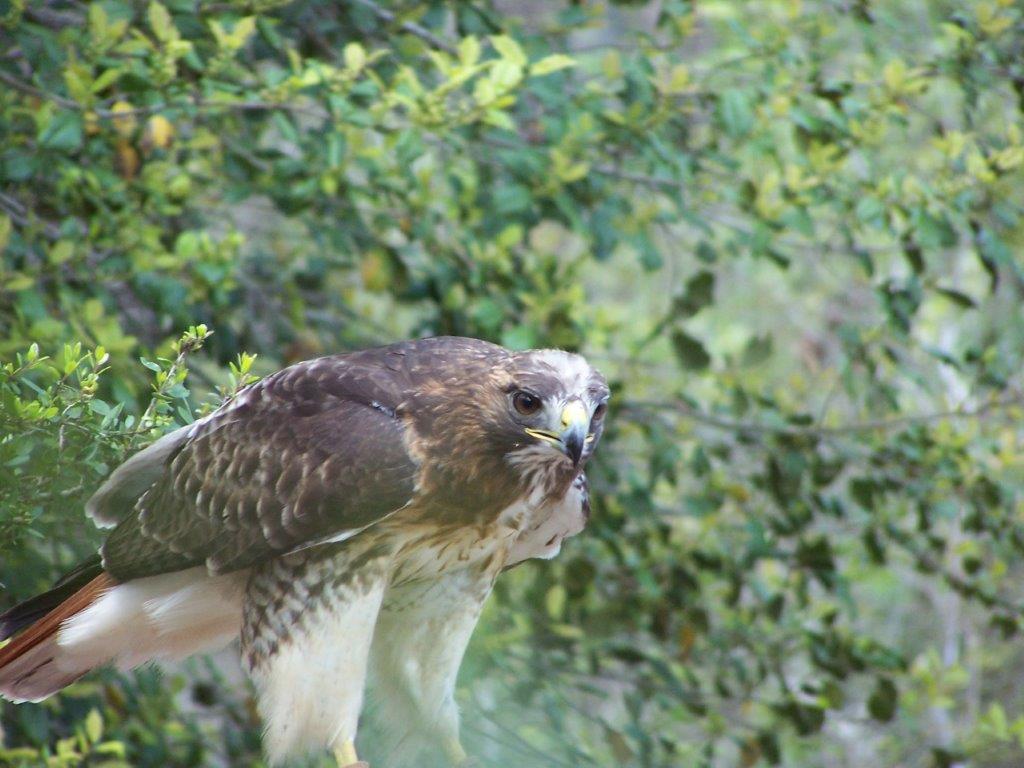
“To a Marsh Hawk in Spring” by Henry David Thoreau [w/ Audio]

There is health in thy gray wing,
Health of nature's furnishing.
Say, thou modern-winged antique,
Was thy mistress ever sick?
In each heaving of thy wing
Thou dost health and leisure bring,
Thou dost waive disease and pain
And resume new life again.