PROMPT: Positive Events

Daily writing prompt
What positive events have taken place in your life over the past year?

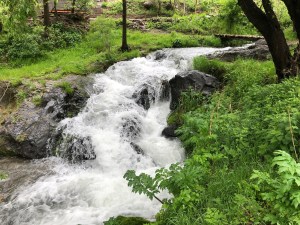
Positive? Negative? Who’s to say? Like the Taoist farmer, I’ll withhold judgement.

Surrender [Lyric Poem]

Let the flood sweep 
one away — out
of the shallows,
into the deeps.
Don’t ever cry;
Don’t ever weep;
Just feel the speed
Carry one on.

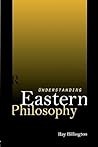
BOOK: “Understanding Eastern Philosophy” by Ray Billington

Understanding Eastern PhilosophyUnderstanding Eastern Philosophy by Ray Billington
My rating: 4 of 5 stars

Publisher Site — Taylor & Francis

This book does a solid job for one that bites off so much in a single go. Eastern Philosophy is a large subject, and to try to outline the major premises of its varied systems and also compare them to Western / Abrahamic notions (when Western schools are sometimes no more different from Eastern schools than each side is within,) and to do so in under two-hundred pages is a daunting undertaking.

For the most part, I felt the book did a fine job of meeting its objective. A fair amount of selection and simplification is required. I will say the part describing karmic doctrine didn’t seem consistent with what I was taught and seems more in line with the early Western scholars who started writing about Eastern Philosophy but could not help but couch the subject in a Western / Abrahamic frame because it was what they knew and was invisible to them. I say this as one who is no big fan of Karmic philosophy, though for another reason (one which is also mentioned in this book.) I’ve always been told that the central idea is to do selfless acts in order to escape the karmic cycle. Billington, like others before him, states it as do “good deeds” and then he puts forth the critique that this won’t help because doing good for one’s own benefit is fraught with peril. My understanding from Sanskrit scholars is: first, Hindu philosophers were aware of this paradox from the beginning and that’s why the emphasis has always been on “selfless” acts; second, the Abrahamic bifurcation of all actions into good and evil is not so much a thing in Hindu thinking (most actions are inherently neither.) I should point out that there is a lot of internal conflict within these philosophies (e.g. differences between Buddhist and Hindu thoughts on Karma) and that Billington does elsewhere reflect on the differences between Eastern and Western thinking about good and evil.

The first two-thirds of the book is organized by schools of thought (beginning with the Indian ones and working toward Chinese / East Asian schools) and the last third deals with a series of fundamental philosophical questions.

If you want a quick outline of Eastern philosophical ideas, this book gives a good look at them, particularly if one is interested in a comparison to Western ideas. The book also spends a fair amount of time in discussion of what a religion is and how one differs from a philosophy.

View all my reviews

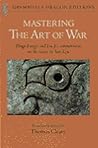
BOOK: “Mastering the Art of War” by Zhuge Liang & Liu Ji [Trans. & Ed. by Thomas Cleary

Mastering the Art of War: Commentaries on Sun Tzu's Classic (Shambhala Dragon Editions)Mastering the Art of War: Commentaries on Sun Tzu’s Classic by Zhuge Liang
My rating: 5 of 5 stars

Publisher Site — Shambhala

This book combines the writings of two prominent Chinese strategists, Zhuge Liang and Liu Ji. Both men came after Sunzi, author of The Art of War, and Cleary describes these two works as commentaries on the work of Sunzi.

Zhuge Liang’s piece is called The Way of the General and it collects short essays from Records of the Loyal Lord of Warriors. Like many, I first became acquainted with Zhuge Liang from his novelized personage in the Chinese classic, Romance of the Three Kingdoms, in which he is called “Kongming” and is a force to be reckoned with in service to Liu Bei of the Shu Kingdom. Zhuge Liang’s ideas are conveyed as short topical discussions, not unlike Sunzi’s work.

Liu Ji’s manual, Lessons of War, is a bit different in that the explanation of the strategy is briefer than in the works of Sunzi or Zhuge Liang, but Liu Ji always includes an exemplary story from history. This makes Liu Ji’s work a little more narrative. It is interesting to see the varied approach to conveyance of the concepts under consideration.

Because the works of Zhuge Liang and Liu Ji are thin, the book has a fair amount of padding in the form of Translator’s Introductions, both an overall Introduction and one per included work. I was happy with how these were done. They do not drone on but rather give some background that will be useful to the average reader without getting lost in the weeds.

If you’re interested in strategy, be it applicable to war or otherwise, I’d highly recommend this book.

View all my reviews

White Space [Free Verse]

I read the space
Around the poem.
It has no meaning,
But says so much.
It betrays a little secret
That no reader ever learned
Who was too concerned
With what was written,
While wholly inattentive
To
What
Was
Not.

BOOK REVIEW: “New Story of the Stone” by Jianren Wu [Trans. by Liz Evans Weber]

New Story of the Stone: An Early Chinese Science Fiction NovelNew Story of the Stone: An Early Chinese Science Fiction Novel by Jianren Wu
My rating: 5 of 5 stars

Publisher Site – Columbia University Press

This book is presented as a sequel to the Chinese literary classic (alternatively) known as Dream of the Red Chamber or Story of the Stone. The central character is a scholarly traveler by the name of Baoyu. The first part of the book is set in China around the time of the Boxer Rebellion, an event that features in the story. Throughout this portion, the book reads like historical fiction. However, Baoyu’s travels eventually bring him to a hidden realm, a technologically advanced utopia within China. It is here where Baoyu’s adventures get fantastical and otherworldly, and the book ventures into the domain of Science Fiction.

The setting of the book reminds me a little of Marvel’s Wakanda from Black Panther. Perhaps both instances of worldbuilding were motivated by the humiliated colonists’ fantasy of being more advanced than those who pull the strings for once, or of showing their (respective) lands to be places of “crouching tigers and hidden dragons” (i.e. where great talents exist but remain unseen.) (Note: While China wasn’t on-the-whole colonized by a Western country, its interaction with England and other Western nations left it forced to accept terms unfavorable and undesirable to China (not to mention the outright colonized enclaves such as Hong Kong and Macau.) While the publisher has emphasized the science fiction aspect of this work, it is an anticolonial work through and through. The book can come across as xenophobic and nationalistic in places, but this only reminds the reader of how such positions might be arrived at under the boot of foreign influence.

The book is readable though philosophical and is well worth reading for those interested in developing a deeper insight into Chinese perspectives.

View all my reviews

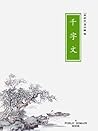
BOOKS: 千字文 [Thousand Character Essay] by 周兴嗣 [Zhou Xingsi]

千字文千字文 by 周兴嗣
My rating: 4 of 5 stars

A version with English commentary can be found at the IFA Gallery

This short work, consisting of just one-thousand characters, is first and foremost a teaching tool for children. While it presents a thousand of the most important Chinese characters, it also delivers lessons on history, ethics, philosophy, and culture by way of short sayings.

It’s arranged into 250 4-character phrases (125 sentences) and reads as a lyric poem, though because it dates to the Sixth Century, the degree to which the rhyme scheme holds varies depending upon the which spoken language one speaks (e.g. Mandarin, Cantonese, or Hakka.)

There have been different versions of this work over the centuries.

This is a much beloved work of literature among Chinese, though its sayings do not necessarily hold up as well as works like Sunzi’s Art of War or Laozi’s Daodejing. Some do, but most are much less relevant than when written.

As someone learning Chinese, I’d highly recommend this work as a way to expose oneself to language while gaining insight into Chinese culture.

View all my reviews

BOOKS: “Wen-Tzu” Trans. by Thomas Cleary

Wen-TzuWen-Tzu by Lao-Tzu
My rating: 5 of 5 stars

Publisher Site – Shambhala

This work is presented as “further thoughts of Laozi [老子].” Readers of the Dàodé jīng [道德经] will recognize many a familiar statement of that work, but this book is much more extensive and detailed. I say “presented as” because scholars no longer believe this was a product of Laozi and his lifetime (if such an individual ever existed.) For one thing, the book seems more syncretic than the Dàodé jīng, that is to say there are points at which it sounds strikingly Confucian — rather than purely Taoist.

As with the Dàodé jīng the Wénzǐ [文子] covers a lot of ground from metaphysics to individual ethics to political philosophy, but this book has more room to sprawl on each subject.

As with other Cleary translations, it’s a pretty readable translation.

I’d recommend it for readers interested in Chinese Philosophy.

View all my reviews