Ikkyū Limerick

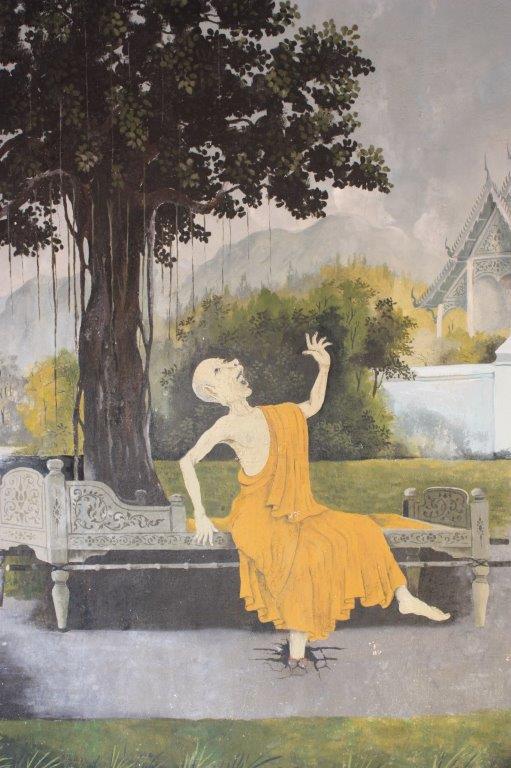
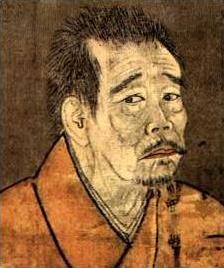
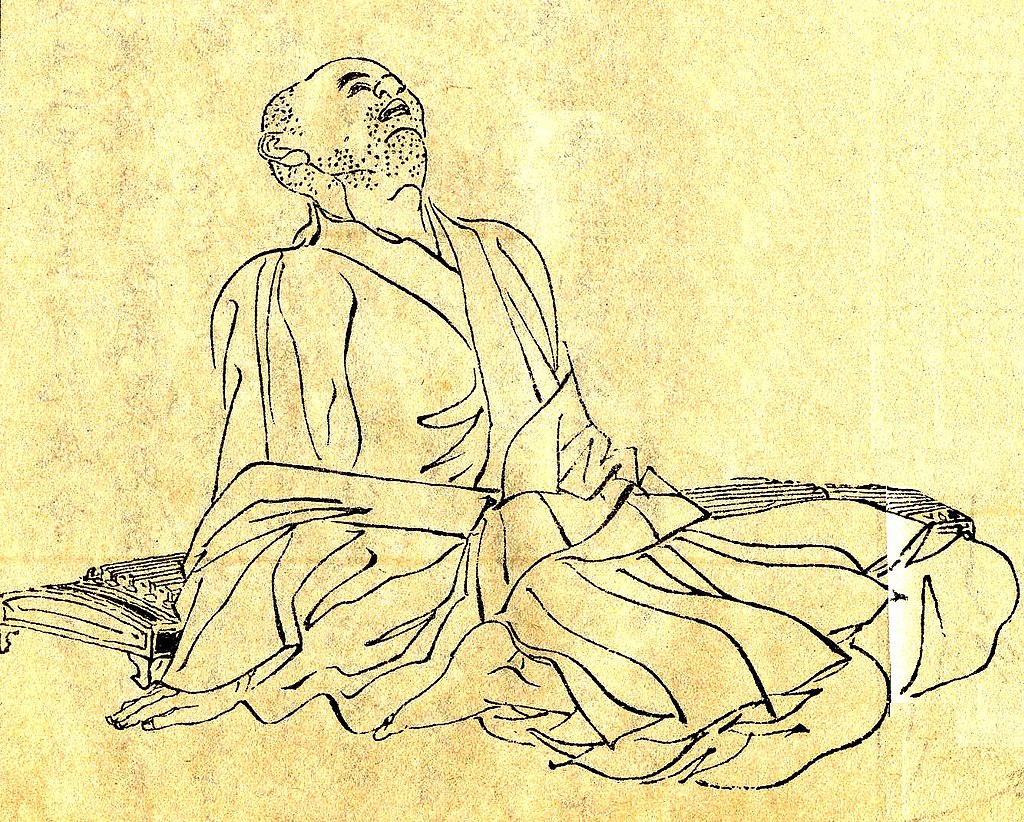
There was a Zen master named Ikkyū
   who was thought by many to be cuckoo. 
 He'd allow a toot
  on his very own flute.
 Which was unbecoming of flutists (& monks, too.)

The Most Important Lesson in All of Human Living [DAILY PROMPT]

Describe something you learned in high school.

A Psych teacher told us a story of what he called “a gestalt of expectations.” A man from a city in the East is driving out West, and he passes a gas station – despite being low on fuel. (He’s used to gas stations being everywhere.) Anyhow, he runs out of fuel. He can’t see anything around except desolate desert bisected by a line of asphalt. He decides to walk back to the gas station he passed ten miles back. There is no one traveling on this remote stretch of desert road. As he’s walking in the intense heat, it comes to his mind that the employee at the service station is really going to gouge him on the price of gas and a jerry can. As he walks and walks, skin prickling with the heat, he keeps thinking about how he’s going to get screwed by the gas station attendant and also how he’ll be chided and ridiculed for running out of gas in the middle of the desert. He imagines it in great detail. Finally, bedraggled and with heaving breaths, he arrives at the station. The gas station attendant rushes out to help this poor man, and the man punches the attendant square in the nose (for all the offenses taking place solely in the man’s mind.)

In a broader formulation, I think this is the most important lesson any human can learn. Our personal perception of what we experience is not equal to what it is that we experience (the exterior world.) This is why some people dealt a crappy hand can turn it into a wonderful life, and also why some people who seem to have it all commit suicide in the prime of life.

I could be angered or dismayed that the single most important lesson I learned in secondary school was via off-curriculum ramblings during an elective class, but I choose not to. Instead, I’ve been trying all my life to make that bit of knowledge into wisdom.

The Immovable… Object [Haiku]

the Immovable
 lives amid impermanence,
  so, in time, he'll move.

BOOK REVIEW: The Pocket Chögyam Trungpa by Chögyam Trungpa

The Pocket Chogyam TrungpaThe Pocket Chogyam Trungpa by Chögyam Trungpa
My rating: 5 of 5 stars

Amazon.in Page

This pocket-sized guide consists of 108 excerpts drawn from the writings of Chögyam Trungpa, a prolific — if controversial — teacher of Tibetan Buddhism. Chögyam Trungpa may have been most famous in the West for coining the English term “Crazy Wisdom,” and for founding Naropa University in Boulder, Colorado. [Note: while he coined the term “Crazy Wisdom,” he didn’t originate the concept, which existed already – arguably in multiple forms — in Vajrayana Buddhism from olden times.] Beyond basic Buddhist philosophy, he wrote extensively on Buddhist Psychology, Tantric Buddhism, and the Buddhist conception of warriorship.

The book is designed to be picked up at any point. There isn’t a formal grouping of concepts, but rather the book meanders around, revisiting ideas such as Enlightenment, Emptiness, emotional intelligence in multiple locations throughout the book. The entries are between a paragraph and a page long in most cases.

I found a great deal of food-for-thought in this book and would highly recommend it for those wishing to dip a toe into the teachings of Chögyam Trungpa.


View all my reviews

Satori [Free Verse]

It was a moment 
 of silent spaciousness.

In the midst of a fight,
 there was no enemy --
  just the effortless
   dance of the thing.

That moment 
 expanded to the infinite,
  & snapped back 
   to one tick after the tock.

Since then, 
 no catastrophe has felt 
  too great for a smile.

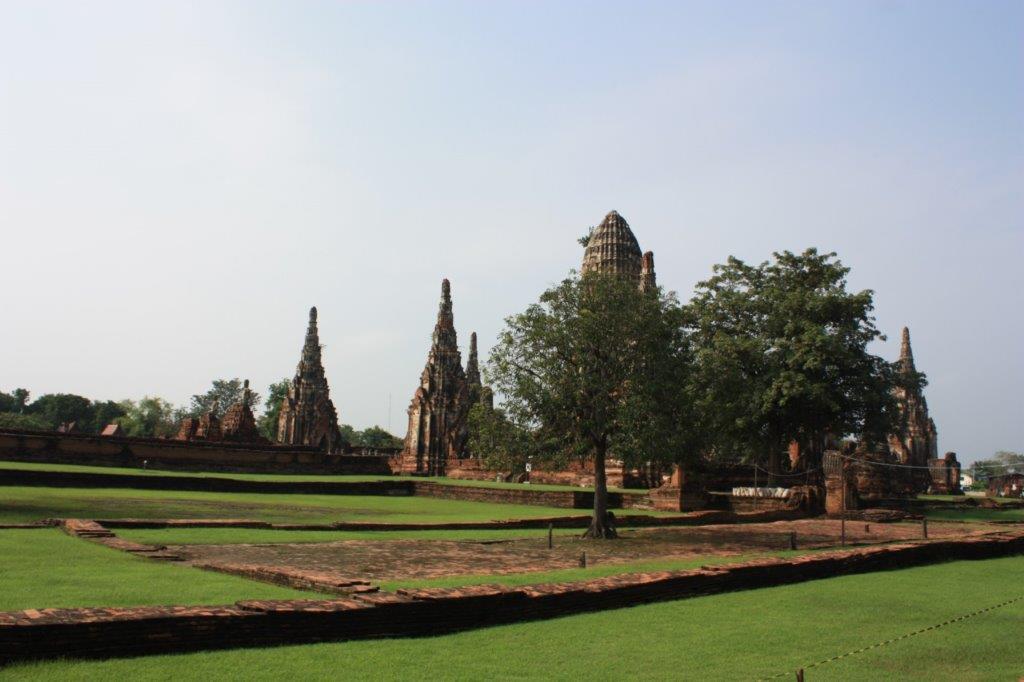
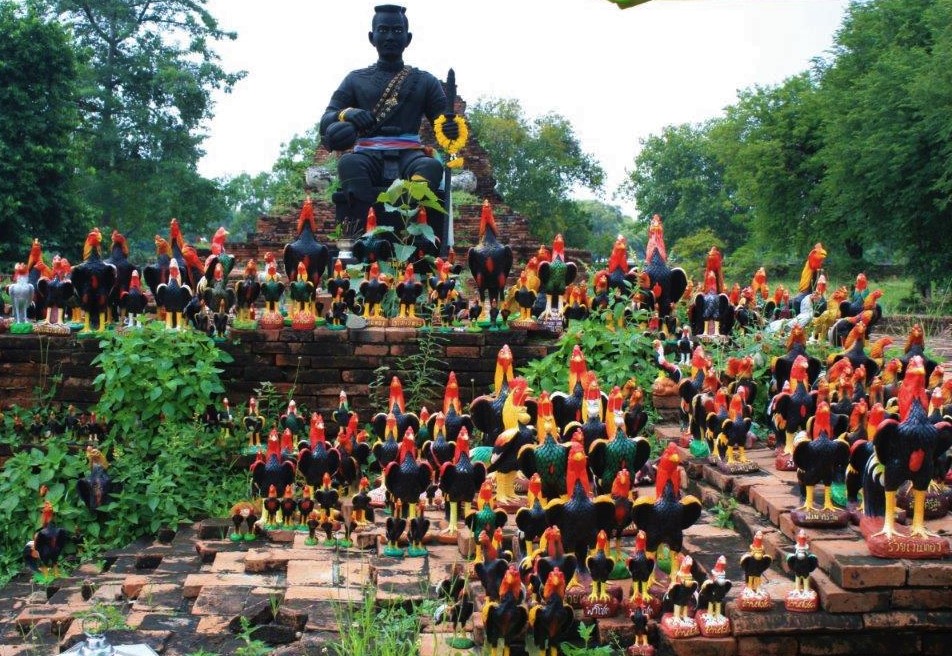
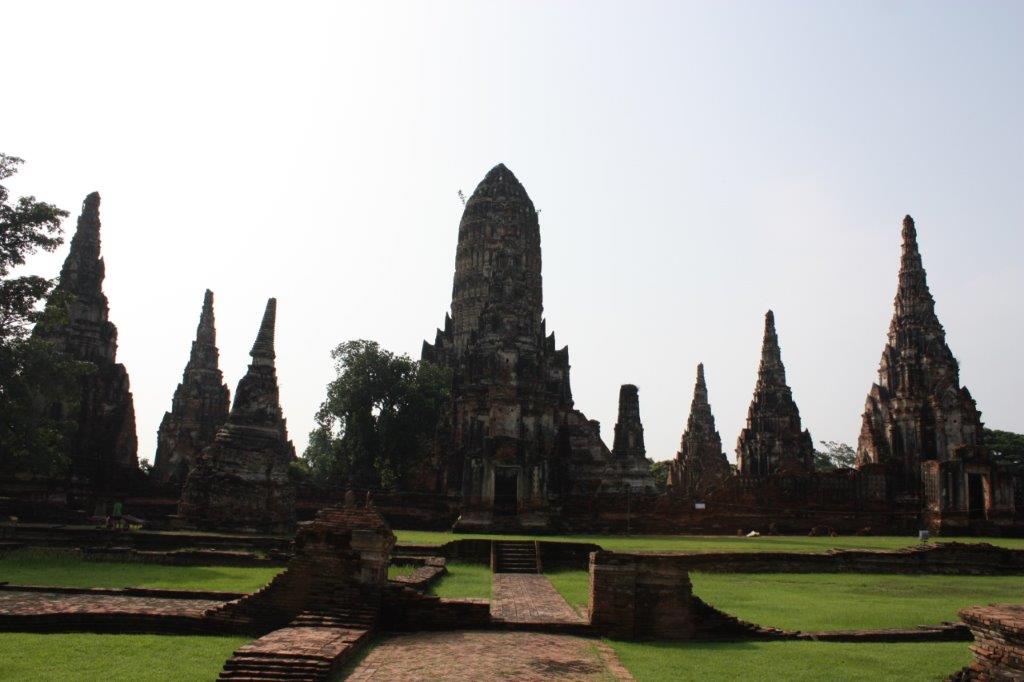
DAILY PHOTO: Scenes from Wat Yai Chaya Mongkhon

BOOK REVIEW: Singing and Dancing Are the Voice of the Law by Busshō Lahn

Singing and Dancing Are the Voice of the Law: A Commentary on Hakuin's “Song of Zazen”Singing and Dancing Are the Voice of the Law: A Commentary on Hakuin’s “Song of Zazen” by Bussho Lahn
My rating: 5 of 5 stars

Amazon.in Page

Release Date: December 20, 2022 [In India, may be out in your area.]

This book consists of a collection of essays inspired by the poem, “Song of Zazen,” written by the 18th century Zen master, Hakuin. Hakuin’s poem is brief (about forty lines,) and the essays composed by a present-day Zen priest (Lahn) offer commentary on a stanza-by-stanza basis. The book is divided into fourteen chapters, though the final chapter isn’t a stanza commentary.

I enjoyed reading this book and learned a great deal from it. The book benefits from the fact that the author is not rigidly sectarian. Therefore, the book is not doctrinaire, which warms the reader to the teachings. It’s also useful because it allowed the author to freely draw examples and quotes from a variety of sources, some of which may be more familiar or relatable to neophyte readers.

The last chapter offers a discussion of the fundamentals of zazen (seated meditation) as well as some other ancillary information that may be useful to readers new to Zen Buddhism, its practices, and its sutras. If you’re interested in Zen Buddhist meditation and philosophy, you may want to give it a look.


View all my reviews

In the Temple [Free Verse]

i enter an empty temple. 

it’s not silent.

footfalls resonate
&
floorboards creak.

but flickering flames
&
sleepy-eyed Buddhas
are quiet enough

in an hour,
the monks will filter in
with great punctuality:
monks, young and old.
(i would say, “and ages in-between,”
but they all seem young or old.)

there will be chanting,
and the din of finger cymbals
and deep-toned drums.

and i will leave
for the solace
of the world
outside the temple.

DAILY PHOTO: Buddha & Fountain, Ravangla

Taken in May of 2022 in Ravangla, Sikkim

DAILY PHOTO: Seated Buddhas of Swayambhunath

Taken in May of 2018 in Kathmandu