PROMPT: Skill

What skill would you like to learn?

FREEDIVING.

PROMPT: Relax

Daily writing prompt
How do you relax?

Tai Chi, Chai Tea, the usual suspects.

BOOK: “Breath” by James Nestor

Breath: The New Science of a Lost ArtBreath: The New Science of a Lost Art by James Nestor
My rating: 5 of 5 stars

Author’s Book Site

In this book, James Nestor takes an immersion journalism approach to reporting on the art and science of better breathing. In addition to participating in trainings on particular breathwork (e.g. Tummo / Wim Hof, Buteyko breathing, Sudarshan Kriya, the DeRose method, etc.,) he participates in a scientific studying involving closing off his nostrils for a few weeks and then systematically nose breathing for a few more. (The first half of which he describes as torturous.) In between discussions of his own experiences, he explores both ancient breathwork teachings and the discoveries of modern science.

While there’s not really anything new in this book, it does a good job of presenting the information in a clear and readable form. In truth, it would be hard to say something both profound and new on the subject, given that yogis, tantrics, Daoists, and others have been systematically observing and altering breath for centuries to improve health, concentration, and emotional poise. Even the seemingly modern systems are by-and-large variants of the old ways (e.g. Wim Hof breathwork adapts the Tummo of Vajrayana Buddhism, DeRose worked from ancient yoga teachings, and Andrew Weil’s 4-7-8 breathing is pretty much the 1:2:2 vrtti pranayama that yogi’s have practiced for centuries.) Still, despite the basic information in the book being widely available, there remains a crisis of bad breathing and the cascade of ill-health that results, therefrom, and so it is a valuable book. (The key takeaways are: nose breathe, breathe slowly and deeply, hyperventilate only consciously and occasionally, and elongate exhalation to facilitate relaxation.)

The newest information to me, personally, was that of Chapter 7, which dealt with the role that shifting to softer, cooked foods played in humanity’s proclivity for breathing problems. Chapter 1, which deals with humankind’s unique breathing issues, also provides insight into why people have so many problems with something so fundamental to life as breathing. Nestor also presented some of the breath-relevant insights of Albert Szent-Györgyi, a Nobel-winning biochemist whose work offered some insight into the connection between electrons and both cancer and aging. So, in addition to some nice reminders and references, I did learn a thing or two as well.

This is a fine overview of breath and how to improve it for better living, and I’d recommend it for anyone looking to learn more on the subject.

View all my reviews

PROMPT: Negative Feelings

Daily writing prompt
What strategies do you use to cope with negative feelings?

Feel them, but don’t feed them. By that I mean take time to be aware of the feelings, but do not let the mind go into its default mode of fixation upon the object informing these sensations and worst-case scenario building. Give the feelings your attention but recognize that you influence your experience of the world and don’t give the mind free reign to build an illusory scenario that it accepts as its reality. (i.e. Remember what Mark Twain said, “I’ve had a lot of worries in my life, most of which never happened.”)

The biggest problem with negative feelings is that the go-to modern strategy is attempted distraction (by vice, by entertainment, by activity, etc.) this leads the body to turn up the heat. If you give the sensations your attention without adding value judgements, it becomes impossible to obsess. For yoga practitioners who’ve done Yoga Nidra (Yogic sleep) the experience will be familiar. One often begins by being attentive to sounds, by giving the sounds attention without judgement, your mind starts to lose interest and it becomes harder for those sounds to distract you throughout the practice. This approach to negative feelings is much the same.

Also, breathwork that extends the exhalation component of breath will shift the balance toward rest and digest activity.

Ultimately, realize that these feelings are just sensations your body and brain use to turn your attention in certain directions. They have no more power than that, other than what one grants them. They are not identical to — or inextricably linked with — the events of the world that triggered them, and — therefore — you get to be the master of, and not the slave to, your feelings.

The next time you find yourself getting bogged down by a negative feeling, give the feeling a minute or two of pure undivided attention, and then think, “This is a wonderful opportunity to learn how my body and mind work.” See what happens.

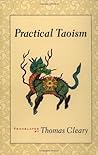
BOOKS: “Practical Taoism” ed. / trans. by Thomas Cleary

Practical TaoismPractical Taoism by Thomas Cleary
My rating: 4 of 5 stars

Publisher Site – Shambhala

Like a number of Eastern systems, Taoism is thought of in many different ways by many different people, and a few of those ways are fairly “out there.” To some, it is a philosophy. To others, it is a religion. To still others, it is a style of magic. By “practical Taoism” Cleary is suggesting that the many varied sources from which he drew snippets, assembling them together to make a coherent whole, reflect some of the more down-to-earth philosophy of “inner alchemy.” [Not to be confused with the “alchemy” in which lead is turned to gold, but sharing the central idea that methods exist to convert a low-quality entity into a high-quality one, but in the case of inner alchemy these methods are breathwork, meditation, and movement techniques that improve one’s vitality as a human being.]

The good news is that Cleary does collect a group of ideas that seem less arcane and cryptic than the average Taoist inner alchemy manual content (or, at least, they are translated so as to seem so.) The bad news is that the average Taoist inner alchemy manual was apparently pretty darn arcane and cryptic, such that even this selection isn’t exactly clear as a limpid stream. Some parts of it are straightforward, but one still has some work to do to make sense of what the original authors were trying to get across. [Some readers will enjoy that more than others.]

Presumably owing to the attempt to simplify through selection and translation, the book isn’t annotated, nor does it feature much ancillary material besides a relatively lengthy introduction to setup the reader with a contextual backdrop. So, there is not a lot of help to clarify ideas that are murky. (I do recognize the translator’s challenge in that there is only so much he can do to try to clarify ideas without imposing upon the authors’ intensions.)

I enjoyed, and learned from, this book — even if I didn’t always feel I was reading a “practical” guide to self-betterment.

View all my reviews

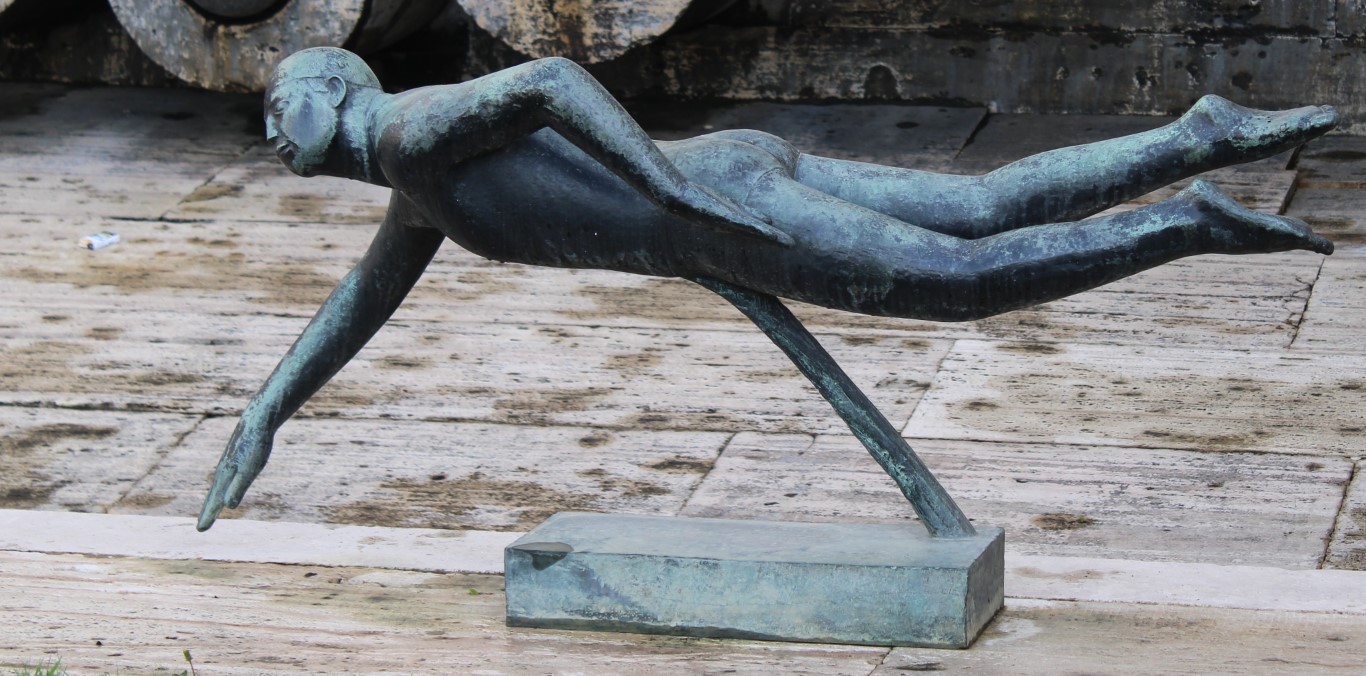
Swimmingly [Free Verse]

Swim through the world
- effortlessly -
Don't crave speed;
Maximize the glide.

With each stroke,
Sail as far as the limbs
will send one.

Don't thrash. Don't splash.
Don't gasp.

Feel the catch. Feel the pull.
Don't let short, wild motions
exhaust one.

Breathe!

Be wary of drag.
Put less effort
into propulsion,
And more into streamlining --
Shoot through the void,
without struggle.

Never lose sight of the value
of a good glide.

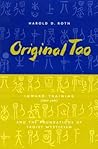
BOOKS: “Original Tao” by Harold D. Roth

Original Tao: Inward Training (Nei-yeh) and the Foundations of Taoist Mysticism (Translations from the Asian Classics)Original Tao: Inward Training (Nei-yeh) and the Foundations of Taoist Mysticism by Harold D. Roth
My rating: 5 of 5 stars

Publisher site – Columbia University Press

This book is built around a translation of an old Taoist manual called “Inward Training” (i.e. 内业,) and the book serves not only to elaborate the meaning of the twenty-six poems that make up the manual, but also to put this work in a context with respect to its place in early Taoist mysticism — which raises further questions as to what constitutes early Taoism and early Taoist mysticism. (Just as the earliest followers of Jesus didn’t think of themselves as “Christians” – at least not as we understand that term – it’s an open question as to when people started to think of themselves as Taoists and how that start relates to when people began holding a set of proto-beliefs that formed the basis of the school(s) of philosophy.)

“Inward Training” presents breathwork and meditational exercises that Roth calls “inner cultivation” — or what some have called “inner alchemy.” The book does contain the entire manual both in Traditional Chinese and an English translation, as well as a much more extensive elaboration of the teachings of the manual. The latter is necessary because, like many old manuals, sparse description, archaic language, and assumptions about common knowledge du jour make it difficult for the layman to get any depth of understanding from the manual, itself.

This is a scholarly work, which means that its readability isn’t the highest and it does dive into matters that will be arcana for non-expert readers. That said, particularly as works of academic philosophy go, its readability isn’t bad. The book is heavily annotated and offers and extensive bibliography.

If you are interested in Taoist practices of breath, meditation, and alignment, this book is well worth investigating.

View all my reviews

PROMPT: Energy

What things give you energy?

Breath and food. But I also find movement, music, and being in a natural setting feel energizing,

PROMPT: Relax

Daily writing prompt
How do you relax?

I usually don’t find it too difficult. I find reading and free writing conducive to relaxation. In cases in which I’m wound up, I move and / or exercise intensely. If I ever need to achieve relaxation expeditiously, I use Visama Vritti Pranayama or PMR (progressive muscle relaxation.)

PROMPT: Fun

Bloganuary writing prompt
List five things you do for fun.

1.) Read; 2.) Move; 3.) Juggle; 4.) Hike; 5.) Breathe