PROMPT: Power

Daily writing prompt
If you had the power to change one law, what would it be and why?

That no individual would have the power to unilaterally change any law.

Because if we all had the power to change one law it would be chaos, like in “Bruce Almighty.”

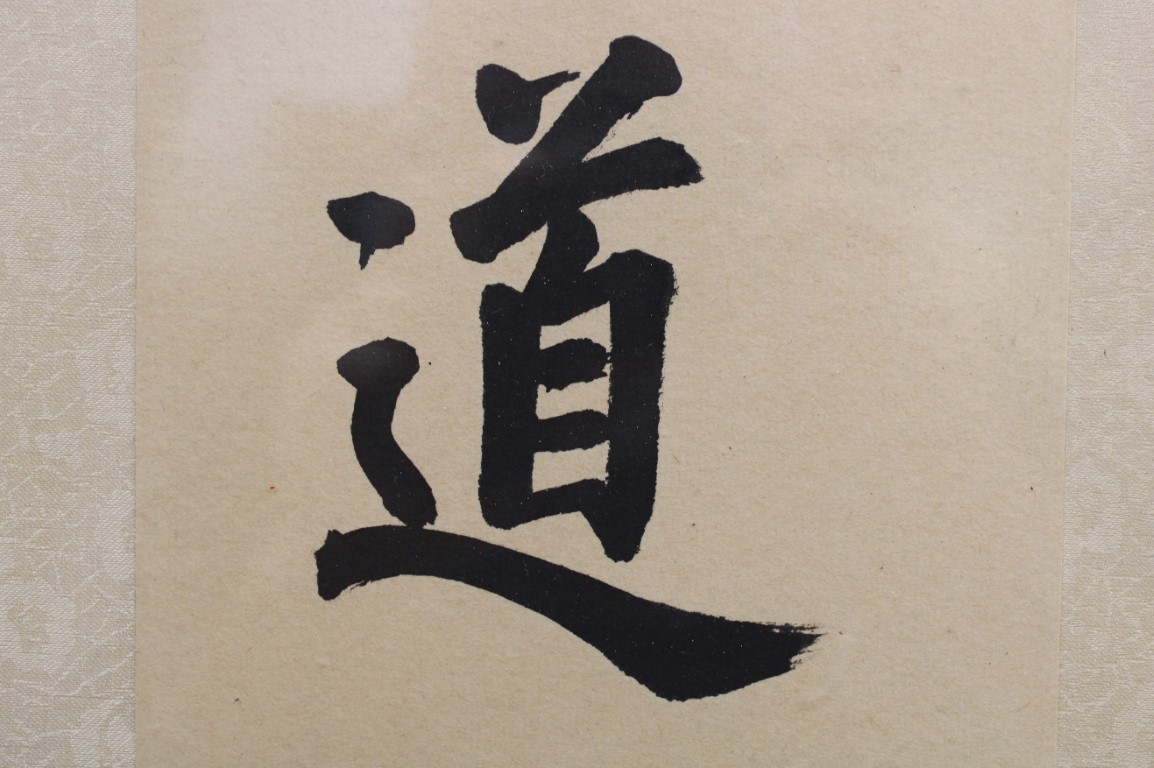
BOOKS: 道德经 by 老子 [a.k.a. Daodejing by Laozi]

老子道德经校释(简体中文版): 中华传世珍藏古典文库 (Chinese Edition)老子道德经校释(简体中文版): 中华传世珍藏古典文库 by 王弼
My rating: 5 of 5 stars

Available in Traditional & Simplified Chinese [w/ multiple translations] at YellowBridge

Packed into the 81 brief chapters of this book is the core Taoist philosophy on life, human relationships, governance, and war. Most often, it offers a wisdom that turns conventional wisdom on its head, advocating for inaction over action, less over more, simplicity over complication, and for recognizing the usefulness of what isn’t.

Some of the book’s central ideas are captured in these quotes:

上善若水。水善利万物而不争. “The greatest good is like water. It benefits all without fighting.” [Ch. 8]
金玉满堂,莫之能守 “A house full of jade and gold cannot be guarded.” [Ch. 9]
知人者智,自知者明。胜人者有力,自胜者强。“He who knows others is smart; he who knows himself is enlightened. He who conquers others has power; he who conquers himself is mighty.” [Ch. 33]
柔胜刚,弱胜强。“Softness overcomes hardness; weakness overcomes strength.” [Ch. 36]
道常无为而无不为。“The Dao is constant inaction, yet nothing is left undone.” [Ch. 37]
善者,吾善之;不善者,吾亦善之;德善。“The good, I treat well; the bad, I also treat well. Yeah Virtue!” [Ch. 49]
知者不言,言者不知。“He who knows does not speak; he who speaks does not know.” [Ch. 56]
千里之行,始于足下。“The journey of a thousand li (“miles”) begins with a single step.” [Ch. 64]
天之道,不争而善胜 “The way of heaven is to win without fighting.” [Ch. 73]
信言不美,美言不信。“True words aren’t pleasing; pleasing words aren’t true.” [Ch. 81]

I think this is one of those works that should be read and reread. It may help rewire your brain in useful ways.

View all my reviews

FIVE WISE LINES [November 2024]

Inspiration enters at the border between hard work and laziness.

Lu juren in “Poets’ jade splinters” [Trans. by Barnstone and Ping in The ART Of Writing]

I will not own anything that will one day be a valuable antique.

Miyamoto musashi in “My way of walking alone” [Dokkōdō] (Trans. by Teruo machida)

A house full of gold and jade can’t be guarded.

Laozi in the DAo De jing [Ch. 9]

Writing is a struggle between presence and absence.

Lu ji in The ART of Writing [Trans. by Barnstone and ping]

The best leaders remain unknown; the next best are praised; the next best are feared, and the worst are mocked.

Laozi in dAo de Jing [Ch.17]

Five Wise Lines (August 2024)

Empires arise from chaos, and empires collapse back into chaos. This we have known since time began.

The romance of the three kingdoms by luo guanzhong

Being poor is a mere trifle. It is being known to be poor that is the sting.

Jerome k. jerome; “On being hard up”

The art of war teaches us to rely not on the likelihood of the enemy’s not coming, but on our own readiness to receive him…

Sun tzu; The art of war

It is impossible to enjoy idling thoroughly unless one has plenty of work to do.

Jerome k. Jerome; “On being idle”

The wise man, like a child, can be filled with wonder at anything.

Tibetan proverb

Five Wise Lines [June 2024]

The man who says to me, “Believe as I do, or God will damn thee,” will presently say, “Believe as I do, or I shall assassinate thee.”

Voltaire, in On superstition

The real voyage of discovery lies not in seeking new landscapes but in having new eyes.

Marcel proust

The translation of a poem having any depth ends by being one of two things: Either it is the expression of the translator, virtually a new poem, or it is as it were a photograph, as exact as possible, of one side of the statue.

Ezra pound

The people are of supreme importance to the ruler,
food is of supreme importance to the people.

Chinese adage

All translators face two choices: leave the reader in peace and drag the author closer, or leave the author in peace and drag the reader closer.

Friedrich schleiermacher (1768-1834)
[Referenced in Twenty-Nine GOODBYES, ed. by timothy billings]

PROMPT: Ban

If you could permanently ban a word from general usage, which one would it be? Why?

I would ban the word ban because banning is not a thing that should exist. It is not an impulse one should have.

PROMPT: Patriotic

Are you patriotic? What does being patriotic mean to you?

I certainly was as a young man, but increasingly I have shifted towards a more “citizen of the world” worldview. I’m no doubt influenced by my admiration for the life of Socrates (such as we know it,) who was said to have been a valiant and fearsome hoplite warrior in his youth but came to call himself a Citizen of the World. As one becomes governed less by passions and more by reason, it becomes easier to have a logically consistent ethics by doing so.

Consider the question: “Is it wrong to stab a person in the back without warning, a person who you do not know, a person who doesn’t know a thing about you and has never done you any personal wrong, a person who to your knowledge has always lived a good and virtuous life?”

Of course, the immediate impulse is to say that that act is clearly wrong. Really, the only case we can attempt to successfully counter argue would be a soldier in war or a military action acting on lawful orders against an enemy combatant. But everything becomes messy. Is it enough that the soldier is operating on “lawful orders?” In that case, is the soldier a moral individual, if he lacks agency? To what degree can a infantryman or spec ops soldier know that it is – in fact – a lawful order? Can a lawful order be morally and ethically reprehensible and indefensible? The questions abound, and that’s why I suspect Socrates – lover of questions as he might have been – had a shift in philosophy about the matter over the course of his life.

It may seem I’m arguing that this is growth or betterment, but maybe it’s just the natural progression of a life. Maybe we need more passion in our youth and more agency as we age.

Of course, in those elder / “citizen of the world years,” the Athenians straight up murdered their onetime hero, so maybe I have not picked the best role model.

PROMPT: Law

Have you ever unintentionally broken the law?

Unintentionally, intentionally… there are a lot of laws, and some of them are, quite frankly, ridiculous. I would not have been able practice the martial arts that contributed so much to my personal growth and development if I had complied with all the state weapons laws of the various places I have lived. Unlike guns (speaking about the US here) which have a big lobby and voter block, the martial arts community is small and those who practice systems with weapons are a sliver of that. This means that any time some random yahoo does something nefarious with a nunchuck or samurai sword, the weapon gets banned without a moment’s thought for those who have benefited from practicing historical traditions that include said weapons.

I recognize the law as an instrument to prevent people from harming others through violence, fraud, etc. Also, to set common standards necessary for safety – i.e. rules of the road. I do my best to conduct my life in such a way as to not injure or adversely impact the lives of others. I would do this as an ethical matter regardless of the laws, but believe in the value and necessity of many laws.

However, like H.D. Thoreau, I believe there are laws on the books that it’s our moral duty to disregard. For example, if we don’t have liberty within our own skin, there is really no way in which we can be said to be free.

PROMPT: Power

If you had the power to change one law, what would it be and why?

It would be whatever law gave one person the power to unilaterally change a law. That would be a terrible thing.

PROMPT: Political Views

How have your political views changed over time?

While pretty much the same place on the spectrum, they have softened with the realization that abstract principles may have value for understanding, but for a system of governance to work it must be in tune with human nature ( which is far too messy for dogmatic principles.) In short, my political views have become more pragmatic.

Most importantly, I have come to believe that the governance we get comes of a dialectical battle of ideas, and – therefore – a wide diversity of views in the fray is beneficial. Far from wishing our political opponents would go away, we should hope they force us to do our best by putting their best argument out there in the most astute and persuasive way. It will always be messy, with some cover hog temporarily stealing the warmth, but ultimately it’s better (less bleak and cold) than sleeping alone.

It does require sound and strong rule of law, select depoliticized domains (i.e. the military and judiciary,) a willingness of people to accept that ideas they hate can only be defeated by engagement and persuasion (not by silencing or canceling – i.e. intellectual courage is essential,) but it will yield something better (if often messier) than any political ideology.