BOOKS: “Literary Theory: A Very Short Introduction” by Jonathan Culler

Literary Theory: A Very Short IntroductionLiterary Theory: A Very Short Introduction by Jonathan D. Culler
My rating: 4 of 5 stars

Publisher site – OUP

This brief guide tries to bring some clarity to the question of what literary theory is, a question which is a great deal more convoluted that it is in science (or even the social sciences) where the scientific method shapes our understanding of the term. Often when one hears about literary theory it’s in the context of Marxists, Feminists, or Psychoanalysts, and one might be forgiven for wondering whether those scholars don’t have a discipline of their own (not to mention how much can a Marxist – for example – illuminate The Little Prince or the poetry of Li Bai.)

I thought the book was well-arranged to shed as much light on the topic as possible. Of its nine chapters, the first two explore competing ideas of what constitutes “theory” and “literature,” respectively. There is a chapter (Ch.3) that distinguishes the field from the overlapping discipline of cultural studies. The remaining six chapters cover topical components of the field, including: language / meaning, rhetoric / poetics, story, performative language, identity, ethics, and aesthetics.

This book does a good job of offering some clarity and has a sense of humor as it does so (notably through satirical cartoons that illustrate the book.) If you’re looking for a layman’s guide to the subject, this one is readable and insightful.

View all my reviews

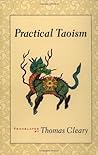
BOOKS: “Practical Taoism” ed. / trans. by Thomas Cleary

Practical TaoismPractical Taoism by Thomas Cleary
My rating: 4 of 5 stars

Publisher Site – Shambhala

Like a number of Eastern systems, Taoism is thought of in many different ways by many different people, and a few of those ways are fairly “out there.” To some, it is a philosophy. To others, it is a religion. To still others, it is a style of magic. By “practical Taoism” Cleary is suggesting that the many varied sources from which he drew snippets, assembling them together to make a coherent whole, reflect some of the more down-to-earth philosophy of “inner alchemy.” [Not to be confused with the “alchemy” in which lead is turned to gold, but sharing the central idea that methods exist to convert a low-quality entity into a high-quality one, but in the case of inner alchemy these methods are breathwork, meditation, and movement techniques that improve one’s vitality as a human being.]

The good news is that Cleary does collect a group of ideas that seem less arcane and cryptic than the average Taoist inner alchemy manual content (or, at least, they are translated so as to seem so.) The bad news is that the average Taoist inner alchemy manual was apparently pretty darn arcane and cryptic, such that even this selection isn’t exactly clear as a limpid stream. Some parts of it are straightforward, but one still has some work to do to make sense of what the original authors were trying to get across. [Some readers will enjoy that more than others.]

Presumably owing to the attempt to simplify through selection and translation, the book isn’t annotated, nor does it feature much ancillary material besides a relatively lengthy introduction to setup the reader with a contextual backdrop. So, there is not a lot of help to clarify ideas that are murky. (I do recognize the translator’s challenge in that there is only so much he can do to try to clarify ideas without imposing upon the authors’ intensions.)

I enjoyed, and learned from, this book — even if I didn’t always feel I was reading a “practical” guide to self-betterment.

View all my reviews

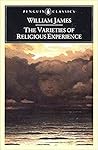
BOOKS: “The Varieties of Religious Experience” by William James

The Varieties of Religious Experience: A Study in Human NatureThe Varieties of Religious Experience: A Study in Human Nature by Dr. William James
My rating: 5 of 5 stars

Project Gutenberg — Free Online

This book is now more than 120 years old and yet is still widely read and is still provoking thought about the nature of religious experiences and how they should be considered by academia. The book is a write-up of a series of twenty lectures that the famous American Philosopher-Psychologist, William James, delivered at the University of Edinburgh in 1901-02.

There are a few things that impressed me about this book. First, James was skilled with language and clever in conveying ideas, resulting in a good bit of quotable material and stimulating ideas.

Second, James’s writings about Eastern practices and philosophies were impressively clear and faithful. In those days, there wasn’t a lot translated from Sanskrit, Pali, etc. and what had been translated was frequently done by outside academicians with no firsthand experience with Eastern systems — e.g. Hinduism or Buddhism. This meant that the writings about Eastern Philosophy and practices from those days were often contorted by a Western / Abrahamic frame in a way that distorted the true nature of those traditions. James seems to have gained at least some of his understanding from someone with enough practical experience to produce accurate descriptions. Furthermore, James avoids spewing myths and misapprehensions by being humble in stating what is merely his understanding. It should be noted that James does write much more about Abrahamic traditions (as one would expect given his direct experience,) but it’s hard to plumb the depths of mysticism without looking to the East where such practices reached such advanced states.

Finally, I was impressed with James’s ability to walk the line of believer and scholar in a way that was fair both to religion and the religious but also to the scientifically-minded rational sceptic. So much of what I read on the subject takes a vitriolic tone of strict opposition and often unfairly depicts the positions of the other side (to be fair, usually this seems to be because the critic doesn’t understand the views of the other side and so produces an interpretation of the opposing ideas conforming to their own worldview, rather than just lying to win.) [As was attributed to James as well as others, “…people think they are thinking when they are merely rearranging their prejudices.”]

I’d highly recommend this book for readers interested in philosophy of religion and the psychology of religious experience.

View all my reviews

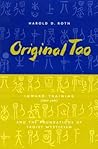
BOOKS: “Original Tao” by Harold D. Roth

Original Tao: Inward Training (Nei-yeh) and the Foundations of Taoist Mysticism (Translations from the Asian Classics)Original Tao: Inward Training (Nei-yeh) and the Foundations of Taoist Mysticism by Harold D. Roth
My rating: 5 of 5 stars

Publisher site – Columbia University Press

This book is built around a translation of an old Taoist manual called “Inward Training” (i.e. 内业,) and the book serves not only to elaborate the meaning of the twenty-six poems that make up the manual, but also to put this work in a context with respect to its place in early Taoist mysticism — which raises further questions as to what constitutes early Taoism and early Taoist mysticism. (Just as the earliest followers of Jesus didn’t think of themselves as “Christians” – at least not as we understand that term – it’s an open question as to when people started to think of themselves as Taoists and how that start relates to when people began holding a set of proto-beliefs that formed the basis of the school(s) of philosophy.)

“Inward Training” presents breathwork and meditational exercises that Roth calls “inner cultivation” — or what some have called “inner alchemy.” The book does contain the entire manual both in Traditional Chinese and an English translation, as well as a much more extensive elaboration of the teachings of the manual. The latter is necessary because, like many old manuals, sparse description, archaic language, and assumptions about common knowledge du jour make it difficult for the layman to get any depth of understanding from the manual, itself.

This is a scholarly work, which means that its readability isn’t the highest and it does dive into matters that will be arcana for non-expert readers. That said, particularly as works of academic philosophy go, its readability isn’t bad. The book is heavily annotated and offers and extensive bibliography.

If you are interested in Taoist practices of breath, meditation, and alignment, this book is well worth investigating.

View all my reviews

BOOKS: “Magic: A Very Short Introduction” by Owen Davies

Magic: A Very Short IntroductionMagic: A Very Short Introduction by Owen Davies
My rating: 5 of 5 stars

Publisher Site – OUP

The first thing that a potential reader should be aware of is that this book isn’t about stage magic or sleight of hand, and that form of magic — in which all parties are aware that techniques are being used to exploit perceptual limitations so as to create the illusion of a supernatural occurrence — doesn’t even really come up as an aside. This book is about magic that (at least some) people believe is a demonstration of actual supernatural happenings in the world.

The book looks at the topic largely from a historical viewpoint; though special emphasis is given to the relationship between religion and magic, in both its congruous and adversarial aspects. That said, for the most part, it’s not arranged historically but rather topically. It does have one chapter on historical perspectives (ch. 3) and one that addresses the ways and degrees to which magical thinking still exists in the modern world (ch. 6.) But it also has chapters on the anthropology of magic (ch.1,) the shifting landscape of thinking about what magic actually is (given that it’s clearly something to many people but isn’t likely the actual exploitation of loopholes in the laws governing the physical world that believers feel it to be — ch. 3,) the role of language in magic (ch. 4,) and the practices of magic (ch. 5.)

The book does focus heavily on the Abrahamic world (Judeo-Christian-Islamic) and its Janus-faced relation to magic over time, but not exclusively so. It brings in African, Chinese, Caribbean, and Native American traditions here and there as well.

I found this book interesting and thought-provoking and would highly recommend it for anyone looking to gain a better insight into how humanity has thought about magic over time and how those beliefs have aligned – or conflicted with – religious beliefs and practices.

View all my reviews

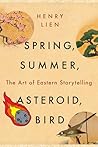
BOOK: “Spring, Summer, Asteroid, Bird” by Henry Lien

Spring, Summer, Asteroid, Bird: The Art of Eastern StorytellingSpring, Summer, Asteroid, Bird: The Art of Eastern Storytelling by Henry Lien
My rating: 4 of 5 stars

Publisher Site

I enjoyed, and was stimulated in thought, by the first half of this book, as well as by sections of the latter half, especially in the fourth chapter. (It’s arranged into four chapters, echoing the book’s central idea of a unique four-act approach to storytelling prevalent in Eastern societies. I’ll get to why I was not so fond of Ch. 3 later.) The book employs exemplary works of literature, film, and even video games to support the claim that there’s not just one approach to sound story crafting — but, rather, that Eastern societies developed distinct modes of storytelling reflecting their values and worldview. (A note on the use of the word “Eastern”: while the book draws heavily on East Asian sources, it tries to make a broader case suggesting not only South Asia but also the Middle East [i.e. everyplace not big-W “Western”] fit this mold. The book might have made a stronger case sticking to East Asia, as – for example – it might be argued that Arabia / Persia of the time of One Thousand and One Nights, being Abrahamic, was closer to Europe than East Asia in values and worldview. To be fair, the author does argue that some parts of that book are believed to have come from farther East (India and, possibly, beyond.))

The book proposes that there are two (arguably three) styles of story construction that are distinctly Eastern. The first is a four-act structure that is far from just a rejiggering of the three and five act forms with which English Literature students will be familiar. Incidentally, the book’s rather unusual title maps to the elements of this four-act structure. The second involves circular and nested story structure. I don’t know that the author succeeds in (or even seeks to) convince the reader that this is a uniquely Eastern approach, but -rather – makes an argument as to why it is prominent in Eastern storytelling.

The author picked an excellent set of works to illustrate his points. Generally, the works are both well-known and well-received among diverse audiences. The films he employs as cases include Parasite, Everything Everywhere All at Once, and Rashomon (the latter also being a literary work.) Lien uses one of my favorite Haruki Murakami novels Hard-Boiled Wonderland and the End of the World as a critical example. I was not at all familiar with the video games he describes (beyond name,) but – given that I’d at least heard of them – I assume they are pretty popular (though I can’t speak to whether they have any discernable stories and will have to take that on faith.) [I’m not sure whether One Thousand and One Nights was a good choice for Eastern literature, though it is an excellent choice as of nested structure.]

As for why I didn’t care for the book’s third part. I should point out that is the most philosophical (and the least explicitly concerned with story) part of the book, and it aims to show how values and worldview vary across cultures such that there are differences in story structure and crafting between different parts of the world. That could be a laudable objective and germane to the book’s point and it’s not why I found this section to be muddled and ineffective. The problem is that the chapter oversimplifies the issue in a way that seems to undercut a broader central argument (that Eastern modes of storytelling are underrepresented outside of the East.) Instead of suggesting that people experience conflicts along continuums (e.g. individual to group identity) and that Easterners tend come to different conclusions than Westerners do based on differing values and cultural perspectives, it engages in an elaboration of the distinctions that seems to suggest there’s some unbridgeable gulf of understanding between cultures (and, quite frankly, kind of feels like it’s shifted from making the aforementioned point to just being a thinly veiled critique of Western culture — which is fine, but probably belongs in a different book — or maybe a manifesto.) But if there were no basis for stories to resonate across this gulf, then not only wouldn’t Parasite and Everything Everywhere All at Once have killed it at both the Oscars and American box office, there’d be no reason for artists to attempt to branch out and tells stories across tribal lines. Without establishing a basis for story resonance, it’s ridiculous to argue that Hollywood should use Eastern modes of storytelling and Eastern worldviews to a greater extent. (A profit pursuing entity is always going to seek the largest possible customer base.) I’m not attempting to negate the argument that there are different approaches to storytelling among different peoples nor that more diversity of approaches shouldn’t be seen across cultures. I’m saying that this chapter doesn’t well support the argument for greater representation of Eastern modes of storytelling outside of Eastern outlets (publishers, film studios, etc.) because it spends so much time arguing the cultural differences that it doesn’t indicate how cross-cultural story resonance is possible.

Overall, I found this to be an interesting and thought-provoking read, though it was – for me – a bit muddled in the middle.

View all my reviews

BOOKS: “Confucianism: A Very Short Introduction” by Daniel K. Gardner

Confucianism: A Very Short Introduction (Very Short Introductions)Confucianism: A Very Short Introduction by Daniel K. Gardner
My rating: 5 of 5 stars

Publisher Site – OUP

This is a brief guide to Confucianism from the early life of Confucius (孔子 -Kǒngzǐ) to the ups and downs the philosophy experienced in the twentieth century. It has chapters exploring the system’s thinking with respect to personal development as well as with respect to governance and also discusses how later thinkers (most notably Mencius and Xunzi) expanded on Confucius’s ideas — but also created schisms. The book examines the laudable elements of the philosophy such as its sanction of benevolence among leaders, but also its less laudable elements such as its unenlightened views on women and what they are capable of [and, of course, the many ideas in between that could be seen in varied lights.)

As with other books in this series, it has a few graphics as well as a bibliography and further reading section.

I found this book to be readable, well-organized, and of a level appropriate for its intended purpose. I’d highly recommend it for individuals looking for a concise introduction to Confucianism.

View all my reviews

BOOKS: 三字经 by 王应麟 [“Three Character Classic” by Wang Yinglin]

三字经三字经 by 章炳麟
My rating: 5 of 5 stars

Available online — Project Gutenberg

This is a Confucian primer written in lines of three characters. It’s a children’s book in the sense that it’s aimed at children, but not necessarily with respect to being presented in a manner most conducive to childhood learning. (While it’s concise, the material isn’t presented in an interesting or memorable form. i.e. It’s intended for brute force rote memorization.)

The book consists of five sections, ranging between twenty-four and one hundred and six lines (72 to 318 characters per chapter.) The first introduces Confucian virtues. The second offers a broad overview of classics of Chinese philosophy. The third section lists the dynasties of China. The penultimate section describes ideal behavior from a Confucian perspective. The last, and briefest, section is largely a pep talk on studying hard.

As someone learning Mandarin Chinese, it’s interesting to see how sentences are formed in this sparse format, and this text offers insight into Chinese history and philosophy, in addition to providing a good early reader.

If you are interested in learning elementary Confucianism or you’re learning Chinese and looking for short and simple texts for reading, I’d recommend one look into the Three Character Classic.

View all my reviews

BOOKS: “The Secret of the Golden Flower” ed. / trans. by Thomas Cleary

The Secret of the Golden Flower: The Classical Chinese Book of LifeThe Secret of the Golden Flower: The Classical Chinese Book of Life by Lü Dongbin
My rating: 4 of 5 stars

Online – Archive.org

This is a manual on Taoist inner alchemy practices, particularly a meditative practice called “turning the light around.” The book has been attributed to Lü Dongbin, said to be an immortal who lived during the Tang Dynasty, though there are differing views about the manual’s actual origins. While it is nominally a Taoist manual, it also discusses the Buddhist approach extensively (and Confucian ideas to a lesser extent) such that it could be considered a Buddhist teaching as much as a Taoist one.

The Cleary translation seems to exist not merely to provide an English translation of this Chinese manual, but to combat the misunderstandings perpetrated by the earlier English translation, that of Richard Wilhelm, a translation famously associated with the psychoanalyst Carl Jung. Neither Wilhelm nor Jung had any depth of understanding of Taoist and Buddhist methods and philosophy, and Wilhelm’s grasp of the Chinese language, itself, seems to have been fairly rudimentary. (At least the Chinese of the 1600’s, which is when the edition that Wilhelm is believed to have worked from is dated.) Thus, there is a lot of peddling of the notion that the ideas of this manual were in line with twentieth century psychotherapy in ways that were really not true — either because Wilhelm was mistaken or wanted them to be true or some combination, thereof.

The translation, itself, is quite short and makes up less than half of the text length of this book. More than half consists of extensive notes as well as an Afterward. While I have complained many times about publishers padding out pamphlet length publications to make them salable at book prices, in this case I believe the “ancillary” matter is helpful to achieving a better understanding of the text. The translation itself is not only sparse but features a bit of Taoist and Buddhist arcana that is likely to be unfamiliar — even to those with some understanding of the traditions. The notes and afterward help one to comprehend this book’s ideas much better.

If you’re interested in Taoist inner alchemy or Buddhist meditative practices, this book is worth checking out. That said, it can be a bit of a tedious read, flipping between the translation and the notes to make sense of ideas that don’t readily translate.

View all my reviews

BOOKS: “Swimming: Made Easy” by Terry Laughlin

Swimming Made Easy: The Total Immersion Way for Any Swimmer to Achieve Fluency, Ease, and Speed in Any StrokeSwimming Made Easy: The Total Immersion Way for Any Swimmer to Achieve Fluency, Ease, and Speed in Any Stroke by Terry Laughlin
My rating: 4 of 5 stars

Google Books Page

I learned a lot from this book’s emphasis on how to smooth out and lengthen one’s strokes. The author describes his approach as teaching “fishlike” swimming, and effortlessness is emphasized.

The book covers all four of the strokes one sees in competitive swimming (i.e. crawl [a.k.a. freestyle,] backstroke, breaststroke, and butterfly.) For each stroke one learns how to improve balance, stroke length, and fluidness, as well as a bit about breath and coordination.

The book is presented in two parts. The first is the more theoretical bit and the second describes drills one can use to improve one’s technique. Part one is longer, more detailed, and written in more readable prose. Part two is shorter, more picture-laden, and tends to stick to bullet points. Photos are monochrome, mostly from above water level, and of varying degrees of clarity / informational value.

My biggest peeve with the book is that it frequently breaks into advertisement for other products (i.e. DVD’s [dates the book, as I’m pretty sure no one has an operational DVD player anymore] and gear.)

I’d recommend this book for readers interested in learning to swim more efficiently. The book is geared toward competitive swimmers interested in shaving time, rather than recreational swimmers who are just interested in a move pleasant experience (e.g. if one swims for fun, one will probably not be running a sequence of drills as that kind of defeats the fun of the activity.)

View all my reviews