“Beggar to Beggar Cried” by William Butler Yeats [w/ Audio]

"Time to put off the world and go somewhere
And find my health again in the sea air,"
Beggar to beggar cried, being frenzy-struck,
"And make my soul before my pate is bare;

"And get a comfortable wife and house
To rid me of the devil in my shoes,"
Beggar to beggar cried, being frenzy-struck,
"And the worse devil that is between my thighs.

"And though I'd marry with a comely lass,
She need not be too comely -- let it pass,"
Beggar to beggar cried, being frenzy-struck,
"But there's a devil in a looking glass.

"Nor should she be too rich, because the rich
Are driven by wealth as beggars by the itch,"
Beggar to beggar cried, being frenzy-struck,
"And cannot have a humorous happy speech.

"And there I'll grow respected at my ease,
And hear amid the garden's nightly peace,"
Beggar to beggar cried, being frenzy-struck,
"The wind-blown clamor of the barnacle-geese."

BOOKS: “A Child’s Garden of Verses” by Robert Louis Stevenson

A Child's Garden Of VersesA Child’s Garden Of Verses by Robert Louis Stevenson
My rating: 5 of 5 stars

Amazon.in Page

Until recently, I was only acquainted with Stevenson as a novelist, but I had a powerful experience with his poem “The Hayloft” (included in this collection.) I was intrigued by how a poem written by a nineteenth century Scot could prove so nostalgia-inducing for me, having been a 20th century American farm-boy. So, I read the collection, and found that “The Hayloft” was only one of many examples that had such an effect. Others include: “Land of Counterpane,” “Block City,” and “Land of Nod.” The nostalgic power of the poems derives from the fact that Stevenson does a phenomenal job of capturing a child’s enthusiasm for play, and in that regard I’m sure the collection will resonate more broadly than just I, or even than just farm kids.

Afterall, there’s a lot of Stevenson’s experience that is dissimilar to mine. Besides his era and his nationality, his mentions of nurses, gardeners, and cooks is surely much different from my own upbringing, being devoid of household staff. But the book only needs to draw upon that love of play and imagination to take one back.

For a work from the nineteenth century, this collection of 50+ lyric poems has aged well. There is the occasional word like “gabies” or “whin” to send one to a dictionary, but those archaic or obsolete terms are rarities. Furthermore, the lyricism of the poems makes them easily read or sung.

I’d highly recommend this collection for poetry readers, particularly children or those looking to reexperience childhood.

View all my reviews

BOOKS: “Imagination: A Very Short Introduction” by Jennifer Anna Gosetti-Ferencei

Imagination: A Very Short Introduction (Very Short Introductions)Imagination: A Very Short Introduction by Jennifer Anna Gosetti-Ferencei
My rating: 5 of 5 stars

Amazon.in Page

This is a concise guide to the subject of imagination, the capacity to conceptualize that which does not exist in reality. Philosophy is the primary dimension through which the subject is investigated, though the insights of poets (particularly Romantics,) authors, and artists are frequently presented — in several cases, in detail. Also, the author does discuss ideas from other disciplines as relevant (e.g. psychology, anthropology, science.) This is notable, for example, in Chapter 2, which looks at early signs of imagination in the human record and the evolution of this capacity.

Philosophical views on imagination have varied to the greatest possible extent, from Plato’s belief that imagination represents untruths and is therefore dangerous to various views suggesting that imagination is a good thing, is fundamental to what it means to be human (e.g. to empathy,) and is inescapable for humans. This Plato against the world dispute is revisited in several places throughout the book. Besides those of Plato, the views of Kant, Nietzsche, Wittgenstein, and Sartre are particularly extensively examined.

Creative types will find the final chapter (Ch.6 “Creativity from invention to wonder”) the most engaging part of the book as it deals with what makes for creativity. The chapter discusses topics such as whether constraints help or hinder creativity? Take, for example, poetry: does free verse poetry produce more imaginative material, or — on the contrary — is rhymed and metered verse more innovative and novel. If you think you know the answer, you might be surprised by the arguments that have been put forth.

I enjoyed reading this book and found it thought-provoking and worthy of the time.

View all my reviews

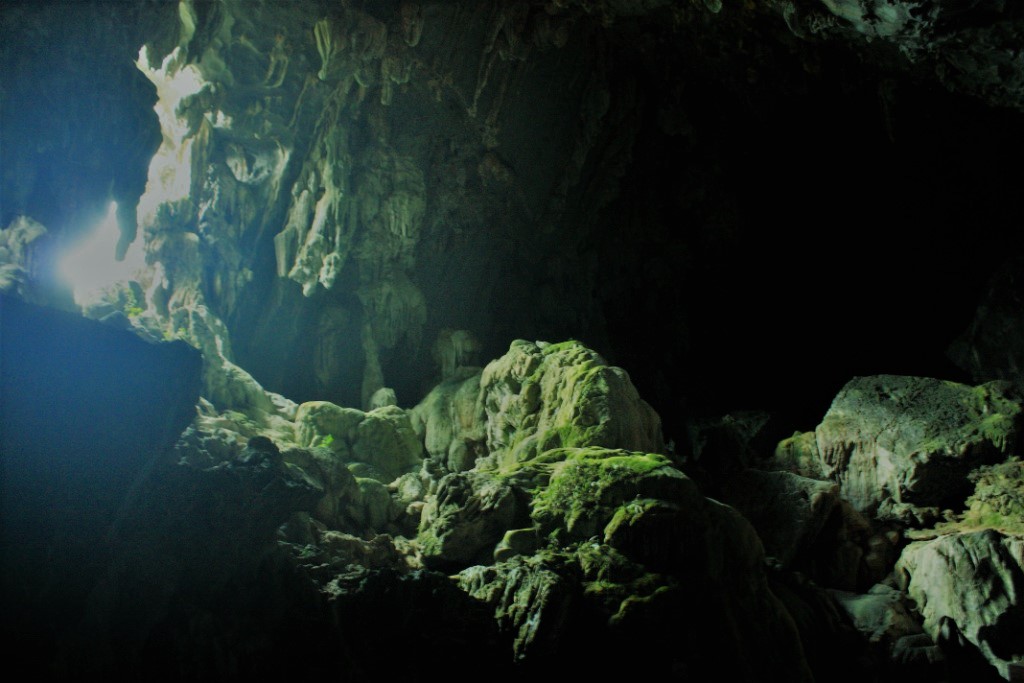
Covert Cave [Lyric Poem]

Do you know how deep the darkness goes?
 No. Chiaroscuro black conceals
  all but what's divulged by echoes,
   and figments spastic minds reveal.   

Spared the Human Curse [Free Verse]

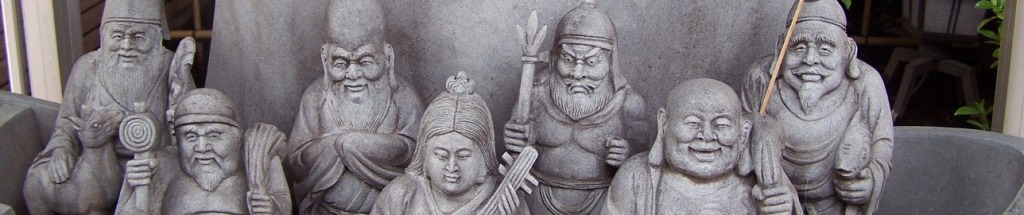
Seven Sages were spared the sickness
 of perceiving the possibility of perfection,
  a "perception" of the patently impossible --
   in truth, just dim and flimsy imaginings of mind,

   and, so, they didn't mind the inevitable
     flaws of the human world. 

Runaway Imagination [Haiku]

a bird-shaped cloud!
 then the mountain becomes a
  dreadnought on calm seas.

BOOK REVIEW: The Storyteller’s Handbook by Elise Hurst

The Storyteller's HandbookThe Storyteller’s Handbook by Elise Hurst
My rating: 5 of 5 stars

Amazon.in Page

Out: June 14, 2022

This is a book, but not one that one reads but rather one that one writes. It contains more than 50 imaginative and fantastical artworks intended to help creative parents build their own stories, while helping their children learn to become storytellers. There is a forward by Neil Gaiman (who has worked with the artist on previous occasions) and an introduction by Hurst, but otherwise there’s almost no text.

The animate subjects of the book are children and animals, but not just any animals. They are mis-sized, misplaced, mythical, imaginary, anthropomorphized, and extinct creatures in search of a clever explanation for their existence and behaviors. The usual suspects of our beloved stories are most well-represented: bears, lions, foxes, rabbits, birds, and fish – for example. But there are also less well-known creatures: mollusks, a mantis, kangaroo, koala, and armadillo. The settings are also designed to fuel the imagination: oceans, hot air balloons, impossibly floating places of all sorts, cities of gothic and fantastical architecture.

If you’re looking for a storybook where you have a graphic prompt to trigger your own story, this is a beautifully illustrated example of such a work.


View all my reviews

Gothic Imagination [Free Verse]

I first saw the stone beast
by the light of a bright day --
frozen, still & placid

My second sighting was on a rainy night,
a steady, careless rain,
the kind of rain
that seems to have declared
itself the new default mode.

I saw it in the space of lightning flash --
the silhouetted gargoyle.
It lacked the fine detail
of its sculptor's effort.
It lacked the clean edges
and ornamental effects.
Imagination filled in the lost detail
with scales rippling under
muscular flesh.

And while the lightning felt prolonged,
it was still just a flash --
leaving me to wonder whether
I'd really seen it rear back,
preparing to lunge off the wall?

And then I saw the world through its eyes
and all was better...

and then all was worse.

Beyond the Light [Haiku]

deep in the cavern
just beyond the light's reach
lives what might be

POEM: Imagination Tree

Under blue skies, the live oaks were just trees — hearty and expansive trees.

But in the feeble light of waning days or the frequent forays of morning fog, the rangy and sinuous moss-draped limbs became a Lovecraftian monster, head stuck into the damp loam in an attempted retreat to the underworld.

And if one stood still enough, those limbs just might start to writhe.