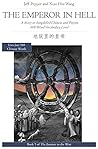
BOOK: “The Emperor in Hell” [Book 5 of the “Journey to the West” Series] ed. by Jeff Pepper; trans. by Xiao Hui Wang

The Emperor in Hell: A Story in Simplified Chinese and Pinyin, 600 Word Vocabulary LevelThe Emperor in Hell: A Story in Simplified Chinese and Pinyin, 600 Word Vocabulary Level by Jeff Pepper
My rating: 4 of 5 stars

Publisher Site – Imagin8 Press

This is the fifth volume in a series that abridges and simplifies the classic Chinese novel, Journey to the West, so that it can be read by a language learner with about a HSK 3 grasp of Chinese. It tells the story from Chapters 10 and 11 of the original novel. Like the preceding volume, this one doesn’t deal with Sun Wu Kong (i.e. the Monkey King — protagonist of the novel overall,) and doesn’t even deal with the monk Xuanzang — the protagonist of the true story on which the novel was based.) These chapters tell a story that feels like a diversion, though it will be involved in the segue back to the actions of the main cast.

In this book, the Jing River Dragon King gets in trouble when he makes a bet with a fortune-teller. The Dragon King has to cheat to save his pride, but this runs him afoul of the Jade Emperor. The Dragon King appeals to the human Emperor, Taizong, who agrees to help. When wires get crossed, Taizong ends up in the underworld for judgement. With the help of others and with promises made, Taizong is allowed to return to earth.

It’s an interesting story and gives some insight into Chinese mythology. As is always the case with a book such as this, events of the story must be cut or rushed. Readers may vary in their views about whether the right material was cut or thinned.

I continue to enjoy this series. This book was a little more challenging to read than earlier volumes, not because the vocabulary was harder. I think it was more that contextual cues were fewer, owing to it not being so tightly tied to the overall story.

If you’re just learning to read Chinese, I’d recommend this series as an interesting story made readable to a language learner.

View all my reviews

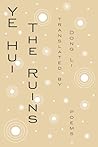
BOOK: “The Ruins” by Ye Hui [Trans. by Dong Li]

The Ruins: PoemsThe Ruins: Poems by Hui Ye
My rating: 5 of 5 stars

Publisher Site — Deep Vellum

This is a Chinese-English bilingual edition of Ye Hui’s first poetry collection. The poems use stark imagery with occasional instances of philosophizing and surreal statements to create a vivid and provocative set of poems.

As I’m learning Chinese, it was nice to have the original poems in Simplified Chinese script next to the English translations. While I’m not up to a reading level sufficient to taking on Modern Poetry (any poetry for that matter,) it was useful to peruse the Chinese text. I did appreciate how much vibrance the author wrings out of a relatively simple vocabulary.

I’d highly recommend this collection for poetry readers.

View all my reviews

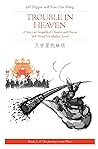
BOOK: “Trouble in Heaven” [Vol. 2 “Journey to the West” (西游记) Series] ed. by Jeff Pepper / trans. by Xiao Hui Wang

Trouble in Heaven: A Story in Simplified Chinese and Pinyin, 600 Word Vocabulary Level (Journey to the West in Simplified Chinese)Trouble in Heaven: A Story in Simplified Chinese and Pinyin, 600 Word Vocabulary Level by Jeff Pepper
My rating: 5 of 5 stars

Publisher Site – Imagin8

This is an abridged and linguistically simplified telling of the story of chapters three and four of the Chinese classic novel, Journey to the West. It is written and organized for learners of Chinese who would like to start reading in Chinese.

The events covered in this volume are Monkey King’s (a.k.a. Sun Wukong’s) acquisition of weapons for himself and his companions, his discovery that his name is on the registry of the underworld (and, thus, he’s not as immortal as he’d believed at the end of Vol. 1,) his ascension to heaven where he is given the job of stable manager (a life and job he is happy with until his discovery that it is the lowest level job in heaven,) and his skirmishes with the forces of heaven when he takes on the title “Great Sage Equal to Heaven.”

The story is conveyed in Simplified Chinese script, and has pinyin interspersed at the paragraph level. I like this arrangement because one has access to the pinyin as needed, but it’s not immediately adjacent (as it is with many starter readers,) such that it’s not possible to “cheat” by seeing the pinyin in one’s peripheral vision. It also offers an English language telling of the story, but after the entirety of the Chinese. The book also has three glossaries that collectively define all the terms used in the book. The first contains all the proper nouns, the second is all the basic words, and the last is all the words that are a little outside the most basic reading level. (The latter are also footnoted throughout the text.)

I’m enjoying this series. It’s a gripping story, it’s arranged in a way that encourages one read by the Chinese characters alone, and it is readable by the most beginning level student. That’s a combination that isn’t readily found. I’d highly recommend this series for those learning to read Chinese.


View all my reviews

“Spring Thoughts” by Li Bai [w/ Audio]

Yan grass shimmers like silken jade.
Qin mulberry trees' green leaves droop.
Your homecoming is now at hand
As heartbreak has me thin and stooped.
Spring Winds and I are strangers --
Why, past my curtains, the inward swoop?

Chinese Title: 春思; Original poem in Simplified Chinese:

燕草如碧丝, 秦桑低绿枝;
当君怀归日, 是妾断肠时。
春风不相识, 何事入罗帏?

Note: this is poem #7 in “300 Tang Poems” [唐诗三百首]

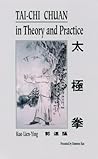
BOOKS: “Tai-Chi Chuan in Theory and Practice” by Kuo Lien-Ying [ed. Simmone Kuo]

Tai-Chi Chuan in Theory and PracticeTai-Chi Chuan in Theory and Practice by Kuo Lien-Ying
My rating: 4 of 5 stars

Publisher Site

This brief book discusses Taijiquan primarily from a philosophical perspective. Though a significant amount of the book’s page-count consists of full-page pictures of various taijiquan movements, it isn’t so much a how-to book. Readers who enjoy an eclectic book that’s short and sweet but also kind of all over the place have a good chance of liking this book and gaining from its varied tidbits of wisdom. Readers who favor books with a clear organization and internal logic will probably find this to be an odd stew of short writings (essays, guides, poems, scriptural excerpts, etc.) It should be noted that not all of the writings are from Kuo Lien-Ying, himself. It includes a translation of a manual by Wang Tsung-Yue (13th Century) as well as an appendix consisting of writings from the Daodejing, Tang Dynasty poetry, and quotes from Mencius and Confucius. It also features a chapter on the I-Ching and Taiji philosophy by Kuo’s wife, Simmone Kuo. Besides the Wang manual, which is right up the alley of Kuo’s writings, it’s not clear why the other pieces were selected (not that they aren’t beneficial, but that they seem random.)

One thing I really liked about this book is that a lot of it is presented in bilingual format. For someone learning Chinese, this is quite beneficial. (Especially, given that it consists of short pieces that can be more easily consumed by a new reader.) That said, those who don’t read Chinese may see the translations as further indication of padding a pamphlet up to book scale. The monochrome photos are well-done and could definitely be of use to someone who practices taijiquan (though would not be of much use to someone new to it.)

This book is an insightful mess, make of that what you will.

View all my reviews

BOOKS: “The Story of Chinese Characters” by Fang Zeng

Languages - The Story Of Chinese Characters: 汉字的故事 (Bilingual Chinese with Pinyin and English - Simplified Chinese Version) - Preschool, Kindergarten (Educational ... Books For Smart Kids: 聪明宝宝益智成长绘本 Book 2)Languages – The Story Of Chinese Characters: 汉字的故事 (Bilingual Chinese with Pinyin and English – Simplified Chinese Version) – Preschool, Kindergarten by Elite Panda book
My rating: 5 of 5 stars

Publisher’s YouTube Channel

This story book is apparently perfect for preschoolers and definitely is for someone newly learning Chinese. It is the tale of a man who goes hunting and his mild trials and successes. It’s not a gripping tale, but that’s perfect for those new to the language as it allows simple language and concepts. The language is grammatically and semantically straightforward. This bilingual book presents Chinese characters, pinyin with tone markers, and the English translation all on the same page.

The story teaches a few rudimentary Chinese characters (person, mountain, boat, bird, etc.,) particularly ones that are either pictographic or lend themselves to pictographic memory tricks. (For those unfamiliar with Chinese, it is a common misconception that all the characters are pictographic. In fact, about eighty percent of characters appear as they do because of their spoken sound quality [i.e. they appear similar to another character with the same sound, but often with an entirely unrelated meaning.]) The illustrations not only tell the story but invokes the shape of the character that is under study.

I found this book useful for learning to read in Chinese. A little more separation of the pinyin and characters might be nice so one could cover it up to focus on reading characters, but I was clearly not the intended demographic. I don’t see any reason why the book couldn’t work either way, i.e. for English learning Chinese speakers as well as English speaking Chinese learners.

View all my reviews

BOOKS: “Chinese Folktales for Language Learners” by Vivian Ling and Peng Wang

Chinese Folktales for Language Learners: Famous Folk Stories in Chinese and English (Free online Audio Recordings)Chinese Folktales for Language Learners: Famous Folk Stories in Chinese and English by Vivian Ling
My rating: 5 of 5 stars

Publisher Website

As the title suggests, this is a collection of fifteen Chinese folktales presented bilingually in a manner optimized to language learners. To clarify the “optimized for language learners” comment, these stories are paced differently than they would be if the central objective was to entertain. That old writerly chestnut of “show don’t tell” is often violated and the stories are kept short and sweet in a way that can feel like they sprint through critical moments. This is not criticism. I think it is the best way to give individuals learning Mandarin (or presumably Mandarin speakers learning English) a user-friendly book that doesn’t feature dense blocks of text and overly complicated language. (Note: it’s also not bad for those who just want the quick and dirty version of these tales.)

Each of the stories includes a section with some background information on the history and cultural elements behind the stories (stories which display a range of realism and are from distant times,) a list of terms and phrases in English and Chinese, and a brief set of questions to help the reader develop deeper insight into the stories. These ancillary features are all quite useful to the student of language.

As stories, some of these folktales are more compelling than others. A number of them are dry, but what they lack in intrigue they make up for in insight into the history and culture of China. And some of the stories, e.g. “Judge Bao Takes on the Emperor’s Son-in-Law,” are fascinating.

I’d highly recommend this book for those who are trying to learn Mandarin, but it would also serve those who wish to learn some Chinese folklore in a condensed and readable format.

View all my reviews

BOOKS: “Hōjōki” by Kamo no Chōmei; Trans. by Matthew Stavros

Hojoki: A Buddhist Reflection on Solitude: Imperfection and Transcendence - Bilingual English and Japanese Texts with Free Online Audio RecordingsHojoki: A Buddhist Reflection on Solitude: Imperfection and Transcendence – Bilingual English and Japanese Texts with Free Online Audio Recordings by Kamo no Chōmei
My rating: 5 of 5 stars

Amazon.in Page

Release Date: May 7, 2024 [for Tuttle’s bilingual edition]

This is the Japanese Walden, except that it was written several hundred years before Thoreau’s essay and was predominantly philosophically informed by Buddhism rather than Transcendentalism. (Though those philosophical systems do agree on a number of points, most relevantly that materialism is not a sound route to happiness.) Like Walden, Hōjōki is an autobiographical promotion of the hermitic lifestyle. Both works sing the virtues of life in a simple, rustic cabin in a natural setting, a life of minimalism and subsistence living.

There are many translations of this work available, and so I’ll spend the remainder of this review on what differentiates this edition from the two others that I’ve read. First and foremost, the other versions I’m familiar with were presented as prose essays. This edition is presented in verse, which I understand to be the form that the original Japanese work employed. I should say that in some places the work comes across as poetic in the conventional sense, though in others it seems like a versified essay.

Secondly, this edition has a few handy ancillary features. One is that it is bilingual. Romanized Japanese allows the reader to experience the sound quality of the original. This edition also has graphics in the form of maps, artwork, and photographs. Some of the graphics support or expand upon the information delivery while others seem to be more a matter of creating atmospherics. Also, there are explanatory endnotes that help readers unacquainted with Kamakura Period Japan to understand some of the book’s references that might otherwise remain unclear.

I enjoyed and benefited from reading this edition, even having read others. If you are looking for insight into the ascetic life, I’d highly recommend it.

View all my reviews

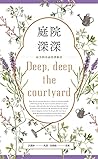
BOOKS: “Deep, Deep the Courtyard” [庭院深深] trans. by Xu Yuanchong

庭院深深:最美的宋詞英譯新詮 (Traditional Chinese Edition)庭院深深:最美的宋詞英譯新詮 by 吳俁陽(賞析)
My rating: 5 of 5 stars

Publisher Website

This is a bilingual (Chinese / English) anthology of Song Dynasty poetry. It features more than 140 poems by almost fifty poets of the Song Dynasty, but a few of the Song poetic rockstars are particularly well represented (e.g. Su Shi, Qin Guan, Ouyang Xiu, and Xin Qiji.) The principal language of the book is Chinese (Mandarin) and so, while the poems themselves appear in English as well as Chinese, the ancillary matter is only in Chinese. Said ancillary matter includes notes, contextual information, bio-blurbs on the poets, and brief front and back matter.

I learned after reading the translations, that the translator was Xu Yuanchong and that he was (i.e. he’s now deceased) a very big deal as a translator, translating classical Chinese poetry into both English and French. All in all, I enjoyed the translations and found them to be sound as poems in their own right. That said, my personal preference would have been to have had less effort put into maintaining rhyme. I suspect a closer transmission of the ideas of the originals could have been achieved without the forced constraint of rhyme. Furthermore, while in many cases metering was attended to, sometimes it was not, leaving those poems to have a doggerel quality. [I come to this conclusion by comparing a few of the poem’s translations to those by other translators as well as to literal translations.] That said, the translator was clearly no slouch, and his stylistic choices were likely informed by what was popular during his career.

This book is part of a series. Other volumes include: In the Thick Woods a Deer Is Seen at Times (Tang Dynasty poems) and A Pair of Swallows Fly (from The Book of Songs, a.k.a. The Classic of Poetry.) I picked this book up in Taipei’s Zhongshan Book Street (Eslite Bookstore,) and don’t know how widely available the books of this series are outside of Taiwan, but if you are interested in Classical Chinese poetry and can find a copy, I’d recommend it.

View all my reviews