BOOKS: “The Zen Teaching of Bodhidharma” Translation by Red Pine

The Zen Teaching of Bodhidharma (English and Chinese Edition)The Zen Teaching of Bodhidharma by Bodhidharma
My rating: 5 of 5 stars

Publisher’s Site

Bodhidharma was a Buddhist Monk who is credited with bringing an approach to Buddhism to China that would become Zen. This book presents four of his surviving lectures in their entirety: “Outline of Practice,” “Bloodstream Sermon,” “Wake-up Sermon,” and “Breakthrough Sermon.” It is a bilingual edition, featuring Traditional Chinese script juxtaposed with the English translation.

Bodhidharma was an intriguing and important character in the history of Buddhism, so much so that a legend has grown up around him that is in all likelihood substantially false. The most well-known element of the legend is that he taught monks the martial art that became Shaolin Kung Fu. (Historians refute the likelihood of this because there was no evidence of it in the documentation in the centuries immediately after Bodhidharma’s death. The story came along much later and caught on like gangbusters, so much so that it is routinely repeated today as if established fact. For elaboration, see Meir Shahar’s “The Shaolin Monastery.”) There is simply not a lot known about Bodhidharma (or even the extent which there was a Bodhidharma,) and what is known is not without controversy. Popular accounts put his homeland in Tamil Nadu, India, but dissenting accounts put it as far away as Persia (Iran.)

The reason I mention all this is because some potential readers may expect a kind of fabled story, full of kung fu and magic, and — in point of fact — these teachings offer a clear and straightforward approach to the practice of Buddhism. I’d highly recommend the book for readers interested in Buddhism, Zen, and meditational practices – generally. It is a clear and thought-provoking work. But, if you’re expecting a thrilling recitation of legend and woo-woo, this isn’t it.

View all my reviews

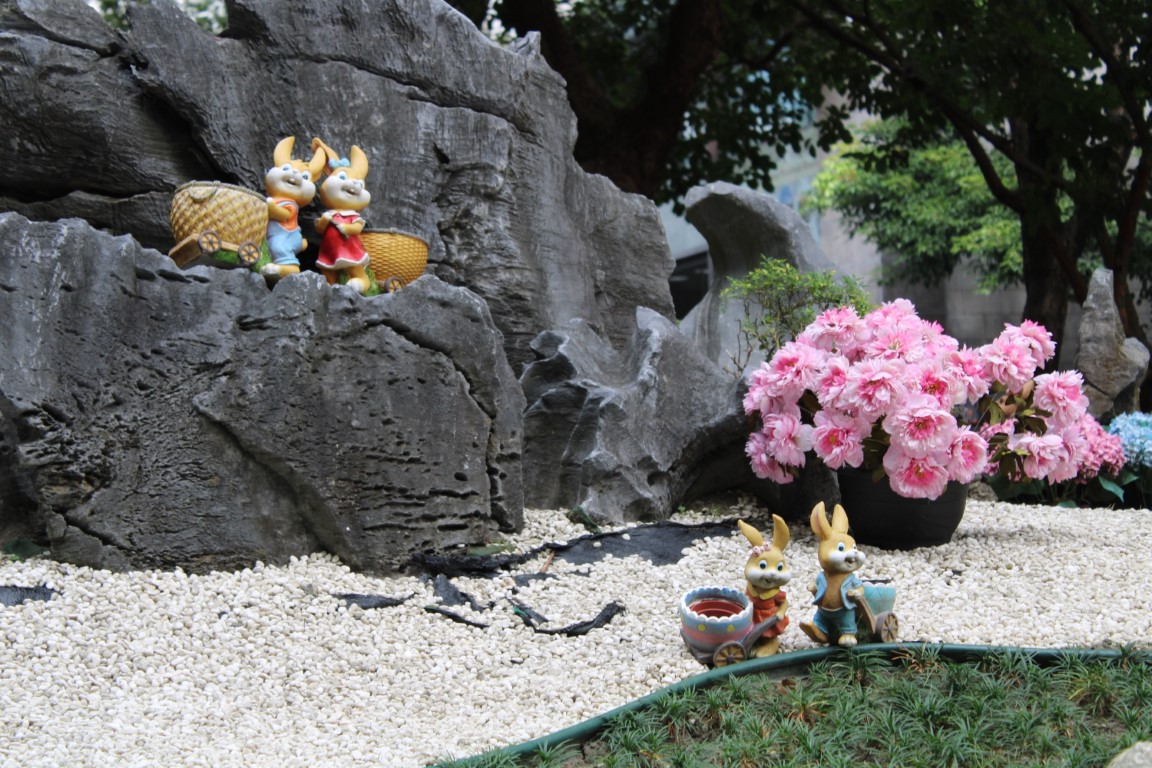
Zen Garden [Haiku]

little Zen Garden
evokes a craggy cliff
despite scale issues.

BOOKS: “Improv Wisdom” by Patricia Ryan Madson

Improv Wisdom: Don't Prepare, Just Show UpImprov Wisdom: Don’t Prepare, Just Show Up by Patricia Ryan Madson
My rating: 4 of 5 stars

Publisher’s Website

One might expect this to be a book about how to perform improvisational comedy, but it’s better described as a philosophy of life that employs lessons from improv. There are books that take a much more tailored approach to building an improv act. This one, rather, broadens its target demographic from those interested in theater and comedy to everybody. It discusses applying lessons such as default to positivity (the famous “Yes, and…” of improv) both on and beyond the stage.

Each of the thirteen chapters is built around a maxim that might be heard in an improv theater or troupe. The crux of the matter is building the confidence and sense of freedom to be able to behave spontaneously in an environment that’s stressful and somewhat chaotic. Most of the lessons approach an aspect of the problem of surrender and free response action, though there are broader lessons such as the benefits of gratitude and helpfulness. While I call the book’s content a philosophy of life, the author doesn’t spend a lot of time drilling down into established philosophies, with the exception of Buddhism — specifically of the Zen variety. As one might imagine, Zen — with its emphasis on non-attachment and avoidance of overthinking — has a substantial overlap with the approach to living that Madson is proposing.

“Improv Wisdom” is set up as a self-help book, featuring not only lesson-based organization but also offering a few exercises in each chapter.

This is a quick read and might prove to be of great benefit to those who have never thought much about the challenges and lessons of improv. The book can’t be said to be groundbreaking in terms of the lessons it presents, but its focus on what improv elucidates about these lessons is interesting and unique.

View all my reviews

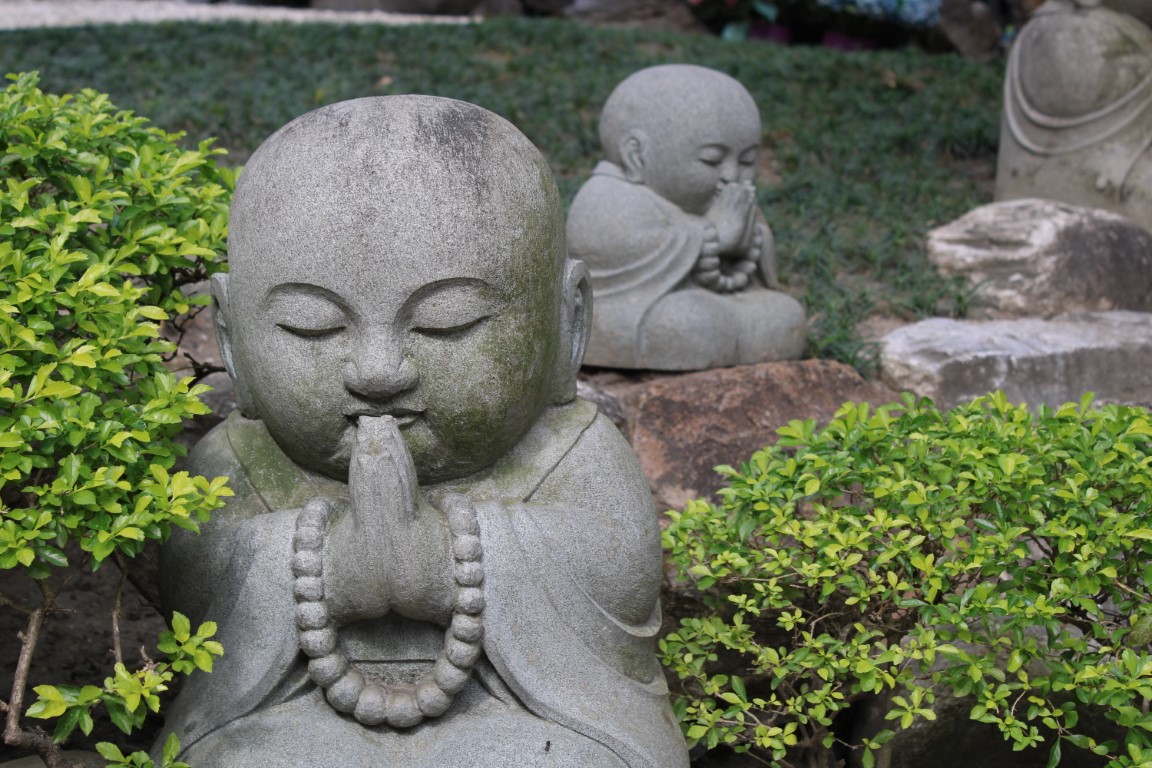
Zen Garden [Lyric Poem]

I see those serene figures sit
 amid Zen Garden evergreens.
Like Benkei, they don't move a whit,
 Their minds are free of thoughts & dreams.

The moss is growing on them, now,
 and birds have left their fecal splat.
Don't envy how they've found the Dao,
 but how they have no need of hats.

PROMPT: Comfort

What strategies do you use to increase comfort in your daily life?

I don’t, but I have a lot of strategies for being more content in the face of various situations and environments — including uncomfortable ones. These include the yogic practice of dispassionate witnessing, minimalism, travel (and specifically minimalist travel to places – the less familiar the better,) and intense physical activity.

I think comfort as a major objective in life is overrated, and virtually insures a discontented life. A life in which one can be content, whatever may come along, is a happy life.

Ikkyū’s Poetry: The John Steven’s Wild Ways Selection / Translation

Wild Ways: Zen Poems of IkkyuWild Ways: Zen Poems of Ikkyu by Ikkyu
My rating: 5 of 5 stars

This is the John Stevens selection and translation of poetry from Ikkyū’s Crazy Cloud Anthology. Ikkyū was what might be called a mad sage of the Rinzai sect of Zen Buddhism. He once showed up at a temple in his vagabond rags and was turned away, when he came back the next day in the ceremonial robes that revealed him as a preeminent monk and was subsequently treated like royalty, he took the robes off and told the abbot that it was apparently the robes that were honored and deserving of a meal. Ikkyū was known not only for his rejection of dogmatic and highfalutin approaches to Buddhism, but also for his love of sex, brothels, meat eating, and poetry. Much of the poetry touches on those two subjects (disdain for dogma and pretension and love of pleasure,) though there are also poems that explore nature and the kind of imagery one might be more likely to expect in Japanese poetry.

Ikkyū mostly wrote in quatrains, using a Chinese style of verse. Though Ikkyū was no more dogmatic about following poetic protocols than he was following monastic precepts, and often went with the flow.

I read the Stephen Berg translation, Crow with No Mouth several years ago. I would put this one on par with that one. There are actually several translated selections from the Crazy Cloud Anthology poems that are available. If you are interested in Ikkyū’s poetry, this is as good a place to start as any. It should be noted that while some of the poetry is around sexuality, it’s not particularly graphic but more suggestive.

View all my reviews

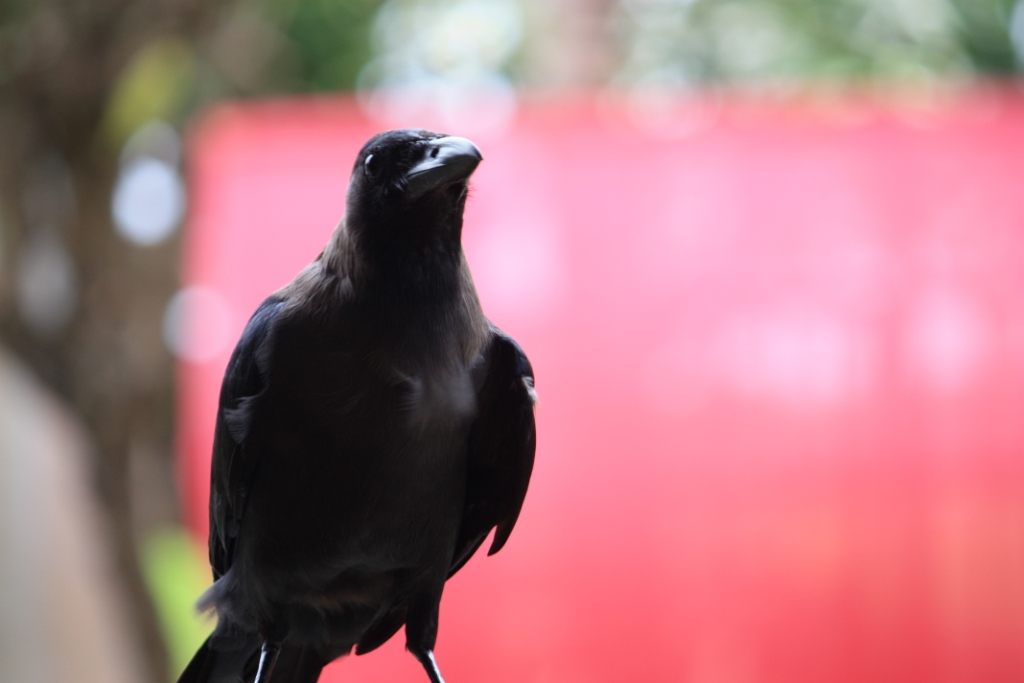
Crow Sound [Tanka]

the sharp caw
 of a crow triggers a monk's
  enlightenment.
 a second crow responds.
 a sailor doesn't look up.

Ikkyū Limerick

There was a Zen master named Ikkyū
   who was thought by many to be cuckoo. 
 He'd allow a toot
  on his very own flute.
 Which was unbecoming of flutists (& monks, too.)

Satori [Free Verse]

It was a moment 
 of silent spaciousness.

In the midst of a fight,
 there was no enemy --
  just the effortless
   dance of the thing.

That moment 
 expanded to the infinite,
  & snapped back 
   to one tick after the tock.

Since then, 
 no catastrophe has felt 
  too great for a smile.

BOOK REVIEW: Singing and Dancing Are the Voice of the Law by Busshō Lahn

Singing and Dancing Are the Voice of the Law: A Commentary on Hakuin's “Song of Zazen”Singing and Dancing Are the Voice of the Law: A Commentary on Hakuin’s “Song of Zazen” by Bussho Lahn
My rating: 5 of 5 stars

Amazon.in Page

Release Date: December 20, 2022 [In India, may be out in your area.]

This book consists of a collection of essays inspired by the poem, “Song of Zazen,” written by the 18th century Zen master, Hakuin. Hakuin’s poem is brief (about forty lines,) and the essays composed by a present-day Zen priest (Lahn) offer commentary on a stanza-by-stanza basis. The book is divided into fourteen chapters, though the final chapter isn’t a stanza commentary.

I enjoyed reading this book and learned a great deal from it. The book benefits from the fact that the author is not rigidly sectarian. Therefore, the book is not doctrinaire, which warms the reader to the teachings. It’s also useful because it allowed the author to freely draw examples and quotes from a variety of sources, some of which may be more familiar or relatable to neophyte readers.

The last chapter offers a discussion of the fundamentals of zazen (seated meditation) as well as some other ancillary information that may be useful to readers new to Zen Buddhism, its practices, and its sutras. If you’re interested in Zen Buddhist meditation and philosophy, you may want to give it a look.


View all my reviews