What’s your biggest dream?
To meet a Yeti.

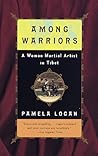 Among Warriors: A Woman Martial Artist in Tibet by Pamela Logan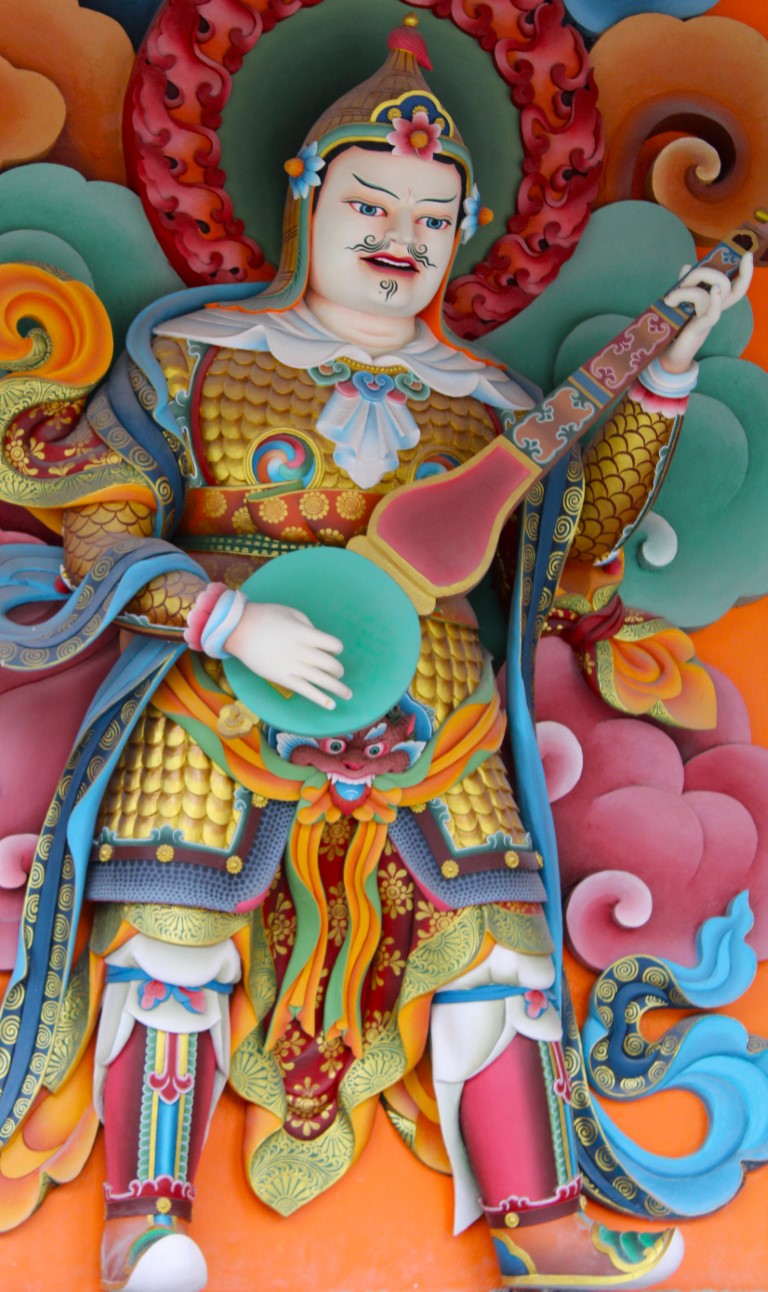
I'm happy to be a free Yogi,
   growing evermore into inner happiness.

I can have sex with many women
   as it helps them find the path of liberation.

Outwardly I'm a fool
   and inwardly I live a clear spiritual path.

Outwardly I enjoy wine and women
   and inwardly I work for the benefit of all beings.

Outwardly I live for my pleasure
   and inwardly I do everything in the right moment.

Outwardly I'm a ragged beggar
   and inwardly a blissful Buddha.

Thang Tong Gyalpo,

They called him:
Maker of Iron Bridges,
King of the Empty Plain,
"Excellent Persistence,"
&
Madman of the Empty Valley

You might not like your bridge-maker
sharing mind & body
with a madman,
but some of his 15th century bridges
are still in use today.
 A Stranger In Tibet: The Adventures Of A Wandering Zen Monk by Scott Berry
 The Divine Madman: The Sublime Life and Songs of Drukpa Kunley by Keith Dowman
 Tibetan Buddhism: A Very Short Introduction by Matthew T. Kapstein
 The Life of Milarepa: A New Translation from the Tibetan by Lobsang P. Lhalungpa
My rating: 5 of 5 stars
Superhero stories can be surprisingly hard to make interesting. The hero’s vast powers make it hard to build obstacles that seriously challenge him. Make no mistake; while this book may be the biography of a Tibetan Buddhist yogi who was born in the eleventh century, it’s a superhero story as well. At various points, the titular character can control the weather, fly, read minds, predict the future, and cover a distance that would take a mere mortal months in just days. Milarepa is basically the entire cast of the X-Men rolled into one monk. [Note: the introduction of 1962 Lobzang Jivaka edition features a series of rants against Westerners that put a bad taste in my mouth early in the reading–basically suggesting the reality of these magic powers should be taken as a given even though the deficient Western mind has trouble wrapping its head around difficult concepts. It made me think I’d probably not like the book, but I’d forgotten it by the time I got around to the end of the book.]
“The Life of Milarepa” is essentially a hero’s journey, which begins with his widowed mother, his sister, and he being taken advantage of by a mean Uncle and Aunt. Milarepa takes up Black Magic to influence the weather so that he can exact revenge. Doing so makes him feel great shame, and puts him on the path of a religious ascetic. After his initial training, he is put through a great series of trials by Marpa, the man who will eventually his guru. Were it not for the encouragement and support from Marpa’s wife, Milarepa would never have made it through the training, and at one point—in fact—he goes away to learn from one of Marpa’s most advanced students because it seems Marpa unwilling to teach him.
Eventually, Milarepa ends up returning to his home and, thereafter, meditating on his own. Here he runs into the aunt and uncle (now separated) who made his family’s life hell after his father died. These elders aren’t the only ones who think Milarepa is a ne’er-do-well. However, most people are too scared of his superpowers to create problems for him, at first. He eventually wanders off and becomes the poorest of ascetics—with not so much as covering for his naked body as he live off nettles.
There are oddities in the book. The Buddhist teachers he studies under both use him as weapon (i.e. his hailstorm magic) as a requirement to taking him on as a student, despite the fact that this will pile onto his Karmic debt (and ostensibly theirs), and it leaves him feeling horrible—as well, it seems, these black magic powers make Marpa hostile to the young man and not take him seriously as a student until the guru receives an omen.
So why does this story turn out to be so satisfying? For one thing, for all his powers, Milarepa is constantly confronting challenges that keep the story tight. (I should again emphasize that this is nominally a work of biography. It just doesn’t read like one because of all the magic and the classic story elements. Few people have such a novel-shaped life. A hagiography is a more apt descriptor but instead of only displaying Milarepa’s good side (boring), this book presumably dances around facts to make a more engrossing product.) While Milarepa could concoct all manner of magic, he mostly doesn’t with the exception of some ESP. After Marpa has taught him, Milarepa deals with people with calm and compassion. (His return home is a little like Alex’s from “A Clockwork Orange” in that people have ill feelings about him because of his past, but at first they are afraid of him. When they discover he can’t defend himself, they start to lay into him.) For another, we can see Milarepa’s growth and we come to respect his intense devotion tremendously as he becomes quite virtuous of the course of the book. While he is a superhero, he’s also an ascetic who denies himself with the utmost of discipline in pursuit of liberation.
I’d highly recommend this book for those who like biographies—especially if you like to learn about Buddhism in the process. In the latter half of the book there are some lessons transmitted through the text as Milarepa interacts with students and other people. Eventually, even his loathsome aunt becomes a student.
5.) Vada Pav (Potato [fritter] on a bun): India
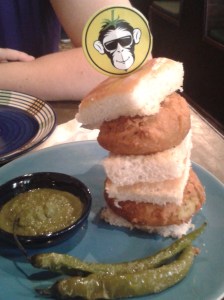
Tip: Try it in Mumbai. While the one’s shown above were fine. The legendary Vada Pav is to be found at a stall across from Flora Fountain in Bombay.
4.) Pad Thai (Noodles Thai Style): Thailand

Tip: Vegetarians beware. Fish sauce is a standard ingredient in this dish. So if you order it vegetarian, it’s not just the prawns and / or chicken one needs to be wary about–depending upon how strict one is. Soy sauce is the substitute.
3.) Kürtőskalács (Chimney Cake): Hungary
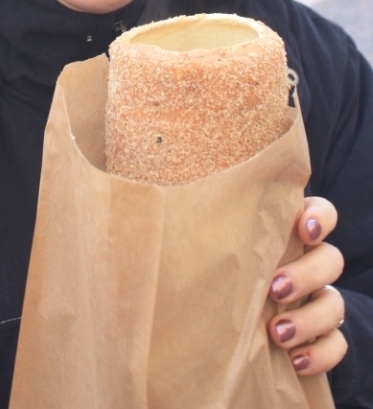
Tip: It can be found at little stands in or near Christmas markets during the winter season. Buy it hot when it’s cold outside, and it will actually steam like smoke rising from a chimney. If you’re in Hungary during the summer or you want a savory street food, try lángos .
2.) Banh Mi: Vietnam
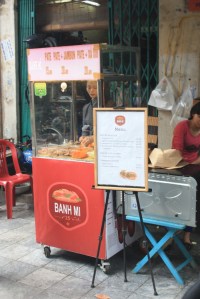
Tip: Try this sandwich on a baguette from Banh Mi 25, a famous cart at 25 Hàng Cá, Hàng Đào, Hoàn Kiếm in Hanoi.
1.) Momo (Dumpling): Tibet, Ladakh, and anywhere displaced Tibetans reside.
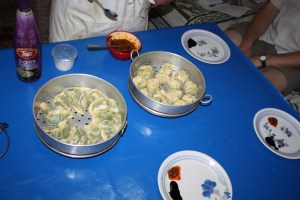
Tip: Try the spinach and cheese momo of The Wok Tibetan Kitchen on Main Bazaar Road in Leh.
Bonus: Masala Dosa: India, particularly in the South
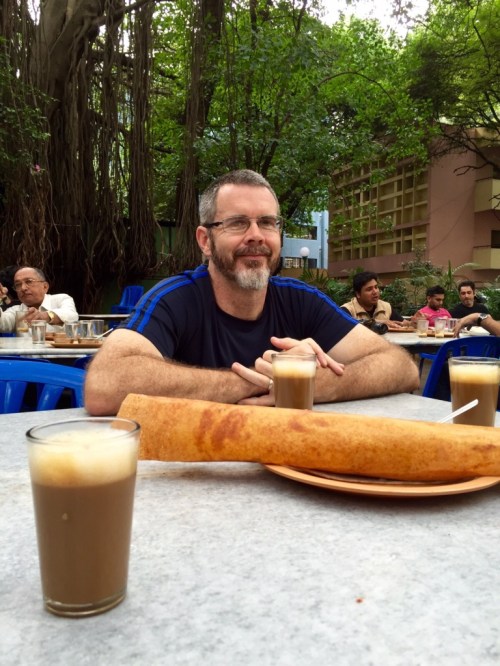
Tip: If you ask for a “Paper Masala Dosa” you’ll probably get something too big to fit on a plate (as shown.) It will be very thin and the potato-based filling will only be in the central part. (So it’s not quite as insane an amount of food as it may appear.) This one is from Airlines Hotel in Bangalore. Dosa is just the Indian version of a pancake, and it can take many shapes and forms. There are a few varieties, but often it’s a rice & lentil-based rather than wheat-based flour.


