PROMPT: Write Space

You get to build your perfect space for reading and writing. What’s it like?

Just a small, quiet room with a window for day and a light for the night. Minimalist. The less to distract, the better.

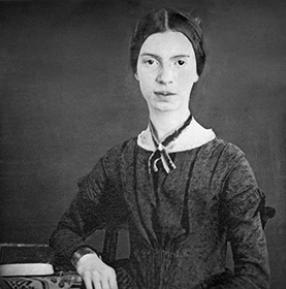
“There is no Frigate like a Book” (1286) by Emily Dickinson [w/ Audio]

There is no Frigate like a Book
To take us Lands away
Nor any Coursers like a Page
Of prancing Poetry --
This Traverse may the poorest take
Without oppress of Toll --
How frugal is the Chariot
That bears the Human Soul --

PROMPT: Less

Daily writing prompt
What could you do less of?

Truth be told, the answer is reading, but as hardcore addictions go, the side-effects are better than with heroin or meth (and almost completely opposite, though it does sometimes make me sleepy.) So, I think I’ll go with social media, which I probably do less of than average, but that’s still way too much.

PROMPT: Currently Reading

What book are you reading right now?

I’m reading The Man with the Compound Eyes by Wu Ming-Yi because I try to read some literature from every place to which I travel, and this one is with respect to Taiwan.

As I’m never reading just one book, there’s also Geoffrey West’s Scale, Lukianoff & Schlott’s The Cancelling of the American Mind, Stephen Wolfram’s The Second Law, and others.

Five Wise Lines from The Importance of Being Earnest by Oscar Wilde

The truth is rarely pure and never simple. Modern life would be very tedious if it were either, and modern literature, a complete impossibility!

Algernon

Oh! it is absurd to have a hard and fast rule about what one should read and what one shouldn’t. More than half of modern culture depends upon what one shouldn’t read.

ALgernon

It is awfully hard work doing nothing. However, I don’t mind hard work where there is no definite object of any kind.

Algernon

One has a right to Bunbury anywhere one chooses. Every serious Bunburyist knows that.

Algernon; [fyi: “Bunburying” is the use of appointments with ficticious individuals to get out of one’s duties and obligations.]

One should always eat muffins quite calmly.

Algernon

PROMPT: Possessions

Daily writing prompt
What would you do if you lost all your possessions?

Probably go to the cemetery to read gravestones. I have a reading addiction that would be itching with no books or e-reader. Of course, I would soon be arrested for sitting on graves in the nude. After being booked for public indecency, they would give me food and lodging… problem solved.

Poetic Absorption [Free Verse]

Read at the speed 
  of absorption,
   (not consumption.)

Sit with the ephemera
  that boils off upon
   each read.

It will be different
  the next time.

Don't memorize.
 
That hammers it into
   some dark, heavy pit
    that it was never meant to be --

a thing that sinks in water
   and plummets from the air. 

Hammering cleaves its wings,
   and it becomes hopeless in the flow --
    staggering like a deranged drunk
     in the dark. 

When you read it,
    only read it. 

Don't anticipate.

Be surprised. 

A Quick & Dirty Guide for Reading William Blake’s Prophetic Poetry

It’s been said that Blake’s poetry is nearly impenetrable. When people say this, they’re referring to a series of long poems that are often called Blake’s “prophetic books.” It’s not that people struggle much with Songs of Innocence, Songs of Experience, or The Marriage of Heaven and Hell. I doubt anyone is stumbling their way through “The Lamb” or “The Tyger.” In fact, some of Blake’s poetry is highly readable for eighteenth century work.

The challenge is that Blake created his own mythology and he launches in with all these characters that have no sticking power for a reader. This is unfortunate as Blake remains well worth reading for his ideas, his language, and his sui generis worldview. [Even if he doesn’t win you over, Blake will give you something to think about that you’ve probably never considered before.] Blake’s mythology forces the reader to choose between a painstaking read (making notes, re-reading sections multiple times, stopping dead to make connections, etc.) or a casual read that misses most of what Blake is saying because it floats over the connections he is making.

As I’m re-reading Blake, I constructed a chart that helps me track who’s who and what each major character is about. I won’t claim it makes Blake’s prophetic work completely simple and transparent, but it has made reading it more productive and insightful. If you’re reading “Valas,” “Milton,” “Jerusalem” or any of the other prophetic books, I hope it will benefit you as well.

Em/F: these are emanations (i.e. characters that flow from the character from which the pointer originates.) Some refer to these as the feminine forms, hence the “F.”

5 Thought-Provoking Quotes I’ve Read Recently

Nothing records the effects of a sad life as graphically as the human body.

Naguib mahfouz (in Palace of desire)

Religion is recognized by the common people as true, by the wise as false, and by the rulers as useful.

Lucius annaeus seneca (via edward gibbon)

Comparison is the thief of joy.

theodore roosevelt

I was not; I have been; I am not; I do not mind.

Epicurean Epitaph

My experience is what I agree to attend to. Only those items which I notice shape my mind.

william james

Enlightenment in Four Bits of Shakespearean Wisdom

If you’re looking to attain Enlightenment, you may have turned to someone like the Buddha or Epictetus for inspiration. But I’m here to tell you, if you can put these four pieces of Shakespearean wisdom into practice, you’ll have all you need to uplift your mind.

There is nothing either good or bad, but thinking makes it so.

william Shakespeare, Hamlet

Through Yoga, practitioners learn to cultivate their inner “dispassionate witness.” In our daily lives, we’re constantly attaching value judgements and labels to everything with which we come into contact (not to mention the things that we merely imagine.) As a result, we tend to see the world not as it is, but in an illusory form.

The fault, dear Brutus, is not in our stars, but in ourselves.

William shakespeare, julius caesar

In Psychology class, you may remember learning about the self-serving bias, a warped way of seeing the world in which one attributes difficulties and failures to external factors, while attributing successes and other positive outcomes to one’s own winning characteristics. Like Brutus, we need to learn to stop thinking of our experience of life as the sum of external events foisted upon us, and to realize that our experience is rooted in our minds and how we perceive and react to events.

The fool doth think he is wise, but the wise man knows himself to be a fool.

william shakespeare, as you like it

A quote from Hamlet also conveys the idea, “There are more things in heaven and earth, Horatio, than are dreamt of in your philosophy.” If you grasp this idea, you may become both humbler and more readily capable of discarding bad ideas in favor of good. It’s common to want to think of yourself as a master, but this leads only to arrogance and to being overly attached to ineffective ideas. Be like Socrates.

Cowards die many times before their deaths; The valiant never taste of death but once.

william shakespeare, julius caesar

Fears and anxieties lead people into lopsided calculations in which a risky decision is rated all downside. Those who see the world this way may end up living a milquetoast existence that’s loaded with regrets. No one is saying one should ignore all risks and always throw caution to the wind, but our emotions make better servants than masters. One needs to realize that giving into one’s anxieties has a cost, and that that cost should be weighed against what one will get out of an experience.

There it is: Enlightenment in four bits of Shakespearean wisdom.