BOOKS: “The Obscene Madame D” by Hilda Hilst

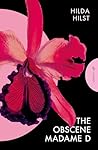
The Obscene Madame DThe Obscene Madame D by Hilda Hilst
My rating: 4 of 5 stars

Publisher Site – Pushkin Classics

Release Date: May 27, 2025

This strange novella features a lot of stream-of-consciousness exchanges between the lead and her common-law spouse / lover. Hille, the protagonist, is a woman who’s decided to withdraw from her normal life and live a celibate, hermetic existence in a recess under the stairs of the home she shares with Ehud (her lover / long-time partner.)

It is a thought-provoking and philosophical work and will be most of interest to readers who like such books. On the other hand, it isn’t likely to have much appeal for readers of commercial fiction. It’s not story-driven and isn’t even deeply character-driven. [Except in the sense of showing thought processes that encourage the reader to drill down into the character’s psyche.] This book has been placed in the genre of (and titled as) erotica (or even pornography,) but I would say that it is much less accurately defined as such than other works of that category, including Hilst’s “Letters from a Seducer.” This isn’t to say the book doesn’t use graphic language or mention past sexual activity, but it’s not erotic at the core. It’s not shy about sex or “vulgar language” by any means, but it is a book about a woman who has given up sex along with other activities of ordinary life.

Ultimately, I’d recommend this book for readers of psychological and philosophical literary fiction. It is not intensely readable as a story and is not intensely erotic as erotica, but it does keep a curious person wondering about the motives and future of Hille.

View all my reviews

“A Passage to India” by Walt Whitman [w/ Audio]

Passage O soul to India!
Eclaircise the myths Asiatic, the primitive
fables.

Not you alone, proud truths of the
world,
Nor you alone, ye facts of modern
science,
But myths and fables of eld, Asia's, Africa's
fables,
The far-darting beams of the spirit, the
unloos'd dreams,
The deep diving bibles and legends,
The daring plots of the poets, the elder
religions;
O you temples fairer than lilies, pour'd over
by the rising sun!
O you fables, spurning the known, eluding
the hold of the known, mounting to
heaven!
You lofty and dazzling towers, pinnacled,
red as roses, burnish'd with gold!
Towers of fables immortal, fashion'd from
mortal dreams!
You too I welcome, and fully, the same as
the rest!
You too with joy I sing.

Passage to India!
Lo, soul! seest thou not God's purpose from
the first?
The earth to be spann'd, connected by
network,
The races, neighbors, to marry and be given
in marriage,
The oceans to be cross'd, the distant
brought near,
The lands to be welded together.

A worship new I sing,
You captains, voyagers, explorers,
yours,
You engineers, you architects, machinists,
yours,
You, not for trade or transportation only,
But in God's name, and for thy sake, O
soul.

“A One-String Harp” by Lu Ji [w/ Audio]

When an author composes too short a poem,
it trails off with a lonely feeling
like looking down at solitude with no friends
or peering into the vast sky, disconnected.
One string on a harp is crisp and sweet
but sings without resonance and harmony.

Translation by Tony Barnstone and Chou Ping in: The Art of Writing (1996) Boston: Shambhala Publications.

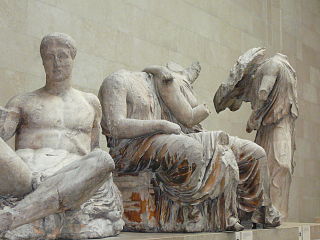
“On Seeing the Elgin Marbles” by John Keats [w/ Audio]

My spirit is too weak -- mortality
Weighs heavily on me like unwilling sleep,
And each imagined pinnacle and steep
Of godlike hardship tells me I must die
Like a sick eagle looking at the sky.
Yet 'tis a gentle luxury to weep
That I have not the cloudy winds to keep
Fresh for the opening of the morning's eye.
Such dim-conceived glories of the brain
Bring round the heart an undescribable feud;
So do these wonders a most dizzy pain,
That mingles Grecian grandeur with the rude
Wasting of old time--with a billowy main --
A sun--a shadow of a magnitude.

“To fight aloud is very brave –” (138) by Emily Dickinson [w/ Audio]

To fight aloud, is very brave --
But gallanter, I know
Who charge within the bosom
The Calvary of Wo --

Who win, and nations do not see --
Who fall -- and none observe --
Whose dying eyes, no Country
Regards with patriot love --

We trust, in plumed procession
For such, the Angels go --
Rank after Rank, with even feet --
And Uniforms of snow.

“Beggar to Beggar Cried” by William Butler Yeats [w/ Audio]

"Time to put off the world and go somewhere
And find my health again in the sea air,"
Beggar to beggar cried, being frenzy-struck,
"And make my soul before my pate is bare;

"And get a comfortable wife and house
To rid me of the devil in my shoes,"
Beggar to beggar cried, being frenzy-struck,
"And the worse devil that is between my thighs.

"And though I'd marry with a comely lass,
She need not be too comely -- let it pass,"
Beggar to beggar cried, being frenzy-struck,
"But there's a devil in a looking glass.

"Nor should she be too rich, because the rich
Are driven by wealth as beggars by the itch,"
Beggar to beggar cried, being frenzy-struck,
"And cannot have a humorous happy speech.

"And there I'll grow respected at my ease,
And hear amid the garden's nightly peace,"
Beggar to beggar cried, being frenzy-struck,
"The wind-blown clamor of the barnacle-geese."

BOOKS: “Kokoro” by Natsume Sōseki 

KokoroKokoro by Natsume Sōseki
My rating: 5 of 5 stars

Publisher Site – Pushkin Press

I first read this many years ago in college for a course on Japanese culture. I didn’t have a good reading experience then because this novel is too quiet to hold the concentration of a fidgety mind. However, on rereading it, I found it to be an intense and moving reading experience. It’s a brutally realistic piece of literary fiction, featuring quiet and unexpressive characters who are never-the-less experiencing a kind of agony of living.

The book’s beginning revolves around the relationship between a young man just finishing college and an older, somewhat hermetic, man. By “relationship” I’m not talking about a sexual or otherwise intimate interaction. This strange relationship might best be made sense of by the fact that the young man calls the older, “Sensei” (i.e. “teacher.”) So, it is largely an informal mentor-mentee relationship, but the reader may not really understand why “Sensei” is a reasonable honorific for the old man until the end. The latter portion of the book is Sensei’s “confession,” or the telling of formative events of his life. It is in this confession that we learn that Sensei is not so much a teacher by virtue of conveying abstract scholarly information but rather he teaches by showing the young man his own life story as a cautionary tale.

You must be in a quiet state of mind to keep attuned to this book, but – if you can do so – it is well worth reading. I’d highly recommend it for readers of literary fiction.

View all my reviews

“Flood” by James Joyce [w/ Audio]

Gold-brown upon the sated flood
The rock-vine clusters lift and sway:
Vast wings above the lambent waters
brood
Of sullen day.

A waste of waters ruthlessly
Sways and uplifts its weedy mane,
Where brooding day stares down
upon the sea
In dull disdain.

Uplift and sway, O golden vine,
Thy clustered fruits to love's full
flood,
Lambent and vast and ruthless as is
thine
Incertitude.

“Fortune-teller’s Song” by Su Shi [w/ Audio]

The crescent moon hangs on a barren tree.
The water clock has stopped and all is still.
Who sees the sad man pace the shore alone?
His shadow slants and curls into a swan.

The startled man stiffens and turns to look;
His grief remains unseen by anyone.
He passes on a seat of fallen log,
And plops down on the wet and cold sandbank.

NOTE: The original title is: 卜算子.

BOOKS: “The Book of Five Rings” by Miyamoto Musashi [trans. by Thomas Cleary] [w/ Yagyu Munenori’s “Book of Family Traditions”]

The Book of Five Rings: A Classic Text on the Japanese Way of the Sword (Shambhala Pocket Library)The Book of Five Rings: A Classic Text on the Japanese Way of the Sword by Miyamoto Musashi
My rating: 5 of 5 stars

Publisher Site – Shambhala Publications

This edition, i.e. The Shambhala Pocket Library edition, contains two guides to strategy, tactics, and philosophy of combat by famous early Edo Period swordsmen. The titular work is Miyamoto Musashi’s The Book of Five Rings, but the volume also contains Yagyu Munenori’s The Book of Family Traditions. The naming of the book is meant to capitalize on the continuing popularity of Musashi, who remains well-known to this day not only because of his own works and legend, but because of an afterlife in pop culture that ranges from Eiji Yoshikawa’s novel to a recent Netflix animated series. That said, one shouldn’t conclude Yagyu Munenori was some sort of slouch. He was, in fact, a martial arts teacher to the Shogun’s son, and he founded a branch of his family’s martial arts school that continues to this day.

It is interesting to see these two guides back-to-back, being by authors whose lifespans largely overlapped, though – in other ways – their lives were quite different. While there is some conceptual overlap in these guides, the two definitely show two very different minds at work, Musashi the pragmatic eccentric and Yagyu the Zen philosopher of noble standing.

Miyamoto Musashi is probably the most famous swordsman in Japan’s history. Oddly enough, he’s not known for his experience in battle (he lived at the tail end of the Warring States period and was only in a couple battles), but – rather – for his 62 duels. The Book of Five Rings and other works he left behind are certainly important factors in his continuing fame. Musashi was a bit of a renaissance man: painter, poet, and sculptor in addition to a swordsman. He also left behind a school of swordsmanship, Niten Ichi-ryū.

The Book of Five Rings is divided into five parts: earth scroll, water scroll, fire scroll, wind scroll, and void scroll.

The earth scroll provides an overview of martial science and an introduction to Musashi’s school, which is noted for its simultaneous use of both the large and short sword. A section is devoted the rhythm of martial arts, a crucial topic. It also includes what might be considered Musashi’s 9-point budō kun (a list of warrior precepts.)It’s worth mentioning a couple of these:
#7 Become aware of what is not obvious.
#9 Do not do anything useless.

The Water scroll describes Musashi’s approach to swordsmanship. It covers a range of elements of a martial art including footwork, the focus of one’s eyes, physical posture, mental posture, techniques, and approaches to cutting and thrusting.

The Fire scroll deals with the strategic or interactive aspects of the battle.

The Wind scroll explores other martial arts. Musashi discusses martial arts that use an unusually long sword, an atypically short sword, that focus on powerful strikes, and those that focus on many rapid strikes. He contrasts other martial arts with his own on subjects such as their focus with the eyes and their footwork.

The void scroll deals with, well, emptiness. It’s actually a short wrap-up.

Yagyu’s guide is much more philosophical and mind-centric. It’s not that Musashi doesn’t deal with such topics, but he also devotes considerable space to more practical nuts and bolts of swordsmanship and strategy. It’s also true that Yagyu gets into technical considerations such as control of distancing (if in a bit more poetic way than Musashi.) One can get a feel for the nature of Yagyu’s Book of Family Traditions [on the Art of War] by seeing how it is organized into three parts: “The Killing Sword,” “The Life-Giving Sword,” and “No Sword.” The latter two indicating the author’s belief in the importance of not equating warrior and killer (nor winning with killing) as well as not fixating on the sword.

These two men had great insight into strategy and the tactics of swordsmanship, their guides are worth being read and reread. And the two authors do offer two intriguingly different approaches to a similar subject.

View all my reviews