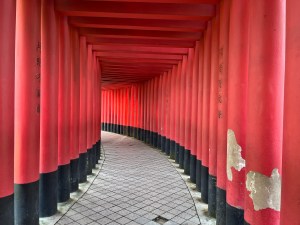
Torii [Haiku]

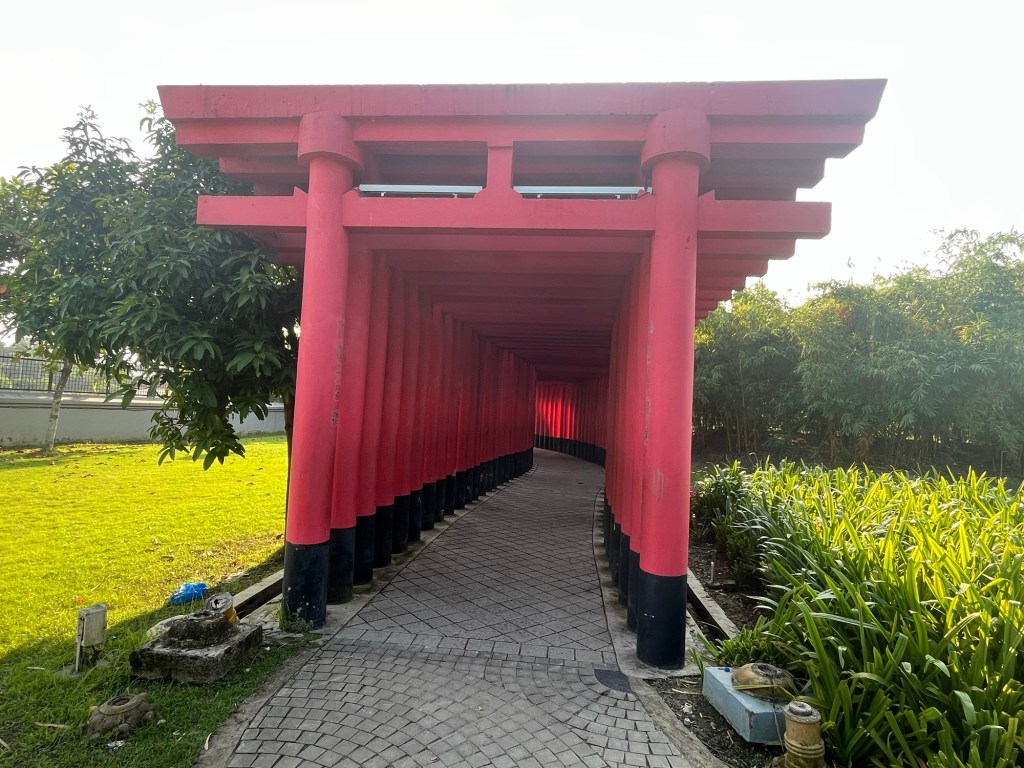
Summer afternoon: 
light plays through the gates, like
glow from a shrine beyond.

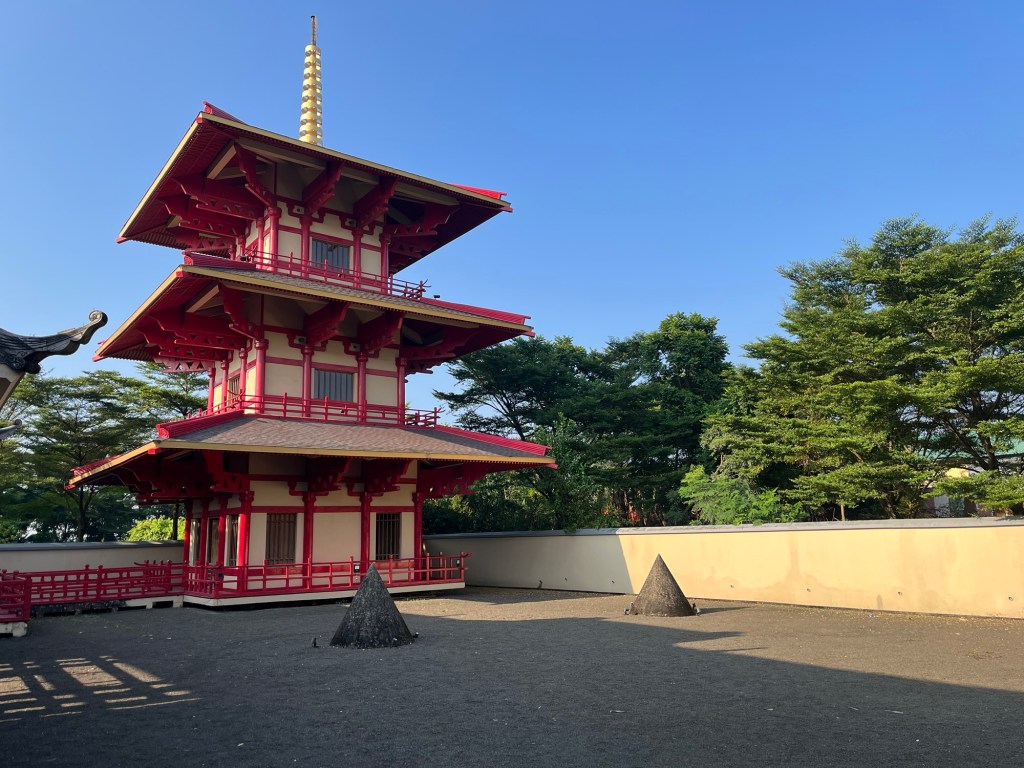
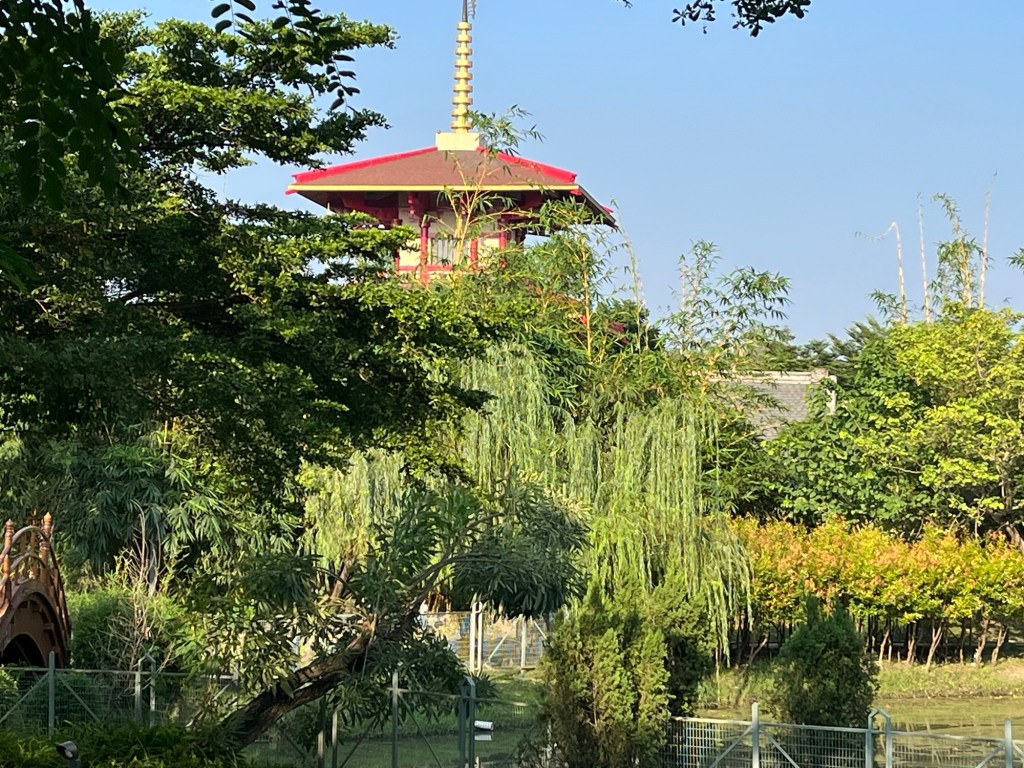
DAILY PHOTO: Japanese Forest, Eco Park, Kolkata

JAPAN LIMERICK

BOOK: “Ma” ed. by Ken Rodgers & John Einarsen

Ma: The Japanese Secret to Contemplation and Calm: An Invitation to AwarenessMa: The Japanese Secret to Contemplation and Calm: An Invitation to Awareness by Ken Rodgers
My rating: 5 of 5 stars

Publisher Site – Tuttle

Release date: October 27, 2025

My introduction to the concept of ma came as a young martial arts student, where it was thought of as distancing, but not distancing in a static sense — rather in a way that incorporated timing as well [so, more of an interval in space-time.] I would later hear the term applied to domains such as joke telling in which perfection of pause could be as critical to a laugh as the words that comprised the joke. This book expanded my understanding to numerous realms I’d never much considered before such as architecture, photography, and gardening. (Incidentally, this book does contain a chapter addressing the martial arts aspect of ma, though not the comedic ramifications of the concept.)

I haven’t seen any other books that focus entirely on this concept. Ma is often mentioned in books on Japanese philosophy and aesthetics but rarely with such depth and singular attention. If there are other books that drill down into the concept in this way, I doubt they are as readable as this one (that is, I suspect such a book would be intensely philosophic and scholarly.) So, this book seems to have a solid niche.

There were a couple chapters that took my thinking on the subject to entirely new places. One was on ma in the domain of virtual reality. This raised interesting metaphysical considerations. Another was about the Heart Sutra and how the translations used have led to longstanding misunderstandings of that work.

If you are interested in art and or philosophy, I’d highly recommend this book.

View all my reviews

BOOK: “The Life of an Amorous Man” by Ihara Saikaku [Trans. by Chris Drake]

The Life of an Amorous Man: A Novel of Love and Desire in Old JapanThe Life of an Amorous Man: A Novel of Love and Desire in Old Japan by Ihara Saikaku
My rating: 5 of 5 stars

Publisher Site – Tuttle

On sale October 14, 2025

Original Title: 好色一代男

As the title suggests, this novel is presented as the biography of a man who is — shall we say — a horndog. Actually, it would be more correct to say that it is the story of the man’s sex life, as it begins with his sexual awakening as a boy of seven and tells stories of his relationships and dalliances throughout his life until he reaches the age of sixty and is no longer physically capable of the act. Of course, the novel does describe non-amorous life events such as the protagonist’s (i.e. Yonosuke’s) brief time as a monk and as (what in modern terms would be called) a “trust-fund kid.” Yonosuke is from a wealthy merchant family, though his inability to keep his mind on task sees him disowned for many years. So, he leads lives both rich and poor, but never without lust in his heart.

Given that the book focuses on Yonosuke’s interactions with geisha and varied sex workers, one might expect that it is a work of erotica (or even pornography.) It is neither. There is no graphic description of sexual activities and often those events are glossed over altogether. This book will be of much more interest to those interested in what life in Edo Period Japan was like, and particularly how sex work operated as a regulated industry with licit and illicit domains, than to anyone wishing to read erotica for sensual or prurient purposes.

The book has a series of illustrations (one per chapter) that were drawn by the author and appeared in the original (1682) edition. There are also poems (tanka and haiku) sprinkled in here and there, many of which were invocative in their own right.

If you are interested in historical Japan and / or its “floating world,” you’ll find this book to be an interesting read. It’s highly readable and entertaining.

View all my reviews

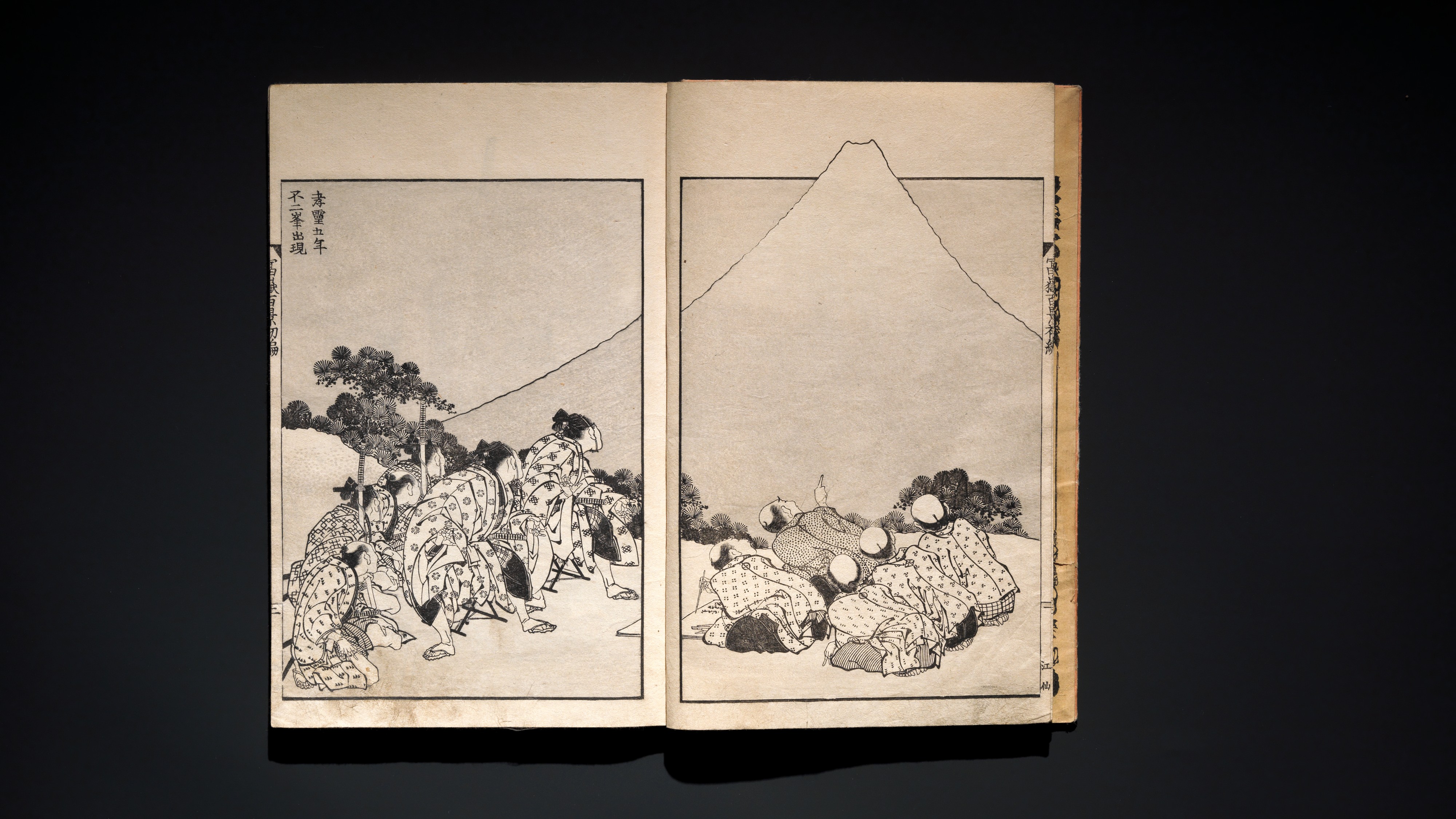
“One of the ‘Hundred Views of Fuji,’ by Hokusai” by Amy Lowell [w/ Audio]

     Being thirsty,
I filled a cup with water,
And, behold! -- Fuji-yama lay upon the water,
Like a dropped leaf!
Five Wise Lines from In Praise of Shadows by Jun’ichirō Tanizaki

Have you never felt a sort of fear in the face of the ageless, a fear that in that room you might lose all consciousness of the passage of time, that untold years might pass and upon emerging you should find you had grown old and gray?

But our thoughts do not travel to what we cannot see. The unseen for us does not exist.

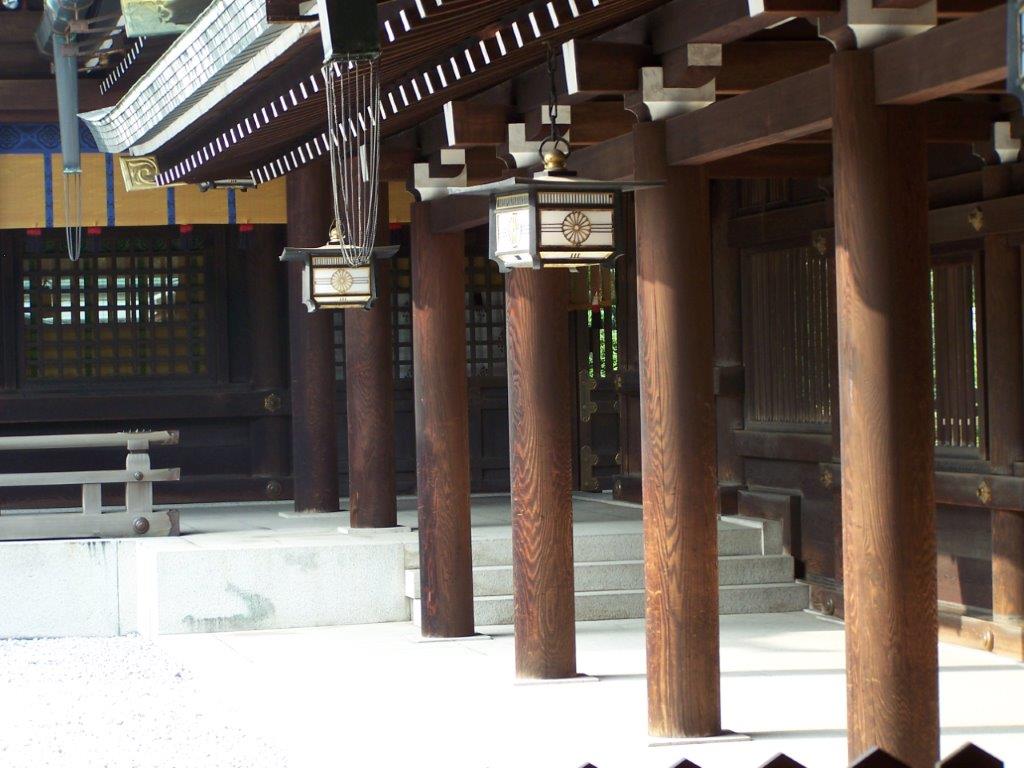
This was the genius of our ancestors, that by cutting off the light from this empty space they imparted to the world of shadows that formed there a quality of mystery and depth superior to that of any wall painting or ornament.

I wonder if my readers know the color of that ‘darkness seen by candlelight.’ It was different in quality from darkness on the road at night. It was a repletion, a pregnancy of tiny particles like fire ashes, each particle luminous as a rainbow.

Whenever I see the alcove of a tastefully built Japanese room, I marvel at our comprehension of the secrets of shadows, our sensitive use of light and shadow.

BOOKS: In Praise of Shadows by Jun’ichirō Tanizaki

In Praise of ShadowsIn Praise of Shadows by Jun’ichirō Tanizaki
My rating: 5 of 5 stars

Amazon.in Page

Tanizaki’s essay on Japanese aesthetics doesn’t just show the reader the simple, rustic, and weathered traits of Japanese beauty, it fully submerges them in an otherworldly place ruled by different principles of seeing. So enamored with this pre-modern Japanese aesthetic was Tanizaki that we are convinced he would give up all present-day conveniences to see the world this way (but, alas, he recognizes the impossibility of maintaining a household or business in today’s world that way.)

While the book is principally a tour of this Japanese shadow world, moving from architecture to toilets to lacquerware to Noh plays to skin tones to hotels (with other stops along the way,) it is also a critique of modernity, and particularly a modernity shaped by the West by virtue of Western countries building a lead in a number of key technologies. The most crucial of these technologies, and the one Tanizaki most decries, is electric lighting, which does away with the artistic beauty that derives from the interplay of varied toned shadows (and occasionally a little bit of light.) [I should say, he’s not bashing the Western technology or ways, but rather how poorly they work with maintaining Japanese aesthetic ways.]

I’d highly recommend this book for all readers. If you’re interested in aesthetics, art, architecture, culture, or “things Japanese,” then all the more so, but I can’t remember the last time description pulled me into a book as hard as this one. The essay can be a bit rambling and shifts from euphoria to rant and back, rapidly, but that is part of its magic.

View all my reviews

BOOKS: MONKEY, Vol. 4: Music ed. by Ted Goossen & Motoyuki Shibata

MONKEY New Writing from Japan: Volume 4: MUSICMONKEY New Writing from Japan: Volume 4: MUSIC by Ted Goossen
My rating: 5 of 5 stars

Amazon.in Page

Release Date: November 14, 2023

This is the fourth volume in a series of translated Japanese short creative writing (mostly poems and short stories.) The series (and this edition, in particular) features some of the best-known Japanese authors (e.g. Haruki Murakami and Meiko Kawakami.) Beyond a few major pieces at the beginning, this edition has a theme of music that runs through it.

Among my favorite pieces were: the novel excerpt Yoshiwara Dreaming about a young girl who is sold into the redlight district and becomes a helper in a brothel; Transformer: Pianos which is a work of surrealist fiction; The Zombie is Haruki Murakami’s fresh take on the zombie story; I also enjoyed many of the inclusions in the section entitled Eight Modern Haiku Poets on Music.

It’s a varied collection of writings. Not only does it include all forms of creative writing — prose and poetic — but the broad selection of writers and translators ensure that there is a diversity of styles and genres. That said, there isn’t a great diversity in quality level. It’s all strong writing, though some works will appeal to any give reader more than others. There’s something for everyone.

I’d highly recommend this volume for readers of literature in translation.

View all my reviews

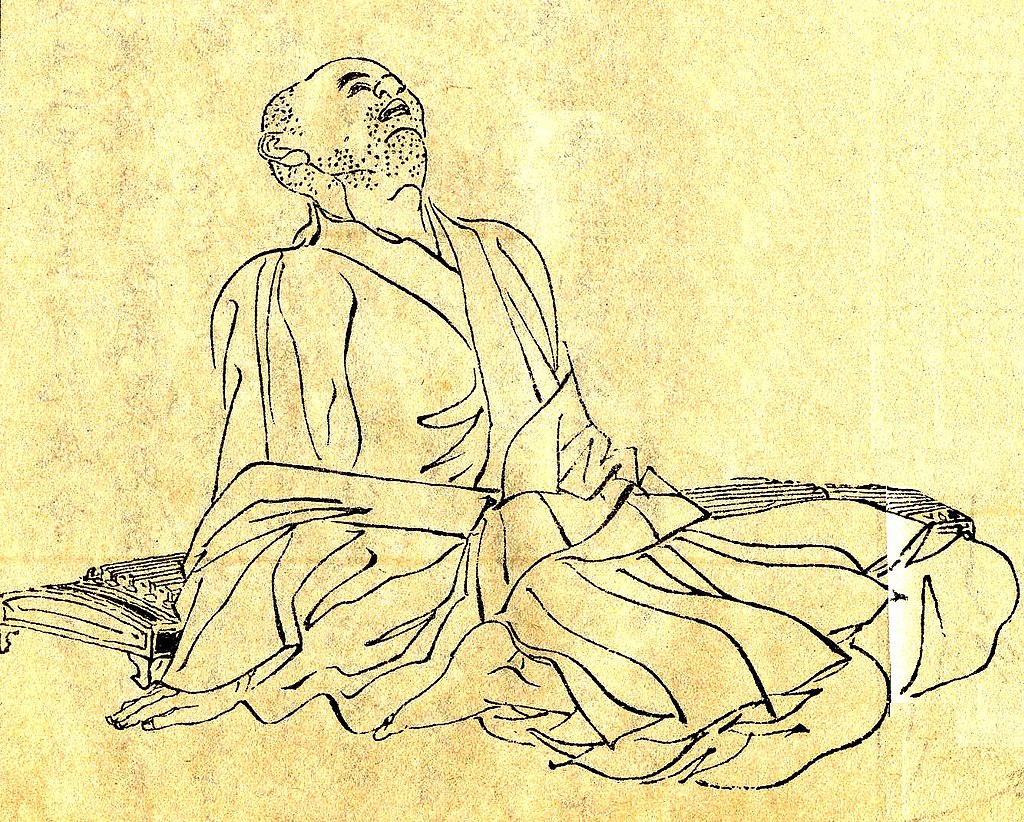
Five Wise Lines from Chōmei’s Hōjōki

drawing by Kikuchi Yōsai

On flows the river ceaselessly, nor does its water ever stay the same.

 Kamo no Chōmei, Hōjōki

No one owns a splendid view, so nothing prevents the heart’s delight in it.

Kamo no Chōmei, Hōjōki

Knowing what the world holds and its ways, I desire nothing from it, nor chase after its prizes. My one craving is to be at peace; my one pleasure is to live free from troubles.

Kamo no Chōmei, Hōjōki

These days, I divide myself into two uses — these hands are my servants, these feet my transport.

Kamo no Chōmei, Hōjōki

When I chance to go down to the capital, I am ashamed of my lowly beggar status, but once back here again I pity those who chase after the sordid rewards of the world.

Kamo no Chōmei, Hōjōki

Reference: Saigyō Hōshi, Kamo no Chōmei, Yoshida Kenkō. 2021. Three Japanese Buddhist Monks. New York: Penguin Books. 112pp.

Available Here