The Oldest & the Last [Free Verse]

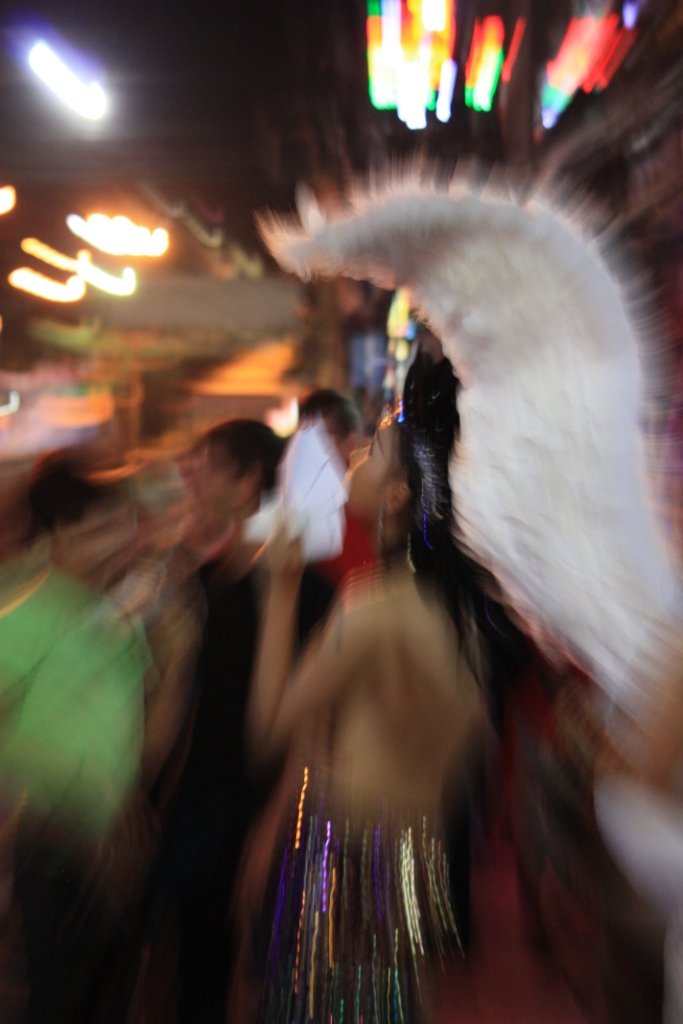
Kipling called prostitution 
The world's oldest profession.

Now, I'm pretty sure that it
Will be the last, as well:

The last professional endeavor --
The last profitable activity --
That humans do better than
Machines.

Whores will be the last holdouts
To shift from being workers
To being Artists of Humanity. . .
Or - maybe - they will be
The first in that, as well.

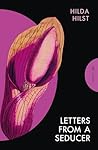
BOOKS: “Letters from a Seducer” by Hilda Hilst

Letters from a SeducerLetters from a Seducer by Hilda Hilst
My rating: 5 of 5 stars

Publisher Site – Pushkin Press Classics

Release Date: May 27, 2025

This is an upcoming English translation of a 1991 novella from Brazilian author, Hilda Hilst, from what has been called her “obscene cycle.” It is mostly an epistolary novella in which a man, Karl, writes his sister, Cordelia, informing her about his recent sexual adventures and attempting to coax a confession out of her about her own activities long in the past. We never see any replies from Cordelia. (And that is part of what makes the book fascinating.) The only indication of her responses that we get are Karl’s references to Cordelia’s comments from her last letter in his present letter. However, we can’t necessarily be certain that even those occasional suggestions of dialog represent the truth.

To understand why one might have doubt, one must be aware of what else is going on in this book. There is one other narrative voice, and that is of Stamatius. Stamatius is in socio-economic terms the opposite of Karl. Karl being of the gentlemanly class — his behavior and letters to his sister notwithstanding — and Stamatius is a starving artist (a writer, to be precise.) The two men speak of each other, though always in deprecating terms. However, there’s reason to think the two men might be one. Stamatius, while condemning Karl’s sex obsession, also mostly engages in tales of his own sexual adventures as well as presenting those of others. In fact, the end of this novella is a collection of short vignettes of the nature one might see in a smutty letter magazine, only better (and sometimes poetically) written.

By the author’s own description, this novella is intentionally pornographic. While the same thing is said of Hilst’s The Obscene Madame D I did not find that book particularly graphic or sex-centric. This book, however, is quite graphic and if one took away references to sexual activities
nothing of substance would remain. (Not true of The Obscene Madame D.)

I found this book to be intriguing, despite the fact that it is quite sloppily arranged (presumably on purpose,) but it does present some splendid use of language (at least in this translation — the original is in Brazilian Portuguese) and character psychology.

I’d recommend this book for readers of literary fiction who don’t mind plotlessness and pornographicness.

View all my reviews

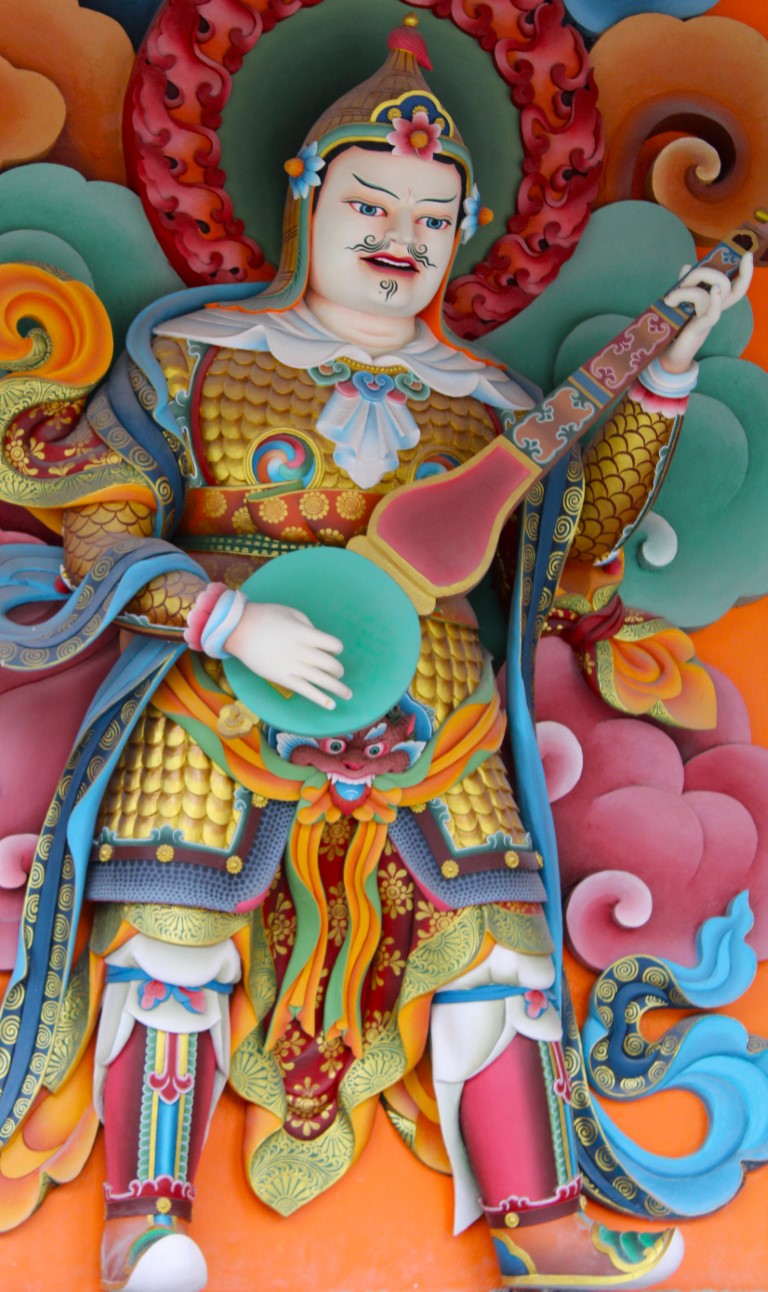
“I’m Happy to Be a Free Yogi” by Drukpa Kunley [w/ Audio]

I'm happy to be a free Yogi,
growing evermore into inner happiness.

I can have sex with many women
as it helps them find the path of liberation.

Outwardly I'm a fool
and inwardly I live a clear spiritual path.

Outwardly I enjoy wine and women
and inwardly I work for the benefit of all beings.

Outwardly I live for my pleasure
and inwardly I do everything in the right moment.

Outwardly I'm a ragged beggar
and inwardly a blissful Buddha.

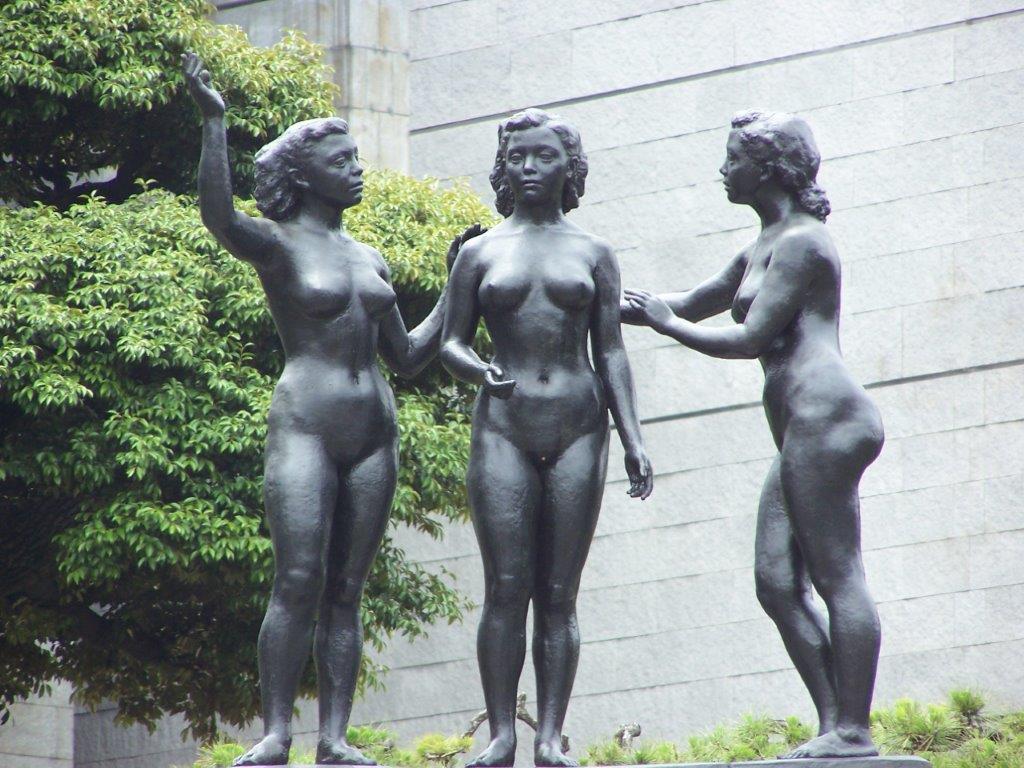
“I Sing the Body Electric” [5 of 9] by Walt Whitman [w/ Audio]

This is the female form,
A divine nimbus exhales from it from head
to foot,
It attracts with fierce undeniable attraction,
I am drawn by its breath as if I were no
more than a helpless vapor, all falls aside
but myself and it,
Books, art, religion, time, the visible and
solid earth, and what was expected of
heaven or fear'd of hell, are now
consumed,
Mad filaments, ungovernable shoots play
out of it, the response likewise
ungovernable,
Hair, bosom, hips, bend of legs, negligent
falling hands all diffused, mine too
diffused,
Ebb stung by the flow and flow stung by the
ebb, love-flesh swelling and deliciously
aching,
Limitless limpid jets of love hot and
enormous, quivering jelly of love, white-
blow and delirious juice,
Bridegroom night of love working surely
and softly into the prostrate dawn,
Undulating into the willing and yielding
day,
Lost in the cleave of the clasping and sweet-
flesh'd day.

This the nucleus -- after the child is born of
woman, man is born of woman,
This the bath of birth, this the merge of
small and large, and the outlet again.

Be not ashamed women, your privilege
encloses the rest, and is the exit of the
rest,
You are the gates of the body, and you are
the gates of the soul.

The female contains all qualities and
tempers them,
She is in her place and moves with perfect
balance,
She is all things duly veil'd, she is both
passive and active,
She is to conceive daughters as well as sons,
and sons as well as daughters.

As I see my soul reflected in Nature,
As I see through a mist, One with
inexpressible completeness, sanity, beauty,
See the bent head and arms folded over the
breast, the Female I see.

Lover’s Limerick

There once was a Shakespearean lover,
Who, in darkness, crawled under cover.
Much to his surprise,
Having no use of eyes,
He later learned 'tweren't his lover, but another.

“The Flea” by John Donne [w/ Audio]

Source: CDC
Mark but this flea, and mark in this,
How little that which thou deniest me is;
It sucked me first, and now sucks thee,
And in this flea our two bloods mingled be;
Thou know'st that this cannot be said
A sin, nor shame, nor loss of maidenhead,
  Yet this enjoys before it woo,
  And pampered swells with one blood made of two,
  And this, alas, is more than we would do.

Oh stay, three lives in one flea spare,
Where we almost, nay more than married are.
This flea is you and I, and this
Our marriage bed, and marriage temple is;
Though parents grudge, and you, w'are met,
And cloistered in these living walls of jet.
  Though use make you apt to kill me,
  Let not to that, self-murder added be,
  And sacrilege, three sins in killing three.

Cruel and sudden, hast thou since
Purpled thy nail, in blood of innocence?
Wherein could this flea guilty be,
Except in that drop which it sucked from thee?
Yet thou triumph'st and say that thou
Find'st not thy self, nor me the weaker now;
  "Tis true; then learn how false, fears be:
  Just so much honor, when thou yield'st to me,
  Will waste, as this flea's death took life from thee.

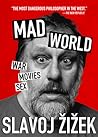
BOOKS: Mad World by Slavoj Žižek

Mad World: War, Movies, SexMad World: War, Movies, Sex by Slavoj Žižek
My rating: 5 of 5 stars

Amazon.in Page

Release Date: November 27, 2023 (Jan 11, 2024 in some markets)

I can see why Slavoj Žižek is one of the most successful popular philosophical authors out there today. For one thing, he deals in provocative topics straight from the headlines: politics, pop culture, war, and sex. Furthermore, like the authors of such books as Freakonomics, he picks cases that are fascinating, if inconsequential / frivolous (e.g. in the case of this book, the question of a proposed massive Ukrainian orgy to be carried out in response to a Russian nuclear strike.) For another thing, while philosophy tends to be nigh unreadable owing to the philosopher’s need to be defensively precise (which, in turn, leads to overuse of complex jargon and tedious qualifiers,) Žižek is quite readable owing to an ability to make clear and confident statements.

Of course, there is a downside to this confident clarity. Many a reader will find too many gratuitous statements for his or her taste. Žižek is often willing to say “clearly, x means y” about things for which there is no consensus, whatsoever. An example seen more than once in this book is in discussing what Žižek believes to be the unambiguous meaning of symbolism in artistic works. Of course, there is a name for the fallacy of believing one knows what an author or artist meant to convey, i.e. the intentional fallacy.

That said, the author provides many intriguing ways of thinking about the absurdity of the modern world. For example, to (deceased) former Secretary of Defense Donald Rumsfeld’s tripartite epistemological nomenclature (i.e. known-knowns, known-unknowns, and unknown-unknowns) Žižek asks us to consider a seemingly impossible fourth sector, unknown-knowns (i.e. we don’t know the question, but we have an “answer.”) Žižek’s self-described “pessimistic realism” appeals to the reader’s sense of martyrdom even as it frustrates, by-and-large telling us that the modern world is screwed and there’s little chance of saving it.

If you’re interested in popular philosophy, this book is worth giving a read. However, if you are used to scholarly philosophy, you may find it a bit sloppy and trivial.

View all my reviews

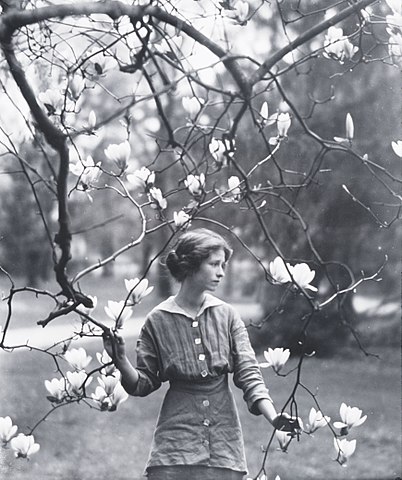
“What lips my lips have kissed, and where, and why” by Edna St. Vincent Millay

What lips my lips have kissed, and where, and why
   I have forgotten, and what arms have lain
 Under my head till morning; but the rain
   Is full of ghosts tonight, that tap and sigh
 Upon the glass and listen for reply,
   And in my heart there stirs a quiet pain
 For unremembered lads that not again
   Will turn to me at midnight with a cry.

Thus in the winter stands the lonely tree,
   Nor knows what birds have vanished one by one,
 Yet knows its boughs more silent than before:
   I cannot say what loves have come and gone,
 I only know that summer sang in me
   A little while, that in me sings no more.

Snail Amore: a Kyōka

the curious child 
remains unbaffled by the
complexities
of snail amore:
thinking the lead a tow-snail.

PROMPT: Romantic [Or, romantic]

Daily writing prompt
What’s your definition of romantic?

Depends on the context. If I’m thinking about poetry or philosophy (which I often am,) then it pertains to the early nineteenth century movement that counterpoised the Enlightenment. Those “Romantics” disliked what they saw as the cold rationality of Enlightenment thinking; they valued spiritual and mystical experiences, and they believed it was important to not throw out the spiritual “baby” with the bathwater. That is, like many Enlightenment thinkers, they realized that it was necessary to jettison many of religion’s noxious ideas (e.g. the concept of “chosen people”) and also realized that mindlessly following moral dictates that may or may not have made sense in the pre-Christian Levant could be detrimental to their present-day life experience. However, unlike most Enlightenment thinkers, they did find value in spiritual views of the world as well as in the pursuit of mystical experiences. William Blake (even though he is often labeled pre-Romantic) provides an excellent example. His poems are spiritual to the core, and yet explicitly reject a lot of the moralizing and toxic aspects of conventional religion.

Of course, that variety of “Romantic” is usually given a big-R, and so I suspect the question is after a more colloquial definition. With that in mind, I believe “romantic” means “that which facilitates the unity of two (or more, I don’t judge) people in an immersive intimate experience of each other during a common period of time.” I’m not big on trappings. I think people obsess over trappings because it allows them to slack on the physical / cognitive demands of being fully engaged. This is why sex (done well) is such a great tool both for relationship building and for personal development. It makes it relatively easy (i.e. rewarding) to stay fully engaged in a common experience and in the moment, and to not fall into the attentional abyss.