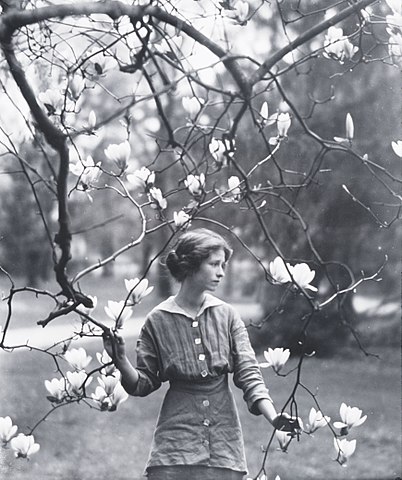
What lips my lips have kissed, and where, and why I have forgotten, and what arms have lain Under my head till morning; but the rain Is full of ghosts tonight, that tap and sigh Upon the glass and listen for reply, And in my heart there stirs a quiet pain For unremembered lads that not again Will turn to me at midnight with a cry. Thus in the winter stands the lonely tree, Nor knows what birds have vanished one by one, Yet knows its boughs more silent than before: I cannot say what loves have come and gone, I only know that summer sang in me A little while, that in me sings no more.
Tag Archives: sex
Snail Amore: a Kyōka

the curious child
remains unbaffled by the
complexities
of snail amore:
thinking the lead a tow-snail.
PROMPT: Romantic [Or, romantic]
Depends on the context. If I’m thinking about poetry or philosophy (which I often am,) then it pertains to the early nineteenth century movement that counterpoised the Enlightenment. Those “Romantics” disliked what they saw as the cold rationality of Enlightenment thinking; they valued spiritual and mystical experiences, and they believed it was important to not throw out the spiritual “baby” with the bathwater. That is, like many Enlightenment thinkers, they realized that it was necessary to jettison many of religion’s noxious ideas (e.g. the concept of “chosen people”) and also realized that mindlessly following moral dictates that may or may not have made sense in the pre-Christian Levant could be detrimental to their present-day life experience. However, unlike most Enlightenment thinkers, they did find value in spiritual views of the world as well as in the pursuit of mystical experiences. William Blake (even though he is often labeled pre-Romantic) provides an excellent example. His poems are spiritual to the core, and yet explicitly reject a lot of the moralizing and toxic aspects of conventional religion.
Of course, that variety of “Romantic” is usually given a big-R, and so I suspect the question is after a more colloquial definition. With that in mind, I believe “romantic” means “that which facilitates the unity of two (or more, I don’t judge) people in an immersive intimate experience of each other during a common period of time.” I’m not big on trappings. I think people obsess over trappings because it allows them to slack on the physical / cognitive demands of being fully engaged. This is why sex (done well) is such a great tool both for relationship building and for personal development. It makes it relatively easy (i.e. rewarding) to stay fully engaged in a common experience and in the moment, and to not fall into the attentional abyss.
Traveling Salesman Limerick
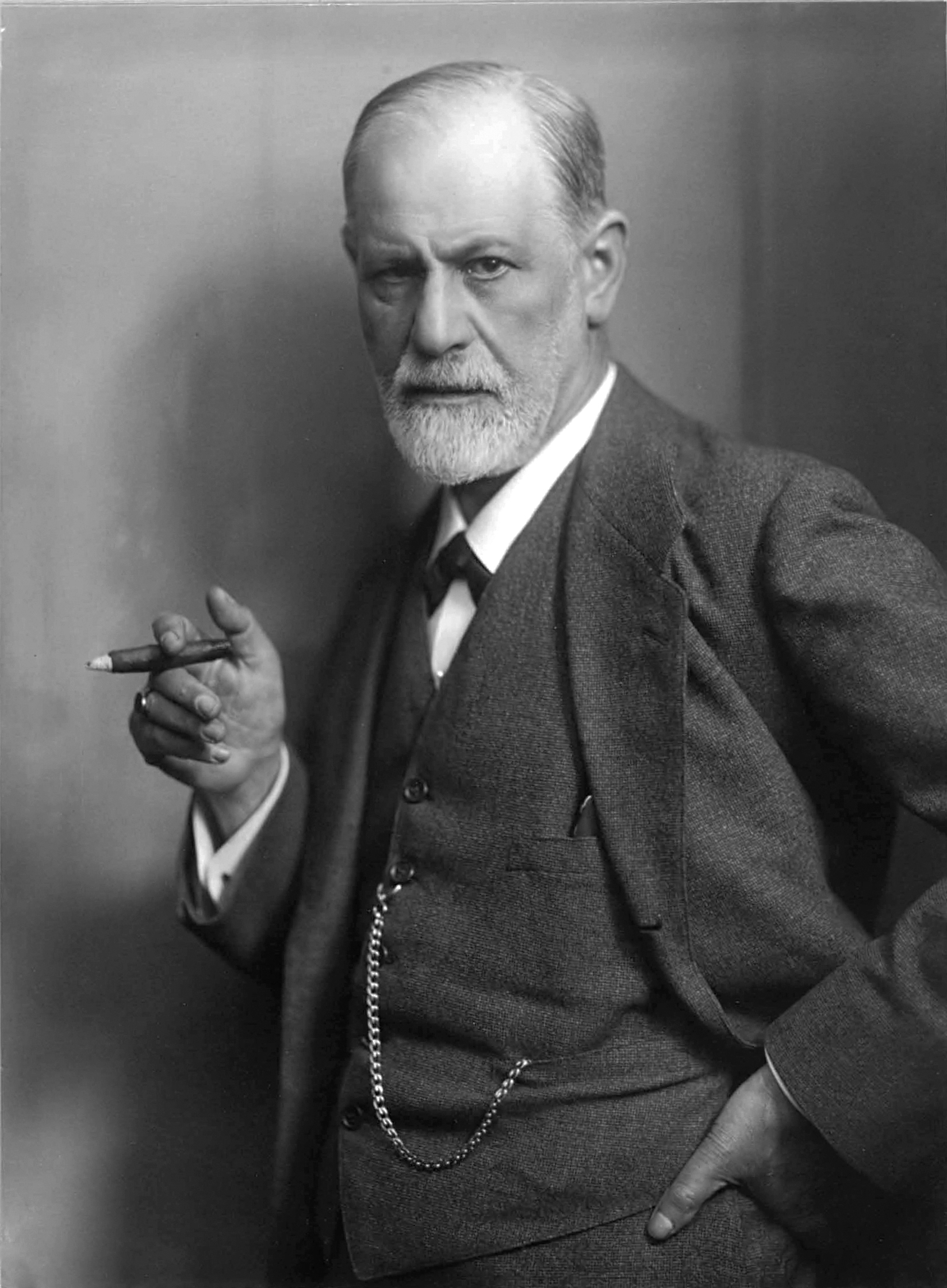
Freud Limerick
Ikkyū Limerick
BOOK REVIEW: Goa Travels ed. by Manohar Shetty
Goa Travels: Being the Accounts of Travellers from the 16th to the 21st Century by Manohar ShettyMy rating: 5 of 5 stars
Amazon.in Page
I picked up this book because I’m now planning a trip to Goa — only my second trip to India’s smallest state and my first to the north beach area for which it has become such a popular destination in recent decades. It’s always good to get a literary feel for a place, perhaps receiving some insights one might otherwise miss. In a way, this is the perfect book for that purpose in that it offers outsider views of Goa across time. [In another way, it’s admittedly a skewed view.]
This book gathers written excerpts from travelers to Goa. It’s divided into three parts. The first part mostly covers the sixteenth and seventeenth centuries, back when Goa was a Portuguese colony. This is the largest section and includes twenty-one pieces by priests, sailors, merchants, and adventurers. This section shows a preoccupation with a few features of Goan culture that seized travelers’ attention. One of these was the terrifying practice of sati, in which a widow would throw herself on her deceased husband’s funeral pyre and be burned alive. Another was the obsessively guarded way wives were treated, generally barred from doing anything in public or with those who weren’t blood relatives.
The second section, also the shortest, features one piece on the Goan Inquisition, which was an extension of the Portuguese Inquisition and one of the major examples of horrifying behavior by the Roman Catholic church. While it’s alarming and gruesome to read about, it’s nonetheless fascinating.
The final section is about the modern era, which – for the purposes of this book – runs from about the 1950’s (after India gained independence from Britain, but while Goa was still a Portuguese colony,) through its days on the Hippie Trail, and on to more-or-less the present. I knew about Goa as a hippie hangout during that countercultural revolution, but I was less aware of what went on between Indian independence and Goa’s independence from Portugal. Among the seven pieces in this section, one also gets a feel for the challenges of having an intensely culturally conservative population packed into India’s smallest state with what is probably South Asia’s biggest party destination.
I learned a lot of fascinating facts from reading this book. It may be a bit sensationalist in some places and vaguely racist in others, but it’s not boring.
View all my reviews
BOOK REVIEW: Philosophy in the Bedroom by Marquis de Sade
Philosophy in the Boudoir by Marquis de SadeMy rating: 4 of 5 stars
Amazon.in Page
This seven-part dialogue tells the story of a young woman’s education in libertinage (“libertine” shouldn’t be confused with liberal or libertarian.) The book mixes action sequences of a pornographic nature with philosophical discussions on ethics, law, governance, relationships, and religion. A young woman, Eugenie, is sent (without objection) by her father into the care of Madame de Saint-Ange, though another character, Dolmance, serves as both the girl’s primary philosophy lecturer as well as the choreographer of the orgiastic sexual activities that take place throughout book.
Overall, the philosophy is weak, but not altogether lacking compelling ideas, at least in the context of its time – i.e. late Age of Enlightenment. Setting aside the controversial and broadly reviled nature of Sade’s philosophy, I criticize it primarily on the grounds that it misunderstands its own foundations and frequently contradicts itself. The foundations I’m referring to are the workings of the natural world. Libertine philosophy is an offshoot of Enlightenment thinking, and as such attempts to replace the superstition and the arbitrary morals of religion. The question becomes with what one replaces religion-driven bases for determining action. Sade’s argument is that we should see ourselves as part of nature and behave in synch with it. It could be argued that using natural principles as one’s guide is as fine an idea as any, but the problem is Sade doesn’t have an accurate picture of how nature really works. Ironically, he seems to have the same unsophisticated view of nature that his opponents held – i.e. that nature is always and everywhere a brutal and chaotic hellscape. [The main difference is that Sade assumed that one must surrender to this hellscape while his opponents proposed that one must subdue it.] The fact of the matter is promiscuity and intraspecies killing aren’t universal in nature, and cooperation does exist alongside competition in the natural world. (To be clear, interspecies killing is universal for many species and intraspecies killing occurs, but consider venomous snakes of a given species that wrestle for dominance while not using their poison or infantrymen who only pretend to shoot their weapons in combat. Also, I don’t mean to suggest monogamy is the rule [besides in birds, where it is,] but Sade seems to believe there is no order to mating in the natural world.) In sum, nature does not tell us to default to the most savage behavior in all situations, and while animals can be ferocious, they generally don’t go around being jerks for the sake of being a jerk.
Since I also criticized the book’s philosophy for inconsistency, I will give one example to demonstrate a more widespread problem. Dolmance tells us that humans should live checked only as nature would check us (as opposed to by religious dictates,) but tells Eugenie to not listen to the voice of nature that tells her to not behave fiendishly.
I also said this philosophy wasn’t without compelling points. Setting aside the many ideas that were well-addressed by more mainstream philosophers long before Sade entered the picture (e.g. the need to separate the activities of religion from those of government,) Sade’s arguments for seeing a purpose for sexual activity beyond procreation, against seeing the making of more humans as a grand and necessary virtue, and against attaching stigmas to nonprocreative sex are all ideas that have gained traction since the turn of the 19th century and arguably could be furthered to positive ends.
Speaking briefly to the non-philosophical side of the book, I will say that – excepting Dialogue VII (the final one) – this book was much less disturbing than some other of the Marquis’s books (e.g. 120 Days of Sodom or Justine,) Prior to the last section, the book involves consensual activities that aren’t dialed up to the maximum level of shock value. That said, Dialogue VII is as cringeworthy as they come. Also, I didn’t understand how all the orgy choreography could work, but that might be attributable to my lack of imagination.
This book will obviously not be everyone’s cup of tea (too much orgy sex for some, too much philosophy for others, and to much of both for most) but as the Marquis de Sade’s books go, it does delve most deeply into philosophy and is moderately less disturbing than some others.
View all my reviews
Four on the Floor [Limerick]
Monogamous Geometer [Limerick]

There once was a monogamous Geometer who could angle in inches or kilometers. "I do love triangles, except love triangles," At orgies he was a nervous vomiter.