BOOK: “This and That” by Ryōkan [trans. by Stan Ziobro and John Slater]

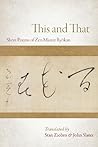
This and That: Selected Short Poems of Zen Master RyokanThis and That: Selected Short Poems of Zen Master Ryokan by Ryōkan
My rating: 5 of 5 stars

Publisher Site — Monkfish Books

Release Date: March 24, 2026

This is a new selection of Ryōkan’s short poetry (haiku, tanka, and Chinese-Style poems) as translated by Stan Ziobro and John Slater. Ryōkan was a Buddhist monk who lived across the late 18th / early 19th century. These translations are evocative and present the sometimes whimsical and sometimes haunting work of Ryōkan well. While the forms are just three, i.e. haiku, tanka, and kanshi [Japanese Poetry in the Chinese Style,] the style varies, some being imagist and some being more philosophical. Being a monk, Ryōkan’s work is heavily influenced by a Buddhist worldview, as well as by philosophies that interacted with Buddhism — e.g. Taoism.

While I usually have no basis to judge a translation as translation and am left to reflect on it purely as stand-alone verse, in this case, I have enough experience reading translations of Ryōkan to have a feel for his work. I immediately recognized some of Ryōkan’s more famous poems: e.g. the one’s translated in this book as, “Poems? no way // when you see that my // poems aren’t poems // then we can talk poetry” or “Left behind by thief // bright moon // in my window” Yet, at the same time, I felt the translators left some of their own imprint on the poems, and their influence / voice resonated with me.

The book does have front matter to set the stage for readers, and there is a “Notes” section that includes useful background on the poems. I found this ancillary matter useful, but not excessively verbose or intrusive.

If you enjoy Japanese poetry or Buddhist influenced poetry, I’d highly recommend this selection.

View all my reviews

Ancient Guardian [Haiku]

walking a streambed: 
ancient carving worn & cracked,
stands guard… for me?

Head On [Haiku]

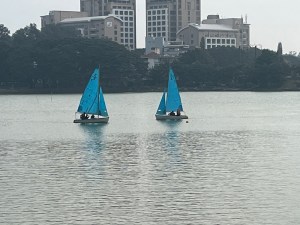
two sailboats 
tack toward collision,
then glide smoothly past.

CZECH REPUBLIC LIMERICK

A parachutist from Czech Republic
never ever did have too much luck.
He dodged a tall spire,
bounced off a high wire,
hit a wall and knocked loose some pub bricks.

Feral [Haiku]

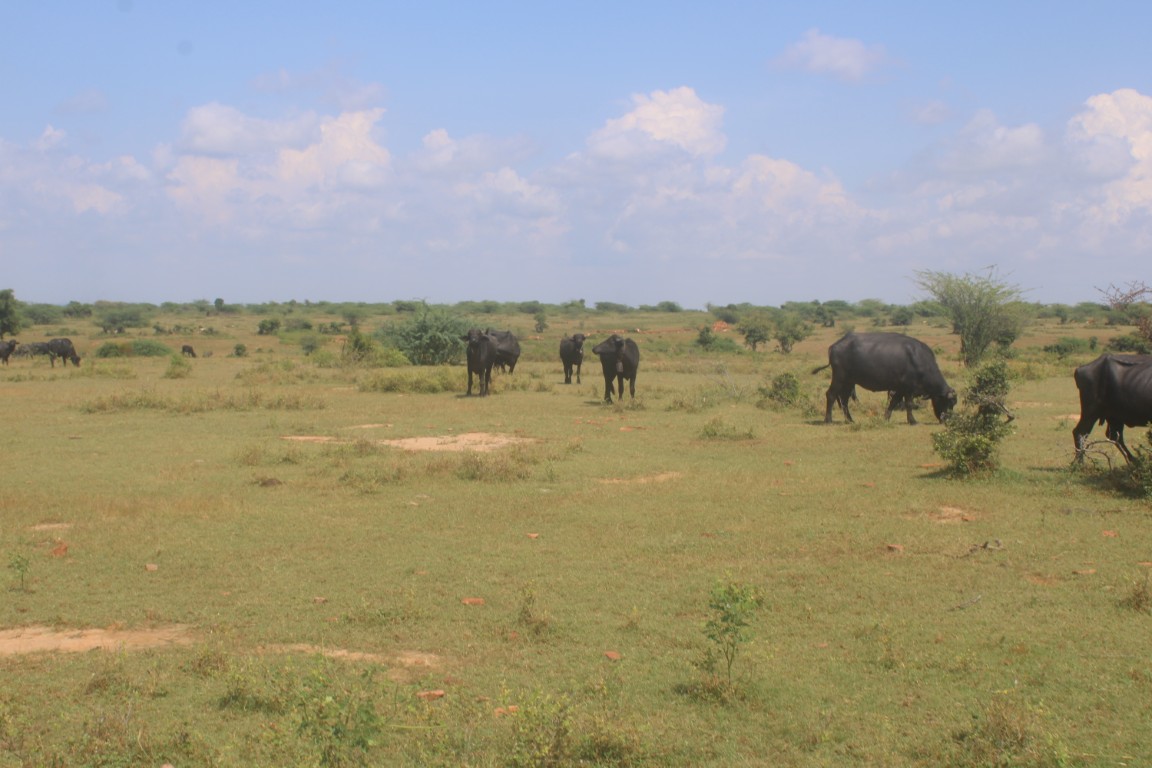
Cow Pasture: Photo taken north of Gwalior in Madhya Pradesh on the hike to the Nareshwar Temple Group.
the pasture sprawls: 
once dull & docile cows
now have feral eyes.

BOOK: “The Ruins” by Ye Hui [Trans. by Dong Li]

The Ruins: PoemsThe Ruins: Poems by Hui Ye
My rating: 5 of 5 stars

Publisher Site — Deep Vellum

This is a Chinese-English bilingual edition of Ye Hui’s first poetry collection. The poems use stark imagery with occasional instances of philosophizing and surreal statements to create a vivid and provocative set of poems.

As I’m learning Chinese, it was nice to have the original poems in Simplified Chinese script next to the English translations. While I’m not up to a reading level sufficient to taking on Modern Poetry (any poetry for that matter,) it was useful to peruse the Chinese text. I did appreciate how much vibrance the author wrings out of a relatively simple vocabulary.

I’d highly recommend this collection for poetry readers.

View all my reviews

BOOK: “The Wanderer’s Song” by Johann Wolfgang von Goethe [trans. by John Kent]

The Wanderer's Song: Essential Poems (Pushkin Press Classics)The Wanderer’s Song: Essential Poems by Johann Wolfgang von Goethe
My rating: 4 of 5 stars

Publisher Site — Pushkin Press Classics

This is a new translation of select poems of Johann Wolfgang von Goethe. It’s a clever and varied set of poems by one of German literature’s all-time greats, a polymath of the 18th and early 19th centuries.

It can be a challenge for a general poetry reader to relate to this work. Over two hundred years since most of these poems were composed, the collection reflects a worldview quite different from that which one finds today. That said, the translations are readable and pleasant and don’t feel strained or clunky, and the collection has instances of sublimity. Having no background in German Literature, I can’t say how true the translations are to source material, but they stood solidly as poems in their own right. The book does offer a substantial introduction by the translator for individuals who are particularly interested in the German literature, translation decisions, or the life of Goethe.

I would recommend this for poetry readers, even though casual readers may find it a bit archaic. If you like the Romantic poets, and haven’t given Goethe a try, it’s well worth the time investment.

View all my reviews

Passing [Haiku]

at day’s end, 
fishermen pass
on each boat’s way home.

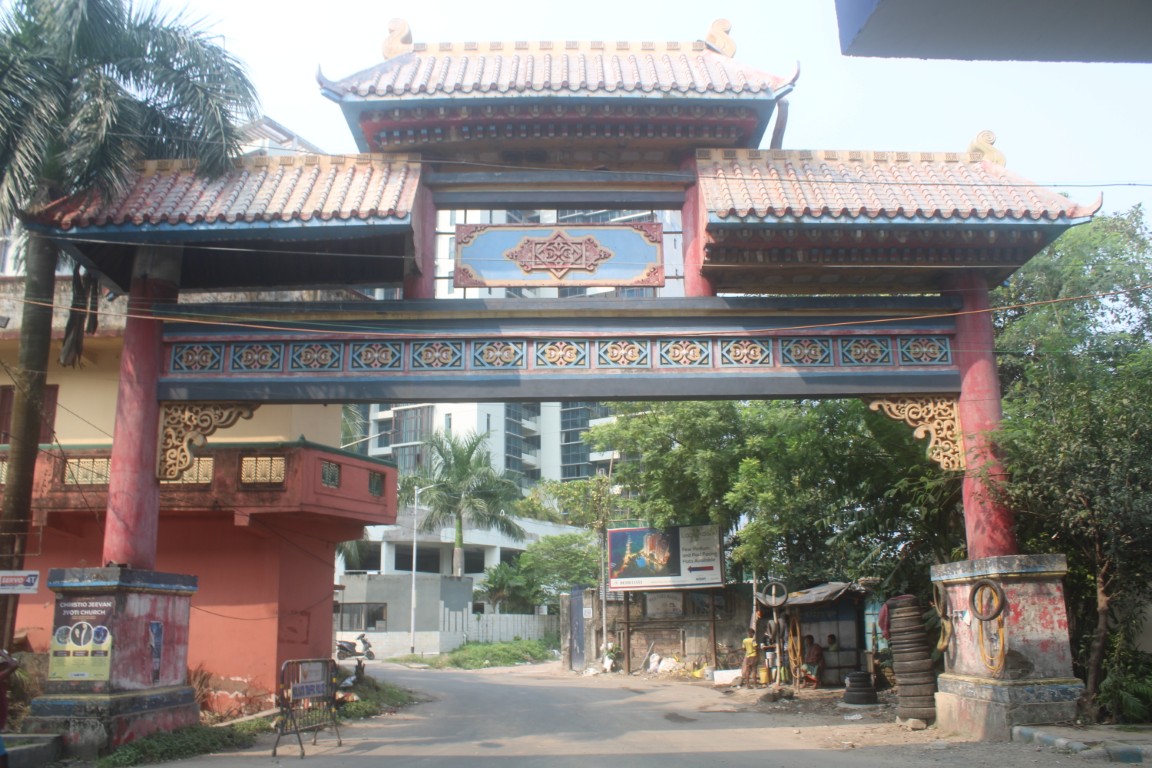
Chinatown [Senryū]

through the paifang*,
you leave your city,
but you're not in China.

*A paifang (牌坊) is the gate over a street or road that denotes the bounds of a Chinatown.

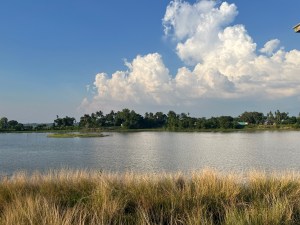
Something Moves [Haiku]

something moves
through autumn grass
at water’s edge.