Rivers of the Dead [Free Verse]

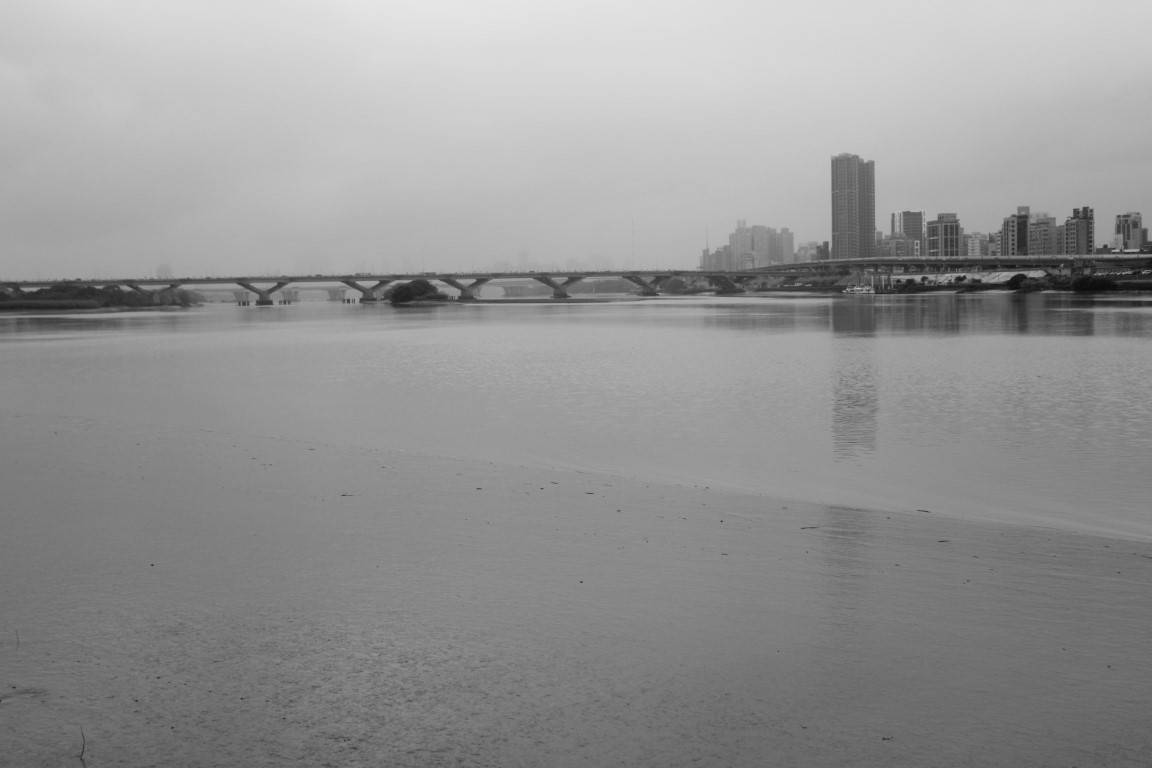
So many cultures
make their dead
cross a river.

The Greeks' Styx.
The Hindus' Vaitarna.
The Norse Gjȍll.
The Gnostic's Hiṭpon.
The Japanese Sanzu-no-Kawa.
The Mesopotamians' Hubur.
Taoists cross Naihe Bridge --
over what (I'm not sure,
but) is probably a river.

No rest for the dead?
It seems kind of rude.

BOOKS: MONKEY, Vol. 4: Music ed. by Ted Goossen & Motoyuki Shibata

MONKEY New Writing from Japan: Volume 4: MUSICMONKEY New Writing from Japan: Volume 4: MUSIC by Ted Goossen
My rating: 5 of 5 stars

Amazon.in Page

Release Date: November 14, 2023

This is the fourth volume in a series of translated Japanese short creative writing (mostly poems and short stories.) The series (and this edition, in particular) features some of the best-known Japanese authors (e.g. Haruki Murakami and Meiko Kawakami.) Beyond a few major pieces at the beginning, this edition has a theme of music that runs through it.

Among my favorite pieces were: the novel excerpt Yoshiwara Dreaming about a young girl who is sold into the redlight district and becomes a helper in a brothel; Transformer: Pianos which is a work of surrealist fiction; The Zombie is Haruki Murakami’s fresh take on the zombie story; I also enjoyed many of the inclusions in the section entitled Eight Modern Haiku Poets on Music.

It’s a varied collection of writings. Not only does it include all forms of creative writing — prose and poetic — but the broad selection of writers and translators ensure that there is a diversity of styles and genres. That said, there isn’t a great diversity in quality level. It’s all strong writing, though some works will appeal to any give reader more than others. There’s something for everyone.

I’d highly recommend this volume for readers of literature in translation.

View all my reviews

BOOKS: Bohemians: A Very Short Introduction by David Weir

Bohemians: A Very Short Introduction (VERY SHORT INTRODUCTIONS)Bohemians: A Very Short Introduction by David Weir
My rating: 5 of 5 stars

Amazon.in Page

This book examines the brief life of the Bohemian artistic lifestyle, exploring how it came about, what it looked like in its heyday, what led to its demise, and by what / whom it was replaced (e.g. the Beats.) It is an intriguing examination of the subject. I will say, there were points that I felt the book had become lost in the weeds, but at other points I found it fascinating. I concluded that my own calculus was to find it interesting when it discussed the lives and works of artists who are still deemed to have relevance and influence today (e.g. Baudelaire, Picasso, and Whitman,) and not so much when it was elaborating on artists and works that have fallen into obscurity among the general populace (e.g. Henry Murger’s Scenes of Bohemian Life.) So, that may be more a reflection on me than on the book.

The author touches upon the fictional influences that inspired Bohemianism, the places where the lifestyle thrived (e.g. Paris and New York,) the philosophy and – particularly – the political philosophy of the Bohemians (e.g. often Anarchists or – at least – anti-government.) One of the topics that most interested me is how the successor artistic communities differed from the Bohemians.

If you’re interested in who the Bohemians were and how they differ from other artistic communities (before and after,) this book is well worth the brief read required.

View all my reviews

Kubla Khan by Samuel Taylor Coleridge [w/ Audio]

In Xanadu did Kubla Khan
     A stately pleasure-dome decree:
 Where Alph, the sacred river, ran
 Through caverns measureless to man
     Down to a sunless sea.
 So twice five miles of fertile ground
 With walls and tower were girdled round:
 And there were gardens bright with sinuous rills
 Where blossom'd many an incense-bearing tree;
 And here were forests ancient as the hills,
 Enfolding sunny spots of greenery.

But O, that deep romantic chasm which slanted
 Down the green hill athwart a cedarn cover!
 A savage place! as holy and enchanted
 As e'er beneath a waning moon was haunted
 By woman wailing for her demon-lover!
 And from this chasm, with ceaseless turmoil seething,
 As if this earth in fast thick pants were breathing,
 A mighty fountain momently was forced;
 Amid whose swift half-intermitted burst 
 Huge fragments vaulted like rebounding hail,
 Or chaffy grain beneath the thresher's flail:
 And 'mid these dancing rocks at once and ever
 It flung up momently the sacred river.
 Five miles meandering with a mazy motion
 Through wood and dale the sacred river ran,
 Then reach'd the caverns measureless to man,
 And sank in tumult to a lifeless ocean:
 And 'mid this tumult Kubla heard from afar
 Ancestral voices prophesying war!

     The shadow of the dome of pleasure
     Floated midway on the waves;
     Where was heard the mingled measure
     From the fountain and the caves.
 It was a miracle of rare device,
 A sunny pleasure-dome with caves of ice!

     A damsel with a dulcimer
     In a vision once I saw:
     It was an Abyssinian maid,
     And on her dulcimer she play'd,
     Singing of Mount Abora.
     Could I revive within me,
     Her symphony and song,
     To such a deep delight 'twould win me,
 That with music loud and long,
 I would build that dome in air,
 That sunny dome! those caves of ice!
 And all who heard should see them there,
 And all should cry, Beware! Beware!
 His flashing eyes, his floating hair!
 Weave a circle round him thrice,
 And close your eyes with holy dread,
 For he on honey-dew hath fed,
 And drunk the milk of Paradise.

Percussive Parade [Haiku]

drums & cymbal crash:
 a parade of percussion
  outside my window.

Brahma by Ralph Waldo Emerson

If the red slayer think he slays,
   Or if the slain think he is slain,
 They know not well the subtle ways
   I keep, and pass, and turn again.

Far or forgot to me is near;
   Shadow and sunlight are the same;
 The vanished gods to me appear;
   And one to me are shame and fame.

They reckon ill who leave me out;
   When me they fly, I am the wings;
 I am the doubter and the doubt,
   I am the hymn the Brahmin sings.

The strong gods pine for my abode,
   And pine in vain the sacred Seven;
 But thou, meek lover of the good!
   Find me, and turn thy back on heaven.

Saint Chaos [Senryū]

Kathmandu backstreet:
 at alley's end, grins Joker --
  global chaos face.

Be Drunken by Charles Baudelaire [w/ Audio]

Be always drunken. Nothing else matters: that is the only question. If you would not feel the horrible burden of Time weighing on your shoulders and crushing you to the earth, be drunken continually.

Drunken with what? With wine, with poetry, or with virtue, as you will. But be drunken.

And if sometimes, on the stairs of a palace, or on the green side of a ditch, or in the dreary solitude of your own room, you should awaken and the drunkenness be half or wholly slipped away from you, ask of the wind, or of the wave, or of the star, or of the bird, or of the clock, or whatever flies, or sighs, or rocks, or sings, or speaks, ask what hour it is; and the wind, wave, star, bird, clock will answer you: “It is the hour to be drunken! Be drunken, if you would not be martyred slaves of Time, be drunken continually! With wine, with poetry, or with virtue, as you will.”

NOTE: This is the Arthur Symons translation from the 1913 Elkin Mathews edition of Baudelaire’s Poems in Prose. Available via Project Gutenberg at: https://www.gutenberg.org/cache/epub/50489/pg50489-images.html#XI

The Anchor Book of Chinese Poetry ed. Tony Barnstone & Chou Ping

The Anchor Book of Chinese Poetry: From Ancient to Contemporary, The Full 3000-Year TraditionThe Anchor Book of Chinese Poetry: From Ancient to Contemporary, The Full 3000-Year Tradition by Tony Barnstone
My rating: 5 of 5 stars

Amazon.in Page

This poetry translation anthology presents examples from some of the earliest known Chinese poetry to authors who are still alive and composing. It’s arranged by dynastic period (up until the modern era,) and, within dynasties, by poet. Most of the poets merit only a poem or two, but some of the major poets are allotted many pages of poems. Of course, how much poetry per poet is included isn’t just a function of how prolific or popular the poet was, but also how much extant poetry remains — i.e. how much survived. Each dynastic section begins with an overview of the time and poetic trends, and there is bio blurb for each poet.

There is quite a bit of variation in the book beyond that of the changing nature of Chinese poetry. The translations are also by varied translators, including not only the book’s editors but also individuals from the past, such as Arthur Waley. I wouldn’t say there is any bad translation in the book, but some translators capture the feel, e.g. the relative sparseness, of Chinese better, and others show their English poetic educations more obviously.

All in all, I enjoyed this selection of poems immensely, and learned a lot about Chinese history as well as of the country’s changing poetic tradition. I gained new insight to some of my favorites (e.g. Li Bai, Han Shan, etc.) and gained new favorites I’d never heard of before. I’d highly recommend this book for readers of poetry in translation.

View all my reviews

Water Swap [Haiku]

the falls are thin.
 the rains are hard. soon,
  fortunes will reverse.