POEM: To BE… Or Not

Copy of IMG_1580“What do you want to BE when you grow up?”

They ask you when you’re just a little pup.

So, what part of what I must BE,

is different from the me you see?

Dad thought, “the part that they’ll pay you for.”

Like an allowance for finishing a chore?

“Yes, young man, but you can safely assume, 

no one else will pay you to clean your room.”


Kids don’t think of being gainfully employed.


Which seems to make grownups quite annoyed.

At five, I wanted to be a cowboy.

“Son, there’s no jobs in that line of employ.”

That’s OK, then I’ll be an Indian.

“You’d have to be born that way, my friend.”

I wasn’t born a doctor, but you said that’s OK.

“That’s not the same, son, what can I say?”

I know what then, Dad, I’ll be the Batman!

“Come on, son, that’s not a feasible plan.”

You’re thinking Superman, Batman has no powers.

“Bruce Wayne by day, Batman at night, where’s the sleeping hours.”

You have a point there, you’ve got me stumped.

Thinking myself prematurely defunct.

BOOK REVIEW: What is Life? by Addy Pross

What Is Life?: How Chemistry Becomes BiologyWhat Is Life?: How Chemistry Becomes Biology by Addy Pross
My rating: 4 of 5 stars

Amazon page

Dr. Pross’s book shares a title (but not a subtitle) with the seminal work by the renowned physicist Erwin Schrödinger from 1944. While Schrödinger addresses a wide range of topics on how life might be explained in terms of physics and chemistry, Pross’s focus is narrower. Pross asks—and proposes an answer for—the straightforward (but thorny) question of how abiogenesis could occur. Abiogenesis is life from the non-living. Darwin did an excellent job of explaining how we could get from single-celled organisms to the great complexity we see in our own bodies, but Darwin didn’t touch the question of how that very first ancestor became animated.

The subtitle of this work, “How Chemistry Becomes Biology,” gives one insight into how Pross proceeds. There’ve been many ideas about how life came to be on planet Earth over the years. For a time, the idea of panspermia—life arriving from an extraterrestrial source—was popular. Of course, the most popular belief has been that there was a force of life (i.e. an “élan vital”) breathed into non-living matter by a, presumably, supernatural force / entity. While the awe-inspiring nature of life made this idea appealing / believable, it took a hit from the Urey-Miller experiments. Said experiment exposed the four materials believed to have been the most common in our pre-biologic atmosphere (hydrogen, ammonia, methane, and water vapor) to lightning, and the result included a range of organic materials—including amino acids–the building blocks of… well, us, among the other life forms of the planet. Of course, Urey-Miller didn’t make abiogenesis a foregone conclusion, but the production of ever more complex self-replicating molecules under laboratory conditions has made it easier to digest the notion that life developed without any intelligent or supernatural push.

While Pross’s ideas are at the stage of hypothesis, he develops a compelling explanation that revolves around the idea of dynamic kinetic stability. “Dynamic Kinetic Stability” is a mouthful, and so it’s necessary to break it down. The best place to start is with the “stability” part. This is because the biggest problem for an abiogenetical theory of life is the Second Law of Thermodynamics. The Second Law tells us that entropy increases. There are many ways of restating this, such as that chemical reactions move to states that are of lower free energy. However, the most intuitive way is to say that a beer mugs break but do not spontaneously pop into existence. So if everything is getting simpler by deteriorating, breaking, and decomposing, how does one get / maintain a stable state of complexity? First and foremost, the answer involves adding a lot of energy and resources, but there’s more to it than that–as the author explains. “Dynamic” can also be explained in complex terms, but it’s most easily thought of as being like a river in that the river’s existence is stable, but it’s always a different river—ever changing water molecules arranged differently. (Critically, our bodies are the same way. Except for neurons, our cells are constantly being replaced.) The term “kinetic” speaks to how said replacement takes place; replication must be fast and decay slow.

The appeal of the ideas put forth by Pross is that they’re conceptually consistent with Darwinian Evolution. That is, an entirely new set of principles isn’t necessary to make sense of the origins of life. Pross argues that the self-replicating molecules that can most effectively put resources to use succeed in doing so, and—in the process–they drive others into extinction.

I found this book interesting and readable. The author uses good analogies to make his points (which often deal in complex matter) as clearly as possible. I can’t disagree with the other reviewers who’ve pointed out that the book is a bit repetitive and drags out a relatively simple statement of the argument. It’s not so egregious that I could say that it’s necessarily the result of a desire to pad the book out to a length necessary to sell in hard-copy form. (But it might have been.) The understanding of this topic is in its infancy, but that doesn’t mean this book isn’t a valuable contribution to popular understanding of abiogenesis.

I’d recommend this book for anyone interested in reflecting on from whence we came in a fashion that is open-minded to explanations that eschew the supernatural.

View all my reviews

2015 Top 10: Highlights From the Year That Was

These aren’t necessarily in any order.


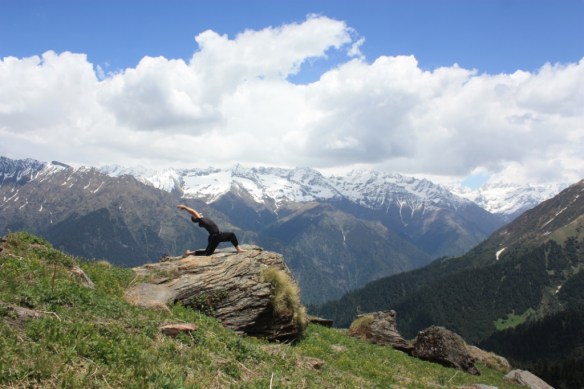
1.) Trekking the Great Himalayan National Park [June]:

IMG_1898


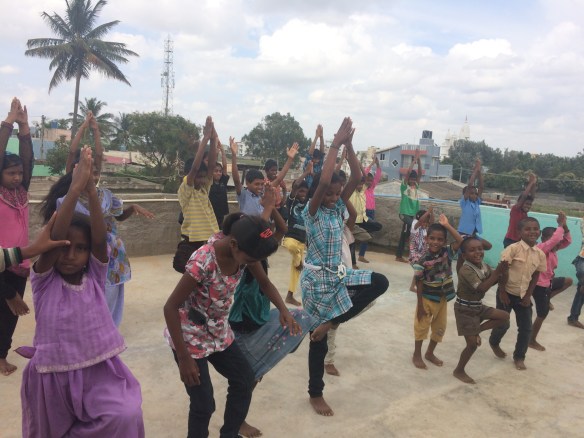
2.) Teaching kids at KAMMS and Socare [September & October]: I finished my RCYT course in April and have been teaching kids when I have a chance:

IMG_0101


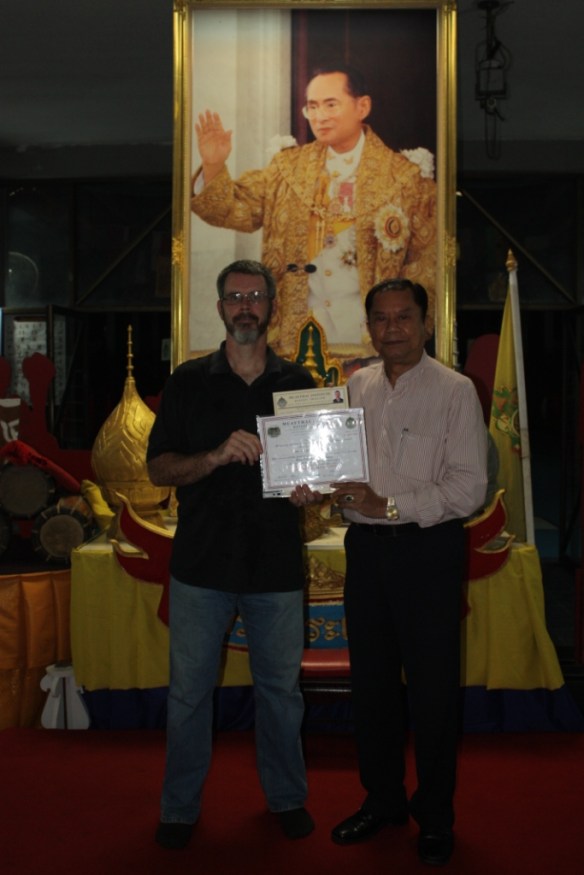
3.) Completing Level I Examination at the Muay Thai Institute [September]:

IMG_1926


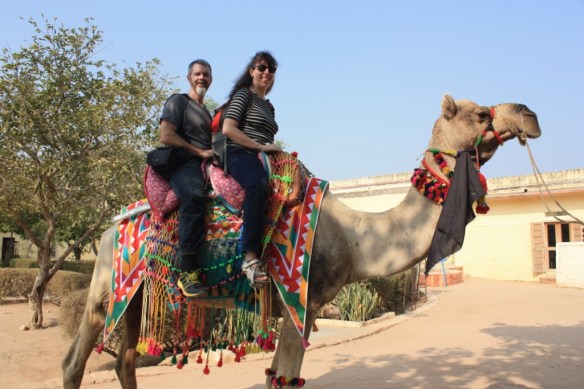
4.) Riding camels at Pushkar and Jaipur [November]:

IMG_3002


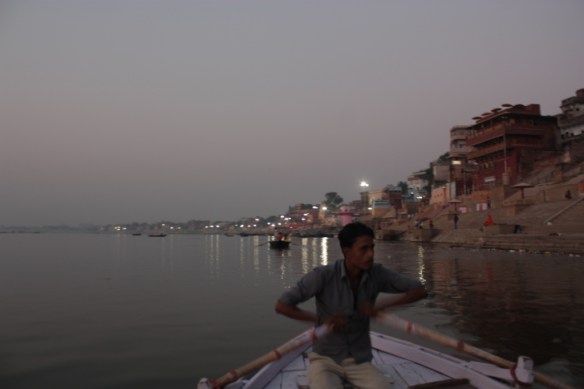
5.) Boating on the Ganges in Varanasi [October]:

IMG_3538


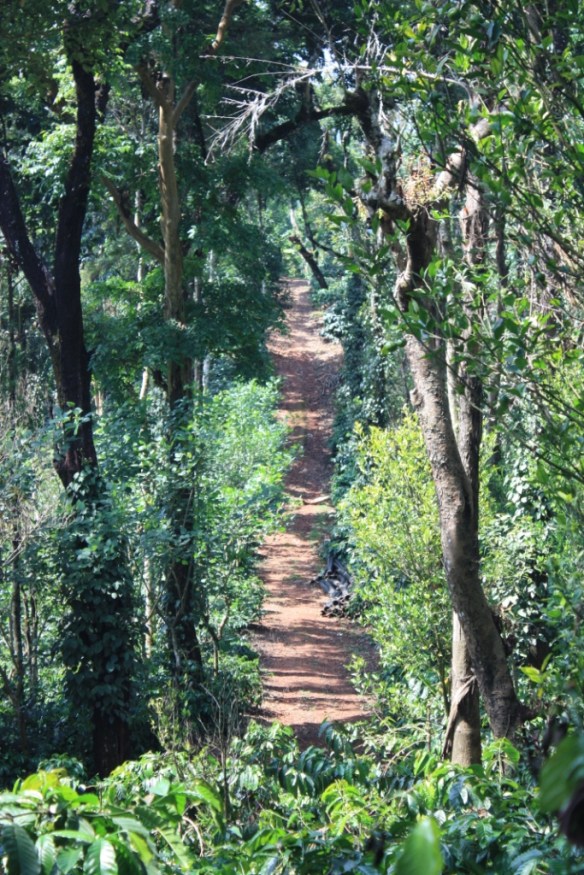
6.) Wandering around a coffee plantation near Chikmaglur [April]:

IMG_1966


7.) Completing the Level III and IV reviews in Kalaripayattu [February & August]:

IMG_4289


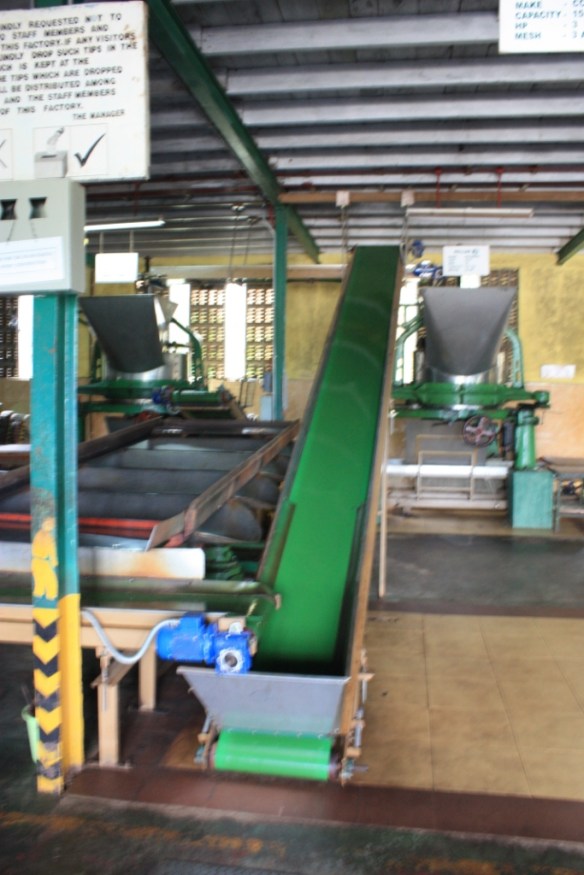
8.) Touring the Glenloch tea factory in Sri Lanka [May]:

IMG_0572


9.) 108 Surya Namaskara Against Child Trafficking [March]:

IMG_3331


10.) Junk boat tour of Ha Long Bay, Vietnam [December]: This may be jinxing us to put it on the list,  before we’ve been (we leave tomorrow) but I’m optimistic that our three weeks in Vietnam will be awesome, and I’m told Ha Long


What to expect in 2016? Lilla and I will be moving back to the States around mid-year. (To where, exactly, remains a mystery.) In January and February I’ll be doing an RYT-300 course to round out my 500 hour yoga teacher certification. I plan to make at least one more trip to Thailand to MTI for Level II. I’d also like to complete the 10-day Vipassana meditation course before returning. Lilla and I are thinking about another Himalaya trek for the summer.

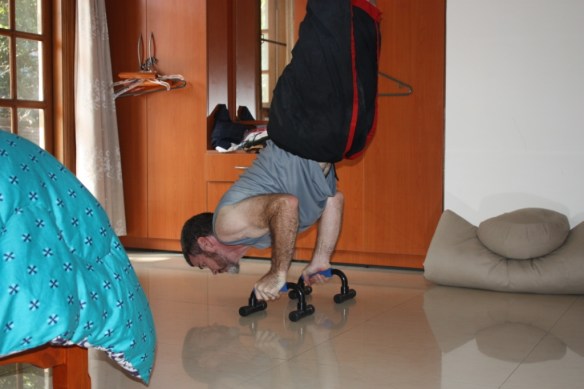
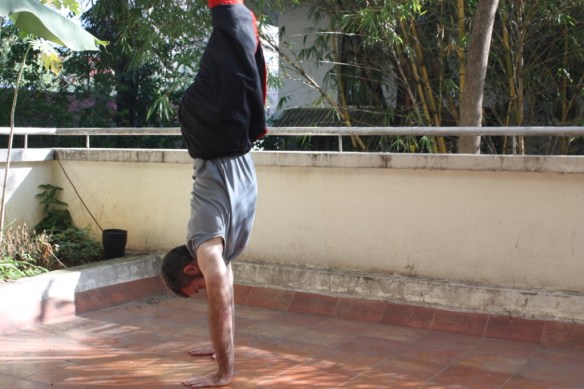
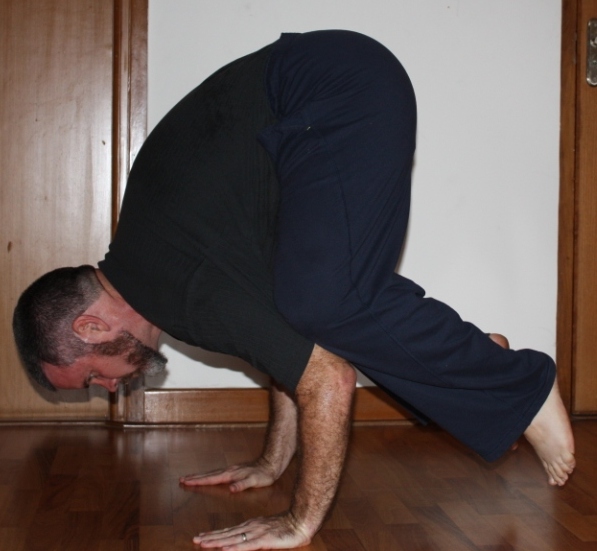
I’ll also be continuing to work on press handstand progression, as that’s been a focus for me of late and I still have a ways to go.

IMG_4354

IMG_4342

10 Easy Pieces of Wisdom: and, Why “Secret Wisdom” is Bullshit

IMG_0438

Having lived in India–land of sages–for over a year now, one may wonder whether enlightenment has taken hold. Let me share some of the nuggets I’ve gleaned. This isn’t what I found chiseled on walls in Sanskrit. It’s what living and thinking in the modern world have wrought.


1.) Anger is just fear in a red dress.

It’s all just frustration / unease / discontent with one’s limited domain of control.

On a related note, I read a relevant quote from Irmgard Schloegl recently: “Look at getting mad from this perspective. If you had but five more minutes to live, and it would still be worth getting mad over, then by all means do so.”


2.) Secret paths to wisdom are bullshit–the theory is simple the practice is arduous.

It all boils down to living in the moment more, being aware of your mind, and exercising your will.

First, you start becoming aware that you were recently a jackass.

Next, you begin to realize you’re in the process of being a jackass.

Then realize that you’re about to be a jackass–but you can’t help yourself and end up with jackass’s remorse.

Finally, you begin to preempt your inner jackass.

The latter is wisdom, and it’s not for lazy people who like shortcuts.


3.) There’s no ratchet effect on wisdom–no one-way trip to enlightenment or nirvana.

Either you accept that life is a glorious lifelong struggle to be the best version of yourself, or you wallow in a sty of mediocrity.


4.) The words “just a…”–as Catholic nuns say of masturbation–result in immediate blindness.

There’s nothing that will blind you to the deepest beauty of a person, place, or animal faster than saying it’s “just a…”


5.) Stop thinking of the body as an “empty vessel.”

It results in your treating it like a rental car. You aren’t a bar of gold being hauled around in a manure spreader. You were endowed with a Rolls Royce with on-board access to a Cray super-computer, and you risk turning into a Yugo with an abacus when you fail to keep it tuned and quietly revel in its magnificence.


6.) If a teacher is happy that his students  almost reach his level, he’s part of a dying tradition.

In a growth tradition, some students will surpass their teachers, and that’s only likely if the teacher wants it to be that way.


7.)  Be a scalable hero.

Human beings are terrified by their smallness, impermanence, and ultimate insignificance. In geologic time, everybody is an inconsequential blip. You can’t get around this, but you can pick a scale of time and space in which you matter. That space is here, and that time is now. In the here and now, you can be a giant–figuratively, of course. Here and now you can’t be everybody’s hero, but you can be somebody’s.


8.) Start your pursuit of virtue by doing no harm.

Begin being virtuous by capturing the advantage in those quiet moments that need nothing but a lack of interference or insinuation. Then go on to active expressions of virtue.


9.) Vicarious living ain’t living.

Don’t sit around watching others live life.


10.) Don’t count yourself free if your impulses overwhelm your conscious mind.

People worry a lot about the control that external forces and authorities exercise over their ability to act, but often spend far too little time on whether they’re working towards liberating themselves from raw impulse, habit, and reactionary living. Epictetus used to piss high society types off by asking them whether they thought they were truly free.

If you’ve been following the science of free will, you’ll know that the current prevailing thought lands against the notion of free will. This is because brain imaging has made it possible to see how decisions are biochemically made before the mind consciously ruminates and “makes a decision.” However, the verdict is still out. The question isn’t whether we ever fail to exercise conscious free will. Of course, there are many times we fail to, maybe even most times. The whole point of emotions is to help us make decisions without adequate information to make rationally optimized decision. However, the question is whether we can learn to exercise free will. Scientist long ago verified that some yogis and monks can exercise conscious control over autonomic bodily functions (e.g. controlling heart rate from a static position.)


There it is: wisdom for the modern age stuffed in a nutshell of bullet points.


My 2014: A Year in Review [w/ Photos]

2014 will be our first full year living in India. Having said that, I spent almost 50 days in Thailand, and Lilla and I will spend the last two weeks of the year in Hungary. So, in truth, I will have lived about ten months of 2014 in India.


The four months of 2013 that we lived in India largely involved acclimating and getting our feet under us, though we did see some important sights in India including the Taj Mahal, Delhi, Fatehpur Sikri, Hampi, Mysore, Belur, Halibidu, and Shravanabelagola.


2014 was an interesting and learning-intensive year, so I’ll review some of the year’s key happenings.


January:

From the 1st through the 18th, I was in Phuket, Thailand. Lilla and I spent the holidays there, and–upon her return to Bangalore–I stayed another couple of weeks training at Tiger Muaythai. Tiger is probably Phuket’s largest and most well-known Muaythai gym.  In addition to Muaythai classes, I took advantage of their broad class offerings to learn a little about Krabi Krabong, Muay Boran, Western Boxing, Mixed Martial Arts, Brazilian Jujutsu, as well as taking daily Yoga classes. I was particularly keen to learn about Muay Boran, MuayThai’s more combative ancestor art.

20140105_163231

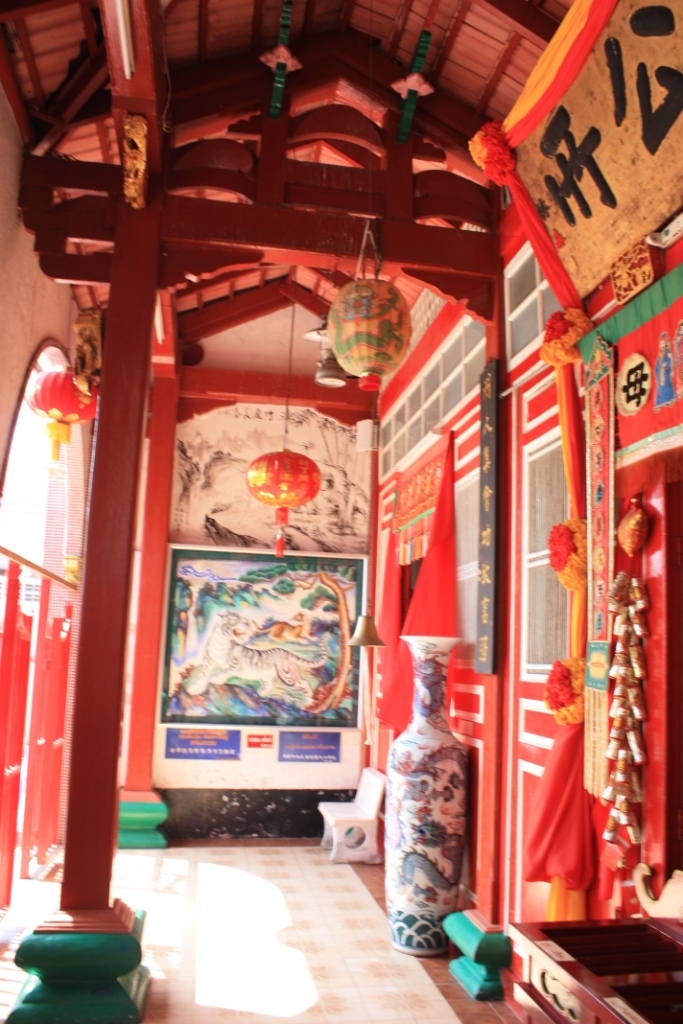
While my training schedule (up to six hours / day, 6 days a week) didn’t allow for much sightseeing, I did get to see a little of Phuket Town and a couple of the beaches that Lilla and I skipped while we were traveling together. Phuket displays a lot of Chinese influence and there are many brightly colored Taoist, Confucian, and Chinese ancestral shrines and temples around Phuket Town. Rang Hill overlooks the island’s main “metropolis”, and I was able to take advantage of that vantage point. The beaches I visited were Karon and Kata which were middling between the two beaches Lilla and I visited together. That is, they weren’t as quiet and secluded as Naiharn, but neither were they as frenetic and overrun as Patong.

IMG_2015

February:

February was marked by two firsts. First, I began taking classes in Kalaripayattu two mornings a week. While this Indian martial art is far afield of the Japanese art I was raised on, I wanted to take advantage of living in India to learn something of the indigenous martial arts. One reason for my interest is the widespread belief that Indian martial arts—and Kalaripayattu specifically—are ancestors to many of the Asian martial arts–including the Chinese martial arts that are said to be predecessor to the Japanese arts I’ve studied. While I’m somewhat skeptical of that claim, I’m not in a position to altogether dismiss it. (I believe that in the face of combat, martial arts evolve rapidly to adapt to local conditions and needs. Also, I believe that ancestral arts continue to evolve as much as their off-shoots. Together this means that a martial art could look quite different from its ancestor in short order.)
20140220_085958


The reason I’ve kept training is that Kalaripayattu is an awesome workout. I see a two-fold strength in the art. For one thing, it builds bodily capacity. I mean one is able to leap higher, stretch farther, and endure more through the practice of this art. I’ve realized that the idea of a martial art solely as a means to ingrain movements that worked in the past is limited.  Another thing that the art does is help build a variety of fearlessness.  One has to throw one’s body around in a ways that can be intimidating, and one must build confidence that one will—like a cat—land on one’s feet. Further down the line, the metal weapons practice—choreographed as it may be—takes a special kind of inner calm. By “further down the line” I mean—as of this writing–I haven’t yet begun to learn weapons. I’ve passed through the first two levels and it’s been suggested that it might be time for the third test (though I’m far from skilled with some of the required jumps), but these levels are all unarmed.


The second activity I began in February was volunteering that the Don Bosco Mane Center, which is home and bridge school for young boys in central Bangalore. (A bridge school is a school used to prepare kids to go to regular public school, which is what they try to do a soon as possible, but some of the kids haven’t been to school and aren’t ready to leap in at the appropriate grade level.) BOSCO is one of the major charities working on children’s issues in Bangalore, and particularly in trying to intercept kids coming into the bus and train stations before the pimps and slavers get their hooks into them. They also run a help / reporting phone line.  If it’s possible, they try to get the kids back to their families, but if that’s unsafe or impossible the children live at one of the centers like Mane.


BOSCO also has a person trying to match kids to foster homes. Foster homes are a relatively new and undeveloped approach in India as compared to the West, but–as it’s a much better approach when it works—they’d like to see more of it. I volunteered here over the course of two months, before I started Yoga Teacher Training. Because I was only volunteering one day a week, and given the nature labor costs in India, they weren’t always sure what to do with me. Such a facility in the West would probably tend to be much more undermanned, but that didn’t seem to be so much the problem here as the challenge of funding and resources. At any rate, I have talked to the head priest about going back to teach martial arts and /or yoga. It was amazing to see how well-adjusted and respectful the kids were, given the hard life they’ve had.


March:

March wasn’t a big month for travel or new experiences. Lilla was in the middle of her busy season, and I continued learning Kalaripayattu and volunteering at BOSCO. Otherwise, I was writing or working out. I’ve been keeping my Gyokko-ryū koshijutsu and Kukishin-ryū jōjutsu training going as much as I can, and work on Muaythai as well.  As part of my yoga training, I started doing yoga with Lilla three mornings a week (this began in January or February), and—after going through yoga teacher training—this will become a regular class that I teach MWF from 7 to 8am. I attended about four studio sessions a week at a1000 Yoga in Indiranagar during March.
IMG_1278


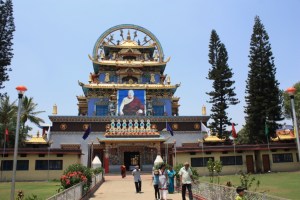
We did take one long weekend trip at the end of the month. We went to Coorg and stayed a couple of nights at a coffee / tea plantation near Madikeri. We stopped along the way to visit the Namdroling Monastery, which is a Tibetan Buddhist monastery set up by exiled Tibetans in the early 1960’s. It’s one of the largest Tibetan communities in South India, and is the largest teaching center for the Nyingma sect of Tibetan Buddhism in the world. The monasterial campus was impressive.
IMG_1599


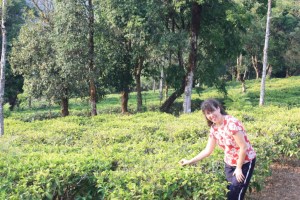
The serenity of the plantation provided a welcome respite from the horns and chaos of Bangalore. The Golden Mist Plantation is owned by a German who spends part of his year in Germany and part of the year in Coorg. Interestingly, they sell only organic products, which they largely export because organics are just beginning to catch on in India and not at the same scale as in Europe and other parts of Asia. The food was great, and—needless to say—the coffee and tea were fresh as can be.  We had a couple nice hikes in the Coorgi countryside, and I had authentic Coorgi pork—that’s a popular Indian dish from these parts.
IMG_1838


April:

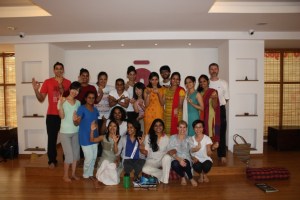
April saw me begin my 200 hour yoga teacher training course (RYT-200) at a1000 Yoga. This course ran about 4 hours a day for five days a week through May 23rd.  The first hour and a half to two hours each day was yoga on the mat, and then we got into a broad range of subjects dubbed “theory” in the afternoon. These included yogic philosophy, Indian approaches to the body (chakras, nadis, granthis, kundalini, koshas, prantas, etc.), Western anatomy and physiology, and the historical development of yoga. The most unusual practice we learned was jala neti, in which one pours warm salt water in one nostril such that it drains out the other, cleansing the nasal passages. It wasn’t as bad as it sounds, and—given the dustiness of India—it’s a valuable skill to stave off sinusitis. Most of the course was about learning yoga, but the last week focused on learning about teaching.
IMG_1536


May:

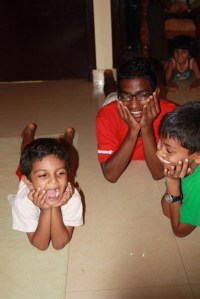
The RYT-200 course occupied most of my time during this month as well. Even after the course ended on May 23rd, there were many requirements to be met and they all had to be documented. This included seva, which was charitable teaching requirement that we did at another of Bangalore’s (unfortunately) many orphanages.  This was a smaller shelter than the BOSCO center, and was run by an individual man rather than a large organization. Again, the kids were enthusiastic and well-behaved and made the process a happy one. I also had class observations to make as well as documenting my own teaching experiences from the guesthouse class and sadhana (my personal practice.)
IMG_1603


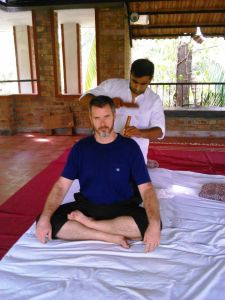
At the beginning of May, I completed a workshop in Tok Sen. Tok Sen is a Thai approach to massage that uses a mallet and a wooden chisel-shaped tool. While it sounds less than pleasant, it’s actually quite enjoyable. I had no idea what to expect besides that it was a Thai approach to body work that used wooden tools.
shoulder_work_on_me


Toward the end of the month there was a Kalaripayattu demonstration. This was the first time I’d seen the art practiced besides in Kalari sessions. Needless to say, it was much more acrobatic and stunning than day-to-day training. It featured many weapons, including the urumi, which is a four to six-foot flexible sword that old-time practitioners wore as a belt. Urumi demonstrations are about as edge-of-the-seat as one can imagine. While the demonstration is choreographed, the urumi is a severe injury waiting to happen. It requires the utmost attention on the part of both participants.
20140523_212734


June:

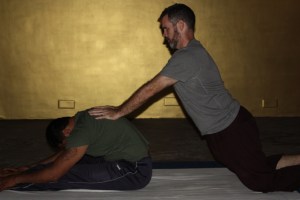
June was an intense month for my yoga practice. In addition to my own personal practice, which I was still documenting for my RYT-200 certification, I was attending 5 to 7 studio sessions per week. I was also able to do some refresher training with my Thai Yoga Bodywork teacher as he was running the Level I and II course in Bangalore, and I attended a few days.
IMG_0068


July:

In July I finally got my RYT-200 journal in and accepted, completing the requirements for a RYT-200 Yoga Teacher certification. Through the first half of the month, I was largely working on finishing up the last of the requirements and typing it all up into a 54 page account of my yoga life (not even double-spaced) since the courses beginning including my teaching, personal practice, observation of master teachers, etc.


We made our first trip to Kerala, another of the states in south India—bounding the Arabian Sea. We overnighted on a houseboat in the backwaters, got our first Ayurvedic massage, stayed at a resort in tea country, and toured the historic Malabar spice capital of Kochi (Cochin.) We were very fortunate with the weather in that we visited Kerala during the heart of rainy season, but stayed dry for the most part.

IMG_0178


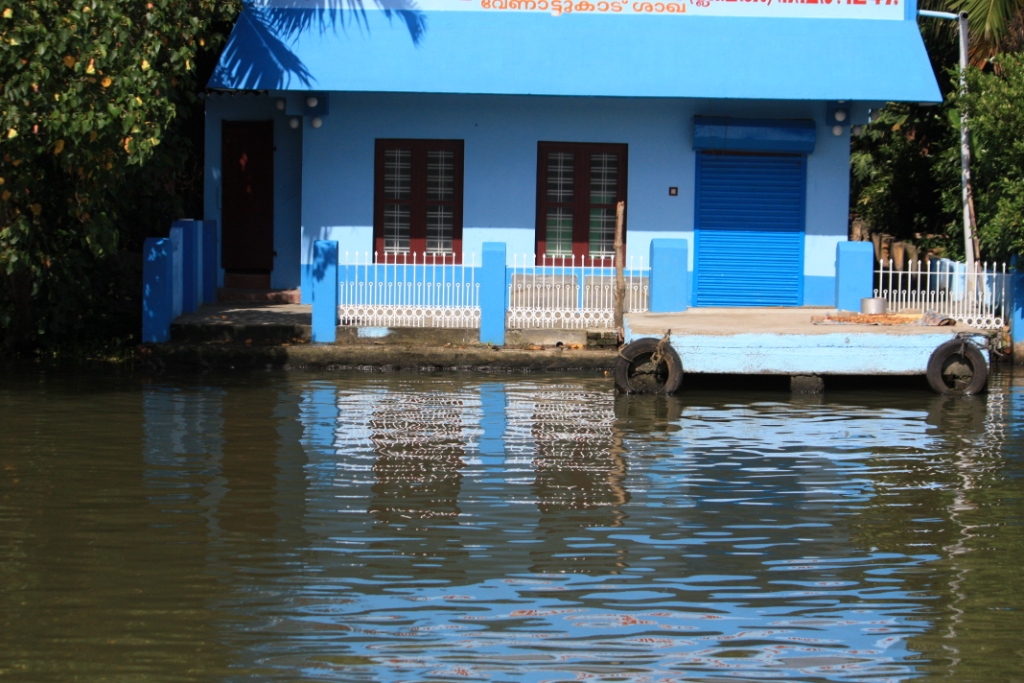
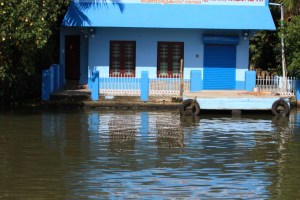
Our houseboat stay was great. Our cook was skilled and the meals were outstanding. Chugging through the backwaters, I felt like a young Martin Sheen heading into the jungle to track down a rogue Army officer who became a cultist chieftain. Except that there was so much life and the ubiquitous Indian flare for color and sound. We got to see a snake boat crew in training, and saw so many colorful houses ornamenting the lush dikes—usually with verdant rice paddies as a backdrop.
IMG_0274

Ayurvedic massage was an unusual experience. It was the most oily I’ve ever been. Days later I felt a little like greased pig. It took place on a massive hardwood slab that had a channel carved through the middle to keep the oil from sluicing over onto the floor, an event that would cause the most skilled masseuse / masseur to slip fatally. The table looked a little like an autopsy table carved out of hardwood. It was a very impressive looking piece of furniture and not the least bit comfortable on one’s bony parts.


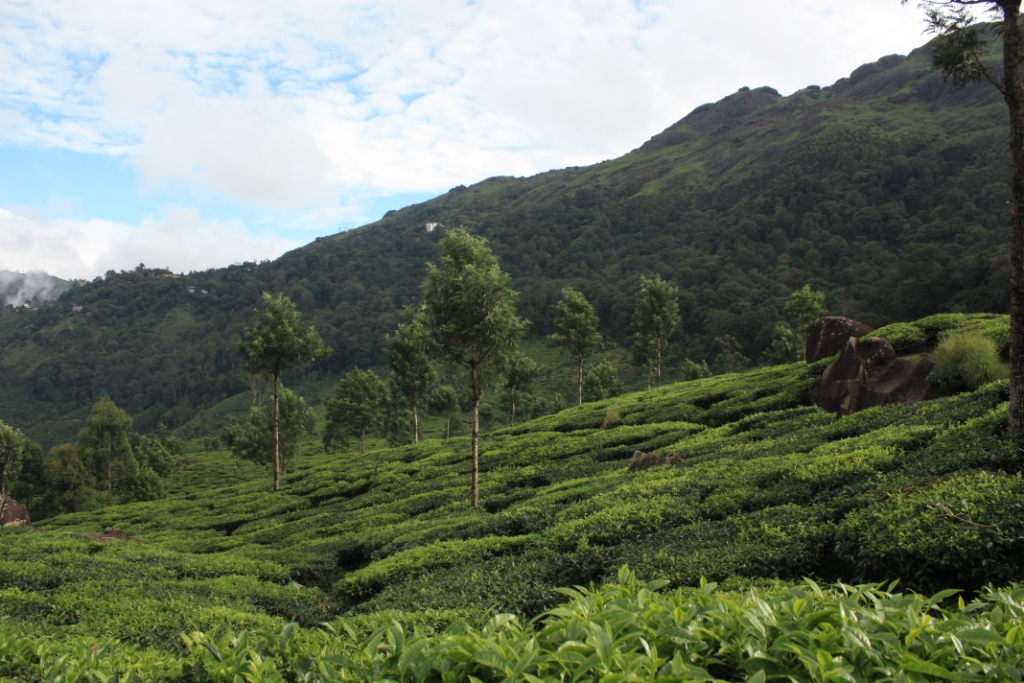
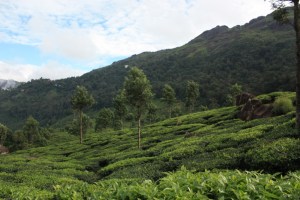
Munnar, amid the tea plantations, was green hill country and the low hanging clouds and vast expanses of tea bushes made it a scenic wonder. There were also some waterfalls in the area. It was misting part of the time we were here, which brought out the full jungle feel.
IMG_0565


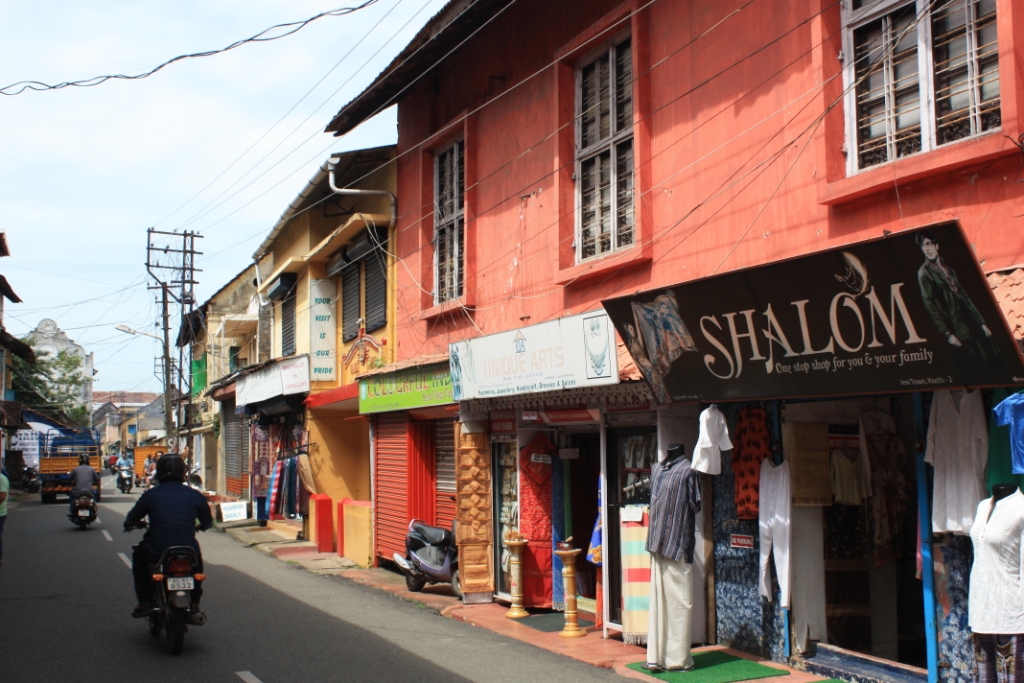
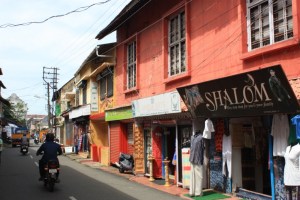
Kochi is an enigma: ancient and modern, small but global. Its history is shrouded in the mists of time. It’s been an important center of commerce since who knows when. While trade with Arabs, Jews, and Chinese are all well-documented, it’s said that this port was familiar to the Greeks and Romans as well. When spice was king, Kochi ruled.
IMG_0977


August:

Lilla and I attended a yoganidra workshop this month. Yoganidra literally means “yoga sleep” and it’s a relaxation technique in which one maintains a state that is neuro-electrically like being on the edge of sleep. As you may know from visions that pop into your head right before sleep, those dreamlike random fragments that don’t make a lick of sense, this is a fertile state for the subconscious mind.


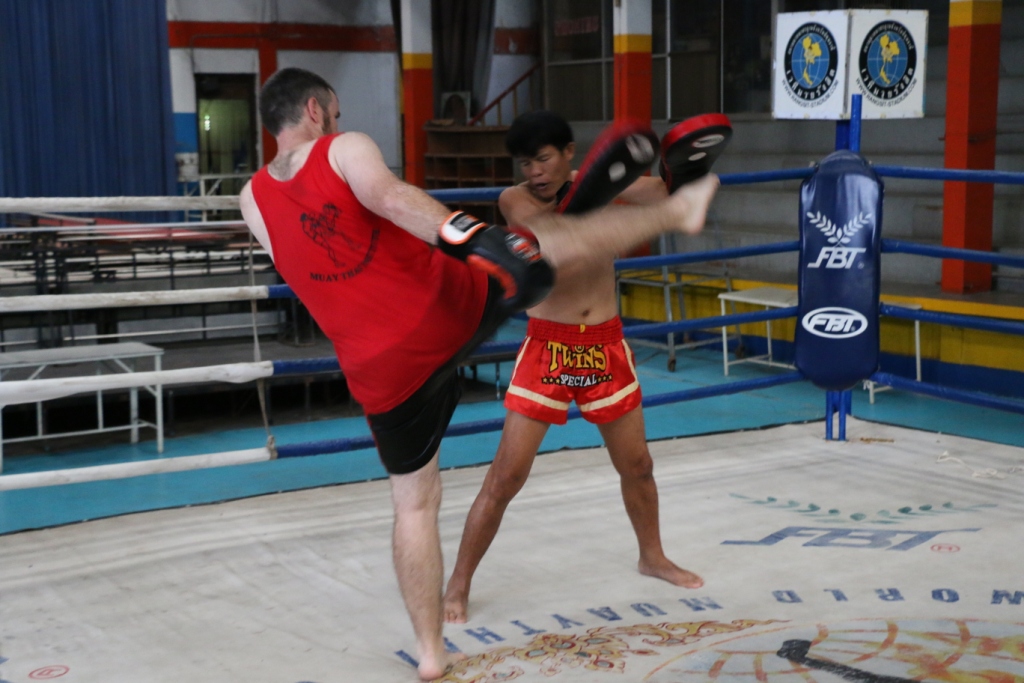
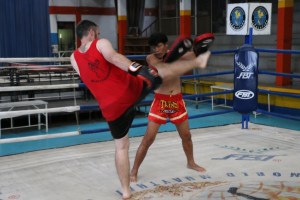
My second visit to Thailand took place in August and September. I left out on the August 20th and returned on September 17th.  From the 20th to September 3rd, I was training at the Muay Thai Institute (MTI) in Rangsit, Thailand. This involved training four hours a day—i.e. two 2-hour sessions. Unlike Tiger, which offered a wide range of classes, MTI specializes in Muaythai and all my training time was devoted Muay Thai. (At Tiger I generally trained one Muay Thai session per day and one other session in boxing, grappling, or muay boran.)  I was in the freestyle tract, and had a well-rounded experience of footwork drills, bagwork, pad drills, shadowboxing, and a bit of sparring.
IMG_4881


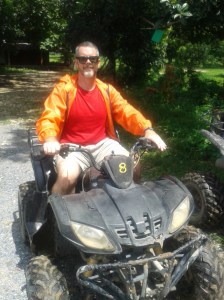
While I was training at MTI, I took one day trip with other trainees to play paintball, ride ATV’s, and go rafting. This also involved stops at a couple of temples at Ayutthaya, one of which I’d visited on my 2012 trip and another which was new to me. The one I’d visited before is Wat Mahathat, which famously appears in Jean-Claude Van Damme’s Kickboxer movie.  Wat Mahathat is particularly famous for a Buddha head that’s enveloped by Strangler Fig roots.
20140825_134351


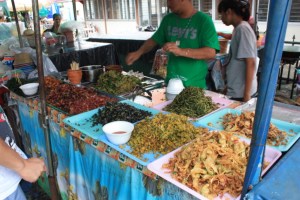
I also took a boat trip around Koh Kret, which is an island in the middle of the Chao Phraya River—i.e. the river that runs through Bangkok. Koh Kret has a popular market and is known for certain unusual street foods like fried flower petals.  The only other place I visited during training was the J.J. Market, Bangkok’s sprawling weekend market where one can buy everything from pets to artworks to cheap tsotchkes to Louie Vattan (that’s how it’s spelled there) purses to street food. I’d been once before in 2012, but still got lost in its maze-like corridors packed with goods.
IMG_1360


September:

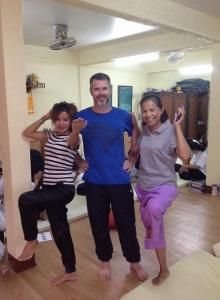
After I finished my second training week at MTI, I moved into Bangkok to a guesthouse in Chinatown.  This was a short walking commute to the Wat Po Thai Traditional Massage School where I completed the General Thai Massage course and the Foot Massage course. These courses were each 5 days long, and the first one is a prerequisite for just about everything at the Wat Po School.
IMG_2074


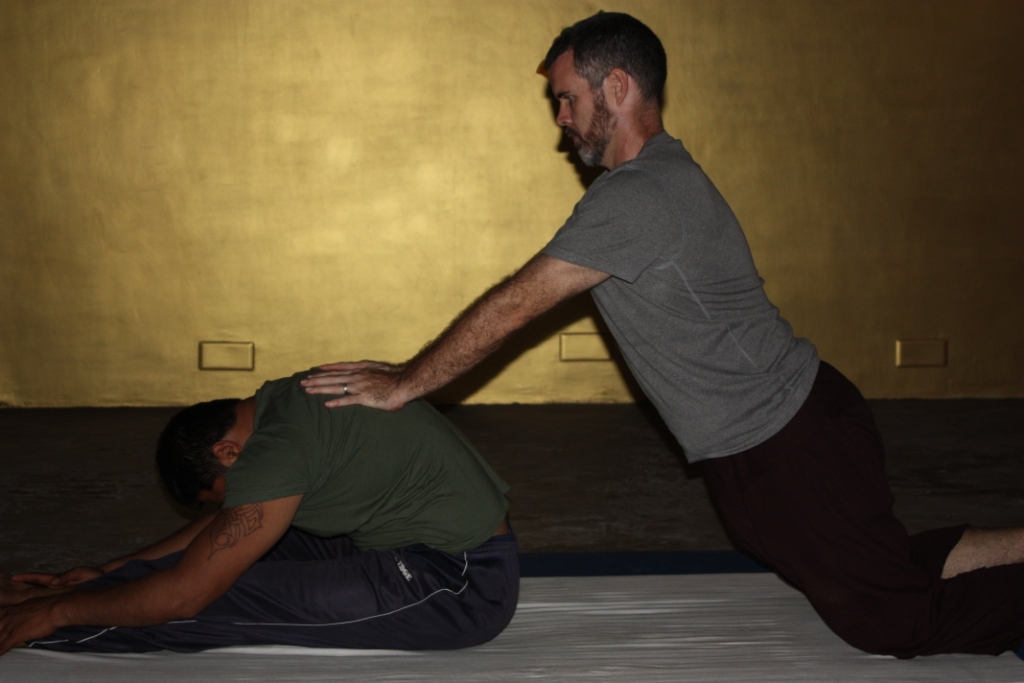
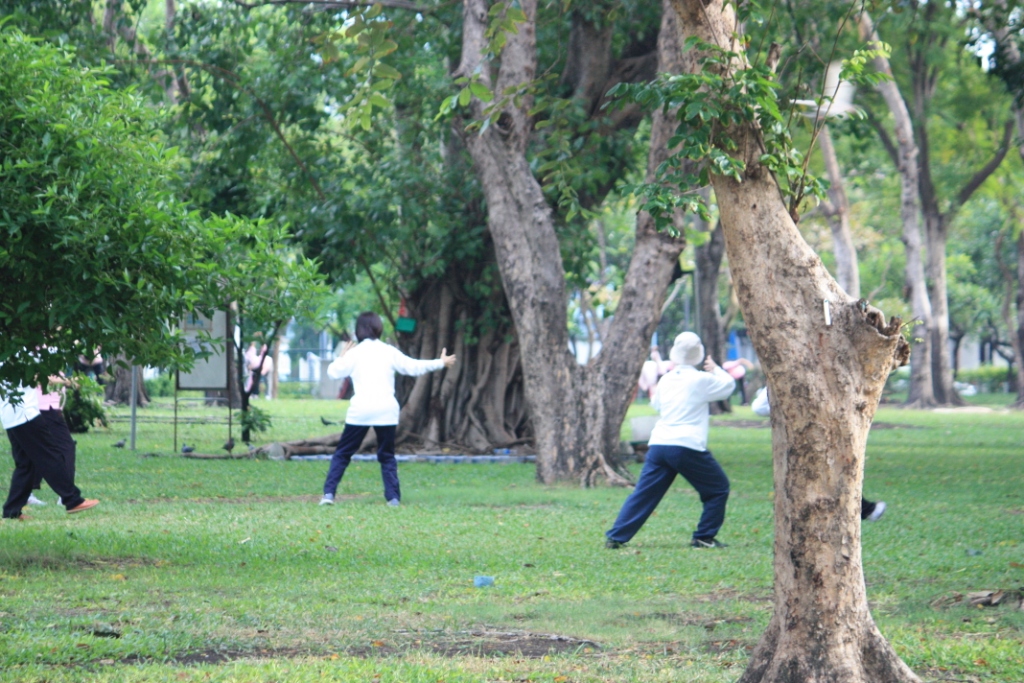
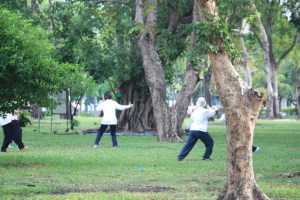
In the morning I would work out in one of two nearby parks frequented mostly by elderly fitness-buffs doing tai chi, chi gong, takraw, or Jianzi (the latter two being hacky-sack like games played with a woven ball [Thai] or a feathered weight [Chinese], respectively.)  On several occasions I went to the Thai Yoga (Russi Dutton) classes that were run inside the temple grounds. Then I would go to class for the day. The General Thai Massage sequence was gradually taught by parts defined by position (supine, side, prone, and seated), and it was not so different from the Chiang Mai style I’d learned in Bangalore. With the Foot Massage course, we began doing the entire sequence from the very outset, which meant one got to practice it about 10 times over the course of the five days.
GeneralThaiMassage2


I was glad to visit Wat Po this time, as it’s the most important Bangkok sight that we missed during our 2012 visit. I also made it across the river to Wat Arun. I also made a trip across the river to a popular seafood restaurant on the edge of town with a group of fellow students from my General Thai Massage Course. With the same of Thais and Germans, I had dinner at the top of the tallest building in Thailand, the Baiyoke Tower.
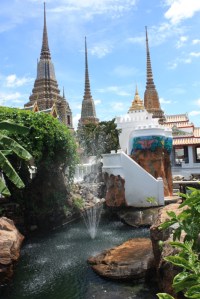
IMG_1634


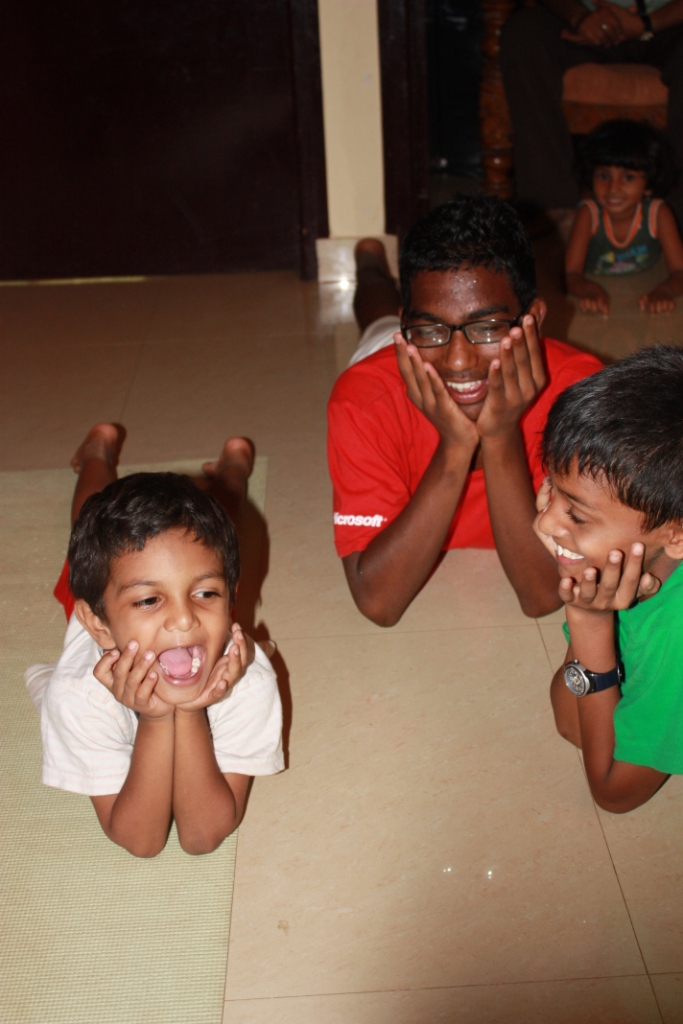
After I returned to Bangalore, there were two small events of note. I attended a function for the children at the KAMMS put on by Lilla’s firm, Grant Thornton, which is the third youth shelter /orphanage I’ve visited. This was the largest group of kids I’ve seen, because, unlike the other shelters, it was both genders and a wide-ranging age group. Again, the kids were very pleasant to be around.
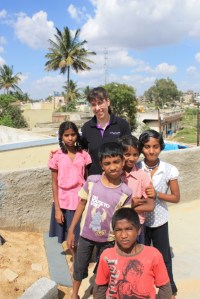
IMG_1668


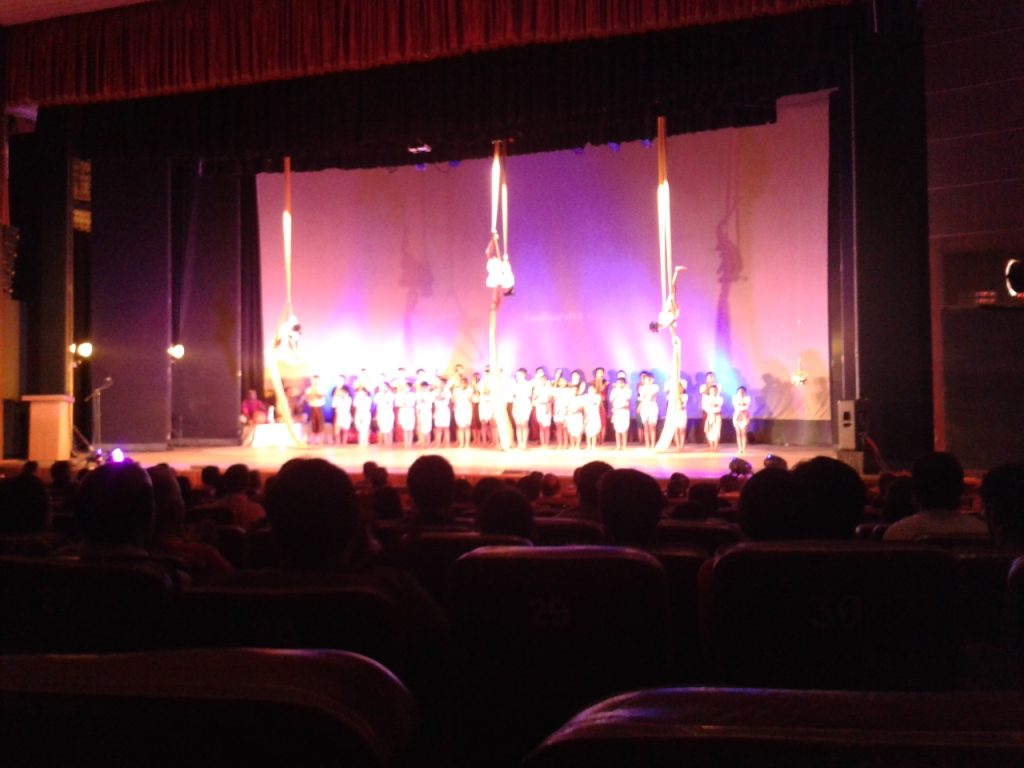
I attended another Kalaripayattu demonstration. This one was out of town at the Kalari Gurukulam, which is the parent school to the Kalari Academy where I’ve been attending classes. This would not be noteworthy except that I was briefly interviewed by a Canadian film crew who were making a documentary about old martial arts in Asia. They’d previously interviewed the Master of Bokator in Phnom Penh, and were making their rounds through the rest of Asia. (I almost visited that same school in Phnom Penh in 2012, but our limited time didn’t allow it. There was a time when it looked like moving to Cambodia might be a possibility.)
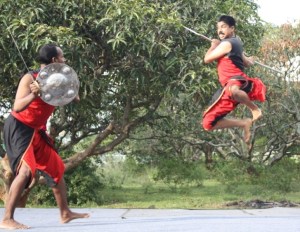
IMG_2246


October:

The big event in the month was our 20th wedding anniversary.
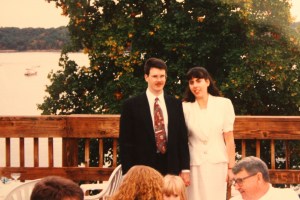
IMG_4492


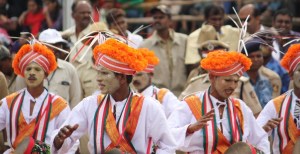
Our big trip this month was to Mysore for the Dasara festival. We took the train, our first Indian train ride. Mysore is a city that’s only about an hour and a half away from Bangalore.  While it’s much smaller than Bangalore, it’s also more popular with tourists and travelers than Bangalore because of its history as a long-standing capital of the Wodeyar Kingdom and as a global center for yoga. It’s a yoga mecca because it was the home of T Krishnamacharya, who was the guru to some of the most famous yogis of the modern era, including B.K.S. Iyengar, Indira Devi, Pattabhi K. Jois, and T.K.V. Desikachar. Pattabhi Jois, founder of the Ashtanga Vinyasa style of yoga, also lived in Mysore and ran a school there until he passed away in 2009.
IMG_1714


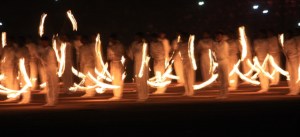
Anyway, Dasara is huge in Mysore. They celebrate all 10 days with various events around town. However, the processional and the torchlight parade on the last day are the major draws, and we had seats for both of those events. For the processional we were right up front at the start of the parade route. For the torchlight parade our seats were not as great, but close to the front. We revisited the Zoo, which this year was rated the best in India by a TripAdvisor survey. There was flower show in progress for the festival.
IMG_2111


I attended a 10-day Advanced Hatha Yoga workshop that focused on building the capacity to do challenging intermediate and advance yogasana (postures.)


November:

I did a couple of sessions of intern/assistant teaching of corporate yoga for a1000 yoga, and will do some more after the beginning of the New Year.


Lilla and I went to a talk on philosophy which introduced me to an organization near our home that we were completely unaware of called the New Acropolis. It’s a school of practical philosophy. This led me to sign up for their introductory course, which takes place every Tuesday night. The class covers a wide range of topics in the domain of practical philosophy. (By practical philosophy, I mean philosophy geared toward substantively improving oneself, as opposed to sitting around staring at one’s navel and bemoaning our inability to know whether anything is real or whether we are all heads floating in vats.)  As of this writing, I’ve attended three of the first four sessions (I was in Maharashtra for one of the classes) and have found it to be a fascinating experience.


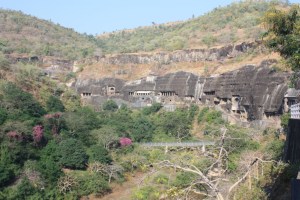
As you may know from my recent posts, this month I traveled to the Indian state of Maharashtra. Lilla and I were going to Mumbai to visit a relative, and I decided to take advantage of the relative proximity to visit the Buddhist caves at Ajanta and Ellora. The caves are among the most important archeological sites in India, but are out in the boondocks, and so they aren’t as well-known as, say, the Taj Mahal. However, in their own way I would rate them—as I do Hampi—as far more impressive than the Taj. A city of about 1.2 million, called Aurangabad, was my base from which to visit the caves. Aurangabad has a few sights of its own, most notably a copy of the Taj Mahal that is from the same era. Aurangabad also has its own set of caves that are nowhere near as extensive as the ones at Ajanta and Ellora, but are worth a visit, and it has remnants of fortification from the days when it was Aurangzeb’s capital.
IMG_0310


December:

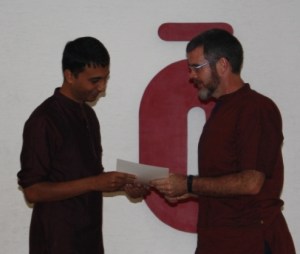
Because the last graduation date occurred while I was in Thailand, I attended the graduation to get my RYT-200 certificate.
IMG_1584


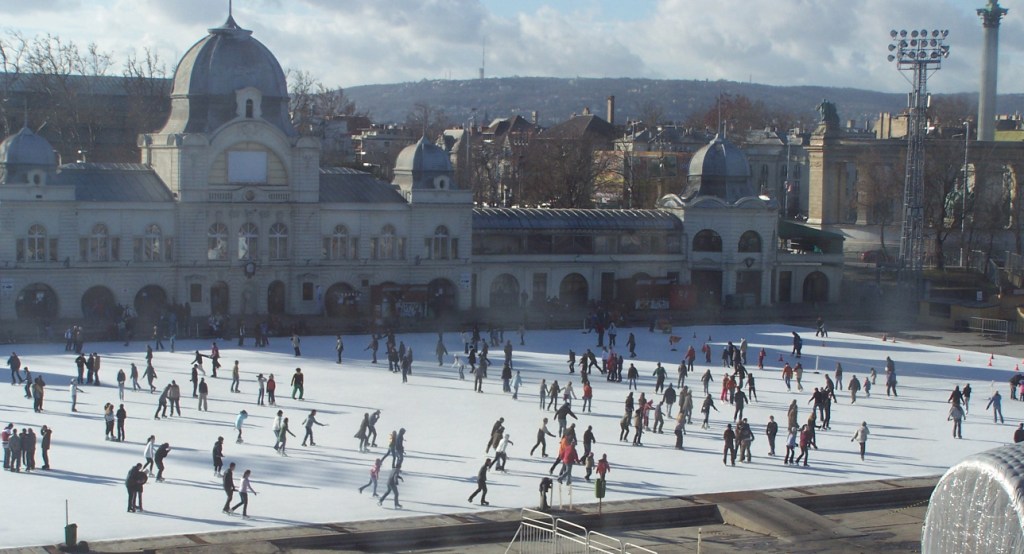
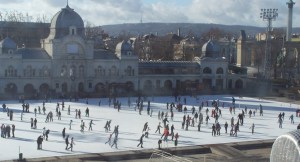
We have one more trip for the year. Lilla and I will be traveling to Hungary in the middle of the month and will be there through New Year’s Day. We last visited Budapest in the summer of 2011, and haven’t been there in the winter since 2008. We haven’t experienced seasons, in the conventional sense, for a year and half–so that’ll be interesting.  (Bangalore has two seasons, rainy and dry, and even those can be muddled, as they were this year.) While I’ve been to Hungary many times, I hope to see some new sights this time, including a possible trip to Pécs, which will be my first Hungary trip south of Balaton. There are also some quirky Budapest locations listed on Atlas Obscura that I’d like to check out.
Skating_rink


The Upcoming Year:

I hope to do some new and interesting things in the upcoming year as well. Probably the oddest activity for the year will be attending the Vipassana Meditation Course. It’s 10 days on the outskirts of Bangalore with no books, notebooks, or electronic devices of any kind, and during which my only interaction with other people will be daily meetings with a teacher. It’s meditation all day every day for 10 days straight. From accounts I’ve read it’s an amazing or insanity-inducing experience.


Writing: The past year hasn’t been as productive as I’d like on the novel front. As I mentioned, I’ve traveled quite a bit and had major time commitments on the Yoga Teacher Training front. A fragmented life disagrees with novel writing because novels are long and fictional, so if you get away from it for any length of time you have a lot of reacquainting to do when you come back to it. If you’ve ever put a book you’re reading down for a month and had trouble getting back into it, multiply that by 100 and you’ll know the challenge of doing the same for a book you’re writing—so many details for which continuity needs to be maintained.  I tossed my first to chapters out entirely and rewrote them from scratch, having to update the rest to accommodate the new beginning. I’ve hemmed and hawed for days over certain plot points and devices.


Having said all that, I’m converging on a product that I’ll be ready to submit sample chapters to agents from in 2015. Most of the points that have been giving me problems are worked out as well as I think they are likely to.


I’ll do some revamping of my website, part of which I’ve already begun.


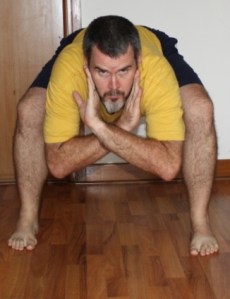
Martial Arts:  I expected that the jumping-intensive level of Kalaripayattu would be the end of that martial art for me. I’m not built for leaping. However, having cut some weight and built my fitness, I’ve found that my old body has taken the acrobatic craziness surprisingly well. So I’ll continue taking classes at the Kalari Academy as long as my body holds up.
IMG_1226


I plan to check out another martial art as well. There are a number of Muaythai places in Bangalore, and I may see if any of those work for me.  I don’t have any plans to travel to Thailand in the upcoming year, but—if I do—I’ll make sure to squeeze in some Muaythai.  (Actually, wherever I go I’ll try to squeeze in some of the indigenous arts.) Alternatively, there are Krav Maga classes offered at the New Acropolis, and that would be convenient to check out.


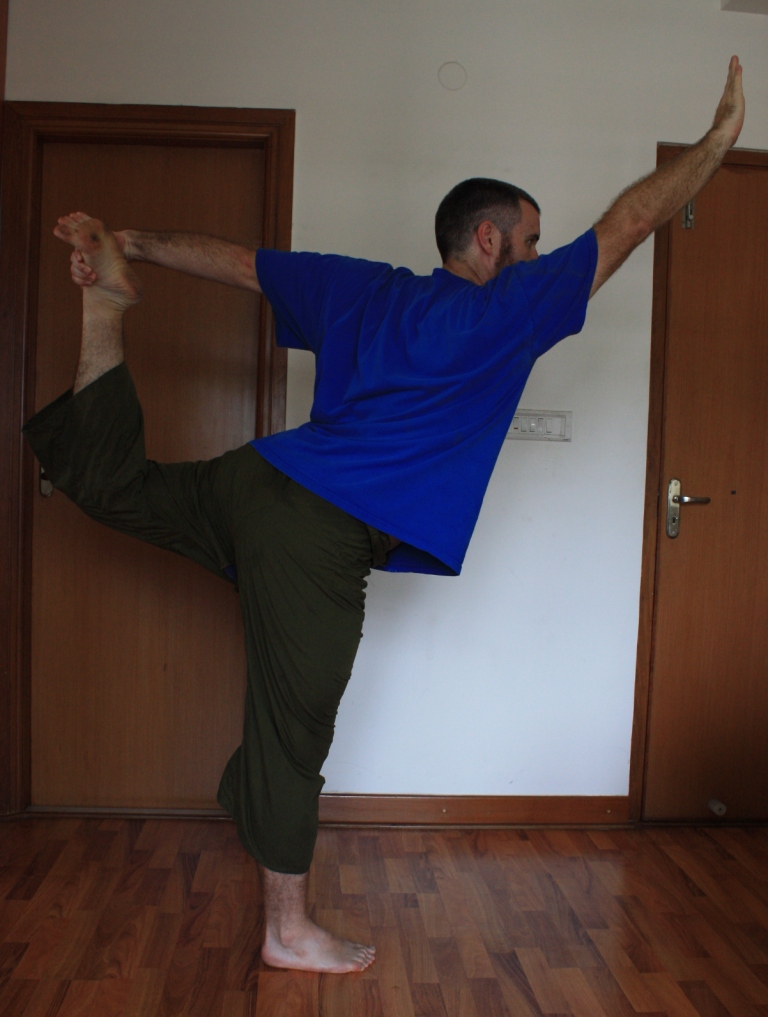
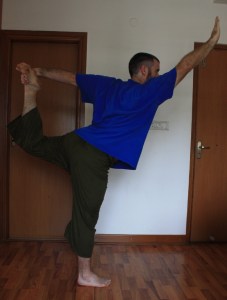
Yoga: I’d originally planned to do the 300-hour course that would complete my RYT-500 certification, but it doesn’t look like it will work with my travel schedule. However, I do intend to continue my studies, and—in particular—may pursue specialty teacher training courses in Children’s Yoga and /or Prenatal Yoga. There are also some intriguing workshop opportunities in Ashtanga Vinyasa and Iyengar Yoga (props yoga.) I may even try out the yoga in Mysore.
Natarajasana_Hatha_side

I’ll continue to teach my MWF courses as long as there is interest and will maintain my own personal practice. Also, I’ll try to do some interning / teaching of corporate yoga classes.


Travel: We don’t have any specific trip planned past our December Hungary trip, but we’re sure to see some fascinating places in 2015.


It looks like I may have to make a trip to the US during the summer time-frame. However, if I don’t have to take care of business with the house, I’ll probably stay in Asia and visit some other country—possibly Burma. Lilla and I are planning to make a trip to the Himalayas sometime during the summer. This may involve a trip to Amritsar (location of the Sikh Golden Temple) in conjunction with visiting McLeod Ganj / Dharamsala (home of the Dalai Lama and the Tibetan government in exile) and Shimla or Ladakh or other Indian portions of the Himalayas. Alternatively, we may go to Nepal.


Among the Indian locations that remain on our list to see are Khajuraho, Varanasi, Pondicherry, Hyderibad, Chennai (with Kanakapura), Kolkata, and Darjeeling. That’s not to mention countries nearby that we’d like to visit while we’re here like Burma and Sri Lanka. It’s unlikely we’ll pack all that in to 2015, but hopefully we can make a dent in it.


Well there’s my 4,500 word narcissism-fest, but it has pictures.

TODAY’S RANDOM THOUGHT: Chasing MacGuffins

What's the "Rabbit's Foot?" Source: Paramount

“What’s the ‘Rabbit’s Foot?'” “I don’t know, but I’m going to shoot her in the head if you don’t give it to me.” Source: Paramount

Critics often bemoan the effectiveness of MacGuffins. A “MacGuffin” is an object so intrinsically valuable that people are willing to kill for it, die for it, or chase each other across the universe for it… and this is the important bit…without knowing precisely why said object is so valuable. In other words, it’s a plot device designed to propel plots forward that would have no reason to advance otherwise. Its exact characteristics are unimportant, and sometimes even its general characteristics remain unrevealed.

Prime examples from the cinema include “the case” from Pulp Fiction, the “Maltese Falcon” from the same-named movie, the “one ring” from Lord of the Rings, the sword “Destiny” from Crouching Tiger, Hidden Dragon, the “Rabbit’s Foot” from Mission Impossible III, the “Tesseract” from The Avengers, or “Genesis” from Star Trek II: The Wrath of Khan.

So, why would people kill, die, or chase after something that they didn’t understand? That’s what the aforementioned critics say, but I have my own theory as to why MacGuffins work well and frequently.  MacGuffins work because people are used to spending their lives chasing something that they don’t precisely understand. Call it bliss or legacy or a missing part of oneself. If one spends one’s life chasing after a key that may or may not achieve one’s desired goal, it would be hypocritical to not have sympathy for characters who do the same.

TODAY’S RANDOM THOUGHT: Death as the Good Drunk

I don’t think Death should be depicted as a cowled, faceless Grim Reaper.

Instead, I think Death should be the wise drinking buddy who can hold his liquor.  Not the one who acts like an idiot an encourages friends to do the same. Rather, the one who spurs you to ask out a girl who’s way out of your league, and keeps you classy if (when) she declines.

DAILY PHOTO: Half a Tree is Better than None

Taken December 7, 2013 in Cox Town.

Taken December 7, 2013 in Cox Town.

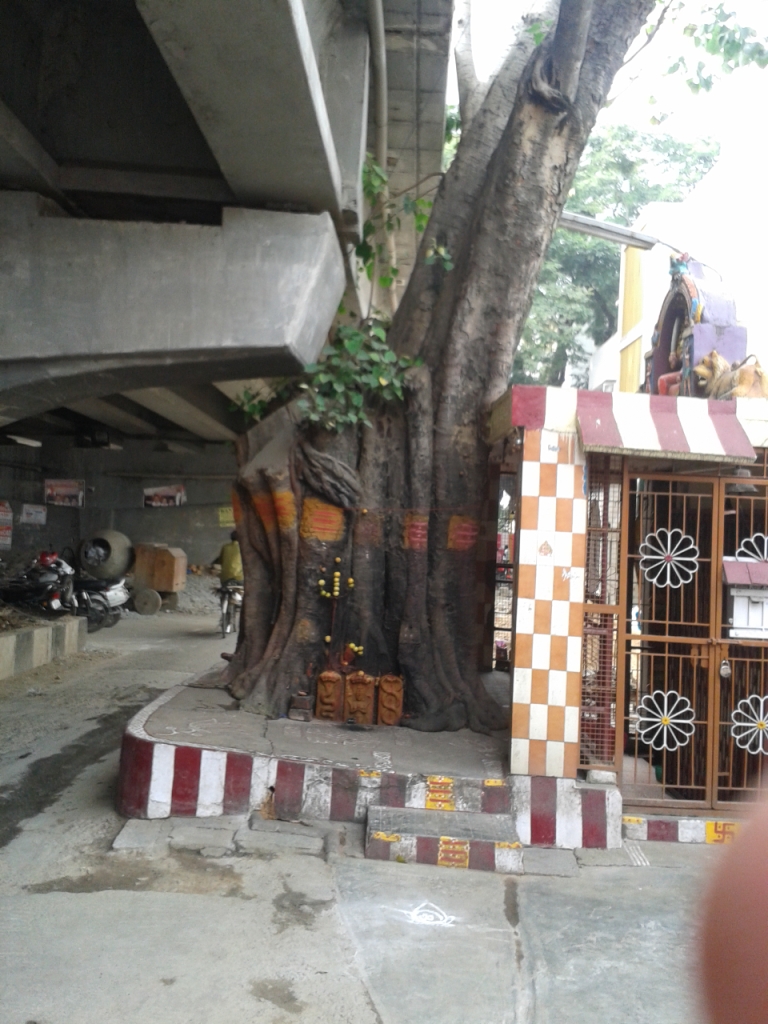
I took this photo yesterday in Cox Town as we were walking over to the United Charities Bazaar (a great and highly recommended event.) It’s a tree that juts out into the road next to a small Hindu temple. When they put in a flyover, they cut away quite a bit of the tree, but the part that remains seems to be thriving.

When one moves to a new country, one experiences a wide variety of cultural insights. All of a sudden, this invisible thing called culture becomes visible. There are, of course, many norms that grate on one’s nerves with respect to the culture one has been transplanted into. In the vast majority of cases, there isn’t anything inherently wrong with the new culture–they are just differences, just shocks to one’s system. There are a few cultural proclivities that one can fairly say are objectively inferior, and it’s a testament to India that they are trying to fix these problems (e.g. by outlawing the caste, by trying to prevent killing off of girl children, etc.)

However, if one is honest with oneself, one also gains insight into one’s native culture, and its particular inferiorities.  As I said, we take culture so for granted that we don’t necessarily even see the peculiarities of our own culture. One of the Indian  norms that I find most laudable is the preservation of living things to the extent possible. Put alternatively, one of the norms of my own culture that I’ve come to find most dismaying is the belief that anything that causes a person the least inconvenience must die immediately.

I imagine that some Westerners in India find it to be a pain to have to step out into the street when walking down the sidewalk because there are occasionally ten-foot diameter trees hogging the whole sidewalk. In the US, they’d just cut down the big tree and replace it with a dwarf tree of some sort that would never give them a problem–and if it did, just get out the saw.

Training the Mind


IMG_0520Left to its own devices, the mind is like Indian traffic: chaotic, noisy, slow-moving, relentless, and brimming with latent rage. Meditation is a tool to help unsnarl the traffic jams so that one can observe the mind as something other than indecipherable chaos.


Meditation isn’t the end game. If one goes to the gym daily to lift weights, but one has no interest in–or use for–putting one’s muscles to practical use, one is engaging in an act of vanity more than one of personal development. In the same way, if one builds one’s awareness of the mind, and doesn’t use it for betterment in one’s daily life, what is the point? What do I mean by betterment? I mean defeating the petty elements of one’s nature that cause oneself and others suffering and that keep one living in a world of delusion.


Meditation trains one to take note of the daydreams and obsessive thoughts that run through one’s mind, and to do so progressively sooner—before they can coalesce into a full-blown avalanche of negativity and delusion. In meditation, we observe these errant thoughts and then let them float on down the river. As one lives one’s waking life, however, one may take time to consider what these thoughts and daydreams are doing for one. Often one can remain ignorant of the purposes these thoughts serve, realizing only that they make one feel better temporarily.


A few of the purposes that these errant thoughts may serve are:

martyrdom (i.e. thinking the world is against one so whatever goes wrong is the result of outside forces)

-ego-boosting (imaging one has the confidence to do something one doesn’t in reality)

-empowerment (fantasizing one has power in the face of feelings of powerlessness)

-wishful thinking (imagining a perfect life just a PowerBall ticket away)


So, if these thoughts make one feel better, why shouldn’t one let them fly? For one thing, they keep one from seeing the situation as it is. The fantasy or obsessive thought becomes one’s reality and one remains ignorant of what is real. The problem is that if one wants to fix the problem, one must know what it is (i.e. have a true view of it.) If one imagines that one has no role in the problem, then how can one fix the problem? If the problem is one’s unhappiness, one can always do something—even if one can’t change the external situation.  One’s unhappiness is a function of one’s mind, and is, therefore, under one’s control.


Second, by giving into obsessive thoughts and fantasies, one becomes dependent upon them as crutches, and becomes stuck in a cycle of helplessness.


Third, when one removes oneself from the problem, one denies one’s power to change the situation—or the emotional result. One makes oneself vulnerable to manipulation. If one doesn’t recognize the ability of another person to “make one mad,” one denies them that power. (But this requires accepting that one has a responsibility for one’s emotional state, a sometimes uncomfortable proposition.)


I have a theory that the steadfast pursuit of an enlightened mind will either result in enlightenment or insanity. Why should it result in insanity? Because, the process involves stripping away the coping mechanisms that got one through each day. If one has the internal confidence (i.e. fudōshin, or immovable spirit) to stare in the mirror and see one’s flaws and weaknesses, one may achieve an enlightened state. If one lacks such confidence, seeing those flaws and weaknesses may be depressing. Of course, fudōshin  is just one side of the coin, it also matters whether one has the relative freedom from stress to lead an introspective life or whether one feels the constant pressure that propels most people back into old habits. It’s easier to make positive changes when one’s life radically changes, then the power of routine and habit lose hold.


The challenge is that the pursuit of an enlightened state of mind is a constant job. Some branches of Buddhism and other mystic religions suggest that enlightenment is a tipping point, and that once one achieves that state one is forever enlightened. I’m not in a position to refute such beliefs, but it seems that it’s more like being a sober AA member–there is an ever-present potential to revert to old habits of the mind. So, one must be ever vigilant. There’s no rest until one is dead… as far as I know.

9 Nights at an Ashram

Taken October 20, 2013 at Fireflies Ashram.

Taken October 20, 2013 at Fireflies Ashram.

Indian cities don’t whisper. They are often lovely, always lively, but offer little relief from bombardment of the senses. Horns are relentless. Bus and truck air-horns can make a person jump from one’s skin. The smells may be pleasing or putrid, but they’re never faint. There is sign pollution, wherein it’s often impossible to find what one is looking for in the sea of signage–even when it lies right in front of one’s face. Colors pop and glow, not smooth pastels, but oranges and purples that you can practically taste.

It shouldn’t have surprised me when I got to the southern edge of the city to find one of the major land uses was Ashrams. Ashrams in all shapes and sizes, from the small but authentic Narayana Gurukula (mentioned a few DAILY PHOTO installments back) to the massive Art of Living International Center–headed by Bangalore’s most famous guru, Sri Sri Ravi Shankar. Out Kanakapura Road, where monkeys sling through trees and fields of corn remind me of my own Hoosier upbringing, lies a diverse collection of houses of spirituality and reflection. They offer a much-needed island of tranquility amid a sea of chaos.

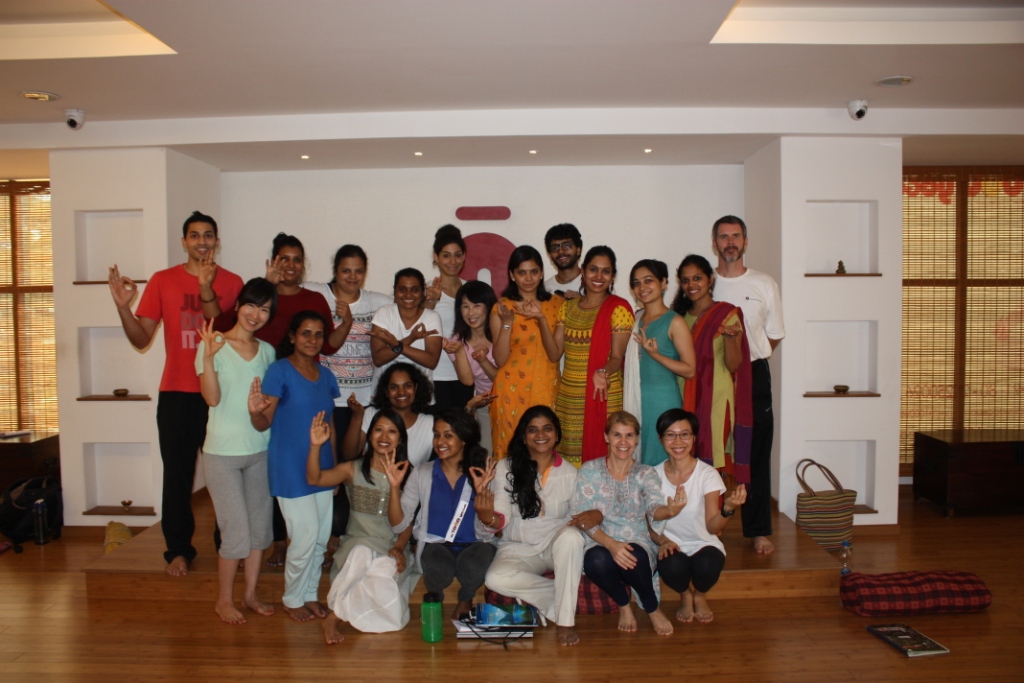
I stayed for nine nights at one of the most singular of these ashrams, Fireflies. One way in which it’s unique is that it’s a “guruless” ashram. That may seem oxymoronic. The terms “guru” and “ashram” seem to go hand in hand. Guru means teacher. My dictionary defines ashram as, “the home of a small community of Hindus.” [I think this definition could be challenged both on the necessity of “smallness” and “Hindu-ness.” As indicated, there are some pretty massive ashrams and there are ones that are associated with non-aligned spiritual groups.] It’s true that the typical ashram has a spiritual leader or yogi as its head. At Fireflies the gurus come and go with the groups that visit. While I was there, besides our group of Thai Yoga Bodywork practitioners, there was a group of psychotherapists and an organization of past life regressionists. Rather than housing a single unified set of beliefs, at this ashram a diverse and sometimes conflicting set of beliefs are harmoniously housed.

As I have little experience with ashrams, I can’t speak authoritatively about other differences. However, it’s my understanding that one other difference between Fireflies and many–more typical–ashrams is that the latter often have limited or non-existent staff. This means that the visitors may do much, if not the bulk, of the work. Fireflies has a staff that does the cooking and takes care of many needs of the visitors. This isn’t to suggest that it’s like a hotel stay. There’s somewhat of an expectation that visitors will take care of the things that they can do for themselves, and the accommodations are basic.

I found the experience of my stay to be beneficial, if not always stress-free. The main source of my stress had little to do with the Ashram. I received my phone sim card right before I left. After a couple of days I got my phone working for a day or two only to have the phone company turn it off because no one was home when they randomly dropped by to verify my address. [Showing up unannounced in the middle of the day and then treating you as non-existent if no one is home is one of the annoying little hallmarks of Indian institutions (corporate and government) that I’ve experienced on more than one occasion.] I will admit that it is a mark of both society’s and my own wussification that we can’t go a few days without being in contact with home and news of the world. Twenty years ago no one would have expected to have such constant verification that all was well in the world. People could go days back then without worrying that the sky was falling. While it wasn’t pleasant to be cut off, it was an eye-opening experience. [I will note that the Ashram property is on a slope and at the low end I got no reception at all, but on the high end I’d get a bar or two–enough to do the job if the phone company wasn’t screwing me over.]

It was also useful to go without brain candy for a while–that is without television and related entertainment. Part of what I hoped to learn from my stay was whether I was prepared to take the 10-day Vipassana meditation course in the spring. The Vipassana course is considerably more spartan level of existence than that of Fireflies.

On some levels, I proved ready, and on others I have yet to do so. I did just fine eating two vegetarian meals and a snack for dinner each day. (I could have had three full meals per day, but I wanted to make sure I was ready to cut my intake adequately. Therefore, I stuck with a snack in the evening and ate reasonable portions for breakfast and lunch.) I found the meals at Fireflies to be quite good, and I had no complaints in that regard. It should be noted that the ashram is not an easy walk to any restaurants or substantial stores (there are a couple small shops up on the corner, but they’re geared toward locals and don’t necessarily have what a traveler needs) so it’s not easy to go out for something–though I did see one auto-rickshaw around the premises at times.

The true test of preparation for the Vipassana course is that there are no books or notebooks allowed. This will be my greatest challenge. I finished two novels and two nonfiction books on Kindle during my stay, plus probably another 100 pages of other books, and I filled 2/3rds of a journal–mostly with notes from the TYB workshop.

Also, at the Vipassana meditation course one is not allowed to speak to anyone but the instructor at a specific time when they take questions about the course. I wasn’t nearly so cut off from humanity at Fireflies. The workshop participants and teachers were around all day and I had occasional conversations in the evening with others at the ashram. Furthermore, I’m a fairly solitary creature.

It was interesting that during the weekends there were so many people around, but during the middle of the week there were few. For a while I thought I was the only non-staff member person at the ashram—though I later found that to be incorrect.

So my time at the ashram was Spartan, but that’s part of the beauty of it.

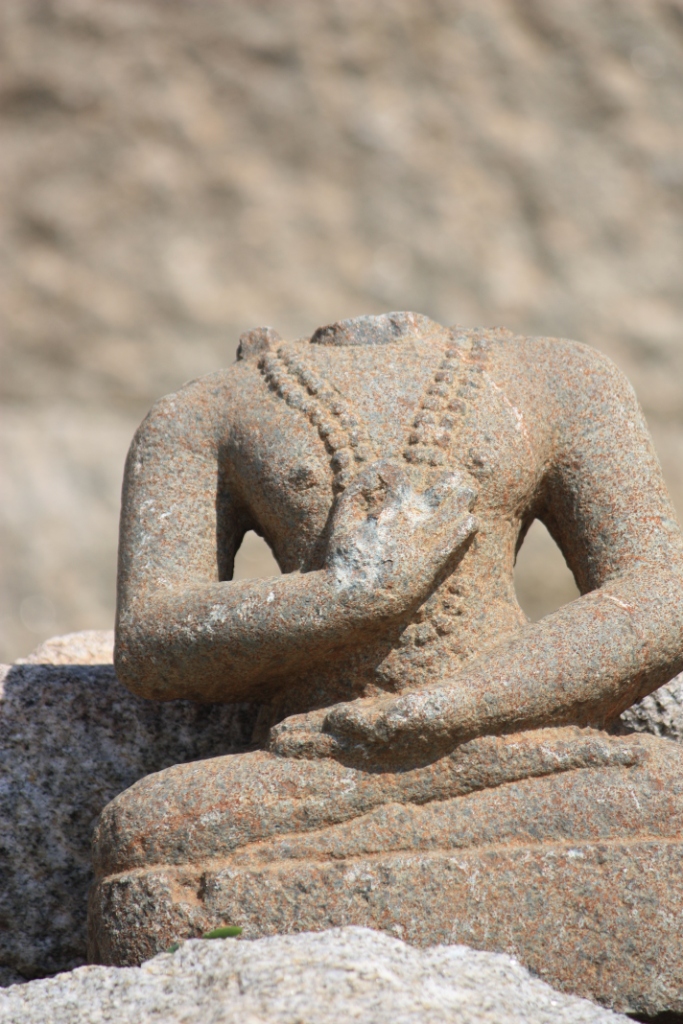
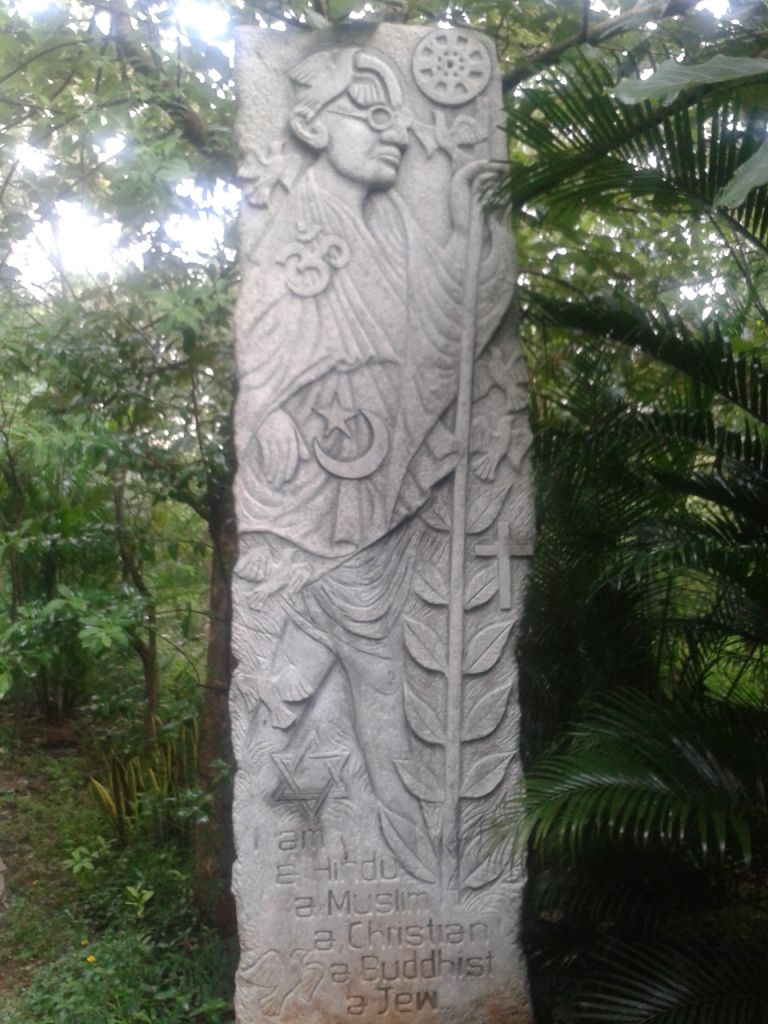
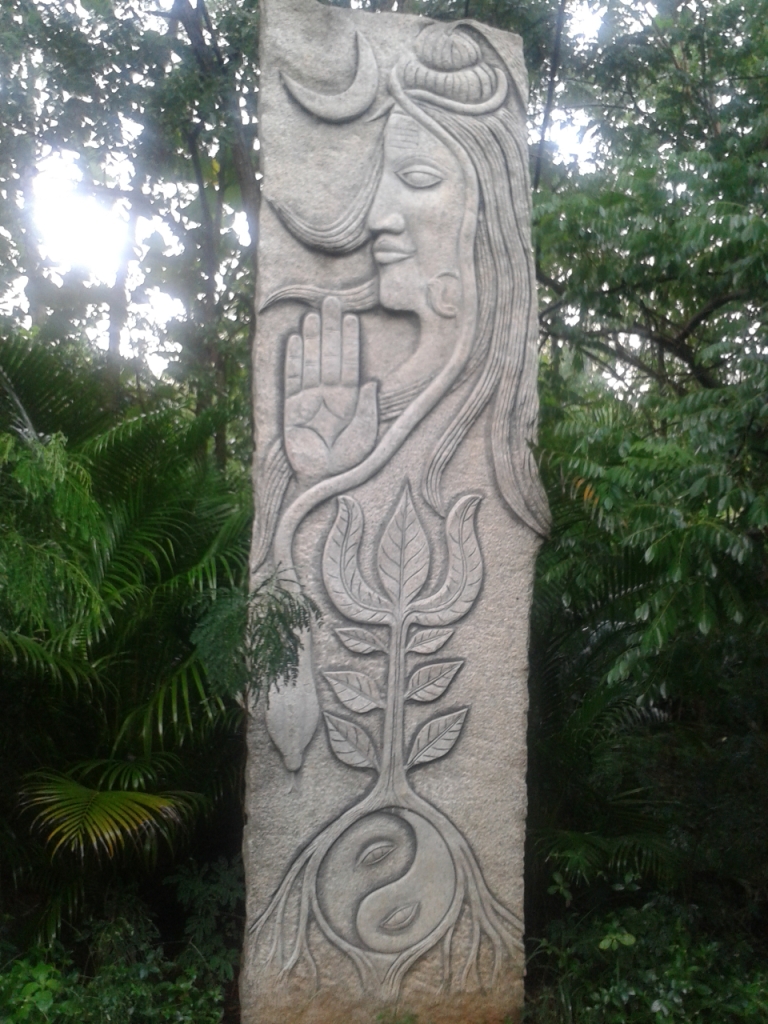
I should point out that there are some impressive stone carvings located throughout the property. The artists are international in scope. Each of these carvings or sculptures offers its own story. I’ll attach a few pics for your edification.

20120101_16151920120101_16142320120101_155241