BOOK: “Understanding Eastern Philosophy” by Ray Billington

Understanding Eastern PhilosophyUnderstanding Eastern Philosophy by Ray Billington
My rating: 4 of 5 stars

Publisher Site — Taylor & Francis

This book does a solid job for one that bites off so much in a single go. Eastern Philosophy is a large subject, and to try to outline the major premises of its varied systems and also compare them to Western / Abrahamic notions (when Western schools are sometimes no more different from Eastern schools than each side is within,) and to do so in under two-hundred pages is a daunting undertaking.

For the most part, I felt the book did a fine job of meeting its objective. A fair amount of selection and simplification is required. I will say the part describing karmic doctrine didn’t seem consistent with what I was taught and seems more in line with the early Western scholars who started writing about Eastern Philosophy but could not help but couch the subject in a Western / Abrahamic frame because it was what they knew and was invisible to them. I say this as one who is no big fan of Karmic philosophy, though for another reason (one which is also mentioned in this book.) I’ve always been told that the central idea is to do selfless acts in order to escape the karmic cycle. Billington, like others before him, states it as do “good deeds” and then he puts forth the critique that this won’t help because doing good for one’s own benefit is fraught with peril. My understanding from Sanskrit scholars is: first, Hindu philosophers were aware of this paradox from the beginning and that’s why the emphasis has always been on “selfless” acts; second, the Abrahamic bifurcation of all actions into good and evil is not so much a thing in Hindu thinking (most actions are inherently neither.) I should point out that there is a lot of internal conflict within these philosophies (e.g. differences between Buddhist and Hindu thoughts on Karma) and that Billington does elsewhere reflect on the differences between Eastern and Western thinking about good and evil.

The first two-thirds of the book is organized by schools of thought (beginning with the Indian ones and working toward Chinese / East Asian schools) and the last third deals with a series of fundamental philosophical questions.

If you want a quick outline of Eastern philosophical ideas, this book gives a good look at them, particularly if one is interested in a comparison to Western ideas. The book also spends a fair amount of time in discussion of what a religion is and how one differs from a philosophy.

View all my reviews

BOOKS: “Wen-Tzu” Trans. by Thomas Cleary

Wen-TzuWen-Tzu by Lao-Tzu
My rating: 5 of 5 stars

Publisher Site – Shambhala

This work is presented as “further thoughts of Laozi [老子].” Readers of the Dàodé jīng [道德经] will recognize many a familiar statement of that work, but this book is much more extensive and detailed. I say “presented as” because scholars no longer believe this was a product of Laozi and his lifetime (if such an individual ever existed.) For one thing, the book seems more syncretic than the Dàodé jīng, that is to say there are points at which it sounds strikingly Confucian — rather than purely Taoist.

As with the Dàodé jīng the Wénzǐ [文子] covers a lot of ground from metaphysics to individual ethics to political philosophy, but this book has more room to sprawl on each subject.

As with other Cleary translations, it’s a pretty readable translation.

I’d recommend it for readers interested in Chinese Philosophy.

View all my reviews

BOOKS: “Confucianism: A Very Short Introduction” by Daniel K. Gardner

Confucianism: A Very Short Introduction (Very Short Introductions)Confucianism: A Very Short Introduction by Daniel K. Gardner
My rating: 5 of 5 stars

Publisher Site – OUP

This is a brief guide to Confucianism from the early life of Confucius (孔子 -Kǒngzǐ) to the ups and downs the philosophy experienced in the twentieth century. It has chapters exploring the system’s thinking with respect to personal development as well as with respect to governance and also discusses how later thinkers (most notably Mencius and Xunzi) expanded on Confucius’s ideas — but also created schisms. The book examines the laudable elements of the philosophy such as its sanction of benevolence among leaders, but also its less laudable elements such as its unenlightened views on women and what they are capable of [and, of course, the many ideas in between that could be seen in varied lights.)

As with other books in this series, it has a few graphics as well as a bibliography and further reading section.

I found this book to be readable, well-organized, and of a level appropriate for its intended purpose. I’d highly recommend it for individuals looking for a concise introduction to Confucianism.

View all my reviews

BOOKS: 三字经 by 王应麟 [“Three Character Classic” by Wang Yinglin]

三字经三字经 by 章炳麟
My rating: 5 of 5 stars

Available online — Project Gutenberg

This is a Confucian primer written in lines of three characters. It’s a children’s book in the sense that it’s aimed at children, but not necessarily with respect to being presented in a manner most conducive to childhood learning. (While it’s concise, the material isn’t presented in an interesting or memorable form. i.e. It’s intended for brute force rote memorization.)

The book consists of five sections, ranging between twenty-four and one hundred and six lines (72 to 318 characters per chapter.) The first introduces Confucian virtues. The second offers a broad overview of classics of Chinese philosophy. The third section lists the dynasties of China. The penultimate section describes ideal behavior from a Confucian perspective. The last, and briefest, section is largely a pep talk on studying hard.

As someone learning Mandarin Chinese, it’s interesting to see how sentences are formed in this sparse format, and this text offers insight into Chinese history and philosophy, in addition to providing a good early reader.

If you are interested in learning elementary Confucianism or you’re learning Chinese and looking for short and simple texts for reading, I’d recommend one look into the Three Character Classic.

View all my reviews

DAILY PHOTO: Religious Buildings in Beijing

St. Joseph’s Church on Wanfujing Street (a.k.a. Wanfujing Church / Dongtang); Roman Catholic

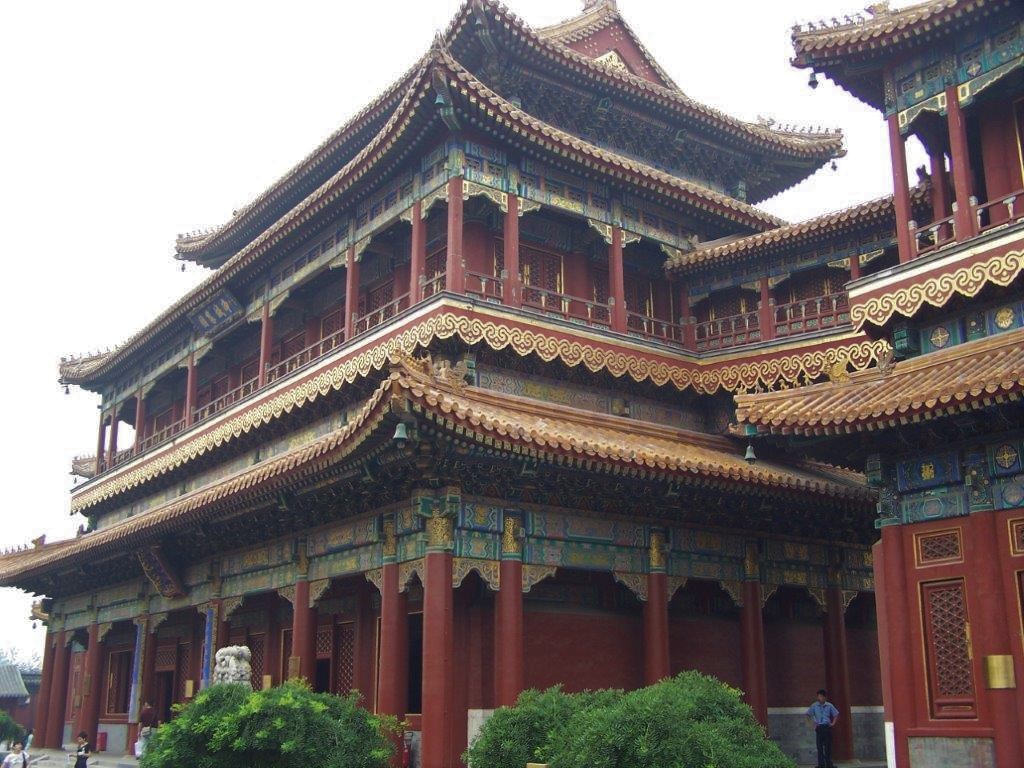
Lama Temple (a.k.a. Yonghe Temple); Tibetan Buddhist (i.e. Vajrayana Buddhist)

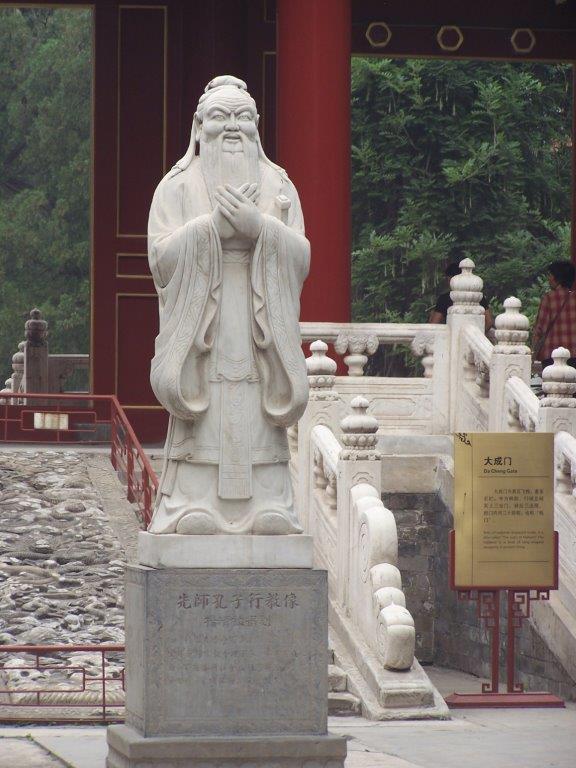
Beijing Temple of Confucius; Confucian

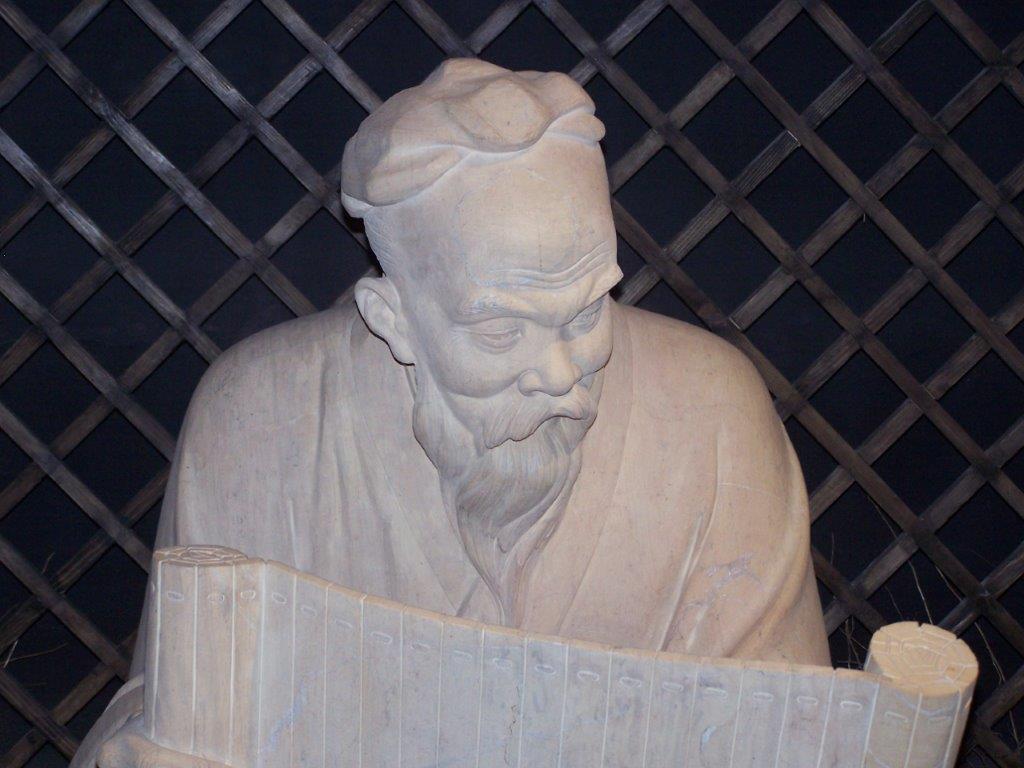
Limerick of Confucius

The great Chinese philosopher Confucius
 wrote in maxims to avoid being circumlocutious.
   [That's a word that absurdly
   describes being wordy.]
 Be like Confucius, not like this verbose doofus. 

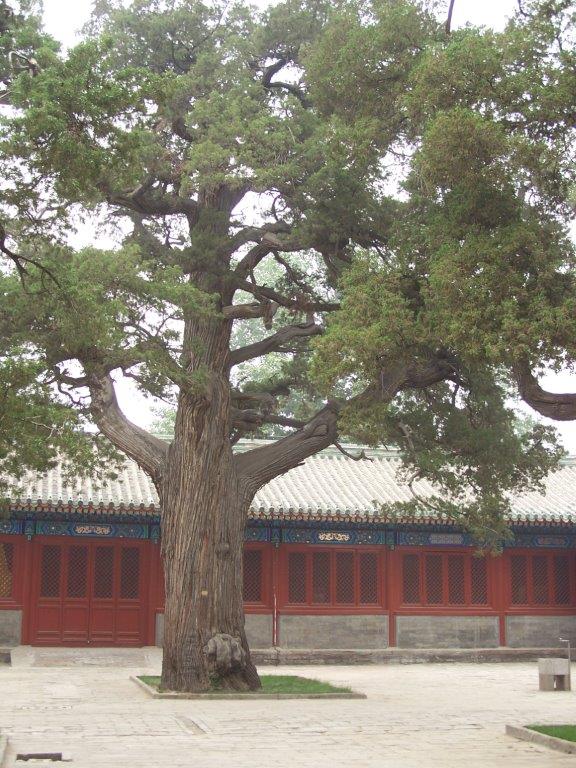
DAILY PHOTO: Tree in the Temple of Confucius, Beijing

Taken in the Beijing Temple of Confucius in the summer of 2008

BOOK REVIEW: Trying Not to Try by Edward Slingerland

Trying Not to Try: The Art of Effortlessness and the Power of SpontaneityTrying Not to Try: The Art of Effortlessness and the Power of Spontaneity by Edward Slingerland
My rating: 5 of 5 stars

Amazon page


This book’s paradoxical title is perfect for its paradoxical subject matter, which is famously expressed in such quotes as, “When nothing is done, nothing is left undone” [ver. 48 of the Tao Te Ching.]  Slingerland lays down the ancient Chinese wisdom of wu-wei and de, but provides something novel by putting it in the context of the positive psychology and neuroscience of today. Wu-wei literally means “no doing,” but can be more meaningfully defined as “effortless action.” De (pronounced “duh”) is a charisma seen in people who have mastered the effortlessness and spontaneity of wu-wei.

While the book is built around the varied approaches of four Chinese philosophers—two Confucians (i.e. Confucius and Mencius) and two Taoists (i.e. Laozi and Zhuangzi)—the author relates this philosophy to the present-day thinking found in Daniel Kahneman’s “Thinking, Fast and Slow,” Mihaly Csikszentmihalyi’s conception of Flow, and the neuroscience of the subconscious.

The book consists of eight chapters. The introduction and the first two chapters outline the concepts of wu-wei and de using both Chinese and Western stories and examples to help clarify these arcane ideas and put them in the context of the social and spiritual spheres. Chapter 1 offers an extensive discussion of the operation of the brain as it relates to the discussion of effortlessness and spontaneity.

Chapters three through six make up the core of the book, and present the approach and thinking of Confucius, Laozi, Mencius, and Zhuangzi, respectively. This “boy-girl-boy-girl” Confucian-Taoist organization offers the reader sound insight into the varied approaches and allows one to see the evolution of thinking. Confucius gets the first cut, but his approach to effortlessness and spontaneity involves a great deal of effort and planning. It might seem that Laozi’s approach–which does away with effort and planning–might be more apropos, but it’s hard to imagine anything of benefit actually being spawned by such a loosy-goosy approach. The more nuanced approaches of Mencius and Zhuangzi offer additional insight, but do not eliminate the paradox. It’s this paradox that’s the subject of chapter seven.

The final chapter examines what the reader can take away–given that the paradox of wu-wei seems inescapable. The author proposes that, paradox or not, there is value in pursuit of effortlessness and spontaneity, and progress can be made by understanding and accepting said paradox.

The book has no graphics, but is annotated and has a bibliography–as well as an appendix table that summarizes the various approaches to wu-wei.

I enjoyed this book and found it fascinating. It’s highly readable, having humor and a wide range of examples from ancient myths to pop culture. The book offers a great value-added by considering the relevance of modern science and psychology to this ancient concept. I’d highly recommend this for individuals interested in Chinese / Eastern philosophy, as well as anyone hoping to bring a little more effortlessness and spontaneity into his or her life.

View all my reviews

DAILY PHOTO: Thian Hock Keng

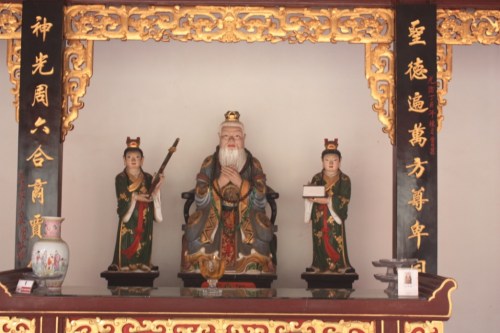
Confucius; Taken on October 29, 2016 in Singapore

Confucius; Taken on October 29, 2016 in Singapore

img_3549img_3548

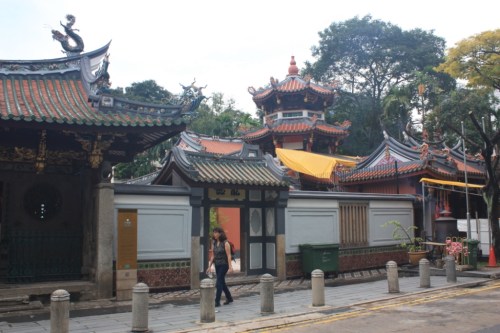
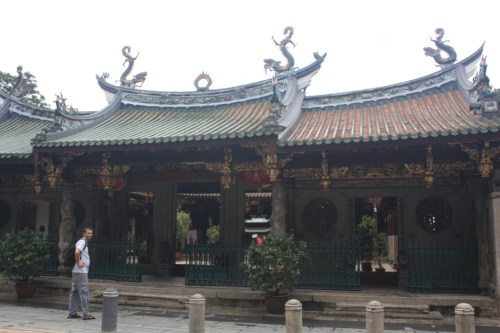
This Chinese temple sits in the heart of Singapore’s Chinatown. It’s said to be the oldest Hokkien or Hoklo temple (i.e. Han Chinese) in Singapore. It’s a temple related to Han Chinese culture generally, rather than to a particular sect or religion. While the main deity is Mazu (a.k.a. Ma Cho Po,) a maritime goddess from Chinese folklore that is sometimes associated with Taoism, there is also a Confucian shrine as well as homages to several Buddhist Bodhisattvas (a Bodhisattva is one who has achieved enlightenment but sticks around to help others out of compassion.)

DAILY PHOTO: In the Temple of Literature

Taken in Hanoi on December 30, 2015

Taken in Hanoi on December 30, 2015

IMG_1830 IMG_1845 IMG_1847


Temple of Literature? (Văn Miếu – Quốc Tử Giám?) It sounds like a grandiose name for a library, but it’s really what the Vietnamese call a Confucian temple. This one is in Hanoi.

Confucius was a Chinese philosopher famous for his ideas such as the hierarchical nature of relationships and how governance is practiced morally. His philosophy provided a popular counterpoint to the more free-wheeling Taoist belief system. Both Confucianism and Taoism came to be practiced by some as religion (though other advocates of each would say that it’s philosophy and not theology.)