BOOK: “The Short Story: A Very Short Introduction” by Andrew Kahn

The Short Story: A Very Short Introduction (Very Short Introductions)The Short Story: A Very Short Introduction by Andrew Kahn
My rating: 4 of 5 stars

Publisher Site – OUP

This guide provides an overview of the short story, particularly literary short stories (though it’s not without mention of genre fiction.) The book is well organized and offers some fascinating food for thought, particularly regarding the psychology of character and the distinctions between short stories and novels. (The former are not to be thought of as pared down versions of the latter.)

I will say that, for a concise introduction, the book does occasionally get into the weeds on specific issues, potentially losing the non-specialist reader who this series is ostensibly geared toward.

I found the book’s organization to be logical and productive to its task. After an introduction that explores the advent and history of the short story, most of the chapters deal with structural or compositional aspects of story, including: openings, voice, setting, plot, irony / reversal, and endings. One chapter (Ch. 6) stands out as a bit different in that it zooms in on Chekhov and his influence on the short story as we’ve come to know it. While this could be said to demonstrate the author’s tendency to zoom in the specificity more than is usual for such a guide, I did find the chapter interesting and enlightening.

If one is interested in the short story (as a reader, writer, or both) one will find this guide worth one’s attention.

View all my reviews

“Daniel Boone” by Stephen Vincent Benét [w/ Audio]

When Daniel Boone goes by, at night,
The phantom deer arise
And all is lost, wild America
Is burning in their eyes.

PROMPT: Failure

Daily writing prompt
How has a failure, or apparent failure, set you up for later success?

If one fails and one tries again, one will make course corrections. Keep repeating that cycle, and one is bound to home in on success.

Psychologically, I think juggling is a fantastic skill to practice because one must fail a million times and keep going. Furthermore, one must learn to choose failure over a spastic success (and condition that behavior in on the fly.) By this I mean, one must learn to let the ball drop rather than lunging to make a frantic catch, because if you are always making wild reaches, you’ll never achieve a smooth, natural rhythm. In other words, a catch that keeps the ball in the air for one or two more throws is not truly a success if it trains a wobbly, unsustainable movement pattern. More generally, one must redefine what constitutes success or failure at a fundamental level.

Riderless [Senryū]

riderless horses
race across the pasture:
finish line unknown

Hawkweed [Haiku]

Hawkweed blooms
beside a creek that sparkles
with summer sunlight.

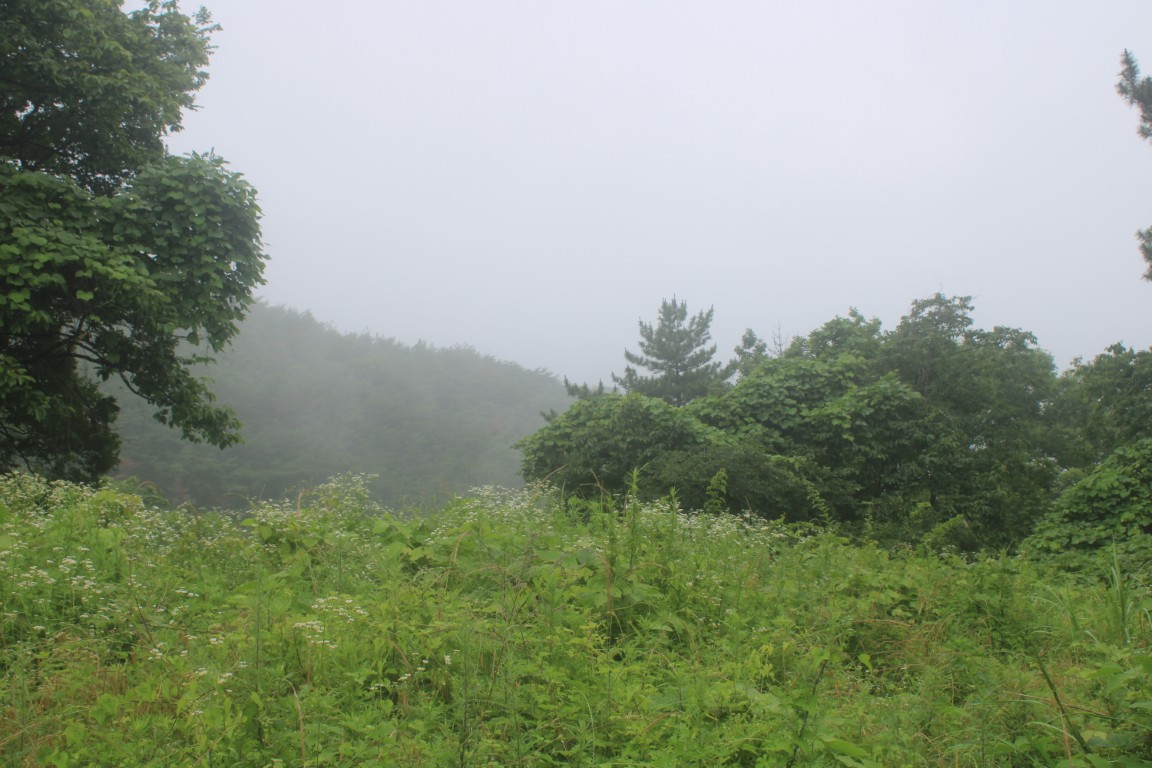
DAILY PHOTO: A Hazy Day in Xian

Image

FIVE WISE LINES [March 2025]

Would the world ever have been made if its maker had been afraid of making trouble?

george bernard shaw, PygMalion

Refrain from talk of others’ shortcomings; don’t rest on your strengths.
[罔谈彼短; 靡恃己长.]

Thousand Character classic [千字文]

The reasonable man adapts himself to the world: the unreasonable one persists in trying to adapt the world to himself. Therefore all progress depends on the unreasonable man.

george bernard shaw, Man and superman

A child is the most reliable measure of time. His daily growth is proof of your daily ageing and decline. The child’s gains are your losses, and the closer a child gets to anything, the farther you withdraw, as though you were tied to one another on opposite spokes of a wheel and the wheel, without your noticing it, turns. Dawn for the child is dusk for you.

Otar chiladze, A Man was going down the road

We are all dependent on one another, every soul of us on earth.

George bernard shaw, Pygmalion

“To Tirzah” by William Blake [w/ Audio]

Whate'er is Born of Mortal Birth
Must be consumed with the Earth
To rise from Generation free:
Then what have I to do with thee?

The Sexes sprung from Shame & Pride,
Blow'd in the morn; in evening died;
But Mercy chang'd Death to Sleep;
The Sexes rose to work & weep.

Thou, Mother of my Mortal part,
With cruelty didst mould my Heart,
And with false self-deceiving tears
Didst bind my Nostrils, Eyes, & Ears:

Didst close my Tongue in senseless clay,
And me to Mortal Life betray.
The Death of Jesus set me free:
Then what have I to do with thee?

Trampled [Haiku]

beside the trail:
a trampled dandelion
springs back, slowly.

DAILY PHOTO: Rocky River