BOOKS: “The Varieties of Religious Experience” by William James

The Varieties of Religious Experience: A Study in Human NatureThe Varieties of Religious Experience: A Study in Human Nature by Dr. William James
My rating: 5 of 5 stars

Project Gutenberg — Free Online

This book is now more than 120 years old and yet is still widely read and is still provoking thought about the nature of religious experiences and how they should be considered by academia. The book is a write-up of a series of twenty lectures that the famous American Philosopher-Psychologist, William James, delivered at the University of Edinburgh in 1901-02.

There are a few things that impressed me about this book. First, James was skilled with language and clever in conveying ideas, resulting in a good bit of quotable material and stimulating ideas.

Second, James’s writings about Eastern practices and philosophies were impressively clear and faithful. In those days, there wasn’t a lot translated from Sanskrit, Pali, etc. and what had been translated was frequently done by outside academicians with no firsthand experience with Eastern systems — e.g. Hinduism or Buddhism. This meant that the writings about Eastern Philosophy and practices from those days were often contorted by a Western / Abrahamic frame in a way that distorted the true nature of those traditions. James seems to have gained at least some of his understanding from someone with enough practical experience to produce accurate descriptions. Furthermore, James avoids spewing myths and misapprehensions by being humble in stating what is merely his understanding. It should be noted that James does write much more about Abrahamic traditions (as one would expect given his direct experience,) but it’s hard to plumb the depths of mysticism without looking to the East where such practices reached such advanced states.

Finally, I was impressed with James’s ability to walk the line of believer and scholar in a way that was fair both to religion and the religious but also to the scientifically-minded rational sceptic. So much of what I read on the subject takes a vitriolic tone of strict opposition and often unfairly depicts the positions of the other side (to be fair, usually this seems to be because the critic doesn’t understand the views of the other side and so produces an interpretation of the opposing ideas conforming to their own worldview, rather than just lying to win.) [As was attributed to James as well as others, “…people think they are thinking when they are merely rearranging their prejudices.”]

I’d highly recommend this book for readers interested in philosophy of religion and the psychology of religious experience.

View all my reviews

BOOK: “Zatanna” by Paul Dini, et. al.

ZatannaZatanna by Paul Dini
My rating: 4 of 5 stars

Publisher Site — DC Comics

Zatanna is a magician, both in the sense of being a professional stage illusionist and in the sense of making real magic offstage. The stories contained herein are about her heroic use of the latter magic, though they are often set to the backdrop of her professional life, i.e. clubs and other entertainment venues. Daughter to a deceased legend of stage prestidigitation, The Great Zatara, Zatanna makes magic through verbal spells.
 
This sixteen-issue run consists mostly of standalone stories. There are a couple story arcs that span three or four issues, but for the most part the stories are wrapped up within an issue. Some of these stories dedicate panels to what’s happening with Zatanna’s long-running nemesis, Brother Night, even when the main story is unrelated to him (presumably so as to keep the readers ready to receive some larger arc.)

The stories are good, light-hearted escapism — even – perhaps – when they don’t mean to be. By that I mean that the subject matter is often dark, dealing in demons and nightmares personified, but Zatanna is usually so overpowered compared to her enemies and the book attempts to maintain a quippy comedic effect, and so the reader never feels their heroine is at risk of true danger. That said, the authors do put Zatanna in dire situations, and so the stories often do hook one into a state of wonder about how she will escape some awful fate (even while not doubting for an instant that she will.) Zatanna does have weaknesses and there is some attempt to suggest that magic has risks and consequences (otherwise, the stories would devolve into lukewarm absurdism rather quickly.)

I enjoyed this run. The art is crisp and imaginative, and the stories are often clever — if rarely taut.

View all my reviews

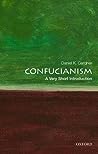
BOOKS: “Confucianism: A Very Short Introduction” by Daniel K. Gardner

Confucianism: A Very Short Introduction (Very Short Introductions)Confucianism: A Very Short Introduction by Daniel K. Gardner
My rating: 5 of 5 stars

Publisher Site – OUP

This is a brief guide to Confucianism from the early life of Confucius (孔子 -Kǒngzǐ) to the ups and downs the philosophy experienced in the twentieth century. It has chapters exploring the system’s thinking with respect to personal development as well as with respect to governance and also discusses how later thinkers (most notably Mencius and Xunzi) expanded on Confucius’s ideas — but also created schisms. The book examines the laudable elements of the philosophy such as its sanction of benevolence among leaders, but also its less laudable elements such as its unenlightened views on women and what they are capable of [and, of course, the many ideas in between that could be seen in varied lights.)

As with other books in this series, it has a few graphics as well as a bibliography and further reading section.

I found this book to be readable, well-organized, and of a level appropriate for its intended purpose. I’d highly recommend it for individuals looking for a concise introduction to Confucianism.

View all my reviews

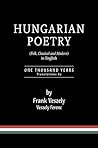
BOOKS: “Hungarian Poetry” trans./ed. by Frank Veszely

Hungarian Poetry (Folk, Classical and Modern) in English: 1000 yearsHungarian Poetry (Folk, Classical and Modern) in English: 1000 years by Frank Veszely
My rating: 5 of 5 stars

Author Site

This anthology of Hungarian poetry translated into English presents some interesting and evocative examples of Hungarian poetry, ranging from anonymous folk poetry of early kingdoms to 20th century pieces by still-living poets. I can’t speak to how the translations compare to the originals, but I will say that they were a pleasure to read and employed metering and rhyme to maintain some of the feel of the originals. This book introduced me to many poets with whom I was only familiar from names on subway stations, city squares, and parks, having traveled extensively in Hungary (plus a few of whom I’m sure I’ve never heard. Note: poetry is huge in Hungary, but because the Hungarian language is not broadly spoken, it remains largely a secret to outsiders.)

That said, the anthology is not so broad ranging as one might expect from its subtitle. The nineteenth and twentieth century selections take up the bulk of the volume. It does make sense that there is a much larger (and more likely to have survived) selection from recent times. However, there also aren’t as many poets included as one might expect. Ostensibly, one reason for this is that Veszely doesn’t shy away from including lengthier pieces. Whereas an anthology like this would often favor short pieces and / or excerpts (and, thus, might include more voices,) this one contains many multi-page poems. That said, while most of the biggest names seem accounted for (e.g. Vorosmarty, Csokonai Vitez, Arany, Petofi, Jozsef Attila, etc.,) there are conspicuous absences of prominent and important poets (and, perhaps, of categories of poets as well.)

Short bios of each of the contributing poets make this an introduction to many interesting figures scarcely known to non-Hungarians, as well as it is a sampling of their poetry. Each of the four sections also has some background historical information. This history is useful because there is a lot of nationalistic / jingoistic poetry in this volume, particularly among the nineteenth century poets (as was the style of the day.)

I should point out that some will find this book excessively nationalistic. (A book titled for the state can be expected to have some superpatriotic pieces, but this goes a bit beyond that.) For my part, I was not troubled by the poetry content, knowing that nineteenth century Hungarian poetry was notoriously nationalistic. Also, once one gets into the twentieth century poetry it gains much more diversity of content, e.g. nature, art, etc. My own concern about nationalism was more about the Part Four introduction, which paints Hungary as an innocent little lamb, always being victimized. Taking history from this introduction, one might think that Hungary was forced into the Axis and struggled to get free of it from the onset. This view would be more defensible if the invasion of Nazi Germany to firm up the Hungarian alliance had occurred in, say, 1941, instead of the spring of 1944 (when everyone knew the Third Riech was on its death bed.) In point of fact, Hungary’s leadership seem to have had their own ambitions (not to mention their own rampant antisemitism) going into this alliance.

I enjoyed these translations immensely, and felt I learned about the poets and the times in which they lived. That said, while I did like that Veszely included some longer pieces in full, it might have been nice to see a bit more diversity in the selection as well.

View all my reviews

BOOKS: 三字经 by 王应麟 [“Three Character Classic” by Wang Yinglin]

三字经三字经 by 章炳麟
My rating: 5 of 5 stars

Available online — Project Gutenberg

This is a Confucian primer written in lines of three characters. It’s a children’s book in the sense that it’s aimed at children, but not necessarily with respect to being presented in a manner most conducive to childhood learning. (While it’s concise, the material isn’t presented in an interesting or memorable form. i.e. It’s intended for brute force rote memorization.)

The book consists of five sections, ranging between twenty-four and one hundred and six lines (72 to 318 characters per chapter.) The first introduces Confucian virtues. The second offers a broad overview of classics of Chinese philosophy. The third section lists the dynasties of China. The penultimate section describes ideal behavior from a Confucian perspective. The last, and briefest, section is largely a pep talk on studying hard.

As someone learning Mandarin Chinese, it’s interesting to see how sentences are formed in this sparse format, and this text offers insight into Chinese history and philosophy, in addition to providing a good early reader.

If you are interested in learning elementary Confucianism or you’re learning Chinese and looking for short and simple texts for reading, I’d recommend one look into the Three Character Classic.

View all my reviews

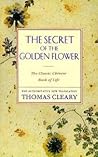
BOOKS: “The Secret of the Golden Flower” ed. / trans. by Thomas Cleary

The Secret of the Golden Flower: The Classical Chinese Book of LifeThe Secret of the Golden Flower: The Classical Chinese Book of Life by Lü Dongbin
My rating: 4 of 5 stars

Online – Archive.org

This is a manual on Taoist inner alchemy practices, particularly a meditative practice called “turning the light around.” The book has been attributed to Lü Dongbin, said to be an immortal who lived during the Tang Dynasty, though there are differing views about the manual’s actual origins. While it is nominally a Taoist manual, it also discusses the Buddhist approach extensively (and Confucian ideas to a lesser extent) such that it could be considered a Buddhist teaching as much as a Taoist one.

The Cleary translation seems to exist not merely to provide an English translation of this Chinese manual, but to combat the misunderstandings perpetrated by the earlier English translation, that of Richard Wilhelm, a translation famously associated with the psychoanalyst Carl Jung. Neither Wilhelm nor Jung had any depth of understanding of Taoist and Buddhist methods and philosophy, and Wilhelm’s grasp of the Chinese language, itself, seems to have been fairly rudimentary. (At least the Chinese of the 1600’s, which is when the edition that Wilhelm is believed to have worked from is dated.) Thus, there is a lot of peddling of the notion that the ideas of this manual were in line with twentieth century psychotherapy in ways that were really not true — either because Wilhelm was mistaken or wanted them to be true or some combination, thereof.

The translation, itself, is quite short and makes up less than half of the text length of this book. More than half consists of extensive notes as well as an Afterward. While I have complained many times about publishers padding out pamphlet length publications to make them salable at book prices, in this case I believe the “ancillary” matter is helpful to achieving a better understanding of the text. The translation itself is not only sparse but features a bit of Taoist and Buddhist arcana that is likely to be unfamiliar — even to those with some understanding of the traditions. The notes and afterward help one to comprehend this book’s ideas much better.

If you’re interested in Taoist inner alchemy or Buddhist meditative practices, this book is worth checking out. That said, it can be a bit of a tedious read, flipping between the translation and the notes to make sense of ideas that don’t readily translate.

View all my reviews
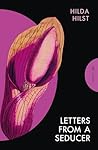
BOOKS: “Letters from a Seducer” by Hilda Hilst

Letters from a SeducerLetters from a Seducer by Hilda Hilst
My rating: 5 of 5 stars

Publisher Site – Pushkin Press Classics

Release Date: May 27, 2025

This is an upcoming English translation of a 1991 novella from Brazilian author, Hilda Hilst, from what has been called her “obscene cycle.” It is mostly an epistolary novella in which a man, Karl, writes his sister, Cordelia, informing her about his recent sexual adventures and attempting to coax a confession out of her about her own activities long in the past. We never see any replies from Cordelia. (And that is part of what makes the book fascinating.) The only indication of her responses that we get are Karl’s references to Cordelia’s comments from her last letter in his present letter. However, we can’t necessarily be certain that even those occasional suggestions of dialog represent the truth.

To understand why one might have doubt, one must be aware of what else is going on in this book. There is one other narrative voice, and that is of Stamatius. Stamatius is in socio-economic terms the opposite of Karl. Karl being of the gentlemanly class — his behavior and letters to his sister notwithstanding — and Stamatius is a starving artist (a writer, to be precise.) The two men speak of each other, though always in deprecating terms. However, there’s reason to think the two men might be one. Stamatius, while condemning Karl’s sex obsession, also mostly engages in tales of his own sexual adventures as well as presenting those of others. In fact, the end of this novella is a collection of short vignettes of the nature one might see in a smutty letter magazine, only better (and sometimes poetically) written.

By the author’s own description, this novella is intentionally pornographic. While the same thing is said of Hilst’s The Obscene Madame D I did not find that book particularly graphic or sex-centric. This book, however, is quite graphic and if one took away references to sexual activities
nothing of substance would remain. (Not true of The Obscene Madame D.)

I found this book to be intriguing, despite the fact that it is quite sloppily arranged (presumably on purpose,) but it does present some splendid use of language (at least in this translation — the original is in Brazilian Portuguese) and character psychology.

I’d recommend this book for readers of literary fiction who don’t mind plotlessness and pornographicness.

View all my reviews

BOOKS: 孙子兵法 [Sunzi’s Art of War] by Sunzi

孙子兵法白话全译孙子兵法白话全译 by 史哲 文
My rating: 5 of 5 stars

Available online – YellowBridge

In thirteen short chapters, Sunzi lays out a masterclass in strategy. One sees in Sunzi’s work the mark of a Taoist mindset, seeing it in the book’s emphasis on engaging in warfare only when necessary, doing things the easy way whenever possible, and never letting one’s ego write checks one isn’t able to cash in lives.

There is good reason that this is one of the world’s most well-known (if not the most well-known) treatise on warfare. Far from being complicated and technical, this guide is full of pithy teachings such as: “War is the way of deception.” “No country ever benefited from a long war.” “Defeating the enemy without fighting is supreme excellence.” “To be undefeated lies in oneself, to be victorious lies in the enemy.” “Know the enemy and yourself and victory is assured; know heaven and earth and victory is complete.” (And these teachings are even more concise in the original Chinese.)

In addition to basics like leadership, maneuver, and terrain, the book devotes chapters to both the use of fire and spies in warfare. (One’s level of understanding is central to strategic victory throughout Sunzi’s teachings.)

I’d highly recommend this book for anyone interested in strategy, martial arts, or other strategic pursuits. The book may be ancient, but it’s not obsolete by any means.

View all my reviews

BOOKS: “Shaolin: How to win without fighting” by Bernhard Moestl

Shaolin: How to win without fightingShaolin: How to win without fighting by Bernhard Moestl
My rating: 4 of 5 stars

Publisher Site

This is a self-help book that nominally draws on the philosophy of Shaolin Kung fu and its Chan Buddhist underpinnings, but – more broadly – employs quotes and examples from many, mostly Eastern, sources. For example, the ideas and stories of Miyamoto Musashi are perhaps as common as any source (Musashi was Japanese, not Chinese, and was not noted for being Buddhist. In his own words, he respected the gods and buddhas, but didn’t expect their help.)

The book offers a fine discussion of Eastern philosophic thought in action, particularly that which arose from warrior sources, but it isn’t particularly ground-breaking in any way. For those who like homework, the book does include many exercises to make the reading a more interactive experience.

I enjoyed reading this book well enough, but it didn’t distinguish itself and will soon fall into the mind-space of a fuzzy amalgamation of similar books I’ve read over the years.

View all my reviews

BOOKS: “Jñāna-Yoga: The Way of Knowledge” by Ramakrishna Puligandla

Jnana-Yoga--The Way of KnowledgeJnana-Yoga–The Way of Knowledge by Ramakrishna Puligandla
My rating: 5 of 5 stars

Google Books Page

This is one of the most useful books I’ve read on the topic of Jñāna-yoga — the approach to yogic philosophy employed by the studious / inquisitive (in contrast to Bhakti-Yoga [the yoga of those for whom faith and devotion works] and Karma-Yoga [the yoga for those for whom a course of self-less action appeals.]) There are Jñāna-yogic Hindu sects and Buddhism — in general — can be thought of as a school of Jñāna-yoga. The author draws from the teachings of both, principally Sankara for Hindu thinking and Nagarjuna for the Buddhist approach.

A word of warning, the author is a scholarly philosopher, and so — while not as unreadable as many works of academic philosophy — it will be a slog for those who are not used to reading scholarly writing.

That said, Puligandla does a fine job of laying out what he views as the central tenets of Jñāna-yoga in a concise fashion and reviewing them at the end. This is not to say I would agree with all that he proposes, herein. In particular, his Chapter 3 conclusions about consciousness are insufficiently justified to be considered core principles of Jñāna-yoga (in my view.) Of course, the beauty of Jñāna-yoga is that it not only doesn’t insist upon coming to the same conclusions, it generates explanations as to how it’s perfectly possible / reasonable to come to different conclusions (see “The Principle of Superimposition,” herein.) Furthermore, since the author is reporting the ideas of Sankara and Nagarjuna, I can’t really hold these ideas against him.

If you’re interested in Jñāna-yoga, and can handle scholarly prose, I’d highly recommend this book.

View all my reviews