READING REPORT: January 30, 2015

Welcome to my second weekly dispatch on what I’ve been reading. Owing to my weird approach to reading, I tend to finish books in clusters, and this week I polished off the novel The Martian, the horror short story anthology 999, and three nonfiction books (Principles of Tibetan Medicine, The Key Muscles of Hatha Yoga,  and How Pleasure Works.) The only one of these that I’ve completed a review on is Principles of Tibetan Medicine, but reviews of the others will be in the works in the upcoming week(s.)


The star of my completed pile was Andy Weir’s The Martian. It’s a spectacular science fiction read that’s engaging from beginning to end. Readers who love science will find it particularly fascinating and well-researched. For the yogis and yoginis out there, Ray Long’s book on muscles as applied to Hatha Yoga is well-organized, easy to follow, and easy to use.


The completion of several books this week creates openings in what fiction and poetry I’ll be reading on Kindle in the coming weeks. Drum-roll please… I will be starting the following books this week:


MoYan_LDWMO

1.) Life and Death Are Wearing Me Out by Mo Yan: Mo Yan won the Nobel Prize for Literature back in 2012, and this 2006 book is about a benevolent land owner who is killed on orders by Mao Zedong, and is subsequently reincarnated as a series of farm animals.


IHaveNoMouth

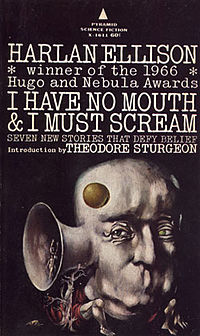
2.) I Have No Mouth And I Must Scream by Harlan Ellison: The title of this collection of short stories is also the title of the most prominent piece in it. The 1968 Hugo winning story is a post-apocalyptic tale of artificial intelligence run amok.


Aeneid

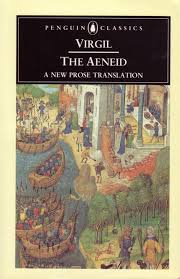
3.) The Aeneid of Virgil: I’m overdue to read this epic poem by the famous Latin poet written during the first century B.C.


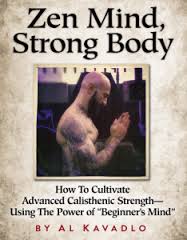
In nonfiction, I made an impulse purchase this week that I’m about half way through reading. It’s called Zen Mind, Strong Body and it’s by Al Kavadlo. I’m having minor buyer’s remorse, not because it’s a bad book, but because it turns out to be a collection of blog posts, and so I could have probably gotten all this for free by digging around the world wide web a little. (Moral: always read the fine print on the dust jacket. I wouldn’t mind, but it was a bit pricey for rehashed blog posts.) Kavadlo is a personal trainer and advocated of calisthenics and advanced bodyweight exercises, and he has many interesting ideas on both mind and body. It has provided some interesting food for thought, but I don’t really need the hundreds of pictures of the author with his shirt off.
ZenMindStrongBody


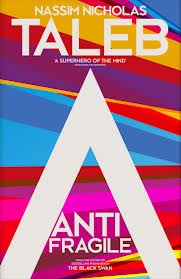
I’m about halfway through Nassim Nicholas Taleb’s latest book, Antifragile, and would like to make some headway on that in the upcoming week. While I’m a fan of Taleb’s work, I’ve gotten bogged down in this one because it keeps going and going and going on about a rather simple concept–i.e. that some things become stronger or more robust when exposed to stressors. I’m not sure the book needed to be this long. I suspect that Taleb is the kind to throw a world class tantrum if an editor took a hatchet to a word of his writing–and now he has the following to make it work. He’s a smart guy and raises many excellent points, but he seems like a major prima donna. At any rate, maybe he’ll surprise me in the second half with something novel and interesting–in lieu of endless restatement of his (admittedly fascinating) thesis.
Antifragility


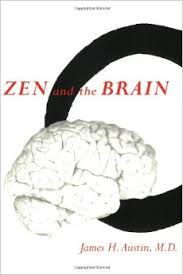
I also started a book a few weeks back called Zen and the Brain by James H. Austin that I’d like to get back to. It examines what science has to say about the practice of meditation from the perspective of a neuroscientist who’s also a Zen practitioner.
Zen&Brain


At the end of last year, I did a post about the Book Riot 2015 Read Harder Challenge. It’s a sort of scavenger hunt for readers. There are 25 categories of books, of which one is supposed to read at least one book each. If you can count the same book for several categories (I don’t see why not as long as they fit the description) then I have so far covered seven categories. (Not bad for the first month of the challenge.)

-Collection of short stories: 999: New Stories of Horror and Suspense

Author of a different gender: Tears in Rain (Rosa Montero) and Principles of Tibetan Medicine (Tamdin Rither Bradley) [Both females]

Science-fiction novel: The Martian

Collection of poetry: Leaves of Grass

A book recommended for you by someone else: The Key Muscles of Hatha Yoga

-A book originally published in another language: Tears in Rain  (Spanish)

A book published in 2014: The Martian (Some might dispute this as it was self-published in 2011, but not picked up by a publisher until 2014.)

BOOK REVIEW: Principles of Tibetan Medicine by Dr. Tamdin Sither Bradley

Principles of Tibetan MedicinePrinciples of Tibetan Medicine by Tamdin Bradley

My rating: 3 of 5 stars

Amazon page

Full disclosure: let me first state that I’m a scientific-minded person and skeptic by nature, and if you’re expecting a review by a true believer, you may be disappointed.

A couple of questions may arise from the disclosure above. First, why do I feel I need to make such a commentary? Well, because this is a book about a system of medicine (i.e. gso-ba rig-pa) that developed within a country that was isolated for centuries and in which every aspect of knowledge was infused with and influenced by religious belief—both pre-Buddhist and Buddhist. Because of this, while some of the advice offered is surely sound, some of it is—from a skeptic’s point of view—bat-shit crazy. For example, there are herbal and dietary preparations to aid in digestion that may be completely sound and reasonable, and then there is the idea that Zombie spirits (one of 18 types of evil spirits) cause constant shivering.

The second question is, “If I’m not a believer, why read the book and review it?” For one thing, as I indicated above, I don’t think that just because the beliefs behind the “theory” of this system of medicine are baseless, it means that there is nothing in the book that is true or of value. The theory is that there are three kinds of energy (Loong, mKhris-pa, and Bad-Kan) and that excesses or deficiencies cause health problems. But it’s a 2500 year old system of healing; certainly they learned a thing or two in the process. It’s quite possible that they have learned things that scientific medicine has not. (Consider for example, Tibetan Buddhist monks have repeated and verifiably demonstrated capabilities—i.e. consciously controlling autonomic systems, that Western medicine would have thought impossible.)

The analogy that I always use is with kid’s Christmas presents. Parents hide the presents, and tell the kids that if there’s any tampering with them the kid won’t get anything but a lump of coal (you say that was just my parents?) Anyway, the kids find the packages, but are afraid to invasively tamper with them. Therefore, they feel the heft of them, they shake them, and they listen to said shakes. From that limited investigation, they develop a theory. The theory may be spot on, it may be completely wrong, or over several gifts it’s probably a combination of wrong and right. However, the question of whether the present does what it’s supposed to (i.e. bring joy) is not closely connected to the child’s theory, because it’s based on the parent’s observation of what the kid likes. That, my friends, is why systems of healing that are based on notions that are empirically wrong sometimes produce good results.

Second, while I’m a believer in science, I don’t always believe that Western medicine (rooted in science as it may be) consistently does a good job. Part of this is the fault of economists, policy types, as well as lazy patients who’ve created a system in which medicine only pays off if it can cut one open or give one an expensive medication. This leaves room for alternative systems of medicine that may not be so scientific, but that allow for the fact that changing patient behavior is often key to improving health.

I’ve taken a long time to get to the actual review, but I thought the reader should know from whence this reviewer was coming. The book is a little under 200 pages long. Its 11 chapters are logically oriented, and it’s easy to navigate the book. The author writes in a readable style, and jargon and foreign terminology aren’t a problem. It doesn’t have an index, but each chapter is broken up into many smaller subunits–so finding what one is after shouldn’t be hard.

The chapters cover the history of Tibetan Medicine, the nature of gso-ba rig-pa, the theory of Tibetan Medicine, causes of illness, human anatomy and physiology (not of the physical body as we know it), common diseases and illnesses, treatment techniques involving changing diet and behavior, medicinal treatment, representative case histories, and the nature of the Tibetan Medicine physician.

It’s not clear who the target audience for this book is. It’s not a self-help book as the implication is that the patient should see a doctor of Tibetan Medicine and not self-prescribe. Furthermore, while the book provides a good overview of Tibetan Medicine, it’s not an all-inclusive description by any means. The book seems to have been written primarily to make individuals aware of Tibetan Medicine and to give enough insight into the system that readers can differentiate it from Traditional Chinese Medicine or Indian Ayurvedic Medicine, both of which display similarities and differences.

I’d recommend this book if you’re interested in alternative approaches to healing, or if you’re interested in Tibetan culture in detail.

View all my reviews

READING REPORT: January 23, 2015

If I were a kid today, I’d be diagnosed with ADD in a heartbeat. I rarely read one book straight through. However, I read a lot, and that means I switching from one book to the next–reading a chapter at a time. I do try to read no more than one book of a given type/genre at a time–often unsuccessfully, as you’ll see. With this in mind, I thought I’d experiment with a weekly post on what I’ve been reading that week.

Book-Review-The-Martian

Fiction: The novel that I’m currently reading is Andy Weir’s The Martian. This book is gripping. It’s considered to be one of the best–if not the best–science fiction works of 2014, although it was self-published in 2011. This is a great example of a book that couldn’t get published despite being spectacular, and which will now make a bazillion dollars. It also explains how a 2014 novel is set to have a big budget movie adaptation come out in late 2015. This book is like the movie Gravity set on Mars, except that it’s smarter.  It taps into that visceral fear of what it would be like to die alone in space–not in a flash but with time to know you are going to die. An unlikely, but plausible sounding, set of circumstances result in astronaut Mark Watney being left for dead on the surface of Mars. But, of course, he’s not dead. Watney has to be creative to figure out how to live for four years in hopes that the next manned Mars mission will go forward as planned. It’s a roller coaster ride between him thinking he will surely die and him coming up with clever solutions. If you are into science, it’s particularly intriguing. I’m about 20% of the way through.


Foreign Fiction: I’ve also continued to read a Hungarian novel called Quarantine in the Grand Hotel by Jenő Rejtő. This is a silly (in a good way) locked-door murder mystery. I picked it up in Hungary over the holidays, and will probably finish it in the next week or so. (I’m about 2/3rds of the way through, and it’s only a 160 page book.) It’s short, highly readable, and humorous.

I also read a chapter from The Mandala of Sherlock Holmes by Jamyang Norbu. A number of authors have picked up the mantle of Sherlock Holmes from Sir Arthur Conan Doyle.  (Not to mention TV shows and movies.) This book is published in India by a Tibetan author who imagines Sherlock Holmes traveled to India and Tibet after he was believed to have been killed (along with Professor Moriarty) in Switzerland. (Going over the falls as depicted in the second Sherlock Holmes movie featuring Robert Downey Jr.) There are three parts to the book: India, Tibet, and Beyond. I’m in the last couple chapters of the first part, most of which takes place in Bombay.


Short Stories: I’m about 85% of the way through 999: New Stories of Horror and Suspense. This is a collection of short fiction of horror / dark suspense. It features authors such as Joyce Carol Oates, Stephen King, Neil Gaiman, Eric Van Lustbader, and David Morrell.  All of the  works are short stories except for a novella/short novel by William Peter Batty. The novella is the last piece, and I’ve just started part II of it.

999_Horror&Suspense


Martial Arts: I just finished Dr. Anthony Catanese’s The Medical Care of the Judokabut I posted a review yesterday so I won’t get into that book. My next martial arts book will be The Pyjama Game by Mark Law, but I haven’t yet begun it.


Yoga: I’ve been reading two books related to yoga this week. I just finished Chapter 2 of Coulter’s Anatomy of Hatha Yoga. This chapter dealt with the anatomy and physiology of breathing. This book is an excellent resource for yoga teachers, but it’s pretty dense–which may explain why I’m only on Chapter 3. Not only does the chapter give general information on respiration, it also provides information specific to various yogic breathing methods such as abdominal, yogic, thoracic, paradoxical, and diaphragmatic.

The second yoga book I’m reading is Singleton’s Yoga Body, which is a history of yoga postural practice (asana practice). This book presents a controversial thesis, which is that postural practice (asana) wasn’t really a part of mainstream yoga until quite recently, and that it’s as much a product of what happened in the Western world in the early 20th century as it is a result of Indian yogic traditions–if not more. Having finished the first three chapters (about 30% through), I’m not sure whether I buy his argument or not. He has some documentary evidence on his side, but I know there is also a proclivity to equate the current era in which everybody documents laundry day with the past in which many people were much more secretive. It’s also often not true that the most vocal are not the mainstream. He may be correct, but he has yet to wow me. (Part of his argument is people like Max Muller and HP Blavatsky found hatha yoga [the style which most emphasizes posture] to be the domain of conmen and beggars.)


AnatomyHathaYoga_CoulterYogaBody_Singleton


Miscellaneous Nonfiction: I’ve got about 70 more pages to finish in a book called How Pleasure Works by Paul Bloom. As the title implies, this book is about the science of why people get pleasure from various things from food to sex to freaky sex to art to music, etc. The primary thesis is that there are hidden essences that are the source of pleasure. The chapter I just finished talked about an interesting study in which violinist extraordinaire Joshua Bell went into a subway station and played his $3.5million violin, and barely netted $30–even though there were people passing him who’d paid $200 to hear him in his tuxedo at a concert hall later that evening. The chapter also talked about art forgeries, and how some art is valuable when it’s associated with a famous painter and worthless when it’s a forgery by a presumably equally skilled forger (I say equally skilled because these individuals have been able to pass their work off to experts as a painting by a famous artist. In some cases, they weren’t forgeries but rather originals in the style of the famous artist and submitted as an unknown work found in a basement somewhere.)

HowPleasureWorks


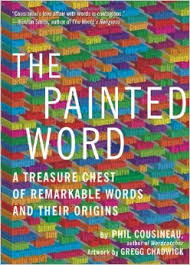
I also finished the letter “B” in the book The Painted Word  by Phil Cousineau. This book is organized like a dictionary, except that it only contains certain English language words that the author finds particularly intriguing, and it gives background on usage and how the meanings have migrated. If you love language, you’ll find this book much less painfully boring than I have made it sound.

Painted Word


That completes the books I’ve been reading over the past week. I did purchase two books this week, but they’re far down the queue to be read. One is the graphic novel The League of Extraordinary Gentleman by Alan Moore, and the other is Right Ho, Jeeves by P.G. Wodehouse.

BOOK REVIEW: The Philosopher at the End of the Universe by Mark Rowlands

The Philosopher at the End of the Universe: Philosophy Explained Through Science Fiction FilmsThe Philosopher at the End of the Universe: Philosophy Explained Through Science Fiction Films by Mark Rowlands

My rating: 4 of 5 stars

Amazon page

This is one of those books that’s designed to make tedious material palatable. Rowlands achieves this by conveying the concepts of erudite philosophers such as Plato, Nietzsche, Sartre, Laplace, Kant, Heraclitus, Wittgenstein, Hume, and Heidegger through the lens of popular speculative fiction movies (almost all Sci-fi.)

The book uses thirteen films as case studies to consider ten critical philosophical concepts (over ten chapters.) Virtually all sci-fi fans are likely to have seen most—if not all—of these films. They include: Frankenstein, The Matrix, the first two Terminator films, Total Recall (1990), The Sixth Day, Minority Report, Hollow Man, Independence Day, Aliens, Star Wars, Blade Runner, and The Lord of the Rings. I am not a film fanatic (though I do like Sci-fi) and I’d seen all but two of these movies (i.e. Hollow Man and The Lord of the Rings.) I can say that the book is understandable without having seen the movies, but it’s much more enjoyable when you have seen them. Although, as far as the two movies that I’d missed went, Hollow Man was easy because it’s a relatively straight-forward invisible man story, and—therefore—the link to that chapter’s question “Why Be Moral?” was simple. However, for The Lord of The Rings book I had to rely more on the synopsis the author provides to follow the chain of thought.

The philosophical issues that are addressed include: the meaning of life, what can we really know (if anything), what am I (or you or any other individual), what makes me (you, etc.) different from everyone else, is there free will, why behave morally, how broadly does morality apply (in other words, is it applicable outside humanity), do good and evil exist and (if so) what differentiates them, what does it mean to be mortal, and what’s wrong with moral relativism. If you’ve seen the movies, and give it some thought, you can probably match the movies to the questions easily.

I enjoyed this book. First of all, I will admit that it’s easier to follow the concepts and for them to stick with one when one puts them in terms of movies one has seen (in some cases, several times.) Second, the author has a good sense of humor. While Rowlands is a Professor of Philosophy, this book doesn’t read in the humorless and dry tone of academic writing. On the contrary, it’s meant for a popular audience and it reads for a popular audience. It should be noted that the humor and the exclusive focus on movies (versus literature or films) set this book aside from a number of others that are superficially quite the same. I have another book in storage back home called Science Fiction and Philosophy that is by an academic publisher, maintains the scholarly tone, goes into a bit more depth, but covers many of the same ideas (e.g. Brain-in-a-vat, etc.) using similar examples. I didn’t finish the more scholarly book, but if you’re looking for great depth but not reading ease you might pick it up for comparison.

Rowlands does overplay the “these-movies-are-so-bad-they’re-good” card, and when he does he sounds a tad professorial / pretentious. However, the book often reads like it was written by a colorful football coach rather than a Philosophy Professor. And, to be fair, in some cases it’s true that the films are delightfully bad. However, these are not B-movies like Attack of the Killer Tomatoes as one might think from the commentary.

If you’re interested in philosophy, but can’t get through two pages of Kant without falling asleep, I’d recommend this book.

View all my reviews

BOOK REVIEW: Zen in Motion by Neil Claremon

Zen in Motion: Lessons from a Master Archer on Breath, Posture, and the Path of IntuitionZen in Motion: Lessons from a Master Archer on Breath, Posture, and the Path of Intuition by Neil Claremon

My rating: 4 of 5 stars

Amazon page

When one thinks of Zen, one thinks of stillness. Sensory and motor deprivation is what scientists call it. But stillness is a favored term among Zen Buddhists. Being someone who is fascinated by movement and activities at the body-mind intersect, this title immediately snagged my attention despite the narrow print on this thin book’s spine. The value of a Zen state of mind in the practice of movement arts is clear and well-established. Zen in Motion recounts the lessons of the author as a student of the Japanese style of mounted archery (kyūdō.) Claremon studied with a Japanese Kyūdō master residing in New Mexico.

It will be clear to many why mounted archers might take allegiance in Zen. Charging down a trail on a horse towards a small, round target, there’s no time for conscious thought in calculating pull and release. Furthermore, there’s stillness in motion (sounds like a koan) that must be maximized because the slightest imperfection in movement can send an arrow astray.

It should be noted that this is neither the first nor the only book written on the nexus of Zen and Kyūdō. (Though it’s the first one I’ve read in full.) Probably the most famous book on the subject is Eugen Herrigel’s Zen in the Art of Archery, but there’s also a more recent book by John Stevens, entitled Zen Bow, Zen Arrow that tells the story of Awa Kenzō (who was Herrigel’s teacher.) The logical question is what is the value-added of Claredon’s book. If we have two books by more famous authors on seemingly the same subject, why should one read this one? I believe Claremon carved out a good niche with this book that makes it sufficiently different from the books of those other authors.

What is Claremon’s niche? The body portion of the mind-body equation is at the forefront in this book. Claremon directs most of his energies to topics such as breathing, posture, grounding, walking, and balance. While I haven’t read Herrigel’s book completely, I did skim through it. Zen in the Art of Archery seems to focus more heavily on the mind portion of the equation—i.e. the philosophy / psychology of Zen, if you will. This may make it sound like Claremon’s book isn’t much about Zen, which is widely considered a mental pursuit. However, one must remember that postural alignment and breath are crucial in zazen, and that Kinhin, walking meditation, is a well-established practice in Zen Buddhism. Furthermore, I don’t want to imply that Claremon leaves out the mental piece altogether, just that the balance of the discussion is toward the physical. (Whereas, it seems like the balance of Herrigel’s discussion is in the realm of the mental—but Herrigel gets into physical topics as well.) Having said all that, an argument could be made that a more appropriate title might be “Ki (Chi) in Motion” as the author devotes a great deal of space to discussing life energy (Ki in Japanese or Chi in Chinese.)

Another valuable piece of Claremon’s work is that there is plenty of value to individuals who don’t practice archery, but who are interested in discovering how these lessons might apply to other movement arts. For example, I found the topic of the 10-point “Diamond Being” that is a central concept in the book to be quite thought-provoking. The 10 points that are roughly arranged in a diamond shape (vertical alignment of 3 nodes down the left side of body, 4 nodes down the body’s centerline, and 3 nodes on the right side, and all these nodes connected by edges (line segments)) and map to the human body. While much of what Claremon said about this construct was esoteric and not of much use to the scientific-minded reader (i.e. sending ki between the various nodes), the construct had value in thinking about postural alignment, for example. There is an entire chapter devoted to healing that, of course, has a value to non-archers as well as archers.

Some of the concepts that are mentioned can be thought of in terms of the modern-day construct of “Flow,” which is related to Zen states of mind and which has gained a following among modern practitioners of high-speed / high-risk sports.) For example, the idea of perceiving time at a slower rate, which is an established part of Flow states valued by skiers and skydivers, would be a valuable state of mind for shooting an arrow from a moving horse toward a small target. Another example is discussed on the chapter of the fear of falling. Whatever one calls the mental state, avoiding an adrenaline dump and the fear associated with it is critical.

The only graphics are drawings, but they seem adequate to the task.

I enjoyed this book. For me the book’s greatest weakness was a tendency to be ethereal and esoteric. While the author denied believing in magic, there was a fair amount of explanation that no scientifically-minded person could hang his hat on. To be fair, this may in part be because the science of some of these experience isn’t yet well-established. (I recently watched a clip from a Discovery Channel program called “Human Weapon” in which there were some Chi related activities that the technicians and experts said they couldn’t explain for all of their state-of-the-art equipment.) However, it could also be that false experiences were arrived at by the leading statements of a trusted teacher.

I’d recommend the book particularly for those who have interests in activities at the intersection of body and mind.

View all my reviews

BOOK REVIEW: Sleep: A Very Short Introduction by Lockley & Forester

Sleep: A Very Short IntroductionSleep: A Very Short Introduction by Steven W. Lockley

My rating: 4 of 5 stars

Amazon page

This is one book in a large series of books put out by the Oxford University Press. All of these “Very Short Introduction” books are brief summaries of the state of research on a given topic in the arts, sciences, or humanities. Based on this book, I’d say the series is geared toward a readership of educated non-specialists. I say “educated” because the book did get into some technical areas, and while it doesn’t presume any particular knowledge of the science of sleep, it does use a scientific vocabulary with occasional academic sentences (i.e. packed with precise detail and lacking concern about readability.) That said, I’d say the readability is higher than the journal articles from which the information for the book was drawn. I suspect I’ll read more from this series. They are cheap on Kindle, provide a concise injection of the basics for a wide range of topics, and are pleasantly readable if you’re used to reading academic literature.

This particular book is about sleep. While, on average, sleep takes up one-third of a person’s life, it’s a subject that is often taken for granted. Like water, one doesn’t really think about it until one isn’t getting enough. However, as the book discusses in detail, all sorts of problems are associated with sleep deprivation, insomnia, and parasomnias (i.e. sleep events like sleepwalking, night terrors, nightmares, bedwetting, sleep-eating, and groaning.)

The book is written in nine chapters covering: the history of sleep, sleep generation and regulation, a brain on sleep, reasons we sleep, variation in sleep throughout one’s life-cycle, the nature of poor sleep, the connection between sleep and health, and the effect of our shift to a round-the-clock society.

There are a number of fascinating questions addressed by this book including:
1.)What does sleep do for us?
2.)Have people always tended to sleep eight hours per night?
3.)Why are some people morning people and others night owls?
4.)Why does one feel drowsy after lunch, but not necessarily when it’s time to hit the sack?
5.)How long can one go without sleep?
6.)Do all animals sleep?
7.)How do sleep and hibernation differ?
8.)Why do teenagers and the elderly have such odd (but different) sleep habits?
9.)Why do people sleepwalk, sleep-eat, groan in their sleep, or have night terrors?
10.)What is the effect of long-term insomnia on health?
11.) What happens to sleep if one has no rising and setting sun cues?
12.)What is jetlag and how can one fight it?

I learned some interesting facts, such as:
1.) On average, women report more insomnia, but, paradoxically, tend to sleep better than men.
2.) Pre-industrial people slept for about 10 hours a night on average, it’s believed.
3.) Many parasomnias occur mostly during REM (Rapid Eye Movement) sleep.
4.)The government can deprive prisoners of sleep for 7.5 days without it being considered torture (then they have to allow a full 8 hours sleep before another 7.5 day period started.)
5.) Long-term insomnia has been linked to heart-disease.
6.)Shift workers have a 50% greater incidence of breast and prostate cancer than day-workers.
7.)Visiting teams win 46% of the time if they are in their home time zone, 44% if they are traveling ‘with their body clock,’ and only 37% if they are traveling against their body clock.

I found this book interesting and informative. However, there are many books on the subjects of sleep and dreams that are more catered to a popular audience. Such books delve into intriguing cases and don’t dig as deeply into the minutiae of the science of the subject. I’d recommend this book, but not for readers who get bogged down or bored with scientific and technical discussions. If you’re looking for a book that’s loaded with pithy facts and fascinating stories, you can find a book closer to the mark by journalists who focus on science writing and who’ve got more flare for creative writing.

View all my reviews

BOOK REVIEW: An Introduction to Yoga by Annie Besant

An Introduction to YogaAn Introduction to Yoga by Annie Besant

My rating: 3 of 5 stars

Amazon page

Given what the word “yoga” brings to mind these days, I’ll first note that this isn’t the book for one who’s looking to improve a stiff downward dog, or even an errant kapalbhati breath. There’s no mention of such physical practices. This is a philosophy book–or theosophy if you want to get technical about it. Besant’s definition of yoga makes this clear, “Yoga is the rational application of the laws of the unfolding of consciousness, self-applied in an individual case.” The book is actually a series of lectures by Besant delivered in 1907 at the 32nd anniversary of the Theosophical Society. If it were being released today it might be called “An Introduction to Yogic Philosophy” or “An Introduction to Jnana Yoga” to avoid confusion. Jnana Yoga is the path of knowledge, as opposed to Karma Yoga (the yoga of action) or Bhakti Yoga (the yoga of devotion,) and it’s Jnana Yoga that’s the focus of this work.

I was ignorant of who Annie Besant was when I read this book. I’d heard of the Theosophical Society, but mainly in the context of being an organization that Jiddu Krishnamurti had been a prominent member of, but then had a falling out with. (Given my respect for—and alignment with– the ideas of Krishnamurti, I must admit that this biased me a bit against the Society–perhaps unfairly.) If you’re not familiar with Theosophy, the name probably gave you a big clue about what it’s all about. The “theos” (as in theology) refers to the divine or godly, and “sophia” (as in philosophy) means wisdom or knowledge. So theosophy is knowledge of the divine and it suggests that a mystical path to knowing god can be achieved. I mention all this so that the reader will be aware that this isn’t “what is yoga?” through the eyes of a Hindu or a yogi as much as it is “what is yoga?” framed by a Theosophist. (That’s not to imply any objectionable biases in the book, just in the interest of full disclosure.)

Having clarified what the book isn’t, it’s now time to turn to what the book is. It’s divided into four lectures. The first is entitled “The Nature of Yoga” and revolves around the questions of what is consciousness, what is divine, and how do they interrelate. The second lecture puts yoga into context as one of the six Indian schools of Philosophy, mostly comparing and contrasting yoga to Samkhya and Vedanta—the schools that yoga is most closely linked to. The third lecture considers yoga as an applied science. The final lecture discusses the practice of yoga. Again this is the practice of Jnana Yoga, and not yoga as it’s practiced today. Besides some discussion of diet and vague statements about how to purify the physical body, there’s no discussion of practices other than Dharana (concentration) and Dhyana (meditation.)

In more specific detail, the book addresses the following topics: the 4 states of consciousness, the 3 aspects of consciousness, the 5 stages of the mind, the 3 gunas, the 5 functions of pain, and the 7 obstacles to yogic progress.

I don’t mean to make it sound like the book is entirely a listopia, but the author is very organized—and, to be fair, a lot of these lists are passed on from ancient works. Given this book is the product is 19th century English, its readability is tolerable—especially considering the complex and abstract concepts under consideration. That said, there’s no attempt to put the abstractions in more concrete terms by way of narrative techniques or the like.

I’d recommend this book for those who are interested in Yoga as a philosophy. If you’re interested in the philosophy of the Theosophists, all the better. Again, it’s not of much value for an individual who wants to know about yoga as an approach to fitness, or even someone who wants a balanced view of the eight limbs of yoga. This book skips straight to the last three limbs, i.e. dharana, dhyana, and Samadhi (union with the divine, liberation from the karmic cycle, etc.) In that way it’s an advanced text, and the term “Introduction” in the title may be more deceptive than the word “Yoga.”

Also, it’s free on Kindle.

View all my reviews

BOOK REVIEW: Pirate of the Far East by Stephen Turnbull

Pirate of the Far East: 811-1639Pirate of the Far East: 811-1639 by Stephen Turnbull

My rating: 3 of 5 stars

Amazon page

Unfortunately, the first thing one notices about this book is what seems like a typo in the title. Instead of “Pirates of the Far East,” it’s Pirate of the Far East, which suggests piracy wasn’t so much of a problem in the region because there was only the one pirate—and that the author isn’t a fan of either definite or indefinite articles. I’m sure this was done intentionally, but it does read oddly and sounds tinny.

This slim book is a typical edition of the Osprey military history series. All of these books are less than 100 pages, illustrated, and focus on a specific class of warfighter over a defined period. In this case, the book presents a class of pirates called wako for the period from 811 to 1639. Wako literally refers to Japanese pirates, but–in fact–these marauders of the high seas were often mixed nationality crews. The book also provides information about counter-piracy activities and those groups of warriors, such as Shaolin monks, who fought against piracy back in those days.

This book covers a range of topics including: the life of a pirate, pirate ships, strategy, tactics, and weapons—as well as the history of these groups. The book has five actual chapters, but there are short units providing important information that would usually be appendices, e.g. a chronology, a discussion of museum exhibits, and an annotated bibliography.

The illustrations are mostly drawings, but include maps and photographs as well. Some of the art is drawn in the present-day by the illustrator Richard Hook, but some are historic pieces from art collections. The photographs also include some present-day photos of locations that were once bases of piracy, as well as photos of museum exhibits (e.g. topographic and other models.) The graphics are helpful in showing how pirates dressed/armored and were armed. The maps and drawings are particularly helpful.

I’d recommend this book, but I do think it’s overpriced at full price. At a mere 64 pages—a pamphlet more than a book–paying $10 or more seems a bit pricey despite the useful graphics and the fact that the author is among the most renowned authorities on Japanese warriors and medieval military tactics. All that said, there are relatively few books on the topic, and it’s not easy to get this information from other sources.

View all my reviews

BOOK REVIEW: The Elephant Whisperer by Anthony Lawrence and Graham Spence

The Elephant WhispererThe Elephant Whisperer by Lawrence Anthony

My rating: 5 of 5 stars

Amazon page

This is the story of Thula Thula, a wildlife preserve in South Africa, and the herd of elephants that came to live there. It’s one of the most gripping nonfiction works that I’ve read in some time. Even if it was just the story of Anthony Lawrence’s interactions with a herd of wild elephants that he took on at first reluctantly and then became powerfully connected to, it would have made a worthwhile read. However, there is so much more to keep one flipping pages. There’s the internecine and tribal warfare among the Zulus that at one point results in a contract being taken out on Lawrence’s life. There are the tales–sometimes happy and sometimes tragic—of the other animals that share Thula Thula with the elephants, including: crocs, rhino, cape buffalo, snakes, and—of course—the humans and their pet dogs. And, sadly, there’s a constant war going on against poachers that occasionally results in a firefight.

That said, the stars of this book are undeniably the herd of wild elephants. The author is told these pachyderms are unruly and are to come into the possession of a big game hunter to be shot if he doesn’t take them. There are no elephants in the area of Thula Thula, and taking them on is a big risk. The neighbors are opposed because if the elephants get out they could cause untold damage—even if not maliciously. Furthermore, these elephants have had bad experiences with humans; the only adult bull had recently been killed—making them all the more hostile. These elephants have a history of escape, and when a herd of elephants wants to escape, it’s hard to keep them in. They are five or more tons of raw power. In fact, the herd does escape once early in the book, and a major drama unfolds as a result. There’s pressure on Lawrence to get rid of at least the matriarch and another female, Frankie, who is almost the same size as the matriarch and is even more aggressive. Eventually, he gets the herd to calm down through patience and an attempt to understand them.

However, even as the herd becomes calmer and actually friendly toward Lawrence, there are always new challenges popping up. They add an adolescent who comes in alone, its entire family having been killed off. This history makes the new addition skittish, angry toward humans, and dangerously aggressive. Furthermore, the adolescent bull transitions into adulthood and is increasingly pushed away from the herd, but without a male role model. By the book’s end, there is even a new generation being brought into the fold.

I won’t tell you this book is all rosy. There are a number of really sad sub-stories within the overall tale of the elephants of Thula Thula. I won’t get into details because these chapter or two long narrative arcs are among the most edge-of-the-seat reading in the book. That said, the overall story is one of triumph. A herd that was on the verge of being eliminated is not only saved, but eventually grows in size due to new births—though, sadly, not without some losses. It’s about successful coexistence and preservation of these species.

A lot of the book is about communication, both the stomach-grumbling elephantine intraspecies communication and the interspecies communication between the author and the elephants. It turns out that elephants can communicate with others across great distances, most notably by stomach rumbles that largely take place at a frequency outside human capacity.

There’s also humor. There are times when all one can do is to accept that elephants will be elephants and gardens will be trampled and swimming pools will become watering holes. There’s no maliciousness. It’s just that five and six ton animals leave their mark wherever they go. They are intelligent but unsubtle creatures.

I’d highly recommend this book to just about anyone. Even if you normally only read commercial fiction, I think that you’ll still find enough tension and intrigue throughout this book to keep you reading. If you’re an animal lover you’ll be engrossed from start to finish even without the poachers, death threats, and, tribal wars. If you’re one of those pathetic old men who think you need rhino horn powder to get it up or need a pair of carved tusks to show your wealth, you should be forced to read the book while an elephant holds its foot over your head.

View all my reviews

BOOK REVIEW: Yoga Mala by Sri K. Pattabhi Jois

Yoga Mala: The Seminal Treatise and Guide from the Living Master of Ashtanga YogaYoga Mala: The Seminal Treatise and Guide from the Living Master of Ashtanga Yoga by K. Pattabhi Jois

My rating: 4 of 5 stars

Amazon page

Yoga Mala is a guide to yoga by one of the most influential yogis of the modern era, Sri K. Pattabhi Jois. Sri Jois, who passed away in 2009, developed an approach to Hatha Yoga that is alternatively called Ashtanga Vinyasa or Ashtanga Yoga. Herein, I will use the term Ashtanga Vinyasa to represent Sri Jois’s style of yoga, which relies on a fixed sequence(s) conducted with vinyasa, i.e. flowing transitions that link postures. The reason I chose one term over the other is that the term “Ashtanga Yoga” long predates Jois and is a more generic name for the practice of all eight limbs of yoga as described in Patanjali’s Yoga Sutras.

Having mentioned the “eight limbs of yoga,” it should be noted that this book really only gets into half of them: yama (rules for interacting with others), niyama (rules for conducting oneself), asana (poses), and pranayama (breath exercises.) Furthermore, three-fourths of the book’s pages are devoted to asana. This is not unusual as many yogis consider it a waste of time delving into the higher level practices (pratyahara [sensory withdrawal], dharana [focus], dhyana [meditation], and samadhi [liberation] with individuals who haven’t yet made headway into the more fundamental practices.

After brief discussion of yama, niyama, and pranayama, Yoga Mala launches into description of the postures of the Ashtanga Vinyasa preliminary series. This begins with the two variants of the Surya Namaskara (Sun Salutations) practiced in Ashtanga Vinyasa and progresses through the poses of the standing, seated, and finishing sequences in the order in which they occur in the Preliminary Series. There are clear black and white photos of the optimal version of each asana. The written descriptions explain the entire set of vinyasa for that asana—i.e. the flowing transitions that connect one pose to the next. Most asana have a header paragraph that tells how many vinyasas are associated with the pose and which vinyasa constitutes the asana proper. This opener is followed by a “Method” section that lays out the vinyasa in detail, and—in many cases–a “Benefits” section that explains what the posture is said to do for one–and occasionally what major the contraindications are. (However, this is a poor reference for contraindications as it mostly only says what pregnant women shouldn’t do and doesn’t get into much detail beyond that.)

There are a couple of things that I think could have been improved—mostly formatting / editorial critiques. The first is that the text increasingly lags the photos so that one has to flip forward several pages to view the associated photos. Also, the author often refers to a movement through a position using the numbering system of an earlier set of vinyasa, and this necessitates a lot of flipping back and forth. For example, the instructions often say “then go to the 4th vinyasa of the first surya namaskara sequence” whereas if he said “then do chataranga dandasana [or low plank]) they would have saved words and obviated need for the back and forth.

Sri Jois was very devout man. For those of a similar mindset, you’ll likely find the book resonates. However, if you’re the kind of person who prefers explanations rooted in a logical or scientific approach, then you may find explanations a bit summarily invoked for your tastes. In other words, he’s prone to say, just do what the Vedas and your teacher tell you and everything will be rosy. I don’t know that this is a critique so much as fair warning. If you think that the Vedas were divinely written by infallible authors, then Jois’s approach may sound good to you. However, if you think that the Veda’s reflect the biases and limited knowledge of another era (just like our present writings reflect our current biases and limitations), you may find a few comments suspect. For example, Sri Jois makes a point of saying that the Vedas state that one can do a headstand for three hours straight without adverse effects. (To be fair, he does point out that you must do it properly and under the supervision of a teacher.)

If you practice Ashtanga Vinyasa, or intend to, this is a must-read book, but it’s a useful book for those who practice Hatha Yoga of other styles as well. It’s a good summary of classic asana, and you may find something in Sri Jois’ explanation of yama and niyama to be helpful to you on your personal path.

I should point out that those who aren’t sure whether they want to practice this form should be forewarned that Ashtanga Vinyasa is an intense practice. The vinyasas require a high level of core strength as well as upper body strength for Uth Pluthi (lifts) and vinyasa motions requiring that one load all one’s bodyweight onto one’s arms. Also, the fact that one is doing the “Preliminary Series” shouldn’t falsely lead one to believe that these are all the “easy” asana. That isn’t the case; there are a number of challenging poses both in terms of flexibility and strength requirements. If you haven’t done yoga before, I would only suggest Ashtanga Vinyasa for those who have a fairly high fitness level.

View all my reviews