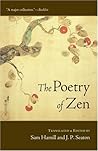
BOOK: “The Poetry of Zen” Ed. / Trans. Sam Hamill & J.P. Seaton

The Poetry of ZenThe Poetry of Zen by Sam Hamill
My rating: 5 of 5 stars

Publisher Site – Shambhala

This poetry anthology consists of translations of Chinese and Japanese poetry that play in the Zen aesthetic. They are not Zen Buddhist poetry in the sense of being sutras or sutra-like expositions on Buddhist philosophy or theology (at least, not mostly.) And while there are many monks and Buddhist layperson poets represented, not all of those included were Buddhists. (In fact, there is even some verse from the Daodejing included, though Taoism is certainly philosophically related to Zen.)

About half the book is Chinese poetry, including pieces from Han Shan, Li Bai, Bai Juyi, Wang Wei, Du Fu, and many other greats of Chinese poetry. (Note: my spellings of author names varies from those used in the book because Hamill and Seaton use Wade-Giles spellings.) The other half of the book consists of works by Japanese poets, including: Saigyo, Dogen, Basho, Ryokan, Buson, Issa, and others. The Japanese part includes a few haibun (prose poems interspersed with haiku,) adaptations of Chinese-style poems, as well as the various Japanese fixed form styles (i.e.. haiku, tanka, etc.)

The two translators, Sam Hamill and J.P. Seaton, initial the poems that each translated (some were dually translated and others singularly.) I enjoyed the translations and felt they were fine reading in their own right. With haiku and tanka, the translators stuck fairly close to the traditional form (in as much as the aesthetic could be maintained doing so,) but with Chinese lyric styles they often took a freer approach to form.

If you’re interested in poetry that conveys Zen sentiment, this book is worth investigating.

View all my reviews

Wen Fu 11 “Banal & Sublime” [文赋十一] by Lu Ji [陆机] [w/ Audio]

Some shoots and stalks stand out --
Taller than the masses.
Their form eludes pursuit,
Sound slips through, like gases.
Great lines are always disjunct:
Don't weave with mid'ling lyrics.
They're pent up and peerless:
Chop them? A win that's pyrrhic.
Jade flecks make mountains shimmer,
Pearly waters enchant.
The thicket mustn't be clipped
If Kingfisher's glory, grant.
Stitched words end under snow,
Work the weft, steady and slow.

The original in Simplified Chinese is:

或苕发颖竖,离众绝致。
形不可逐,响难为系。
块孤立而特峙,非常音之所纬。
心牢落而无偶,意徘徊而不能揥。
石韫玉而山辉,水怀珠而川媚。
彼榛楛之勿翦,亦蒙荣于集翠。
缀下里于白雪,吾亦济夫所伟。
BOOKS: “A Journey to Inner Peace and Joy” by Zhang Jianfeng [Trans. by Tony Blishen]

A Journey to Inner Peace and Joy: Tracing Contemporary Chinese Hermits by Zhang Jianfeng (2015-04-07)A Journey to Inner Peace and Joy: Tracing Contemporary Chinese Hermits by Zhang Jianfeng by Unknown Author
My rating: 5 of 5 stars

Publisher Site

In 1993, Bill Porter (a.k.a. Red Pine) came out with a book called “Road to Heaven” that documented his experiences meeting with hermits in rural China. For many, both in and certainly out of China, the continued existence of this lifestyle might have come as a surprise. This book follows up over twenty years later, showing that Buddhists and Daoist hermits are still alive and well in the mountains of interior China.

The book not only offers beautiful descriptions of the lands where these men and women live, but also insight into their mindsets and how they live such minimalist lives. It’s a light and compelling look at individuals like those one might read of in “Outlaws of the Marsh,” only living in the present day (though living lives not unlike their historical counterparts did more than a thousand years ago.)

The book offers many color photos of the hermits and the landscapes in which they live.

I’d highly recommend this book for anyone interested in the way of reclusive existence.

View all my reviews

“Bad Government” by Guan Xiu [贯休] [w/ Audio]

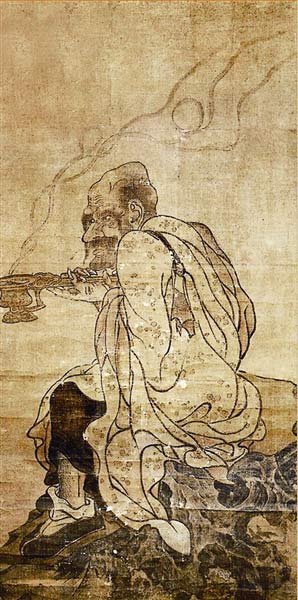
“Venerable Ingatha” by Guan Xiu [One of his 16 Arahat paintings]
Sleet and rain, as if the pot were boiling.
Winds whack like the crack of an axe.
An old man, an old man,
At sunset, crept into my hut.
He sighed. He sighed as if to himself,
"These rulers, so cruel. Why, tell me
Why they must steal till we starve,
Then slice the skin from our bones?

For a song from some beauty,
They'll go back on sworn words;
For a song from some tart,
They'll tear down our huts;
For a sweet song or two,
They'll slaughter ten thousand like me,
Like you. Weep as you will,
Let your hair turn white,
Let your whole clan go hungry...
No good wind will blow,
No gentle breeze
Begin again.

Lord Locust Plague and Baron Bandit Bug,
One east, one west, one north, one south.
We're surrounded.

NOTE: This the J.P. Seaton translation found in The Poetry of Zen (2004); Shambhala Publications: Boston, MA, pp. 67-68. For the author’s name, Seaton uses “Kuan Hsiu,” the Wade-Giles romanization of the name.
“Drinking Alone in the Rainy Season” by Tao Yuanming [陶渊明] (a.k.a. Táo Qián, or 陶潜]

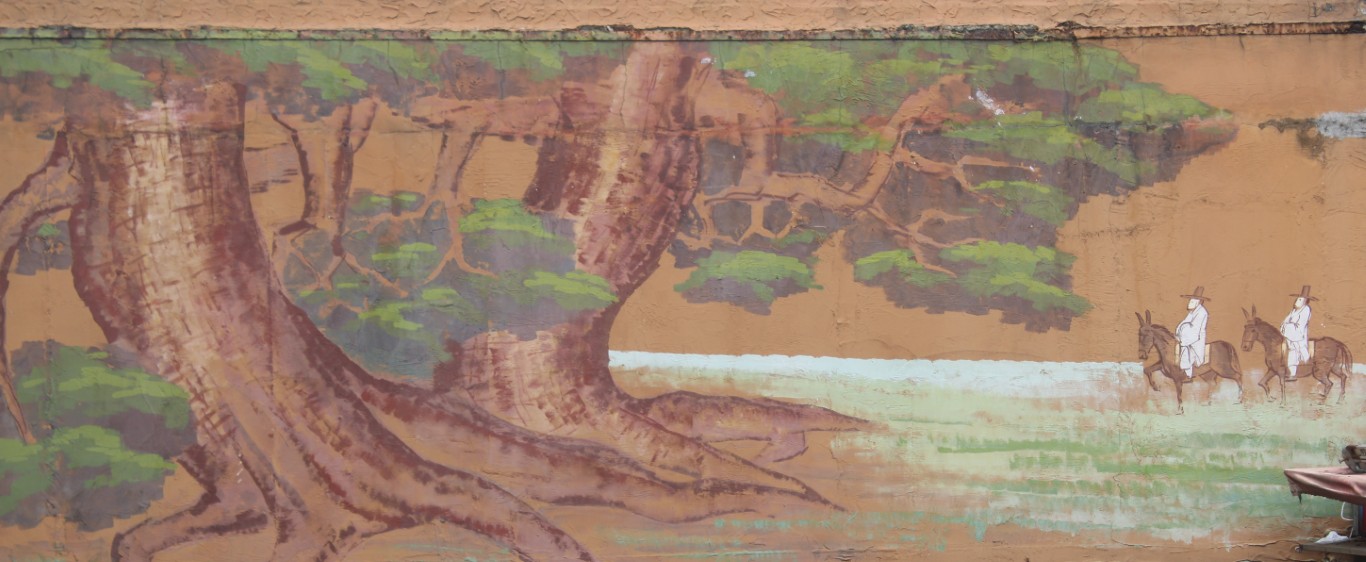
Whatever lives must meet its end --
That is the way it has always been.

If Taoist immortals were once alive,
Where are they today?

The old man who gave me wine
Claimed it was the wine of the immortals.

One small cup and a thousand worries vanish;
Two, and you'll even forget about heaven.

But is heaven really so far away?
It is best to trust in the Tao.

A crane in the clouds has magic wings
To cross the earth in a moment.

It's been forty years of struggle
Since I first became reclusive.

Now that my body is nearly dead,
My heart is pure. What more is there to say?

NOTE: This is the translation of Sam Hamill found in The Poetry of Zen (2004); Shambhala Publications: Boston, MA, p.24.
“Weichuan Farmers” [渭川田家] by Wang Wei [王维] [w/ Audio]

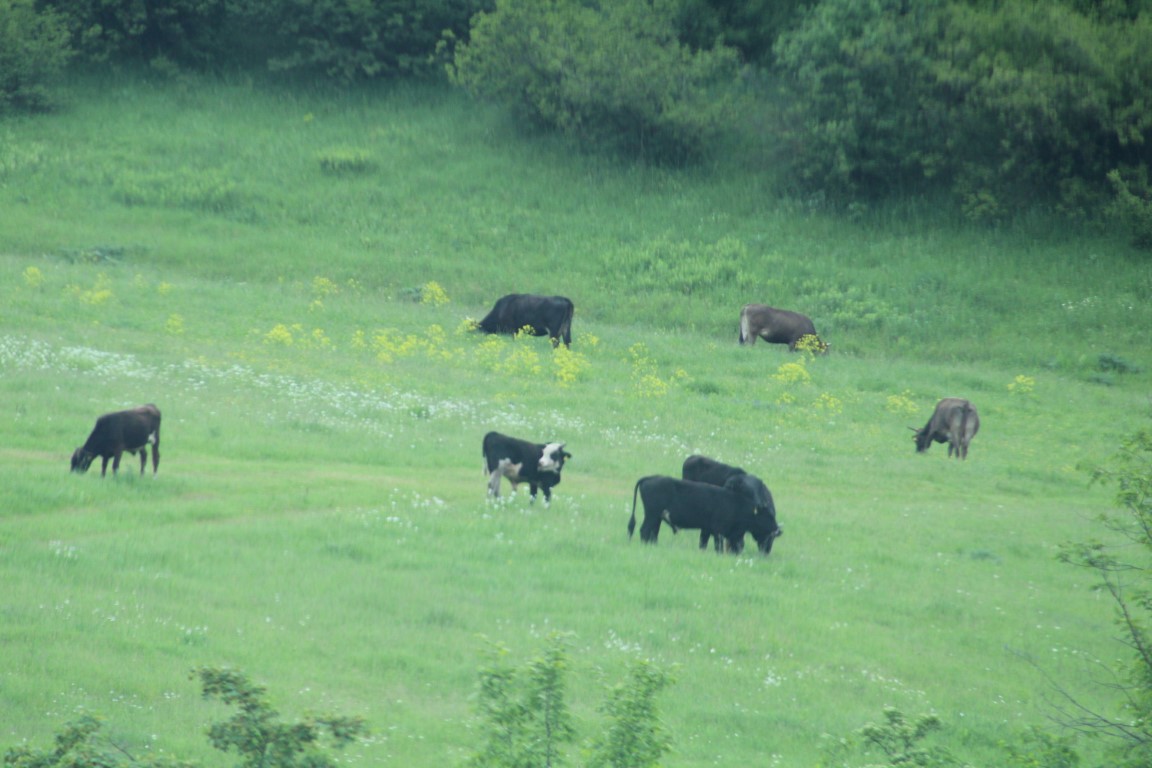
Low, warm light lands on the village.
Cattle and sheep trapsing farmward.
Farmer mulls a missing shepherd,
Leaning on his staff, still on guard.
Pheasants cluck, wheat heads are heavy,
Silkworms dormant, mulberry leaves few.
Farmers stand, hoes on their shoulders,
Telling old tales, as if they were new.
How I envy the idle time --
To chat about mankind's decline.

This is poem #16 of the 300 Tang Poems [唐诗三百首.] The original poem in Simplified Chinese is:

斜光照墟落, 穷巷牛羊归。 
野老念牧童, 倚杖候荆扉。
雉雊麦苗秀, 蚕眠桑叶稀。
田夫荷锄立, 相见语依依。
即此羡闲逸, 怅然吟式微。
“Autumn Moon” [秋月] by Cheng Hao [程颢] [w/ Audio]

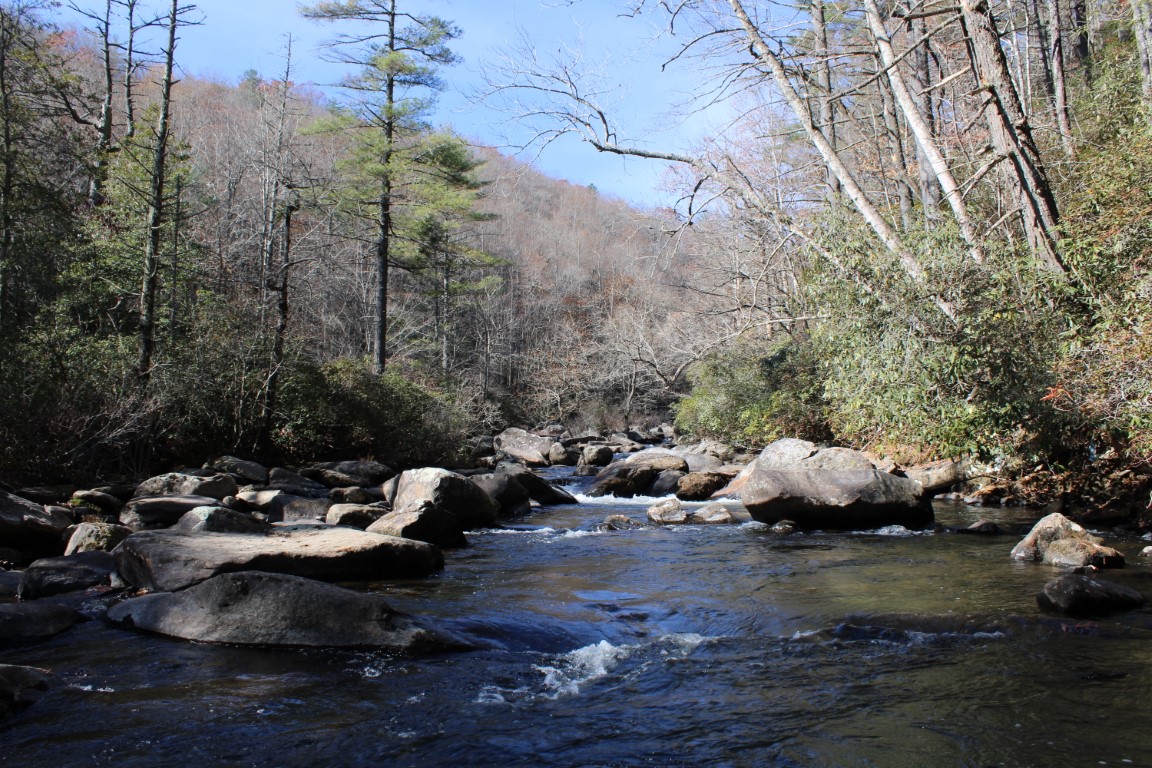
A clear stream passes by the
mountain clad in green;
The clear sky and clear water
melt in autumn hue.
Far far away from the tumultuous
world unclean,
Long long will white clouds and
red leaves be friend to you.

Note: This is the joint translation of Xu Yuanchong and Xu Ming found in the edition of Golden Treasury of Quatrains and Octaves on which they collaborated (i.e. China Publishing Group: Beijing (2008) p. 64.)
“In Search of the Taoist, Chang” [寻南溪常道士] by Liu Changqing 刘长卿

I walk the narrow path,
Clogs divoting the moss.
White clouds over the shore;
Gate obscured by Spring grass.
Post-rain, I see the pines,
Follow stream to its source.
Flower-mind, then Zen Mind --
Arrived! Words have no force.

This is poem #136 of the 300 Tang Poems [唐诗三百首.] The original in Simplified Chinese goes:

一路经行处, 莓苔见屐痕。
白云依静渚, 春草闭闲门。
过雨看松色, 随山到水源。
溪花与禅意, 相对亦忘言。
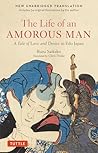
BOOK: “The Life of an Amorous Man” by Ihara Saikaku [Trans. by Chris Drake]

The Life of an Amorous Man: A Novel of Love and Desire in Old JapanThe Life of an Amorous Man: A Novel of Love and Desire in Old Japan by Ihara Saikaku
My rating: 5 of 5 stars

Publisher Site – Tuttle

On sale October 14, 2025

Original Title: 好色一代男

As the title suggests, this novel is presented as the biography of a man who is — shall we say — a horndog. Actually, it would be more correct to say that it is the story of the man’s sex life, as it begins with his sexual awakening as a boy of seven and tells stories of his relationships and dalliances throughout his life until he reaches the age of sixty and is no longer physically capable of the act. Of course, the novel does describe non-amorous life events such as the protagonist’s (i.e. Yonosuke’s) brief time as a monk and as (what in modern terms would be called) a “trust-fund kid.” Yonosuke is from a wealthy merchant family, though his inability to keep his mind on task sees him disowned for many years. So, he leads lives both rich and poor, but never without lust in his heart.

Given that the book focuses on Yonosuke’s interactions with geisha and varied sex workers, one might expect that it is a work of erotica (or even pornography.) It is neither. There is no graphic description of sexual activities and often those events are glossed over altogether. This book will be of much more interest to those interested in what life in Edo Period Japan was like, and particularly how sex work operated as a regulated industry with licit and illicit domains, than to anyone wishing to read erotica for sensual or prurient purposes.

The book has a series of illustrations (one per chapter) that were drawn by the author and appeared in the original (1682) edition. There are also poems (tanka and haiku) sprinkled in here and there, many of which were invocative in their own right.

If you are interested in historical Japan and / or its “floating world,” you’ll find this book to be an interesting read. It’s highly readable and entertaining.

View all my reviews

“Little Echoed Hills” [小重山] by Yue Fei [岳飞] [w/ Audio]

Last night chirps resounded in the cold,
Through witching hour no sleep occurred.
I rose and slowly walked, alone.
Moonlight window glow, but no one stirred.

I've grayed in service and search of fame.
On hills, back home, the pines have grown old.
That's the story I'd let my lute tell,
If a string weren't broken &
there was someone to be told.