Positive? Negative? Who’s to say? Like the Taoist farmer, I’ll withhold judgement.
Tag Archives: Taoist Philosophy
Surrender [Lyric Poem]

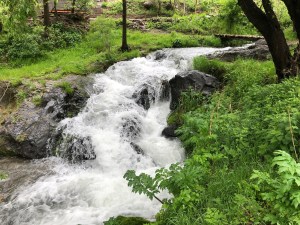
Let the flood sweep
one away — out
of the shallows,
into the deeps.
Don’t ever cry;
Don’t ever weep;
Just feel the speed
Carry one on.
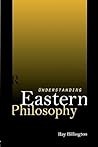
BOOK: “Understanding Eastern Philosophy” by Ray Billington
Understanding Eastern Philosophy by Ray BillingtonMy rating: 4 of 5 stars
Publisher Site — Taylor & Francis
This book does a solid job for one that bites off so much in a single go. Eastern Philosophy is a large subject, and to try to outline the major premises of its varied systems and also compare them to Western / Abrahamic notions (when Western schools are sometimes no more different from Eastern schools than each side is within,) and to do so in under two-hundred pages is a daunting undertaking.
For the most part, I felt the book did a fine job of meeting its objective. A fair amount of selection and simplification is required. I will say the part describing karmic doctrine didn’t seem consistent with what I was taught and seems more in line with the early Western scholars who started writing about Eastern Philosophy but could not help but couch the subject in a Western / Abrahamic frame because it was what they knew and was invisible to them. I say this as one who is no big fan of Karmic philosophy, though for another reason (one which is also mentioned in this book.) I’ve always been told that the central idea is to do selfless acts in order to escape the karmic cycle. Billington, like others before him, states it as do “good deeds” and then he puts forth the critique that this won’t help because doing good for one’s own benefit is fraught with peril. My understanding from Sanskrit scholars is: first, Hindu philosophers were aware of this paradox from the beginning and that’s why the emphasis has always been on “selfless” acts; second, the Abrahamic bifurcation of all actions into good and evil is not so much a thing in Hindu thinking (most actions are inherently neither.) I should point out that there is a lot of internal conflict within these philosophies (e.g. differences between Buddhist and Hindu thoughts on Karma) and that Billington does elsewhere reflect on the differences between Eastern and Western thinking about good and evil.
The first two-thirds of the book is organized by schools of thought (beginning with the Indian ones and working toward Chinese / East Asian schools) and the last third deals with a series of fundamental philosophical questions.
If you want a quick outline of Eastern philosophical ideas, this book gives a good look at them, particularly if one is interested in a comparison to Western ideas. The book also spends a fair amount of time in discussion of what a religion is and how one differs from a philosophy.
View all my reviews
BOOKS: “The Activist” by Daniel Fried
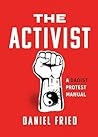
The Activist: A Daoist Protest Manual by Daniel FriedMy rating: 4 of 5 stars
Publisher Page — Prometheus Books/
Release date: March 3, 2026
Taoist philosophy has been applied to many a subject over the centuries, from war to business to governance to relationships, but this is the first time I’ve seen it applied to activism in a substantive way. The book caught my eye because I’ve long recognized the central truth behind Fried’s work, which is that the tactics and mindsets of protesters often does them no favors and may even ensure failure (if one presumes the objective to be to change behavior and attitudes on a given topic into line with the protesters’ stance.) The problem is that protesters are often angry and combative, characteristics which may keep the choir (preaching to itself) warm and feeling self-righteous, but which seldom brings in new converts from among the undecided [let alone from the opposing side.] And if you didn’t need converts to your side, you wouldn’t have to protest in the first place. Given this tendency, Taoism could be argued to be an ideal source of strategy. Taoism proposes going with the grain, not leading with a fight, and avoiding useless activity.
This book provides interesting food-for-thought about how protesters might have more impact by adopting fewer belligerent and self-serving tactics. Unfortunately, the book also has stretches of stream-of-consciousness writing that — while perhaps consistent with the Taoist love of spontaneity — can be a bit of a strain on the reader’s ability to follow. This mostly takes place in the latter chapters.
I found this book to be intriguing. I can’t say that I came away from it having answered the question of whether Taoist philosophy is reconcilable with activism on a practical level. Taoism asks one to let the natural unfold, while protest movements want to guide a society in a particular direction (notably one by definition at odds which that which has fallen into place organically.) It’s not for lack of discussion that I haven’t reached a conclusion, but rather that questions remain for me on the pragmatic level (rather than the level of theory.) That said, I found the book well worth reading, despite a few points of low readability.
View all my reviews
PROMPT: Working On
What have you been working on?
Being…. POW!… more spontaneous. 自然 (zìrán) in the Taoist conception.
PROMPT: Principles
What principles define how you live?
Before traveling, empty my cup. Before returning home, empty my cup.
Collect experiences, not geegaws.
Wishing for the world to be some other way is a grand waste of time.
If there is a river flowing toward where I want to be, surrender to it.
See humor everywhere, especially in myself.
Be content with who I am at the moment, while struggling to be a better version in future editions.
Strive to find the non-adversarial path.
Keep looking until I see what is beautiful in all things and creatures.
Don’t attempt to construct anyone else’s list of principles to live by.
Feel the sensations that arise without letting the mind amplify them out of proportion.
Seek only simple pleasures, enjoy them fully, and then move on.
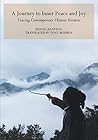
BOOKS: “A Journey to Inner Peace and Joy” by Zhang Jianfeng [Trans. by Tony Blishen]
A Journey to Inner Peace and Joy: Tracing Contemporary Chinese Hermits by Zhang Jianfeng by Unknown AuthorMy rating: 5 of 5 stars
Publisher Site
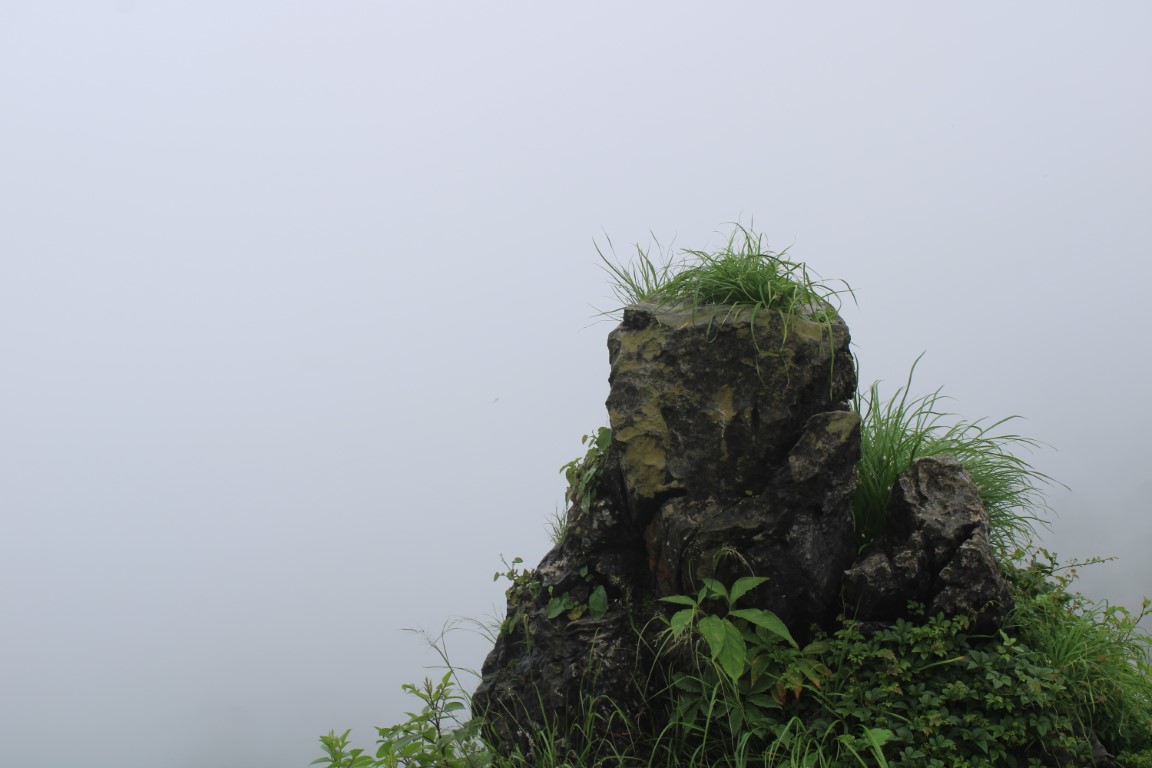
In 1993, Bill Porter (a.k.a. Red Pine) came out with a book called “Road to Heaven” that documented his experiences meeting with hermits in rural China. For many, both in and certainly out of China, the continued existence of this lifestyle might have come as a surprise. This book follows up over twenty years later, showing that Buddhists and Daoist hermits are still alive and well in the mountains of interior China.
The book not only offers beautiful descriptions of the lands where these men and women live, but also insight into their mindsets and how they live such minimalist lives. It’s a light and compelling look at individuals like those one might read of in “Outlaws of the Marsh,” only living in the present day (though living lives not unlike their historical counterparts did more than a thousand years ago.)
The book offers many color photos of the hermits and the landscapes in which they live.
I’d highly recommend this book for anyone interested in the way of reclusive existence.
View all my reviews
White Space [Free Verse]
BOOKS: “Wen-Tzu” Trans. by Thomas Cleary
Wen-Tzu by Lao-TzuMy rating: 5 of 5 stars
Publisher Site – Shambhala
This work is presented as “further thoughts of Laozi [老子].” Readers of the Dàodé jīng [道德经] will recognize many a familiar statement of that work, but this book is much more extensive and detailed. I say “presented as” because scholars no longer believe this was a product of Laozi and his lifetime (if such an individual ever existed.) For one thing, the book seems more syncretic than the Dàodé jīng, that is to say there are points at which it sounds strikingly Confucian — rather than purely Taoist.
As with the Dàodé jīng the Wénzǐ [文子] covers a lot of ground from metaphysics to individual ethics to political philosophy, but this book has more room to sprawl on each subject.
As with other Cleary translations, it’s a pretty readable translation.
I’d recommend it for readers interested in Chinese Philosophy.
View all my reviews
Swimmingly [Free Verse]
Swim through the world
- effortlessly -
Don't crave speed;
Maximize the glide.
With each stroke,
Sail as far as the limbs
will send one.
Don't thrash. Don't splash.
Don't gasp.
Feel the catch. Feel the pull.
Don't let short, wild motions
exhaust one.
Breathe!
Be wary of drag.
Put less effort
into propulsion,
And more into streamlining --
Shoot through the void,
without struggle.
Never lose sight of the value
of a good glide.


