PROMPT: Performed

Daily writing prompt
Have you ever performed on stage or given a speech?

Performed? Not yet. (Unless you count “Crowd Member Milling About [with No Lines] – #7” in an Elementary School Christmas Pageant.) Given a speech? Yes. Unless it is completely impromptu, it is nowhere near the top of my list of horrifying life events.

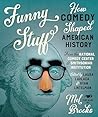
BOOKS: “Funny Stuff” ed. by Laura LaPlaca and Ryan Lintelman

Funny Stuff: How Comedy Shaped American HistoryFunny Stuff: How Comedy Shaped American History by Laura LaPlaca
My rating: 4 of 5 stars

Publisher Site — Rutgers University Press

Release Date: May 12, 2026

As the subtitle suggests, this book explores the nexus between American History and comedy across many, varied media (i.e. writing, theater, standup, improv, radio, television, movies, etc.) It’s an interesting book, but I don’t know that it has the right title. Considering the title, a reader might expect a fuller coverage of American History, drawing on whatever humorous outlets existed at the time (e.g. op-eds and satirical articles.) This book is more of a history of comedic content in the US with a substantial discussion of how comedy addressed / participated in changing views on sex, race, and sexuality and with occasional mention of how comedy was involved in other social issues, such as changing views on free speech and expression. You’re not going to learn how comedic writers addressed Smoot-Hawley or the Sinking of the Maine. (i.e. The book leads with comedic content and leans the discussion toward societal influence [rarely toward policy influence.] It does not lead with historical events and draw on appropriate comedic content.)

The book covers a lot of the same ground as Kliph Nesteroff’s The Comedians, though with quite different emphases. Nesteroff focuses on the gritty underside of comedy and the oft unseen dark side of comedians, while this book focuses on comedy as a factor in changing views on race and sex [as well as on the changing technological outlets for comedy.] Funny Stuff does spend a little more time on pre-20th century America than does Nesteroff, but not much more. Both books are heavily weighted toward the late 20th century to present. To be fair, there is much more volume of comedic output in this period. (That said, there were artists I expected coverage of, e.g. Josh Billings, that weren’t included. That’s where the book seems more like a history of comedy and its varied outlets.)

If you’re interested in the development of comedy in America, and its influence on social issues — most extensively attitudes towards race — I’d recommend this book.

View all my reviews

Five Wise Lines from George Carlin [April 2025]

Have you ever noticed that anybody driving slower than you is an idiot,
and anyone going faster than you is a maniac?

Isn’t making a smoking section in a restaurant
like making a peeing section in a swimming pool?

I don’t believe there’s any problem in this country,
no matter how tough it is,
that Americans,
when they roll up their sleeves,
can’t completely ignore.

Here’s all you have to know about men and women;
women are crazy,
men are stupid.
And the main reason that women are crazy
is that men are stupid.

I like it when a flower or a little tuft of grass grows through a crack in the concrete.
It’s so fuckin’ heroic.

BOOKS: “Be Funny or Die” by Joel Morris

Be Funny or Die: How Comedy Works and Why It MattersBe Funny or Die: How Comedy Works and Why It Matters by Joel Morris
My rating: 5 of 5 stars

Author Site

Release date: Sept 4, 2025 [paperback, hardcover is already out]

This is a comedy writer’s guide to how humor is crafted. It’s a bit popular psychology and a bit of a how-to guide. If one is expecting, because it’s on comedy and humor, a book that is a laugh riot on every page, this isn’t the book for you. That’s not so say Morris doesn’t pepper the book with witty commentary and humorous examples, but it’s ultimately a book about how the sausage gets made and is, thus, somewhat analytic — if in a readable style.

At the core of Morris’s theory of comedy is a three-component structure: construct, confirm, and confound. Other major ideas are the fundamental tribalism of comedy and the connections between comedy and music. It wouldn’t be a present-day book on comedy if there wasn’t some discussion of the idea of offense and the “limits” of what can be said.

I can’t say all of Morris’s ideas found immediate resonance with me, but even when I didn’t fully buy the argument, I did find the presentation thought-provoking. For example, I don’t know that I buy Morris’s argument about the importance of tribality to comedy. I do agree that one needs a common language and some overlap of experience, but all of humanity has a domain of overlap of experience. Yes, one may have an easier time the more extensive that overlap is, but ease doesn’t necessarily mean one can’t get big laughs from an audience whose worldviews and experience are radically different from one’s own. [Of course, I may just be being overly sensitive as a traveler in a tribal world.]

For writers, the end of the book has a few chapters that are more about story than comedy – per se, and – while these chapters compare and contrast comedy and drama writing – they provide information useful to any writer engaged in storytelling.

I’d highly recommend this book for any readers interested in comedy writing, be it of standup material, scripts, or other content.

View all my reviews

BOOKS: “Improv Wisdom” by Patricia Ryan Madson

Improv Wisdom: Don't Prepare, Just Show UpImprov Wisdom: Don’t Prepare, Just Show Up by Patricia Ryan Madson
My rating: 4 of 5 stars

Publisher’s Website

One might expect this to be a book about how to perform improvisational comedy, but it’s better described as a philosophy of life that employs lessons from improv. There are books that take a much more tailored approach to building an improv act. This one, rather, broadens its target demographic from those interested in theater and comedy to everybody. It discusses applying lessons such as default to positivity (the famous “Yes, and…” of improv) both on and beyond the stage.

Each of the thirteen chapters is built around a maxim that might be heard in an improv theater or troupe. The crux of the matter is building the confidence and sense of freedom to be able to behave spontaneously in an environment that’s stressful and somewhat chaotic. Most of the lessons approach an aspect of the problem of surrender and free response action, though there are broader lessons such as the benefits of gratitude and helpfulness. While I call the book’s content a philosophy of life, the author doesn’t spend a lot of time drilling down into established philosophies, with the exception of Buddhism — specifically of the Zen variety. As one might imagine, Zen — with its emphasis on non-attachment and avoidance of overthinking — has a substantial overlap with the approach to living that Madson is proposing.

“Improv Wisdom” is set up as a self-help book, featuring not only lesson-based organization but also offering a few exercises in each chapter.

This is a quick read and might prove to be of great benefit to those who have never thought much about the challenges and lessons of improv. The book can’t be said to be groundbreaking in terms of the lessons it presents, but its focus on what improv elucidates about these lessons is interesting and unique.

View all my reviews

BOOK: “How To Be The Best Improviser On Earth” by Will Hines

How To Be The Greatest Improviser On EarthHow To Be The Greatest Improviser On Earth by Will Hines
My rating: 5 of 5 stars

Amazon.in Page

This guide to performing improv comedy alternates chapters that explore various tenets of the art with chapters that present exercises to help one carry out said tenets in practice. So, it is both a philosophy of improv and a how-to manual. The tenets include: “be present,” “be changeable,” “be brave,” “be authentic,” and “be funny” — among others.

Being a neophyte to the subject, I knew nothing beyond the oft joked upon advice to always “Yes, and…” during a scene, a lesson intended to keep a scene moving and which also provides much material for wisecracks. This book doesn’t spend much time on that rule beyond discussing when one should break it, and how one can do so without bringing a scene to a halt. The key takeaways of the book were about pacing and the need for normality in contrast to the absurdity to make a scene funny. That is, one can’t just go to the whackiest place possible out of the gate and with all characters, instead it is the contrast between everyday conversation and the introduction of an absurd premise that makes a scene funny. As with the “straight man” of a comedic duo, one needs straight elements or characters.

I found this book to be informative. It’s a quick read and offers much food-for-thought that could benefit one offstage as well as on.

View all my reviews

Comic’s Limerick

There once was a peevish standup comic.
Whose war on hecklers would quickly go atomic.
A heckler said, "You suck!"
So, he hit 'em with a truck.
A response neither timely nor economic.

BOOKS: “The Comedians” by Kliph Nesteroff

The Comedians: Drunks, Thieves, Scoundrels, and the History of American ComedyThe Comedians: Drunks, Thieves, Scoundrels, and the History of American Comedy by Kliph Nesteroff
My rating: 5 of 5 stars

Amazon.in Page

This book presents a fascinating history of standup comedy and the various ancillary activities that comedians have taken on to make ends meet, to advance their careers, and – in a surprising number of cases – to pay for drugs — e.g. from writing to radio and television performances to hosting interview shows. The book’s exploration runs from the days of Vuadville to today’s world of Twitter and podcasts.

The book reveals a great deal about which readers may be unaware. If you, like me, watched The Marvelous Mrs. Maisel and wondered whether the mob was really that involved in the entertainment industry, turns out, they were. In fact, Nesteroff addresses the violence and threats experienced by comedians in a way that is much more explicit than in that TV show. There are tales of early insult comedians running afoul of wiseguys who were in the audience unbeknownst to the comedian. There is even a chapter devoted to the building of Las Vegas to meet certain needs of organized crime, as well as discussion of the mob’s decline (or, perhaps, legitimization) in the industry.

Another discovery that was interesting to me was how wild some of the early comedians were, both in their stage and in their personal lives. There were a number of names that were familiar to me from re-runs of highly censored network television programs. I’d wrongly assumed that these individuals were as bland and wholesome as their on-air personas. Buddy Hackett is a prime example of someone who wasn’t at all what I expected.

It’s remarkable to see how many ups and down standup comedy has had in its relatively short life span — cycles of boom and bust.

If you’re interested in standup comedy and how comedy has progressed as a form of entertainment in America, I’d highly recommend this book.

View all my reviews

BOOKS: The NEW Comedy Bible by Judy Carter

The NEW Comedy Bible: The Ultimate Guide to Writing and Performing Stand-Up ComedyThe NEW Comedy Bible: The Ultimate Guide to Writing and Performing Stand-Up Comedy by Judy Carter
My rating: 5 of 5 stars

Amazon.in Page

As the title suggests, this is a soup-to-nuts exploration of building a standup comedy act. While the bulk of the book discusses how to build jokes that work in a comedy club setting, it also gives helpful tips on relevant issues such as stage fright, hecklers, bombing and bomb recovery, set arrangement, and editing material. It offers many insights that may seem counterintuitive to a neophyte reader.

In writing, there is a common distinction made between “plotters” and “pantsers” (as in “by the seat of one’s pants.”) Plotters do a lot of research and outline everything thoroughly before beginning to write (as most people understand the writing process.) Pantsers like to get right into the typing and are willing to have a much messier process in exchange for greater feelings of spontaneity and surprise. A similar distinction seems to exist in standup comedy. Jerry Seinfeld might be the posterchild for the comedic plotter, writing and rewriting jokes on paper and having an already finely honed collection of jokes when he goes into the comedy club to revise through audience feedback. Other comedians seem to like to work by riffing and editing material on the fly. My point is: this book will definitely appeal most to plotters. That said, I think it has a lot of useful information that will save pantsers a great deal of trouble, but I suspect those with intense pantser proclivities will be skeptical of such a step-by-step approach.

The book is set up as a workbook woven into an instructional guide. That is, it has exercises throughout. It also presents a lot of jokes and partial bits by headlining comics to help the reader see how successful comics apply the principles in question.

I enjoyed reading this book and found it helpful. I thought that many of the exercises were quite helpful in triggering joke ideas. If you are looking for a book that deals in both joke writing and comedic delivery, I’d highly recommend this book.

View all my reviews

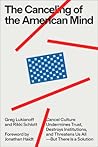
BOOKS: The Canceling of the American Mind by Greg Lukianoff & Rikki Schlott

The Canceling of the American Mind: Cancel Culture Undermines Trust and Threatens Us All―But There Is a SolutionThe Canceling of the American Mind: Cancel Culture Undermines Trust and Threatens Us All―But There Is a Solution by Greg Lukianoff
My rating: 5 of 5 stars

Amazon.in Page

This book presents an in-depth exploration of cancel culture in its many varied manifestations, from both the left and the right of the American political spectrum. The biggest part of the discussion is with respect to the educational system, and particularly higher education. Sadly, this is because the institutions that used to be among the most formidable bulwarks of free speech, expression, and academic freedom have increasingly become untenable to multiple points of view. (The authors point out that there have been more dismissals of faculty members for cancel culture speech and expression issues than there were during the McCarthy era for political stance.)

However, the book doesn’t restrict itself to education, but also investigates cancelations in journalism, publishing, the scientific community, standup comedy, and the medical and psychiatric communities. The authors also present cases of the effect that wokeness and other expression limiting activities are having in these areas. One of the most disturbing revelations to me was the role of wokeness in psychotherapy and the negative effect it may have on people getting the help they need.

The book presents a series of cases in detail to advance the discussion. It also has a couple chapters that examine the tactics that are used to apparently “win” debates by silencing / demoralizing the opposition while avoiding any actual contest of ideas. The authors go through tactics favored by the Right as well as those by the Left. (Though it’s clear that, in a race to the bottom, both sides adopt the approaches of the other side that seem to be effective. e.g. the Left is getting into book banning (historically a Conservative tactic) and the Right is getting into cancelling and shout-downs (usually Progressive tactics.)) I think it was smart to have two authors, one from the left and one from the right, in order to help ensure balance in the project. That said, as the Left has been in the cancel culture vanguard, they come up more often.

Some have called this a sequel to “The Coddling of the American Mind,” with which it shares a co-author, Greg Lukianoff. I don’t know that I’d think of it that way. While it does address some of the same issues as background, psychology and child development are not at the fore in this book (Jonathan Haidt – the other co-author of “Coddling” is a psychologist,) but rather are the legal, cultural, and political issues.  

This is probably the most important book I’ve read this year (and, being late November, it’s likely to retain that status) and I’d highly recommend it for all readers.

View all my reviews