BOOKS: “Inner Space Philosophy” by James Tartaglia

Inner Space Philosophy: Why the Next Stage of Human Development Should Be Philosophical, Explained Radically (Suitable for Wolves)Inner Space Philosophy: Why the Next Stage of Human Development Should Be Philosophical, Explained Radically by James Tartaglia
My rating: 5 of 5 stars

Amazon.in Page

Release Date: July 1, 2024

This is a strange book, and I suspect it will be mostly loved or loathed, with relatively few people in that usually broad spectrum of indifference. It’s not strange in its message (which is an argument for philosophical Idealism and a metaphysics consistent, therewith,) but rather it’s odd in its delivery. It mixes fact and fiction, often in an ill-defined way, and it’s loaded with fourth wall breaking self-introspection. I enjoyed reading the book, found it amusing at times, and received a lot of food-for-thought from it (but not without some frustration, particularly around not knowing which were true stories. I suspect this was intentional. Philosophical Idealism being a notion that what matters is our internal [i.e. mental / emotional] experience and that that experience may not have much to do with any external “reality” [and, to the degree it does, that we have limited capacity to know how.] Therefore, it makes sense that a book taking such a stance would eschew the importance of external world “truths” in favor of building mental models that have pedagogic value regardless of whether the reflect external world happenings. The book boldly puts its money where its mouth is in that regard.)

It should also be said that part of the reason for the book’s unusual approach was to make a hard break from the usual mode of philosophical writing, which is often pedantic, pretentious, and elitist. That’s because, beyond the metaphysics it’s prescribing, the book is also proposing a need for philosophy to be a broadly human endeavor – approachable by all, rather than the domain of an elite who communicate in their own special jargon-laden language and argue over minutiae irrelevant to everyday living. Like a number of books of recent years, it’s proposing that we need a philosophy of life that helps us live better lives, rather than a philosophy of semantics and elaborate logic that helps “professional philosophers” score points in a game of philosophy.

A few things I liked about this book, include: a.) it didn’t treat the Western Philosophical tradition as the sum total of philosophy (as many books have.) For example, it explored Akan and Buddhist philosophy alongside the ancient and modern philosophy of the West. b.) it gives special emphasis to Cynicism, a school of philosophy that is usually disregarded as the domain of a few madmen of ancient Greece. There is a chapter imagining Trinidad’s Gambo Lai Lai as a Cynic of the modern world. c.) I liked that it used the last chapter as a way to review in a way that was fun and echoed the approach of the Socratic dialogue. It pitted a scholar in favor of the ideas of the book against what might best be thought of as a mainstream academic philosopher (though he was also an opponent of the book.) This allowed the author to review the book’s ideas in a way that can only be experienced through a clash of ideas. (And it offered some levity, as well.)

I got a lot out of reading this book. If you can cope with your belief in the importance of factual happenings being challenged, you too will probably enjoy it.

View all my reviews

BOOKS: “The Comedians” by Kliph Nesteroff

The Comedians: Drunks, Thieves, Scoundrels, and the History of American ComedyThe Comedians: Drunks, Thieves, Scoundrels, and the History of American Comedy by Kliph Nesteroff
My rating: 5 of 5 stars

Amazon.in Page

This book presents a fascinating history of standup comedy and the various ancillary activities that comedians have taken on to make ends meet, to advance their careers, and – in a surprising number of cases – to pay for drugs — e.g. from writing to radio and television performances to hosting interview shows. The book’s exploration runs from the days of Vuadville to today’s world of Twitter and podcasts.

The book reveals a great deal about which readers may be unaware. If you, like me, watched The Marvelous Mrs. Maisel and wondered whether the mob was really that involved in the entertainment industry, turns out, they were. In fact, Nesteroff addresses the violence and threats experienced by comedians in a way that is much more explicit than in that TV show. There are tales of early insult comedians running afoul of wiseguys who were in the audience unbeknownst to the comedian. There is even a chapter devoted to the building of Las Vegas to meet certain needs of organized crime, as well as discussion of the mob’s decline (or, perhaps, legitimization) in the industry.

Another discovery that was interesting to me was how wild some of the early comedians were, both in their stage and in their personal lives. There were a number of names that were familiar to me from re-runs of highly censored network television programs. I’d wrongly assumed that these individuals were as bland and wholesome as their on-air personas. Buddy Hackett is a prime example of someone who wasn’t at all what I expected.

It’s remarkable to see how many ups and down standup comedy has had in its relatively short life span — cycles of boom and bust.

If you’re interested in standup comedy and how comedy has progressed as a form of entertainment in America, I’d highly recommend this book.

View all my reviews

BOOKS: “Imagination: A Very Short Introduction” by Jennifer Anna Gosetti-Ferencei

Imagination: A Very Short Introduction (Very Short Introductions)Imagination: A Very Short Introduction by Jennifer Anna Gosetti-Ferencei
My rating: 5 of 5 stars

Amazon.in Page

This is a concise guide to the subject of imagination, the capacity to conceptualize that which does not exist in reality. Philosophy is the primary dimension through which the subject is investigated, though the insights of poets (particularly Romantics,) authors, and artists are frequently presented — in several cases, in detail. Also, the author does discuss ideas from other disciplines as relevant (e.g. psychology, anthropology, science.) This is notable, for example, in Chapter 2, which looks at early signs of imagination in the human record and the evolution of this capacity.

Philosophical views on imagination have varied to the greatest possible extent, from Plato’s belief that imagination represents untruths and is therefore dangerous to various views suggesting that imagination is a good thing, is fundamental to what it means to be human (e.g. to empathy,) and is inescapable for humans. This Plato against the world dispute is revisited in several places throughout the book. Besides those of Plato, the views of Kant, Nietzsche, Wittgenstein, and Sartre are particularly extensively examined.

Creative types will find the final chapter (Ch.6 “Creativity from invention to wonder”) the most engaging part of the book as it deals with what makes for creativity. The chapter discusses topics such as whether constraints help or hinder creativity? Take, for example, poetry: does free verse poetry produce more imaginative material, or — on the contrary — is rhymed and metered verse more innovative and novel. If you think you know the answer, you might be surprised by the arguments that have been put forth.

I enjoyed reading this book and found it thought-provoking and worthy of the time.

View all my reviews

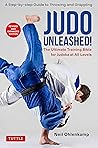
BOOKS: “Judo Unleashed!” by Neil Ohlenkamp

Judo Unleashed!: The Ultimate Training Bible for Judoka at All Levels (Revised and Expanded Edition)Judo Unleashed!: The Ultimate Training Bible for Judoka at All Levels by Neil Ohlenkamp
My rating: 5 of 5 stars

Amazon.in Page

Release Date: July 9, 2024

This is a new and revised edition of a book that has been on the market for many years. It provides an overview of the sport and martial art of judo, with particular emphasis on the competitive version of the art. It does discuss the self-defense philosophy and approach of judo in broad brushstrokes, but the techniques that are discussed (and shown) individually are the competition-legal ones. The book does take a no-nonsense approach and focuses on a straight-forward delivery of the most crucial information for a general reader.

The book’s organization is as one would expect of a martial arts guide: an introductory overview, a detailed breakdown of the techniques by type (i.e. throwing, grappling, groundwork,) and a brief closing (i.e. “where do we go from here”) section. Among the book’s useful features is that Ohlenkamp often tells the reader which judoka were particularly noted for their adeptness with a given technique as he presents said technique. This gives the reader wanting a little more insight the opportunity to do some internet research for video clips of that particular judoka doing the technique in question.

The book has a large number of color photos that are clear and present the gist of each technique in mid-action. It also has extensive appendices discussing rules and the formally accepted techniques of Kodokan Judo.

I found this book useful and would recommend it for those interested in judo, whether as a potential student or to compare and contrast it with other grappling sports / martial arts.

View all my reviews

BOOKS: “Nuclear War” by Annie Jacobsen

Nuclear War: A ScenarioNuclear War: A Scenario by Annie Jacobsen
My rating: 5 of 5 stars

Amazon.in Page

Release Date: March 28, 2024

Annie Jacobsen’s new book is fascinating and — quite frankly — horrifying from cover to cover. The book presents a hypothetical minute by minute unfolding of events that culminate in full-scale nuclear war and the end of the world as we know it. A four-hundred-page book that breaks down the events of an hour may sound like a recipe for tedium, like Joyce’s seven-hundred-plus page elaboration of the events of a single day in “Ulysses.” But, it is anything but. There is so much to explore amid the concepts like “the nuclear football” and MAD (Mutually Assured Destruction,) and EMP’s (Electromagnetic Pulse weapons.) There is also so much to go wrong, and much that is virtually certainly go wrong.

That last sentence might suggest that the book takes an excessively pessimistic view to create drama. Sadly, it does not need to. The ultra-fast timeline of nuclear calculus does the work of ensuring that many things will go terrifyingly and irreparably wrong. Decision makers have a short window to make decisions, and “use-’em-or-lose-’em” thinking plays a major role in decision making. (i.e. One can’t count on delaying a decision about a counter response because one’s delivery infrastructure — notably, the human bit of it — will likely be destroyed if one absorbs the first strike.) There is also the fact that — counter to all the abort buttons seen in the movies — once missiles are launched, there is no way to stop them. [A bit of “Dr. Strangelove” writ into the system.] At many of the points at which it may seem that Jacobsen is being pessimistic for effect, she explains the basis for her pessimism: from historical events like the failure of the nuclear hotline to commentary by experts.

Lest one think that nuclear warfare is a threat of the past, and that it’s a solved problem, Jacobsen’s scenario reminds us that it’s not just a matter of NATO v the Warsaw Pact (i.e. America v the USSR in the common conception) anymore. She does this by using North Korea as the instigator. We don’t ever learn the Kims’ theoretical motivation, but all one really needs to know to make one nervous is that the DPRK has been quite happy playing the role of pariah, engaging in a number of activities in violation of international law and norms, as well as that Kim Jong Un might just believe some of the ridiculous things his yes-men tell him. (Not to mention the famines and other destabilizing conditions that could lead some other inside actor or group of actors to take unanticipated actions.) The truly disturbing part is to see how easily a strike by the DPRK could draw Russia or possibly China into the nuclear exchange. [Russia because it’s in the path between the US and the DPRK, and China because it could suffer massive casualties from strikes on North Korean facilities near the border that send radiation to sizable Chinese population centers.]

This book is a must-read for anyone who thinks nuclear weapons are the problem of a bygone era.

View all my reviews

BOOKS: “Hōjōki” by Kamo no Chōmei; Trans. by Matthew Stavros

Hojoki: A Buddhist Reflection on Solitude: Imperfection and Transcendence - Bilingual English and Japanese Texts with Free Online Audio RecordingsHojoki: A Buddhist Reflection on Solitude: Imperfection and Transcendence – Bilingual English and Japanese Texts with Free Online Audio Recordings by Kamo no Chōmei
My rating: 5 of 5 stars

Amazon.in Page

Release Date: May 7, 2024 [for Tuttle’s bilingual edition]

This is the Japanese Walden, except that it was written several hundred years before Thoreau’s essay and was predominantly philosophically informed by Buddhism rather than Transcendentalism. (Though those philosophical systems do agree on a number of points, most relevantly that materialism is not a sound route to happiness.) Like Walden, Hōjōki is an autobiographical promotion of the hermitic lifestyle. Both works sing the virtues of life in a simple, rustic cabin in a natural setting, a life of minimalism and subsistence living.

There are many translations of this work available, and so I’ll spend the remainder of this review on what differentiates this edition from the two others that I’ve read. First and foremost, the other versions I’m familiar with were presented as prose essays. This edition is presented in verse, which I understand to be the form that the original Japanese work employed. I should say that in some places the work comes across as poetic in the conventional sense, though in others it seems like a versified essay.

Secondly, this edition has a few handy ancillary features. One is that it is bilingual. Romanized Japanese allows the reader to experience the sound quality of the original. This edition also has graphics in the form of maps, artwork, and photographs. Some of the graphics support or expand upon the information delivery while others seem to be more a matter of creating atmospherics. Also, there are explanatory endnotes that help readers unacquainted with Kamakura Period Japan to understand some of the book’s references that might otherwise remain unclear.

I enjoyed and benefited from reading this edition, even having read others. If you are looking for insight into the ascetic life, I’d highly recommend it.

View all my reviews

BOOKS: “Simple Passion” by Annie Ernaux

Simple PassionSimple Passion by Annie Ernaux
My rating: 5 of 5 stars

Amazon.in Pge

I’ll admit, I picked up this book because Ernaux won the 2022 Nobel Prize for Literature and I’m uncomfortable being ignorant of the work of a Literature Nobel Laureate. Her work is atypical of Nobel Prize winners. She is primarily known as a memoirist rather than a novelist, poet, or even essayist, and while she has a large body of works, many are quite short for prose work — i.e. under 100 pages.

This is a straightforward story of obsession, the author’s obsession with a married man, a diplomat from Eastern Europe during the late days of the Cold War. (The book doesn’t get into any Cold War intrigues, so don’t expect any. It’s a completely personal story.) The autobiographical narrative describes the lifecycle of obsession and is loaded with psychological insight. One sees the degree to which Ernaux’s yearning to be with this man intrudes on all aspects of her life, in as much as she can be said to have a life, so much of it being laid aside for their periodic dalliances. It is the kind of compulsion known mostly to young first lovers and those of addictive personalities.

A couple of the most compelling insights come as fourth wall breaks when Ernaux offers insight into her thoughts on writing. (One is that writing should have an effect like pornography [not necessarily be pornographic,] and another is that she writes to learn if anyone else does the things she does.)

I enjoyed read this. It’s an extremely fast read as it’s only around sixty pages and puts the reader in that compulsive mindset. I’d highly recommend it. I can’t speak to how typical it is of her work because it’s the first I’ve read from her, but it was mentioned prominently in the “best of” lists that came out around the time of her Nobel win.

View all my reviews

BOOKS: “Smoke and Ashes” by Amitav Ghosh

Smoke and Ashes: A Writer's Journey through Opium's Hidden HistoriesSmoke and Ashes: A Writer’s Journey through Opium’s Hidden Histories by Amitav Ghosh
My rating: 5 of 5 stars

Amazon.in Page

Release Date: February 15, 2024 [NOTE: for this edition; the book is already out in some markets in some additions.]

Ghosh has written a fascinating exploration of the profound global consequences of that pretty red flower, the opium poppy. I find the events surrounding the Opium Wars to be among the most incredible stories humanity has written. It is mind-blowing that a substance could be so utterly addictive as to spur wars and global social and economic upheavals. That substance is, of course, tea. Ah, you thought I was going to say opium (or its relative, heroin,) didn’t you? But while opium is fantastically addictive, its addicts were by-and-large in peaceful stupors in (or on) their clouds during the time in question. It is the uppity Earl Grey addict who was draining Britain’s treasury of precious metals, and — as addicts do in their impoverished desperation — turned to dealing drugs.

There have been many books written on this subject, but Ghosh carves himself a niche. First, while accounts often focus tightly upon the central adversarial relationship of Britain versus China, Ghosh examines at leisure the roles of two lesser discussed players — India (not only as a subject of Great Britain but also as an autonomous actor) and America. The importance of India’s involvement, from being a major producer and processor of opium to sourcing the sepoys who actually fought the Opium Wars, has been largely ignored, and Ghosh helps to clear up distortions in the historical record. Second, the book investigates questions around America’s opioid crisis and what history can tell us about its drivers. In particular, what does the China’s explosion of addiction tell us about what might have spurred America’s crisis?

This is a readable and compelling nonfiction exploration of the influence of opium from a writer who has produced novels (e.g. the “Sea of Poppies” trilogy) set around these historical events.

I’d highly recommend this book for individuals interested in the influence of Opium, particularly if one is curious about how history relates to the recent crises and what role Indians and Americans played in events.

View all my reviews

BOOKS: “Great Minds on Small Things” by Matthew Qvortrup

Great Minds on Small Things: The Philosophers' Guide to Everyday LifeGreat Minds on Small Things: The Philosophers’ Guide to Everyday Life by Matthew Qvortrup
My rating: 4 of 5 stars

Amazon.in Page

This book was inspired by Voltaire’s Philosophical Dictionary, a collection of essays by the French polymath put out in several editions and which covered topics such as: “Adultery,” “Free Will,” “Kissing,” and “Nakedness.” In some ways, the inevitable comparison that results from such a “reboot” as this proves the connection between the books to be apt. But in at least one sense, the comparison is unfortunate.

On a superficial level, comparison is apt. Not only does this book expound upon a range of alphabetized topics, often of an “everyday” nature, but it uses many of Voltaire’s topics. It should be noted that Qvortrup’s book also includes many topics that Voltaire didn’t address, notably topics such as “cars” that didn’t exist in Voltaire’s day. One difference that benefits the book greatly is that (as the title suggests,) Qvortrup’s book draws on ideas of a wide range of thinkers, mostly philosophers but also artists of a philosophical bent. [Whereas, Voltaire’s book is a single-point of view, his own.] The “great minds” in this book range from the ancient world to that of the present. While it is (by the author’s admission) Western-centric, it does reference Eastern thinkers (e.g. Taoists and Buddhists) more than many books I’ve read that weren’t as self-aware of their own Eurocentrism.

Where the comparison to Voltaire’s dictionary is not so apt is that Qvortrup’s book rarely mixes wit and stimulation in the way for which Voltaire had a genius. This doesn’t mean Qvortrup’s book isn’t witty or thought-provoking, but just that it’s rarely both, simultaneously. In dealing with a topic like flatulence it can be witty but trivial, in expounding on the ideas of Kant it is intriguing but not usually amusing. That said, the book is laden with interesting ideas and insights into seminal thinkers that most people will find unexpected, if quirky. It is also the case that the overall tone of this book is lighter and more aimed at amusement than is Voltaire.

I found this book to be compelling, readable, and well worth the time, and would recommend it for readers of pop philosophy.

View all my reviews

BOOKS: “Robert Frost: Sixteen Poems to Learn by Heart” ed. by Jay Parini

Robert Frost: Sixteen Poems to Learn by HeartRobert Frost: Sixteen Poems to Learn by Heart by Robert Frost
My rating: 5 of 5 stars

Amazon.in Page

Release Date: March 12, 2024

This book presents sixteen of Frost’s poems, each with a commentary on the poem, how events in Frost’s life influenced said poem, and assorted background details. It includes the “greatest hits” (e.g. “Mending Wall,” “The Road Not Taken,” “Fire and Ice,” and “Stopping by Woods on a Snowy Evening,”) a few of Frost’s more obscure works, and a number that are in-between in status.

I found the commentaries to be interesting and readable, which is important as Frost’s poems are now in the public domain, and so the value of this volume hinges on Parini’s work. Parini includes some stories that offer insight into Frost’s mindset, as with the story of the lady who approached him after a reading to ask the meaning of “Fire and Ice.” Reading Frost isn’t like reading, say, Allen Ginsberg, the latter being one who put it all out there – unabashedly, Frost’s poetry is more guarded and deals more in nuanced metaphor. This makes a volume like this useful if it can offer any insight into the poet’s mindset, which I think Parini does.

I considered reading this book to be an opportunity to learn more about the poems and poet, and – therefore – did not heavily weight the stated theme of presenting poems that should be rote memorized. I mention this because I suspect Parini had other criteria in mind as well. While the book does include poems that are easily memorized (e.g. “Fire and Ice” and “Stopping by Woods on a Snowy Evening”) as well as poems that have messages worth learning by heart (e.g. “Mending Wall” and “The Road Not Taken,”) it also includes poems that aren’t so memorable because they are long, not especially lyrical, or not particularly filled with stand-out ideas or vivid imagery (e.g. “Directive,” “The Wood Pile,” and “Birches.”) This also begs the question, why one wouldn’t include a poem like “Nothing Gold Can Stay,” which is short, lyrical, and has an easily grasped message (i.e. easily memorized.)

As for ancillary matter, there is an appendix that offers tips for memorizing poems as well as a short “recommended reading” bibliography.

That said, I enjoyed reading this book; I got a lot out of Parini’s commentary, and I would recommend the book for poetry readers.

View all my reviews