BOOKS: “The Suppressed Poems of Ernest Hemingway”

The suppressed poemsThe suppressed poems by Ernest Hemingway
My rating: 4 of 5 stars

Available online – Public Domain

I read this book because my curiosity was piqued by a reference to poems Hemingway published in Der Querschnitt, a reference that was made in a biography of Hemingway I’ve been reading recently (Forty-Three Ways of Looking at Hemingway by Jeffrey Meyers.) Five of the seventeen poems in the book are from Der Querschnitt. (Ten of the poems were published in a book entitled Three Stories and Ten Poems and a couple are odds and ends.)

The Der Quershnitt pieces are bawdy by 1920’s standards, though not particularly for today. The other poems can be a bit intense, dealing in subjects like death in war (Champs D’Honneur,) suicide (Montparnasse, and a curse upon literary critics (Valentine,) but tend to be a bit more refined (excepting Valentine. which may be the least elevated of the collected poems.)

The poems include a mix of lyric, free verse, and prose poem, though all are fairly short (the longest, The Soul of Spain, fits in three pages.)

My favorite was a short lyric poem entitled The Age Demanded, which considers the paradox of the 1920’s as a progressive age, restrained. I also found T. Roosevelt to be fascinating because in the act of critiquing Teddy Roosevelt, Hemingway (wittingly or not) gives us a bit of autobiography. (i.e.“And all the legends that he started in his life // Live on and prosper, // Unhampered now by his existence.”)

I give Hemingway more credit for saying interesting things by virtue of being bold than for saying anything in a particularly interesting way, but it’s enough to make these poems worth reading.

View all my reviews

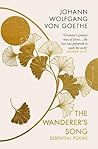
BOOK: “The Wanderer’s Song” by Johann Wolfgang von Goethe [trans. by John Kent]

The Wanderer's Song: Essential Poems (Pushkin Press Classics)The Wanderer’s Song: Essential Poems by Johann Wolfgang von Goethe
My rating: 4 of 5 stars

Publisher Site — Pushkin Press Classics

This is a new translation of select poems of Johann Wolfgang von Goethe. It’s a clever and varied set of poems by one of German literature’s all-time greats, a polymath of the 18th and early 19th centuries.

It can be a challenge for a general poetry reader to relate to this work. Over two hundred years since most of these poems were composed, the collection reflects a worldview quite different from that which one finds today. That said, the translations are readable and pleasant and don’t feel strained or clunky, and the collection has instances of sublimity. Having no background in German Literature, I can’t say how true the translations are to source material, but they stood solidly as poems in their own right. The book does offer a substantial introduction by the translator for individuals who are particularly interested in the German literature, translation decisions, or the life of Goethe.

I would recommend this for poetry readers, even though casual readers may find it a bit archaic. If you like the Romantic poets, and haven’t given Goethe a try, it’s well worth the time investment.

View all my reviews

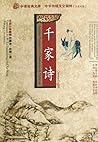
BOOK: “Golden Treasury of Quatrains and Octaves” [i.e. 千家诗] Trans. by Xu Yuanchong and Xu Ming

Golden Treasury of Quatrains & OctavesGolden Treasury of Quatrains & Octaves by Xu. Yuanchong (translator)
My rating: 5 of 5 stars

Publisher Site — China Translation Corp

This is the bilingual (Chinese-English) edition of an anthology of Tang and Song Dynasty poems commonly known in Chinese as 千家诗 (it has a much longer formal title,) which was jointly translated by Xu Yuanchong and Xu Ming (no relation.) The book is organized into four parts by the form of poem: 7-character line quatrains, 7-character line octaves, 5-character line quatrains, and 5-character line octaves. The anthology includes poems by Li Bai, Du Fu, Wang Wei, Meng Haoran, Jia Dao, Ouyang Xiu, Yang Wanli, Su Shi, and many other important Tang and Song poets — from Emperors to Hermits. That said, while the aforementioned Chinese title suggests there are works of a thousand poets involved, that’s an exaggeration. (And that’s probably all the better. While this was the golden age of Chinese poetry, going that wide into surviving poetry might involve hitting the dregs.)

Each entry has a title, byline, the poem in Simplified Chinese script and pinyin (Romanized phonetic script,) an English language translation, notes in Chinese, and a line or two of commentary in English. All but the seven-character line octaves take up just one page per poem. (Seven-character line octaves take two pages per poem.)

This is a great anthology. There’s an introduction to give insight into what approach the translators took. They stuck to rhyming verse to emulate the originals in form, but more can be learned from the introduction.

I’d highly recommend this anthology for poetry readers.

View all my reviews

FINLAND LIMERICK

A hardcore Metal drummer from Finland
refused to be without his sticks in hand,
but then the poor slob
couldn’t work a doorknob,
missed gigs, & got kicked out of the band.

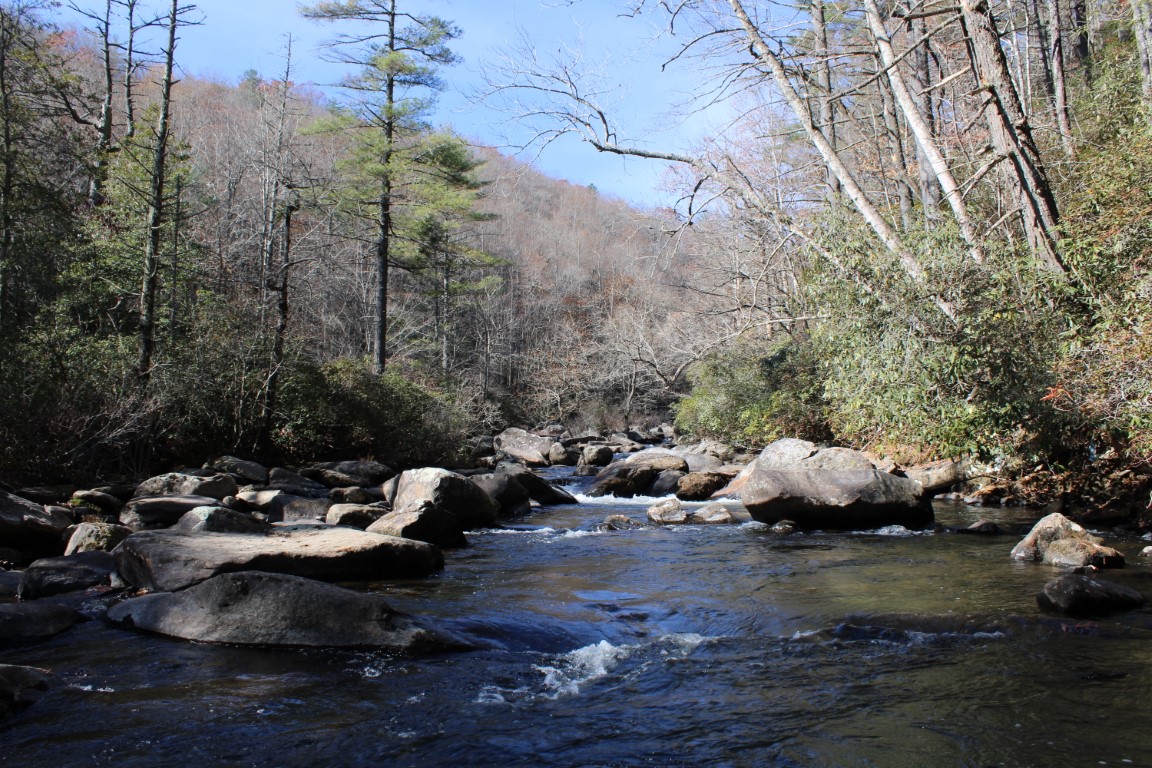
“Autumn Moon” [秋月] by Cheng Hao [程颢] [w/ Audio]

A clear stream passes by the
mountain clad in green;
The clear sky and clear water
melt in autumn hue.
Far far away from the tumultuous
world unclean,
Long long will white clouds and
red leaves be friend to you.

Note: This is the joint translation of Xu Yuanchong and Xu Ming found in the edition of Golden Treasury of Quatrains and Octaves on which they collaborated (i.e. China Publishing Group: Beijing (2008) p. 64.)

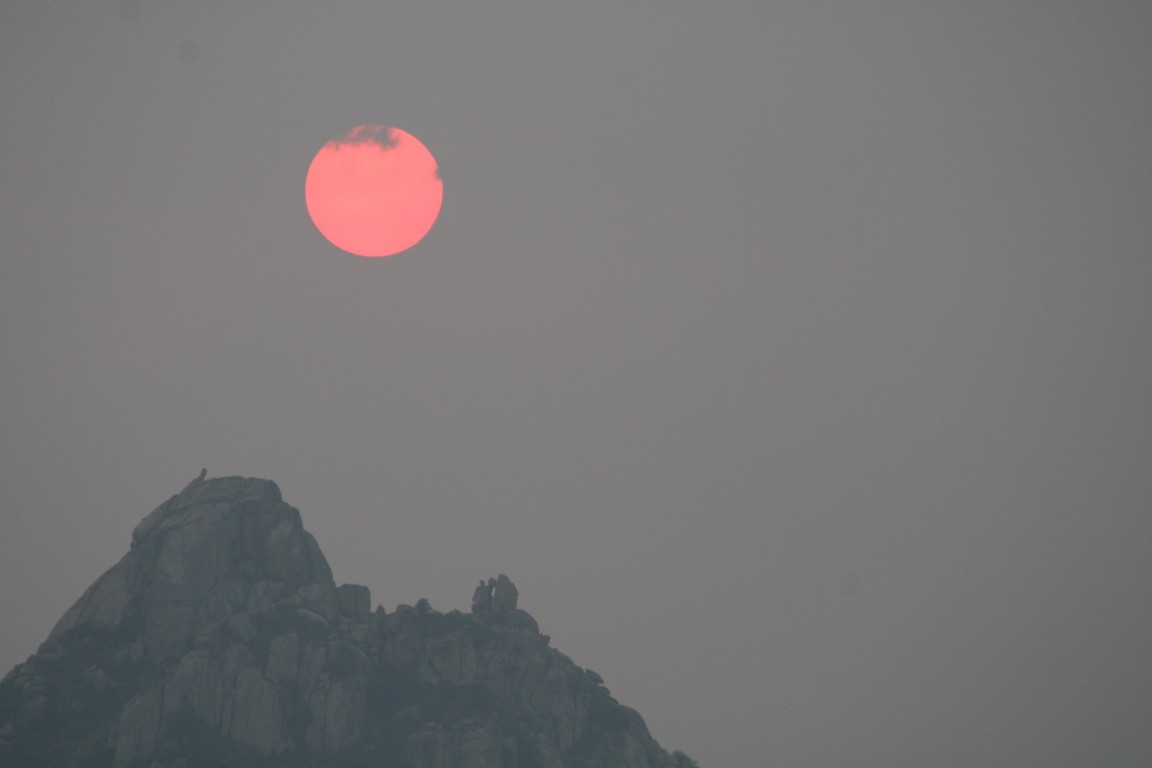
“Sundown” by Henry Wadsworth Longfellow [w/ Audio]

The summer sun is sinking low;
Only the tree-tops redden and glow:
Only the weathercock on the spire
Of the neighboring church is a flame of fire;
All is in shadow below.

O beautiful, awful summer day,
What hast thou given, what taken away?
Life and death, and love and hate,
Homes made happy or desolate,
Hearts made sad or gay!

On the road of life one mile-stone more!
In the book of life one leaf turned o'er!
Like a red seal is the setting sun
On the good and the evil men have done,--
Naught can to-day restore!

Wen Fu 7 “Music” [文赋七] by Lu Ji [陆机]

Matter comes in countless varieties,
And the forms are evershifting, as well.
Writers must dance the varied characters
To dulcet lines where elegance dwells,
Finding the right pace, cadence, and stresses
To blend like harmony in the five hues.
Though the tune fades in and out randomly
And the path is rugged and hazard-strewn,
Those who know the ways of change and order
Will find all falls into place with a flow.
But if one misses the proper pivots
It's like grabbing the tail to steer the nose --
Like yellow painted onto wet, black walls,
One's writing becomes muddy, and it stalls.

The original in Simplified Chinese:

其为物也多姿,其为体也屡迁。 
其会意也尚巧,其遣言也贵妍。
暨音声之迭代,若五色之相宣。
虽逝止之无常,固崎锜而难便。
苟达变而识次,犹开流以纳泉。
如失机而后会,恒操末以续颠。
谬玄黄之粗叙,故浍涊而不鲜。

“The Human Abstract” by William Blake [w/ Audio]

Pity would be no more
If we did not make somebody Poor;
And Mercy no more could be
If all were happy as we.

And mutual fear brings peace,
Till the selfish loves increase;
Then Cruelty knits a snare,
And spreads his baits with care.

He sits down with holy fears,
And waters the ground with tears;
Then Humility takes its root
Underneath his foot.

Soon spreads the dismal shade
Of Mystery over his head;
And the Catterpiller and Fly
Feed on the Mystery.

And it bears the fruit of Deceit,
Ruddy and sweet to eat;
And the Raven his nest has made
In its thickest shade.

The Gods of the earth and sea
Sought thro' Nature to find this Tree;
But their search was all in vain:
There grows one in the Human Brain.

“Nurse’s Song” by William Blake [w/ Audio]

When the voices of the children are heard on the green
And whisp'rings are in the dale,
The days of my youth rise fresh in my mind,
My face turns green and pale.

Then come home, my children, the sun is gone down,
And the dews of night arise;
Your spring & your day are wasted in play,
And your winter and night in disguise.

“Break, Break, Break” by Alfred Tennyson [w/ Audio]

Break, break, break,
On thy cold gray stones, O Sea!
And I would that my tongue could utter
The thoughts that arise in me.

O, well for the fisherman's boy,
That he shouts with his sister at play!
O, well for the sailor lad,
That he sings in his boat on the bay!

And the stately ships go on
To their haven under the hill;
But O for the touch of a vanish'd hand,
And the sound of a voice that is still!

Break, break, break
At the foot of thy crags, O Sea!
But the tender grace of a day that is dead
Will never come back to me.