


If there’s anything that I learned in all those years of Social Science education, it’s that forecasting is a sucker’s game.
I don’t know where I’ll be, but I hope it’s someplace I never saw coming. #embracethechaos.

If there’s anything that I learned in all those years of Social Science education, it’s that forecasting is a sucker’s game.
I don’t know where I’ll be, but I hope it’s someplace I never saw coming. #embracethechaos.
My wife, movement, new & interesting ideas, play, and epiphanies.
[I’m presuming we’re using the word “thing” in the broadest possible sense — as a stand in for any noun. If it is meant in the narrower common usage of trinkets, gewgaws, baubles, and tchotchkes, then I’ve got nothing.]
Wu Song (武松) from Water Margin (水浒传.)
Because he’s a traveler with zero f#&ks to give. There is no more freedom to be had than that.
To pick nits, I think the defining characteristic of a job is that one earns money for one’s time and effort. Otherwise, it’s volunteering or a hobby — both of which are fine activities in which I’ve participated over the years — but they’re not “jobs.” In the case of a hobby, one should do it because one loves it and / or gains from it. In the case of volunteering, if you’re doing the work only because you love the activity, you’ve probably missed the point of the undertaking.

When am I coming home? I don't know.
   At Bashan, night rains swell Autumn ponds.
 Recall, candles in your West Window?
   Ah, through night rains, to talk and bond!
The original in Simplified Chinese:
君问归期未有期, 巴山夜雨涨秋池。
何当共剪西窗烛, 却话巴山夜雨时?
Note: This is poem #298 of the 300 Tang Poems [唐诗三百首.]
That’s a tough one because while I see value in communities, I’m also concerned that there is a rising trend toward tribalism and nationalism that will not be good for anyone — not to mention a shift toward virtual communities where anonymity and disconnect lead to people to act as though they were raised by hyenas. (I do know that, in reality, that’s an insult to the marvelous hyena, but I think it makes a sort of point for the non-hyena expert.)
I’ve been amazed at how India manages to have an intense sense of community in such a vastly super-tribal environment. (I’m using “supertribe” in Desmond Morris’s sense — i.e. a community which is too big for everyone to know everyone else, and which has a group dynamic that reflects that fact.) But it’s not as though there isn’t a dark side to this intensity of community — patriarchy, sectarian conflict, disempowered societal segments, etc.
America, by comparison seems to be experiencing a dearth of true community, which is driving people toward virtual “communities,” and in virtual communities people seem to fall into the shittiest versions of themselves. Not to mention the lack of community’s contribution to what I’ve heard called a “mental health crisis.”
I guess my preferences would be that community be: 1.) real and not virtual. 2.) that it exploit the advantages of diverse membership instead of wallowing in homogeneity and group think. 3.) that it doesn’t create overclasses and underclasses. And that, 4.) Community norms minimally negate individual freedoms.
That said, I’m not at all sure that the above criteria can be reconciled. Maybe the tradeoffs are too strong. Maybe – in our super-tribal world – the closest-knit society will always be the most xenophobic [fearful / disliking of outsiders,] and maybe tolerance and egalitarianism will always be accompanied by societal degradation. I have observed a strong inclination for people to think of compassion as a zero-sum game.
As I said, a tough one.
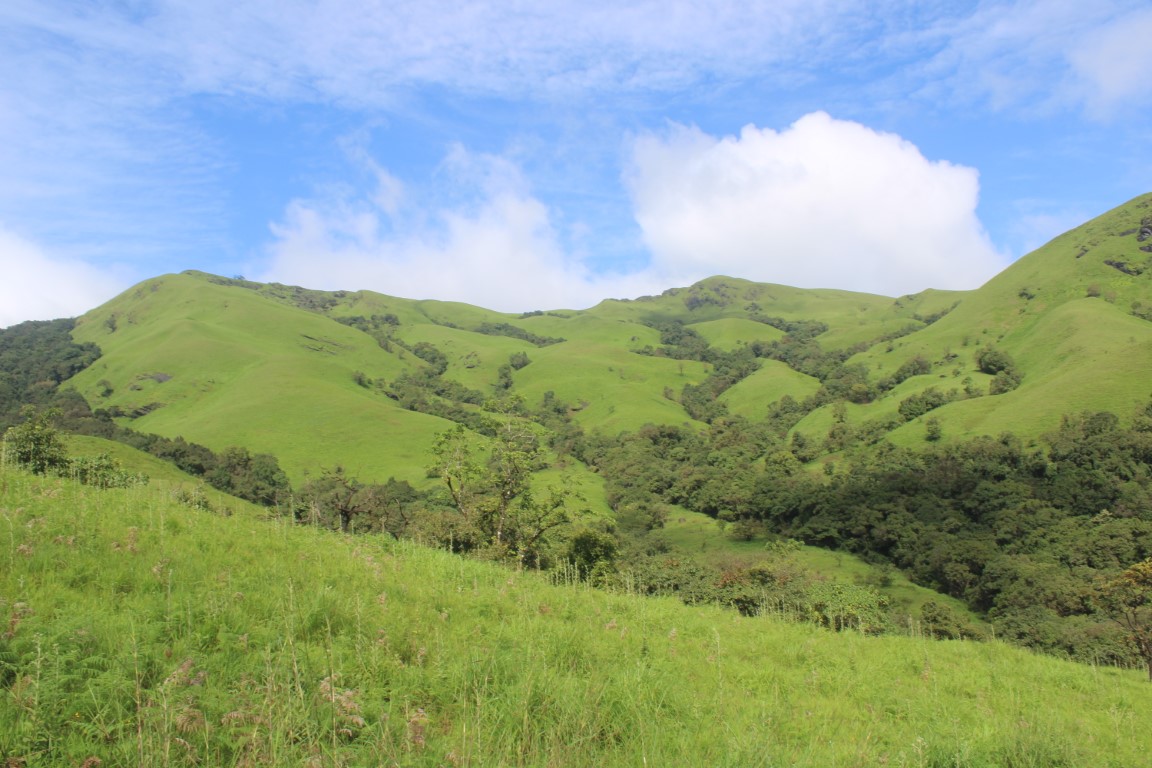
Yan grass shimmers like silken jade.
 Qin mulberry trees' green leaves droop.
 Your homecoming is now at hand
 As heartbreak has me thin and stooped.
 Spring Winds and I are strangers --
 Why, past my curtains, the inward swoop?
Chinese Title: 春思; Original poem in Simplified Chinese:
燕草如碧丝, 秦桑低绿枝;
当君怀归日, 是妾断肠时。
春风不相识, 何事入罗帏?
Note: this is poem #7 in “300 Tang Poems” [唐诗三百首]
I say no to all sorts of things regularly, for good or bad. I have a [sometimes] unfortunate proclivity to default to no. I move through life like an aircraft carrier, not prone to quick turns or rapid adjustment to unexpected circumstance. I need prepping for course changes and plenty of time. But it does tend to keep me on my objective.
I’d say my first full-time martial arts teacher, because I was young enough to have considerable open domain in which said teacher could be influential and because the lessons were so diverse — from kinesthetics to ethics to culture to psychology.
By “most influential” I think one means having had either the broadest or most profound influence. (I favor the importance of the latter, the lessons that stick with one and which inform one’s philosophy of life.) This definition favors earlier teachers, but as I don’t remember any specific lesson taught by a specific elementary school teacher, they’re out (though I learned useful things from them and they ranged from competent to quite skilled as teachers go.) The earliest profound lesson I received through scholastic education, one that became a core tenet in my philosophy of life rather than just a skill, was in high school — and in my junior or senior year at that.
As with books, if I can take away one profound lesson from a teacher, I consider my experience well worth the time and energy. And most influential isn’t necessarily the prime criterion for a teacher — and certainly doesn’t necessarily mean best or most skilled or most in command of a diverse array of knowledge.
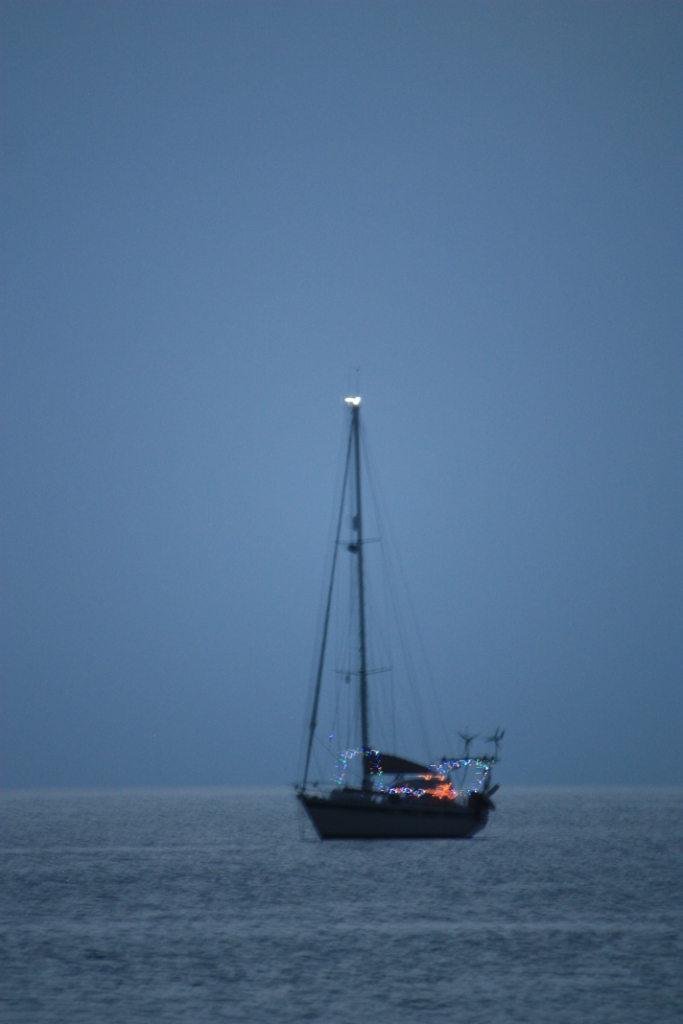
Slender grass waves in a light breeze;
   Tall-masted boat rocks in the night.
 Stars hang low, over the vast plain;
   The river moon struggles for height.
 I'll never gain fame by the brush --
   Too old for civil service posts...
 Wading, wading, what am I like?
    A sandpiper on the mud coast!
The original in Chinese (Title: 旅夜書懷):
細草微風岸,
危檣獨夜舟。
星垂平野闊,
月湧大江流。
名豈文章著,
官應老病休。
飄飄何所似,
天地一沙鷗。
This is Poem 113 of “Three Hundred Tang Poems,” i.e. 唐诗三百首


 Tiger Riding for Beginners