BOOK: “Toleration and Other Essays” by Voltaire

A Treatise on Toleration and Other Essays (Great Minds Series)A Treatise on Toleration and Other Essays by Voltaire

My rating: 5 of 5 stars

Project Gutenberg — Free Access

This collection gathers together eight essays and a poem. The theme that interconnects these works is a petition to avoid petty tribalism and irrationality / superstition in the practice of one’s religion. The titular essay, “On Toleration,” sets the collection’s tone, beginning with its detailing of the murder of Jean Calas on religious grounds and its exploration of many more acts of savagery attributable to sectarian forces in alliance with authoritarian governments. The poem, “Poem on the Lisbon Disaster,” echoes the central idea of “Candide” — i.e. the idea that we live in the best of all possible worlds is patently false.

As one would expect of Voltaire, there is plenty of humor and satire throughout these pieces. The arguments are also generally well supported by facts. It is clear that Voltaire possessed a great deal of the knowledge of his day. That said, the reader may well find some factual errors. Most notably, Voltaire tends to attribute a kind of enlightened utopian vision to cultures with which he was likely largely unfamiliar as he builds a case against many within the culture with which he is familiar. This isn’t to say that there isn’t some truth to Eastern traditions being historically more tolerant of other sects than the Abrahamic religions, but the degree to which he extends these idyllic views of those outside of Europe (and the details, thereof) don’t always seem to comport with the historic record.

While some may be inclined to dismiss this book as a collection of anti-religion writings, it is really not anti-belief at all. (Though he does poke holes in many a Biblical myth, so too does he actually provide a deist argument in favor of the existence of a god or gods in the book’s final essay.) Instead, the collection is anti-intolerance, anti-superstition, and anti-authoritarianism. I’d highly recommend this book for all readers. Whatever flaws it may contain are outweighed by the great importance of its message and the cleverness with which Voltaire conveys said message.

View all my reviews

“Mock on, Mock on, Voltaire, Rousseau” by William Blake [w/ Audio]

Mock on, Mock on, Voltaire, Rousseau;
Mock on, Mock on, 'tis all in vain.
You throw the sand against the wind,
And the wind blows it back again.

And every sand becomes a Gem
Reflected in the beams divine;
Blown back, they blind the mocking Eye,
But still in Israel's paths they shine.

The Atoms of Democritus
And Newton's Particles of light
Are sands upon the Red Sea shore
Where Israel's tents do shine so bright.

Bodhi Tree [Free Verse]

How to pick a tree
 that one can be resigned
  to sit under until
   Enlightenment?

If the choice is hard,
   you are not ready.

If the choice is easy,
   you are not ready.

If there is no choice,
    perhaps, you're ready.
Crow Sound [Tanka]

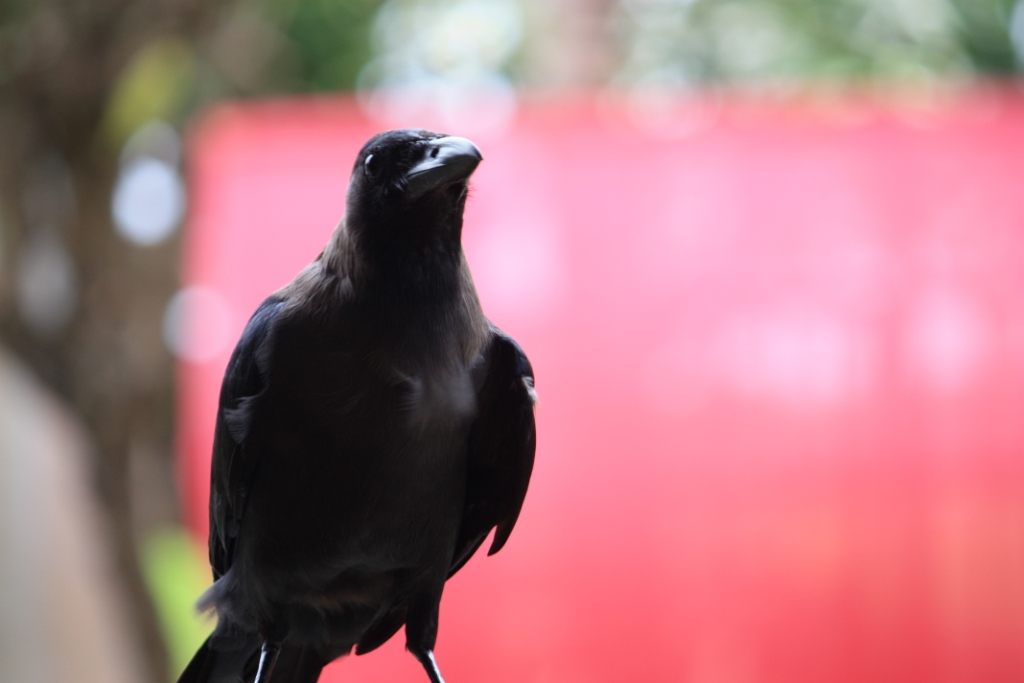
the sharp caw
 of a crow triggers a monk's
  enlightenment.
 a second crow responds.
 a sailor doesn't look up.
Voltaire Clerihew

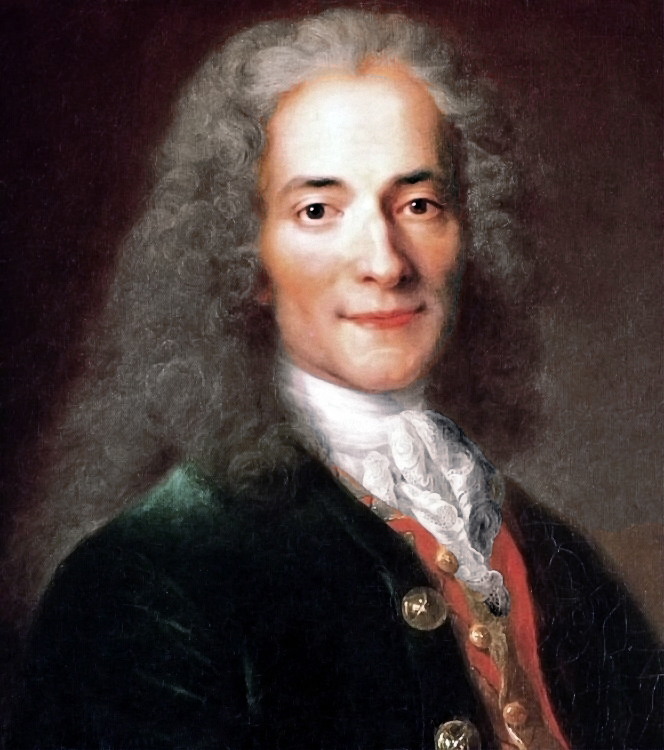
The Enlightenment thinker called Voltaire
 beat the lottery to become a millionaire.
   To the man, he did stick it,
    by buying every ticket. 
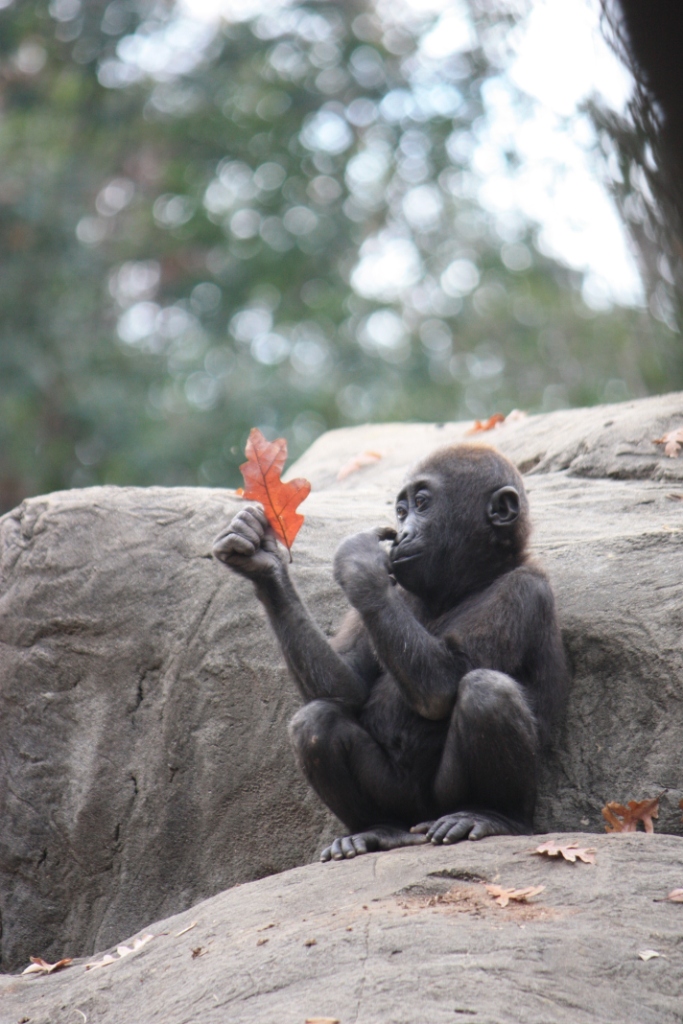
Leaf Enlightened [Common Meter]

I stared, and stared, into a leaf
  until my vision changed.
 And I could see the whole, wide world
   so artfully arranged.

The leaf, it mapped my universe
   from atom to the sprawl.
 Compressed, layer-on-layer, there
    was one and, at once, all. 

But before I could grasp all that
   this vision truly meant,
  a gust of wind did catch that leaf,
     and fluttering it went.

BOOK REVIEW: The Pocket Chögyam Trungpa by Chögyam Trungpa

The Pocket Chogyam TrungpaThe Pocket Chogyam Trungpa by Chögyam Trungpa
My rating: 5 of 5 stars

Amazon.in Page

This pocket-sized guide consists of 108 excerpts drawn from the writings of Chögyam Trungpa, a prolific — if controversial — teacher of Tibetan Buddhism. Chögyam Trungpa may have been most famous in the West for coining the English term “Crazy Wisdom,” and for founding Naropa University in Boulder, Colorado. [Note: while he coined the term “Crazy Wisdom,” he didn’t originate the concept, which existed already – arguably in multiple forms — in Vajrayana Buddhism from olden times.] Beyond basic Buddhist philosophy, he wrote extensively on Buddhist Psychology, Tantric Buddhism, and the Buddhist conception of warriorship.

The book is designed to be picked up at any point. There isn’t a formal grouping of concepts, but rather the book meanders around, revisiting ideas such as Enlightenment, Emptiness, emotional intelligence in multiple locations throughout the book. The entries are between a paragraph and a page long in most cases.

I found a great deal of food-for-thought in this book and would highly recommend it for those wishing to dip a toe into the teachings of Chögyam Trungpa.


View all my reviews

Satori [Free Verse]

It was a moment 
 of silent spaciousness.

In the midst of a fight,
 there was no enemy --
  just the effortless
   dance of the thing.

That moment 
 expanded to the infinite,
  & snapped back 
   to one tick after the tock.

Since then, 
 no catastrophe has felt 
  too great for a smile.

BOOK REVIEW: Introducing the Enlightenment by Lloyd Spencer

Introducing the Enlightenment: A Graphic GuideIntroducing the Enlightenment: A Graphic Guide by Lloyd Spencer
My rating: 4 of 5 stars

Amazon.in Page

This brief illustrated guide offers a history of the Age of Enlightenment with a particular focus on the changing philosophical landscape and its opposition. It does dip into the literature and arts of the time, but most intensely with respect to philosophical novels. It also discusses a burgeoning scientific scene, but mostly with respect to Isaac Newton and his influence. The Enlightenment was an age in which religion’s hold on the populace was declining and tolerance of other sects was increasing, and at the same time there was increasing liberalization, rationality, and openness to new ideas. Therefore, much of the focus is on philosophy of religion and political philosophy, and Locke, Bacon, Rousseau, Diderot, and Voltaire are the most extensively discussed personalities. (Particularly Rousseau and Voltaire as their contrasting views offered insight to the breadth of views among Enlightenment philosophers.)

I felt this book did a fine job of delivering an overview of the era and the new ideas that informed it. It drew heavily on quintessential quotes of major figures of the day (particularly the very quotable Voltaire.) It’s a fine place to begin one’s examination of the topic and includes a “Further Reading” section as a means to direct those who would like deeper insight into the subject.


View all my reviews

BOOK REVIEW: Candide by Voltaire

CandideCandide by Voltaire
My rating: 5 of 5 stars

Amazon.in Page

Get Speechify to make any book an audiobook

Do we live in the best of all possible worlds? “Candide” attempts to wrestle with this question. The protagonist, Candide, is taught by his tutor – the renowned philosopher, Pangloss – that their’s is the best possible world. However, as the story unfolds as one bad turn of events after the next, it becomes harder to argue that there couldn’t be a better world.

Candide is forced to flee from his love (Cunegonda,) is conscripted into wartime military service, is arrested for heresy, becomes a serial killer, acquires and subsequently loses a fortune, is robbed, finds himself in the middle of war and other conflicts, and stumbles into and then flees what might be the closest his world has to a utopia, el Dorado. And, it could be argued, Candide gets off relatively easy. Cunegonda is raped, sliced open, and enslaved. Her brother, the Baron, is run through and is also enslaved. Pangloss gets syphilis, is hung, is partially dissected, and is enslaved, as well.

And yet, to the end, Pangloss retains his (and Liebniz’s) belief that they live in the best of all possible worlds. Candide (kind of) does as well, though at the book’s end he’s fatigued by the question and just wants to distract himself from it with some gardening. The degree to which Candide sticks to his guns is impressive, not only because of everything that goes wrong, but also because he gets a new mentor / friend, Martin, a mentor diametrically opposed to the views of Pangloss. Like Pangloss, Martin is also a philosopher, but Martin’s worldview is much less optimistic, but it also reflects the crucial idea that how bad or good the world is has more to do with one’s perception of it than the events that one experiences. (When Candide asks Martin who has it worse: one of the deposed kings they met or Candide, himself, Martin said he couldn’t know without experiencing what’s in the mind of each.)

Despite the steady flow of negative happenings, the book doesn’t definitively answer the thematic question. How could it? The most it can say is that we don’t live in the best of all imaginable worlds, but we can’t know whether those worlds we imagine are possible. For one thing, we are forced to recognize that humans are flawed and that nature is indifferent, and these factors might play a role in the variation between best imagined world and the world we know. For another thing, maybe we couldn’t handle a more perfect world. The old lady character asks the group whether all the trials they’ve collectively suffered are worse, or better, than sitting around doing nothing – as they happened to be [not] doing at that moment.

This book provides a thought-provoking journey, and it’s well worth reading.

View all my reviews