“I’ll be the tree…” by Sándor Petőfi [w/ Audio]

I'll be the tree, if you'll be its flower;
I'll be the flower, if you'll be the dew;
I'll be the dew, if you'll be the sunshine
That glistens as it unites we two.

If you, My Love, should become the Heavens,
I'd be reborn as a star on high.
Even if you turned into Hell, itself,
I'd be damned, and I'd gladly fry.

The Original Poem in Hungarian:

Fa leszek, ha fának vagy virága.
Ha harmat vagy: én virág leszek.
Harmat leszek, ha te napsugár vagy...
Csak, hogy lényink egyesüljenek.

Ha, leányka, te vagy a mennyország:
Akkor én csillagá változom.
Ha, leányka, te vagy a pokol: (hogy
Egyesüljünk) én elkárhozom.

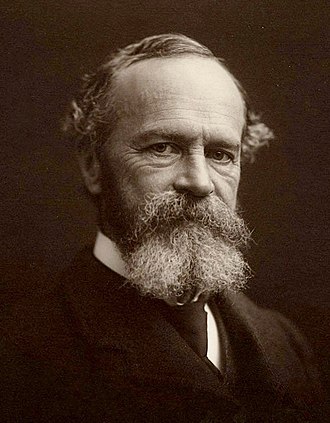
FIVE WISE LINES FROM WILLIAM JAMES [Feb. 2025]

Our view of the world is truly shaped
by what we decide to hear.

The greatest weapon against stress
is our ability to choose
one thought over another.

The art of being wise is
the art of knowing what to overlook.

We have grown literally afraid to be poor.
We despise anyone who elects to be poor
in order to simplify and save his inner life.

Whenever two people meet,
there are really six people present.
There is each man as he sees himself,
each man as the other person sees him,
and each man as he really is.

NOTABLE MENTIONS:

We may be in the Universe as dogs and cats
are in our libraries, seeing the books
and hearing the conversation,
but having no inkling of the meaning of it all.

My experience is what I agree to attend to.

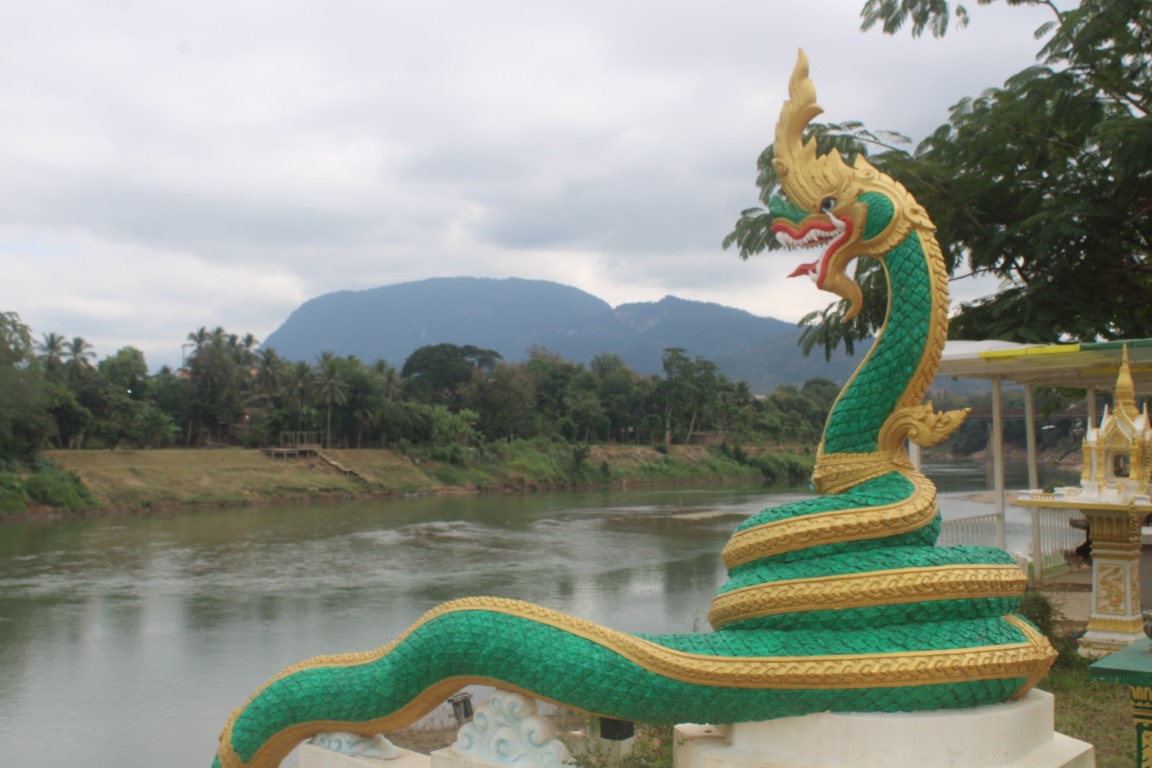
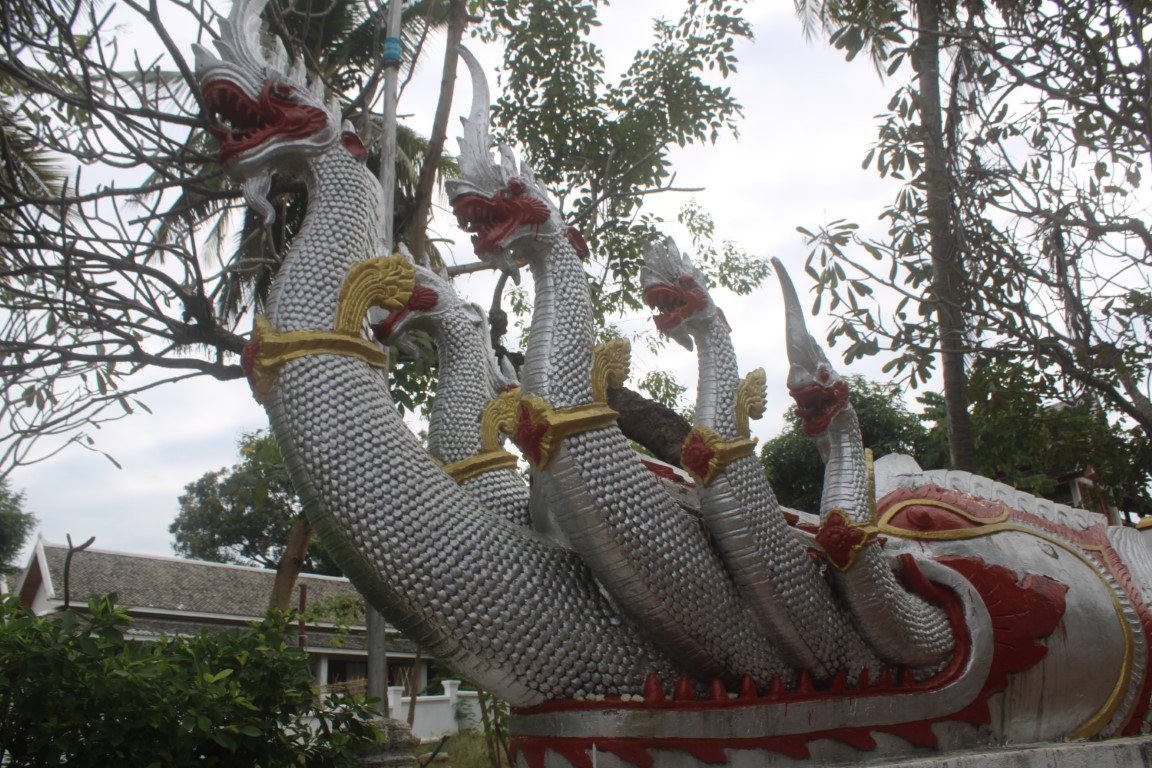
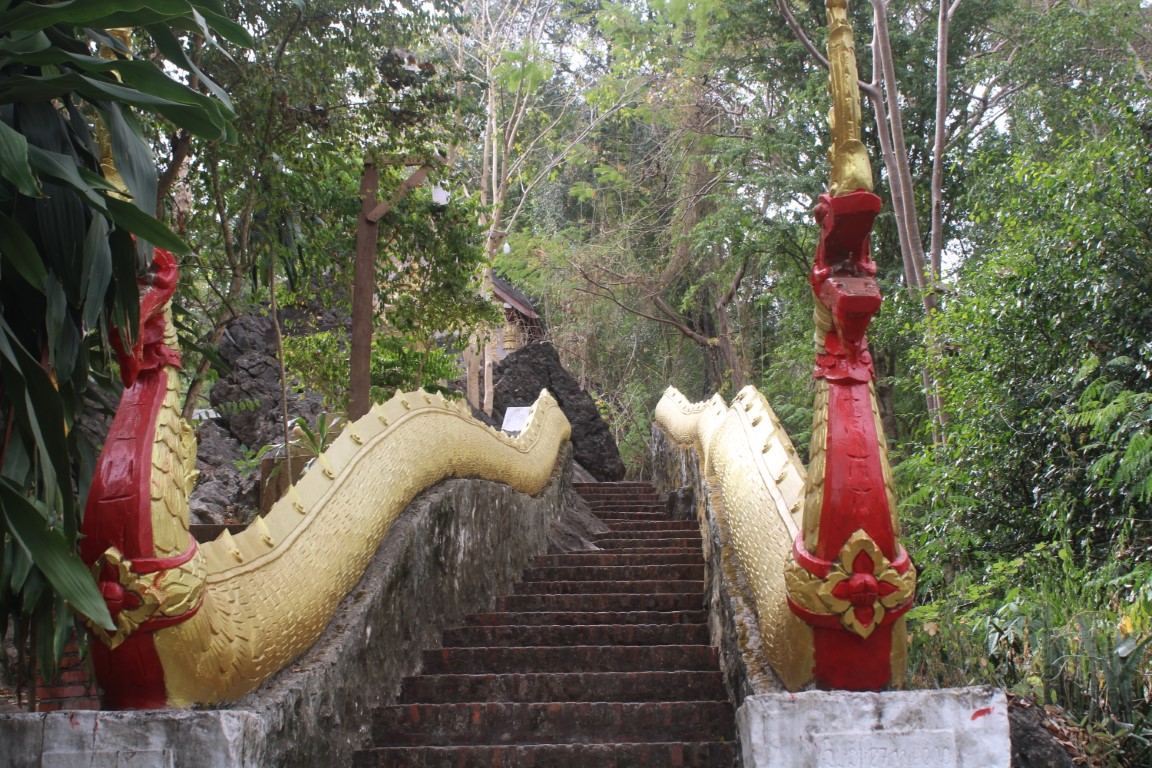
DAILY PHOTO: Guardian Serpents of Luang Prabang

BOOKS: “Practical Taoism” ed. / trans. by Thomas Cleary

Practical TaoismPractical Taoism by Thomas Cleary
My rating: 4 of 5 stars

Publisher Site – Shambhala

Like a number of Eastern systems, Taoism is thought of in many different ways by many different people, and a few of those ways are fairly “out there.” To some, it is a philosophy. To others, it is a religion. To still others, it is a style of magic. By “practical Taoism” Cleary is suggesting that the many varied sources from which he drew snippets, assembling them together to make a coherent whole, reflect some of the more down-to-earth philosophy of “inner alchemy.” [Not to be confused with the “alchemy” in which lead is turned to gold, but sharing the central idea that methods exist to convert a low-quality entity into a high-quality one, but in the case of inner alchemy these methods are breathwork, meditation, and movement techniques that improve one’s vitality as a human being.]

The good news is that Cleary does collect a group of ideas that seem less arcane and cryptic than the average Taoist inner alchemy manual content (or, at least, they are translated so as to seem so.) The bad news is that the average Taoist inner alchemy manual was apparently pretty darn arcane and cryptic, such that even this selection isn’t exactly clear as a limpid stream. Some parts of it are straightforward, but one still has some work to do to make sense of what the original authors were trying to get across. [Some readers will enjoy that more than others.]

Presumably owing to the attempt to simplify through selection and translation, the book isn’t annotated, nor does it feature much ancillary material besides a relatively lengthy introduction to setup the reader with a contextual backdrop. So, there is not a lot of help to clarify ideas that are murky. (I do recognize the translator’s challenge in that there is only so much he can do to try to clarify ideas without imposing upon the authors’ intensions.)

I enjoyed, and learned from, this book — even if I didn’t always feel I was reading a “practical” guide to self-betterment.

View all my reviews

PROMPT: Ideal Day

Daily writing prompt
Describe your most ideal day from beginning to end.

Hiking in the mountains (at most, low- to mid-VHE [Very High Elevation].) Wake at sunrise, walk, pitch camp before sunset.

“The Secret Sits” by Robert Frost [w/ Audio]

We dance round in a ring and suppose,
But the Secret sits in the middle and knows.

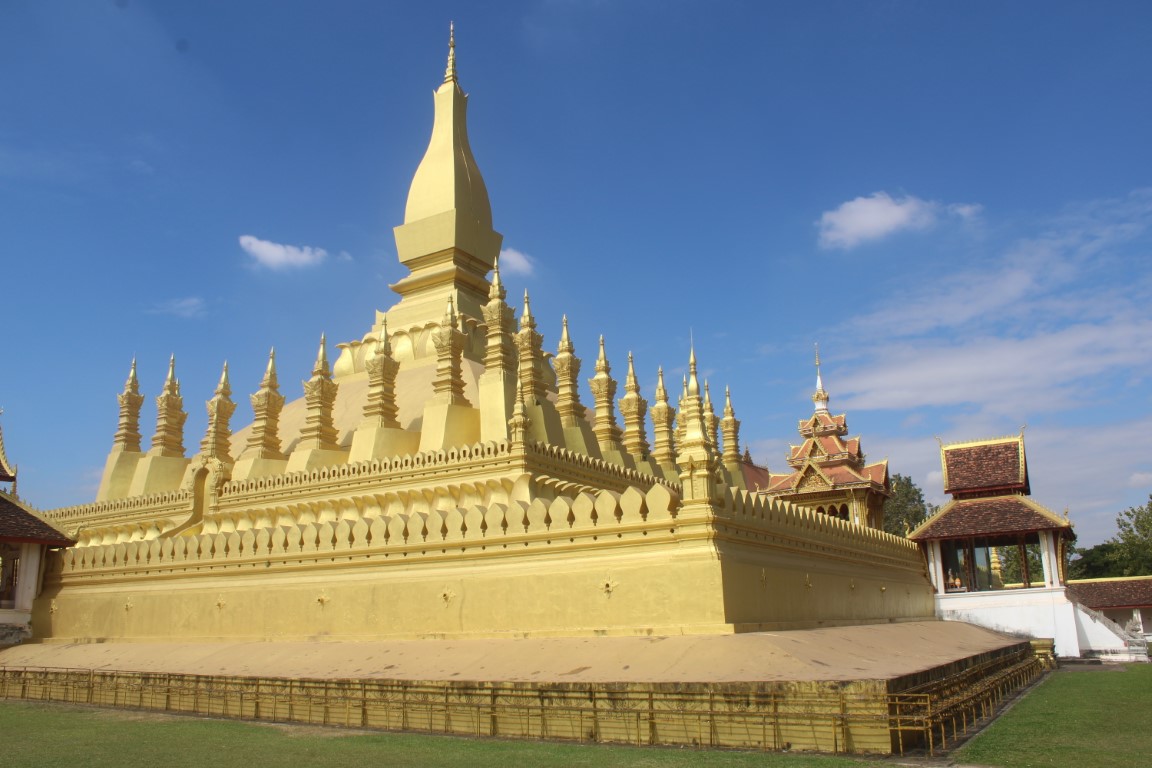
DAILY PHOTO: Pha That Luang, Vientiane

Image

Mountain Envy [Free Verse]

Ah, the mountain!
Old enough to know
When to stay quiet,
And disciplined enough
To stick to it.

BOOKS: “The Varieties of Religious Experience” by William James

The Varieties of Religious Experience: A Study in Human NatureThe Varieties of Religious Experience: A Study in Human Nature by Dr. William James
My rating: 5 of 5 stars

Project Gutenberg — Free Online

This book is now more than 120 years old and yet is still widely read and is still provoking thought about the nature of religious experiences and how they should be considered by academia. The book is a write-up of a series of twenty lectures that the famous American Philosopher-Psychologist, William James, delivered at the University of Edinburgh in 1901-02.

There are a few things that impressed me about this book. First, James was skilled with language and clever in conveying ideas, resulting in a good bit of quotable material and stimulating ideas.

Second, James’s writings about Eastern practices and philosophies were impressively clear and faithful. In those days, there wasn’t a lot translated from Sanskrit, Pali, etc. and what had been translated was frequently done by outside academicians with no firsthand experience with Eastern systems — e.g. Hinduism or Buddhism. This meant that the writings about Eastern Philosophy and practices from those days were often contorted by a Western / Abrahamic frame in a way that distorted the true nature of those traditions. James seems to have gained at least some of his understanding from someone with enough practical experience to produce accurate descriptions. Furthermore, James avoids spewing myths and misapprehensions by being humble in stating what is merely his understanding. It should be noted that James does write much more about Abrahamic traditions (as one would expect given his direct experience,) but it’s hard to plumb the depths of mysticism without looking to the East where such practices reached such advanced states.

Finally, I was impressed with James’s ability to walk the line of believer and scholar in a way that was fair both to religion and the religious but also to the scientifically-minded rational sceptic. So much of what I read on the subject takes a vitriolic tone of strict opposition and often unfairly depicts the positions of the other side (to be fair, usually this seems to be because the critic doesn’t understand the views of the other side and so produces an interpretation of the opposing ideas conforming to their own worldview, rather than just lying to win.) [As was attributed to James as well as others, “…people think they are thinking when they are merely rearranging their prejudices.”]

I’d highly recommend this book for readers interested in philosophy of religion and the psychology of religious experience.

View all my reviews

PROMPT: Perspective

Daily writing prompt
How do significant life events or the passage of time influence your perspective on life?

I’m getting more at ease with Death by the day. In a broader sense, it’s progressively easier to not get worked up over the everchanging and unpredictable nature of the world.