PROMPT: Comfort

What strategies do you use to increase comfort in your daily life?

I don’t, but I have a lot of strategies for being more content in the face of various situations and environments — including uncomfortable ones. These include the yogic practice of dispassionate witnessing, minimalism, travel (and specifically minimalist travel to places – the less familiar the better,) and intense physical activity.

I think comfort as a major objective in life is overrated, and virtually insures a discontented life. A life in which one can be content, whatever may come along, is a happy life.

Ikkyū’s Poetry: The John Steven’s Wild Ways Selection / Translation

Wild Ways: Zen Poems of IkkyuWild Ways: Zen Poems of Ikkyu by Ikkyu
My rating: 5 of 5 stars

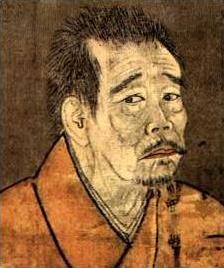
This is the John Stevens selection and translation of poetry from Ikkyū’s Crazy Cloud Anthology. Ikkyū was what might be called a mad sage of the Rinzai sect of Zen Buddhism. He once showed up at a temple in his vagabond rags and was turned away, when he came back the next day in the ceremonial robes that revealed him as a preeminent monk and was subsequently treated like royalty, he took the robes off and told the abbot that it was apparently the robes that were honored and deserving of a meal. Ikkyū was known not only for his rejection of dogmatic and highfalutin approaches to Buddhism, but also for his love of sex, brothels, meat eating, and poetry. Much of the poetry touches on those two subjects (disdain for dogma and pretension and love of pleasure,) though there are also poems that explore nature and the kind of imagery one might be more likely to expect in Japanese poetry.

Ikkyū mostly wrote in quatrains, using a Chinese style of verse. Though Ikkyū was no more dogmatic about following poetic protocols than he was following monastic precepts, and often went with the flow.

I read the Stephen Berg translation, Crow with No Mouth several years ago. I would put this one on par with that one. There are actually several translated selections from the Crazy Cloud Anthology poems that are available. If you are interested in Ikkyū’s poetry, this is as good a place to start as any. It should be noted that while some of the poetry is around sexuality, it’s not particularly graphic but more suggestive.

View all my reviews

Crow Sound [Tanka]

the sharp caw
 of a crow triggers a monk's
  enlightenment.
 a second crow responds.
 a sailor doesn't look up.
Ikkyū Limerick

There was a Zen master named Ikkyū
   who was thought by many to be cuckoo. 
 He'd allow a toot
  on his very own flute.
 Which was unbecoming of flutists (& monks, too.)
Satori [Free Verse]

It was a moment 
 of silent spaciousness.

In the midst of a fight,
 there was no enemy --
  just the effortless
   dance of the thing.

That moment 
 expanded to the infinite,
  & snapped back 
   to one tick after the tock.

Since then, 
 no catastrophe has felt 
  too great for a smile.

BOOK REVIEW: Singing and Dancing Are the Voice of the Law by Busshō Lahn

Singing and Dancing Are the Voice of the Law: A Commentary on Hakuin's “Song of Zazen”Singing and Dancing Are the Voice of the Law: A Commentary on Hakuin’s “Song of Zazen” by Bussho Lahn
My rating: 5 of 5 stars

Amazon.in Page

Release Date: December 20, 2022 [In India, may be out in your area.]

This book consists of a collection of essays inspired by the poem, “Song of Zazen,” written by the 18th century Zen master, Hakuin. Hakuin’s poem is brief (about forty lines,) and the essays composed by a present-day Zen priest (Lahn) offer commentary on a stanza-by-stanza basis. The book is divided into fourteen chapters, though the final chapter isn’t a stanza commentary.

I enjoyed reading this book and learned a great deal from it. The book benefits from the fact that the author is not rigidly sectarian. Therefore, the book is not doctrinaire, which warms the reader to the teachings. It’s also useful because it allowed the author to freely draw examples and quotes from a variety of sources, some of which may be more familiar or relatable to neophyte readers.

The last chapter offers a discussion of the fundamentals of zazen (seated meditation) as well as some other ancillary information that may be useful to readers new to Zen Buddhism, its practices, and its sutras. If you’re interested in Zen Buddhist meditation and philosophy, you may want to give it a look.


View all my reviews

BOOK REVIEW: Dropping Ashes on the Buddha by Seung Sahn

Dropping Ashes on the Buddha: The Teachings of Zen Master Seung SahnDropping Ashes on the Buddha: The Teachings of Zen Master Seung Sahn by Seung Sahn
My rating: 4 of 5 stars

Amazon.in Page

This book’s one-hundred brief chapters mostly consist of interactions between the Korean Zen Buddhist teacher, Seung Sahn, and students of his. However, there are also some old Zen stories, and a few odds and ends: such as the transcript of a completely unproductive “dialogue” between Seung Sahn and a Hindu yogi. Some of the student-teacher interactions are epistolary, but others are face-to-face “dharma combat” or Q&A sessions (which also, ultimately, became dharma combat — given Seung Sahn’s teaching methods.) Dharma combat is a dialogue that resembles Socratic dialogue except that the goal isn’t to use logic and sound reasoning to persuade another, but rather to demonstrate a lack of attachment and proclivity to overintellectualize. It involves a lot of seemingly nonsensical answers and occasional shouting and slapping / hitting. It sounds unproductive, but the objective is to break established cognitive modes and to induce epiphany, rather than to build a rational argument.

It’s a thought provoking and informative book, if a bit repetitive. Most of the conversation revolves around less than a dozen ko-an [kong-an in Korean,] which are questions or statements that’re intended to provoke a kind of realization rather than to produce a straightforward / rational answer. It’s not a problem that there’s repetition, as these aren’t straightforward ways of thinking, and oftentimes it takes many varied looks at a ko-an to grasp what’s being conveyed. That said, I felt this book could’ve used some editing to streamline the dialogue a bit to make it feel a bit less punitively redundant.

If you’re interested in ko-an and dharma combat, this is a great book to look into. However, if you’re familiar with many of the popular ko-an and Zen stories, it may feel a bit redundant.


View all my reviews

BOOK REVIEW: A Stranger in Tibet by Scott Berry

A Stranger In Tibet: The Adventures Of A Wandering Zen MonkA Stranger In Tibet: The Adventures Of A Wandering Zen Monk by Scott Berry
My rating: 5 of 5 stars

Amazon.in Page

This book tells the story of a Japanese Zen Buddhist monk, Kawaguchi Ekai, who traveled to India, Nepal, Lo (now Upper Mustang,) Sikkim, and Tibet in the early years of the twentieth century in search of Buddhist scriptures and teachings. His ultimate goal was Tibet, which he’d heard had the complete Buddhist canon in Tibetan. However, at that time, Tibet (like some of the other nations he traveled through) was xenophobic and strictly controlled / prohibited movements of foreigners, sometimes under penalty of death. This necessitated Kawaguchi first spending a year-and-a-half in Darjeeling to become fluent in Tibetan, and then using a range of disguises to facilitate travel. There was a book published after Kawaguchi’s trip entitled, “Three Years in Tibet,” but there are reasons why one might prefer Berry’s work, reasons that will be addressed below.

Kawaguchi was an interesting figure, a skilled polyglot, a fast thinker, and an iron-willed pursuer of truth. He was also bigoted and held uncompromising moral beliefs upto which few could live. The travelogue is sometimes comic, sometimes tragic, but always interesting. Sometimes Kawaguchi comes across as a Buddhist Don Quixote, but other times he’s a valiant scholar / adventurer.

As for why one might enjoy reading Berry’s account better: first, “Three Years in Tibet” is rather bloated and wasn’t written directly by Kawaguchi but rather by way of journalists. Second, Berry explores the truth behind some of the intolerant and sectarian views of Kawaguchi. Third, Berry offers broader context into the intrigues and geopolitics of the times that led to the shunning of foreigners in the first place.

This book delves into a fascinating time in a little-known part of the world, and it’s a compelling read throughout. I’d highly recommend it for those interested in learning more about the region and its past.


View all my reviews

Tōsui’s Rebuttal [Kyōka]

the Zen monk Tōsui,
rebuked for handling manure,
plead not guilty
by reason of scrawny crops,
and kept spreading shit

BOOK REVIEW: Walking Meditation by Thich Nhat Hanh & Nguyen Anh-Huong

Walking Meditation (With DVD)Walking Meditation by Thich Nhat Hanh
My rating: 5 of 5 stars

Amazon.in Page

This brief guide to walking meditation lays out a basic practice linking breath and stride, and then explores such topics as: how to apply the practice to varied environments, coping with emotion through [and during] walking, the social dimension of walking meditation, and a few thoughts on applying the practice to jogging. The book is nominally attributed to the beloved Vietnamese Zen Buddhist monk who recently passed (i.e. January 2022,) Thich Nhat Hanh, but it seems the bulk of the book was written by the co-author (Nguyen Anh-Huong.) That said, it’s a clearer distribution of labor than usual for mega-guru books; not only does the author get a co-author credit but the words of Thich Nhat Hanh are presented as textboxes with bylines.

The book is less than a hundred pages of text, but the edition I have came with a CD and DVD (if anyone still has a player for these antiquated technologies. If you’re paying full price, I’d make sure you have some means to play the CD and DVD. I obtained a used copy at a low price, so it wasn’t a concern.) The book’s brevity has both pros and cons. On the pro side, it keeps things simple. The practice is a straightforward one of linking one’s breath to one’s stride, and there’s no tedious elaborations or variations with which to contend. On the con side, if one is looking for insight into improving alignment or biomechanics of walking, that’s not covered in this book. That is probably for the best, because it’s hard to avoid overthinking the practice if one is given extensive directions on stride and the like. This isn’t so much a criticism as an attempt to temper expectations for those who may feel they would benefit from some sort of anatomical or biomechanical insights on walking or physiological insights about the breath.

If you’re looking for a quick and straightforward guide to practicing walking meditation, give it a read.

View all my reviews