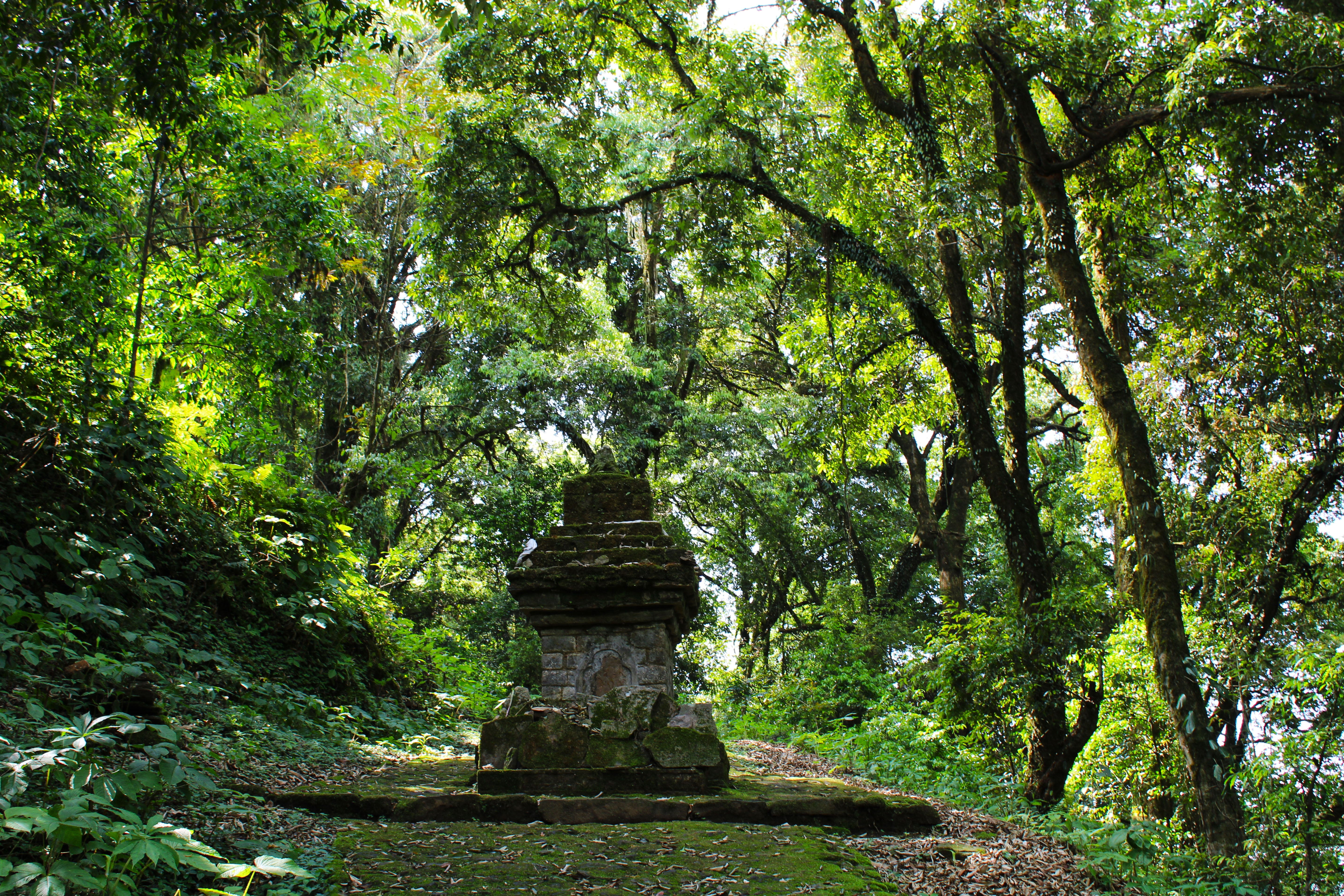
Tap the resonance
And vibrate at the rate
Of those eternal emanations --
The thrumming under-pulse
Of the Universe.
The ripples that can't be heard
Or felt haptically,
But must be tuned into
To feel, otherwise.
Downshift what is you --
Put your Self into idle.
Don't panic
As you start to slide --
Frictionlessly,
A lack of friction that's
Unfamiliar & Uncomfortable,
But which will be the way
One's worldline plays out --
Effortlessly -- to the end.
Category Archives: Philosophy of Life
BOOKS: “Play” by Stuart Brown
Play: How It Shapes the Brain, Opens the Imagination, and Invigorates the Soul by Stuart M. Brown Jr.My rating: 4 of 5 stars
Amazon.in Page
Why does biology encourage play? Why does it stop encouraging play at some point? Should play end, or should one maintain a dedication to play throughout life? These are principal questions addressed by this book.
Brown explores the advantages of leading a playful life, and he doesn’t restrict himself to childhood play. In fact, the book doesn’t restrict itself entirely to human play, but also presents insights derived from the study of other playful species. One of the most profound lessons from the book comes from a story about a sled dog that has repeated playful interactions with a polar bear — a hungry polar bear, at that.
The book is presented more like an essay or a collection of essays than the usual popular science or pop psychology book. That is to say, it is not annotated and lacks a bibliography. The author sites the occasional book or study in the text, but it’s in the manner one would see in journalism or essays. This approach has its advantages, but the flipside of those advantages are the disadvantages. On the positive side, the author is able to communicate more freely, including the ability to discuss more speculative possibilities than one would expect from scientific reporting (with its usual “just the facts” approach.) Of course, the extensive speculation will be frustrating to readers who want to know what evidence has been produced for the proposed benefits. Furthermore, it often feels like the speculation in question is of the “when you’re a hammer every problem is a nail” nature — i.e. when one is a play researcher, one may be inclined to see play as a panacea for all the ills facing humanity (it surely is for some, but probably not all.) [To be fair, the book is almost fifteen years old, and I suspect it was / is probably harder than pulling teeth to get academic funding for play research outside of early childhood development, and so part of what the book was probably trying to do was build enthusiasm for supporting this kind of research, which necessitated talking about possibilities that were outside the known.]
The book does have a chapter on “the dark side of play.” It deals with compulsive behaviors like gambling and video game playing addiction (i.e. not people who like playing video games once in a while, but those who go 48 hours without sleep and who live in cave-like darkness to limit screen glare.) Much of the chapter argues that, while those problems are real and of concern, the activities aren’t play, not as per the definition presented early in the book.
This book does make a sound case for a number of benefits of play and for not abandoning play in one’s youth. If you’re interested in how play can help one to cope in a world of uncertainty, to keep one’s mind and body healthy, and to maintain or grow one’s capacity for imagination, this book is well worth reading.
View all my reviews
“Requiem” by Robert Louis Stevenson [w/ Audio]
“Strong” [Poetry Style #8] by Sikong Tu [w/ Audio]
Walk with a mind that's clear and unburdened,
With life force that flares -n- flows like rainbows,
Traversing the witch's gorge through the mountains --
Among the floating clouds and blowing winds.
Drink up the spiritual; dine on the real;
Let them ever build up in your body.
Emulate the health and might of the gods,
Preserve your energy through harmony.
Be one with Heaven, be one with the Earth.
See in yourself divine transformations.
Know all this to the utmost -- be all this,
And hold on to it 'til the bitter end.
NOTE: The late Tang Dynasty poet, Sikong Tu (a.k.a. Ssŭ-k‘ung T‘u,) wrote an ars poetica entitled Twenty-Four Styles of Poetry. It presents twenty-four poems that are each in a different tone, reflecting varied concepts from Taoist philosophy and aesthetics. Above is a translation of the eighth of the twenty-four poems.
Five Wise Lines [April 2024]
Of what use for us is a man who, although he has long practiced philosophy, has never upset anyone?
Diogenes of sinope on Plato, according to themistius
The superstition that we must drive from the Earth is that which, making a tyrant of God, invites men to become tyrants.
Voltaire in On Superstition
The progress of an artist is a continual self-sacrifice, a continual extinction of personality.
T.S. Eliot in Tradition and the Individual talent
What’s the difference between a king and a poor man if they would both end the same bundle of white bones.
Zhuangzi
The absence of evidence is not the evidence of absence.
Carl sagan (Note: There are variations on this quote that long predate Sagan’s)
HONORABLE MENTIONS:
You live off the crumbs that fall from the festive table of my genius.
Kurban Said in Ali and Nino [Not so much wisdom as a wicked burn]
To roam Giddily and be everywhere, but at home, Such freedom doth a banishment become.
John donne in a Poetic letter to rowland woodward
Lions are not the slaves of those who feed them, it is the feeders, rather, who are the lion’s slaves. For fear is the mark of a slave, and wild beasts make men fearful.
Diogenes the cynic
BOOKS: “The Dangerous Life and Ideas of Diogenes the Cynic” by Jean-Manuel Roubineau
The Dangerous Life and Ideas of Diogenes the Cynic by Jean-Manuel RoubineauMy rating: 5 of 5 stars
Amazon.in Page
This is a translation of a French book about the life and philosophy of Diogenes the Cynic. It’s a thin volume, as there is much that’s unknown about the life of Diogenes, and the dearth of surviving texts means that some of what is believed about Diogenes and Cynic philosophy maybe corrupted by the reports of detractors. I learned a great deal from reading this book, but not because I learned much new about Diogenes, himself. The colorful anecdotes from his life have been extensively discussed.
With respect to what I did learn, it largely fell into three categories. First, I gained insight into the context and environment in which Diogenes lived. Second, I discovered that many of the stories of Diogenes’ life are far less certain than we have been led to believe through the presentations of them in so many books. For example, we know Diogenes was exiled from his native Sinope in relation to a scheme involving currency debasement. This is often straightforwardly stated as “Diogenes was a counterfeiter,” but Roubineau shows that we don’t know much (if anything) about the degree to which Diogenes was involved (i.e. whether he was mastermind, accomplice, or an unwitting pawn.) Third, I benefited from the comparing and contrasting of Cynic philosophy with that of predecessors (e.g. Socratics) and successors (e.g. Stoics,) and – in a few cases – comparisons between Diogenes and other Cynics.
The book consists of four chapters. The first is a discussion of what is known about Diogenes as a historical figure. The second focuses on the Cynics views on economy, wealth, and related ideas. The third explores the Cynic view of the human body and related topics like sex, pleasure, and pursuit of health and well-being. The last chapter considers Diogenes as a teacher and the Cynic approach to practicing philosophy.
I’d highly recommend this book for readers interested in philosophy.
View all my reviews
PROMPT: Unique
Which aspects do you think makes a person unique?
Genetic code and life story.
BOOKS: “Inner Space Philosophy” by James Tartaglia
Inner Space Philosophy: Why the Next Stage of Human Development Should Be Philosophical, Explained Radically by James TartagliaMy rating: 5 of 5 stars
Amazon.in Page
Release Date: July 1, 2024
This is a strange book, and I suspect it will be mostly loved or loathed, with relatively few people in that usually broad spectrum of indifference. It’s not strange in its message (which is an argument for philosophical Idealism and a metaphysics consistent, therewith,) but rather it’s odd in its delivery. It mixes fact and fiction, often in an ill-defined way, and it’s loaded with fourth wall breaking self-introspection. I enjoyed reading the book, found it amusing at times, and received a lot of food-for-thought from it (but not without some frustration, particularly around not knowing which were true stories. I suspect this was intentional. Philosophical Idealism being a notion that what matters is our internal [i.e. mental / emotional] experience and that that experience may not have much to do with any external “reality” [and, to the degree it does, that we have limited capacity to know how.] Therefore, it makes sense that a book taking such a stance would eschew the importance of external world “truths” in favor of building mental models that have pedagogic value regardless of whether the reflect external world happenings. The book boldly puts its money where its mouth is in that regard.)
It should also be said that part of the reason for the book’s unusual approach was to make a hard break from the usual mode of philosophical writing, which is often pedantic, pretentious, and elitist. That’s because, beyond the metaphysics it’s prescribing, the book is also proposing a need for philosophy to be a broadly human endeavor – approachable by all, rather than the domain of an elite who communicate in their own special jargon-laden language and argue over minutiae irrelevant to everyday living. Like a number of books of recent years, it’s proposing that we need a philosophy of life that helps us live better lives, rather than a philosophy of semantics and elaborate logic that helps “professional philosophers” score points in a game of philosophy.
A few things I liked about this book, include: a.) it didn’t treat the Western Philosophical tradition as the sum total of philosophy (as many books have.) For example, it explored Akan and Buddhist philosophy alongside the ancient and modern philosophy of the West. b.) it gives special emphasis to Cynicism, a school of philosophy that is usually disregarded as the domain of a few madmen of ancient Greece. There is a chapter imagining Trinidad’s Gambo Lai Lai as a Cynic of the modern world. c.) I liked that it used the last chapter as a way to review in a way that was fun and echoed the approach of the Socratic dialogue. It pitted a scholar in favor of the ideas of the book against what might best be thought of as a mainstream academic philosopher (though he was also an opponent of the book.) This allowed the author to review the book’s ideas in a way that can only be experienced through a clash of ideas. (And it offered some levity, as well.)
I got a lot out of reading this book. If you can cope with your belief in the importance of factual happenings being challenged, you too will probably enjoy it.
View all my reviews
PROMPT: Teacher
By the measure of having taught still useful lessons about HOW to think (those who taught me WHAT to think are largely forgotten along with their lessons,) that would be a tie between my 11th grade Psychology teacher and an undergrad Religious Studies professor. The former, among other ideas, first exposed me to what I would come to believe is the most important lesson of human existence under his label of the “gestalt of expectations.” [I’ve never heard anyone else refer to it as such, but the lesson was sound and I would latter find it in philosophies from Buddhism to Stoicism.] The latter teacher, among other ideas, exposed me to two common opposing modes of fallacious thinking, what he called “the outhouse fallacy” and “the first-est is best-est fallacy” (he was a folksy, if erudite, professor.)
In terms of personal growth and development, generally speaking, there are numerous teachers of martial arts, yoga, and other mind-body practices that are incomparable and thus unrankable. Not to mention, a sound argument can made for the repugnantly unhumble statement that I am my most influential (and most important) teacher. (I state this claim not as though I am unique, but as one that could apply to anyone.)