BOOKS: The Picture of Dorian Gray by Oscar Wilde

The Picture of Dorian GrayThe Picture of Dorian Gray by Oscar Wilde
My rating: 5 of 5 stars

Amazon.in Page

This is a book about what happens when you hollow out a person of all the complexity of the human condition and idealize them. At the beginning of the story, Dorian Gray is young, attractive, and preternaturally likable in a naïvely innocent kind of way. Almost to the novel’s end, through the magic of a wish made upon a portrait, Gray is still young and beautiful, though that naive innocence cracks under the strain of the impossible bifurcation of man and his soul. The artist, Basil Hallward, and Lord Henry (a man who will become a mutual friend of Gray and Hallward) cannot see Gray as a fully formed human being, but rather see him as an emblem of youth and beauty. But this unnatural ideal cannot hold, and a string of tragic deaths will be left in its wake.

The book is full of clever witticisms, albeit often of a nihilistic nature. These are almost all spoken by Lord Henry, who is the Polonius of the story – but a hipper kind of Polonius than Hamlet‘s. That said, it’s telling that toward the end of the book Gray does some of this epigrammatic philosophizing. (e.g. Such as when Gray tells Hallward, “Each of us has heaven and hell in him…”) One might dismiss this as Gray parroting Lord Henry, but I think that life has defrocked him of his naïveté, and he begins to think in ways that were impossible in his [true] youth.

This is a must-read. It’s interesting, thought-provoking, and well worth the time.

View all my reviews

BOOKS: A Double-Barreled Detective Story by Mark Twain

A Double Barrelled Detective StoryA Double Barrelled Detective Story by Mark Twain
My rating: 5 of 5 stars

Amazon.in Page

This novella is Mark Twain’s satirical jab at the whole Sherlock Holmes concept. In particular, it pokes fun at a detective who eschews everything supernatural in favor of cold rationality, but who produces results so impossible that they are themselves supernatural.

The story has two temporally disjointed parts that almost seem like independent stories until the very end when all is tied up. (Holmes only appears in the second part.) This works nicely for parody of Holmesian detective fiction as it’s an approach that was used by Sir Arthur Conan Doyle on occasion — e.g. in A Study in Scarlet. The first part tells the tale of a woman who is treated foully by Jacob Fuller, the husband she eloped with but who harbored resentment towards her father, a man Fuller believed felt wasn’t good enough for his daughter. The woman makes her son, named Archy Stillman, promise that he will track down Fuller and make the man’s life a living hell.

The second part revolves around a murder that seems to be independent of the case described above, the killing of a man named Flint Buckner. Here Sherlock Holmes, who happens to be in town visiting his nephew – Fetlock Jones, “solves” the case only to be shown to be entirely and humiliatingly wrong by Archy Stillman using only a superior sense of smell and basic observation of the facts (with no elaborated inductions.)

While I never had anything against the Sherlock Holmes stories — in fact, I enjoyed them all — I did find Twain’s satire amusing and compelling as a story. [And it’s true that Arthur Conan Doyle did regularly strain credulity — that’s what made Holmes an intriguing character.]

Well worth reading.

View all my reviews

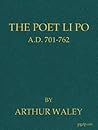
BOOKS: The Poet Li Po AD 701-762 Trans. & Ed. by Arthur Waley

The Poet Li Po       A.D. 701-762The Poet Li Po A.D. 701-762 by Arthur Waley
My rating: 5 of 5 stars

Available online at: Project Gutenberg – The Poet Li Po

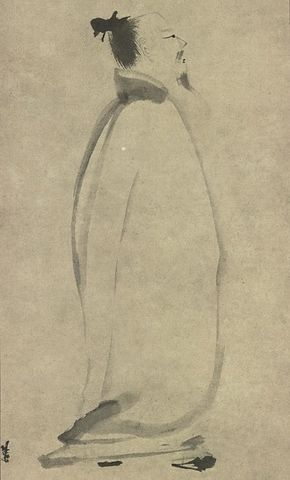
Li Po, also Romanized “Li Bai,” is one of China’s most famous poets, the prolific Tang Dynasty poet wrote extensively at the nexus of intoxication and the beauty of the natural world. His well-loved and evocative poem, “Drinking Alone by Moonlight,” is a prime example [and is included in this selection.]

The selection consists of a small number of translations by [20th-century Orientalist] Arthur Waley. It’s only 20-some of the 1,000-ish extant poems of Li Bai, but it does offer variety in form and subject matter. It doesn’t include all of Li Bai’s most anthologized poems, which I consider a plus — i.e. Waley didn’t just assemble a greatest hits album.

The Waley translations aren’t as sparse as many that one will read. That offers the advantage of being clearer in meaning while losing some of the feel of the original. That said, I enjoyed this group of translations and didn’t feel they were too verbose – for the most part. It’s a selection well worth reading for those who enjoy poetry.

View all my reviews

Li Bai [Lyric Poem]

Li Bai fills his cup;
 Li Bai loves his wine;
  Li Bai sits in moonlight,
 staring at the sky. 

Five Wise Lines from The Picture of Dorian Gray by Oscar Wilde

Nowadays people know the price of everything and the value of nothing.

All art is quite useless.

The books that the world calls immoral are books that show the world its own shame.

A great poet, a really great poet, is the most unpoetical of all creatures. But inferior poets are fascinating.

You will always be fond of me. I represent to you all the sins you never had the courage to commit.

PROMPT: Cultural Heritage

Daily writing prompt
What aspects of your cultural heritage are you most proud of or interested in?

It’s not something that I’ve thought of much. In my youth, I was attracted to most every culture but that of my own ancestry. In my late teens and early twenties, I visited Liverpool two or three times (just across the Irish Sea from my ancestral homeland,) but (sadly) never made it to Ireland. I’ve been to over 40 countries, but not yet my ancestral homeland. I think that’s not so uncommon to come around to an interest in such things later in life.

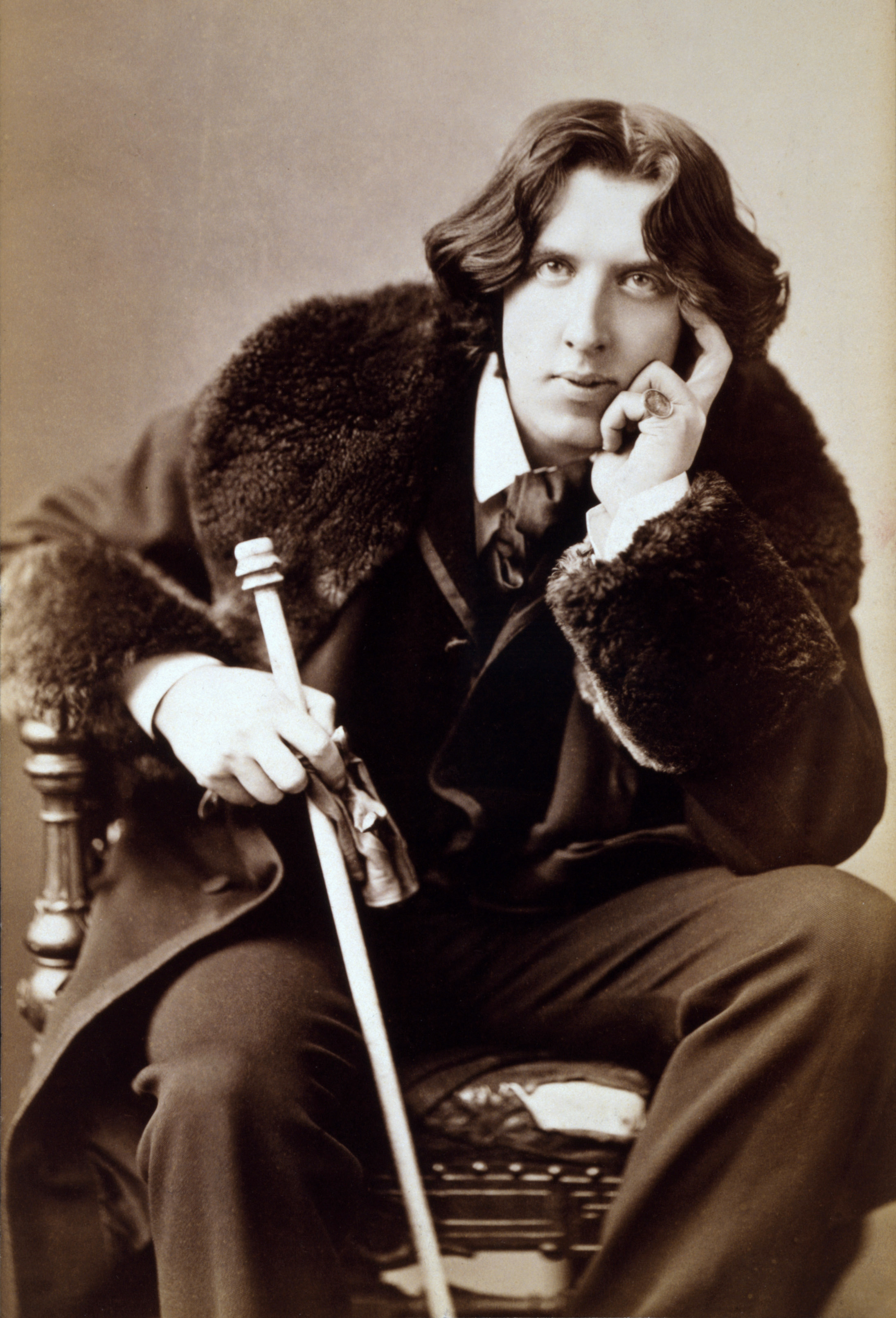
But the answer to the question is certainly to be found in the literature. Yeats is among my favorite twentieth century poets (if not my favorite,) and Seamus Heaney is certainly in the running. Of late, I’ve gotten on an Oscar Wilde kick, and his work definitely appeals to my ornery yet thoughtful nature. Even Joyce, who I had trouble getting into in his role as novelist, is a writer whose use of language I love.

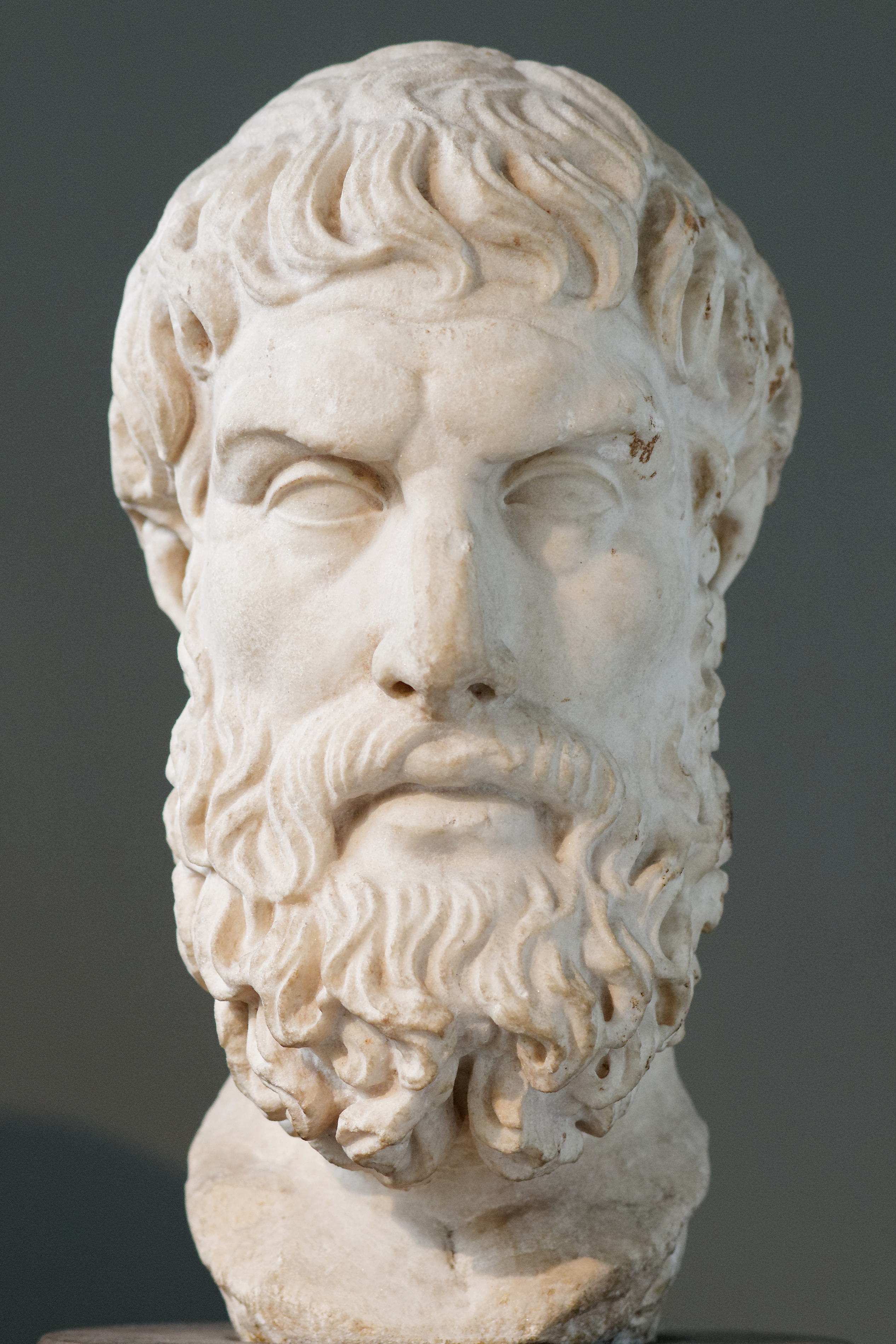
Five Wise Lines from Epicurus

Death is nothing to us, because a body that has been dispersed into elements experiences no sensations, and the absence of sensation is nothing to us.

principal doctrines – No. 2

Nothing is enough to someone for whom what is enough is too little.

Vatican Sayings – No. 68

Of all the means which are procured by wisdom to ensure happiness throughout the whole of life, by far the most important is the acquisition of friends.

Principal Doctrines – No. 27

Don’t spoil what you have by desiring what you don’t have; but remember that what you now have was once among the things only hoped for.

vatican sayings – No. 35

No pleasure is a bad thing in itself, but some pleasures are only obtainable at the cost of excessive troubles.

Principal doctrines – No. 8

And Five Honorable Mentions:

[T]here are an infinite number of worlds, some like this world, others unlike it.

Letter to Herodotus

Dreams have neither a divine nature nor a prophetic power, but they are the result of images that impact upon us.

vatican sayings – No. 24

It is pointless for a person to pray to the gods for that which he has the power to obtain by himself.

vatican sayings – No. 65

But one must not be so much in love with the explanation by a single way as wrongly to reject all others…

Letter to pythocles

Let no one be slow to seek wisdom when he is young nor weary in the search thereof when he is grown old. For no age is too early or too late for the health of the soul.

Letter to Menoeceus

SOURCE: Epicurus. 2021. The Fundamental Books of Epicurus: Principal Doctrines, Vatican Sayings, and Letters. Trans. by: Robert Drew Hicks & R. Medeiros. Independently published on Amazon. 45pp.

BOOKS: The Creative Act by Rick Rubin

The Creative Act: A Way of BeingThe Creative Act: A Way of Being by Rick Rubin
My rating: 5 of 5 stars

Amazon.in Page

This book offers Rick Rubin’s philosophy of creativity and art. For those unfamiliar with Rubin, he’s a ZZ Top-looking music producer who contributed to a lot of successful albums, ranging from hip hop to the rock-n-roll of Tom Petty. He was a major player behind the Run DMC cover of Aerosmith’s “Walk This Way” that blew peoples’ minds in the 80’s. Interestingly, Rubin is neither a musician nor a technologist, and I heard him say in an interview that his great value-added was having an extremely high level of confidence in knowing what he liked. Rubin has a persona that is as much guru as music producer, and this book reflects this broad insight and wisdom.

In the book, Rubin lays out his view of the creative process and the mistakes people make with it, but along the way he offers insight into such interesting questions as why some artists only seem to have one major work in them. While Rubin’s experience is mostly with music (though he also worked with comedian Andrew Dice Clay on Clay’s albums,) his book is broadly targeted towards all artists, and he seems to use as many examples from literature and graphic arts as he does from music.

Rubin does sound a bit woo woo here and there, but I found that many statements — e.g. those that spoke of the universe’s role in artistry — could be interpreted in a way that wasn’t necessarily superstitious. While woo woo sounding statements often get on my nerves, I felt Rubin’s use was poetic and spoke to a broader truth.

I’d highly recommend this book for artists and creative types, regardless of field.

View all my reviews

Five Wise Lines from Fireflies by Rabindranath Tagore

In the drowsy dark caves of the mind / dreams build their nest with fragments / dropped from day’s caravan.

From the solemn gloom of the temple / children run out to sit in the dust, / God watches them play / and forgets the priest.

The wind tries to take the flame by storm / only to blow it out.

The same sun is newly born in new lands / in a ring of endless dawns.

When death comes and whispers to me, / “Thy days are ended.” / let me say to him, “I have lived in love / and not in mere time.” / He will ask, “Will thy songs remain?” / I shall say, “I know not, but this I know / that often when I sang I found my eternity.

Fireflies by Rabindranath Tagore is in the public domain and can be read at sites such as:

Fireflies is available at PoetryVerse

Rickety Gibberish [Free Verse]

A long time ago,
 I listened to the audiobook of
    Kerouac's "On the Road."

In that format, 
   I became aware of how often
     Kerouac used the word
       "rickety." 

Almost as aware as I became
   of how often Twain uses
      the N-word in Huck Finn
      when I unwisely listened to 
      that audiobook while driving
      through downtown Atlanta
      with my windows rolled down. 

I'm now reading Hunter Thompson's
   "Kingdom of Fear," and I've become
      aware that Thompson had a love
      of the word "gibberish" almost on par
      with Kerouac's love of "rickety."

And I think about how much beautiful
   rickety gibberish I've read from those
      authors, and what a fine 
      thing it is if one can write 
      rickety gibberish that stands up 
      under its own weight.