What are your favorite websites?
I fall down the YouTube rabbit hole more than I’d like to admit.
What are your favorite websites?
I fall down the YouTube rabbit hole more than I’d like to admit.
Nothing. My philosophy is that if I need technology to function flawlessly every second to keep me alive, I don’t need to be in that place.
What alternative career paths have you considered or are interested in?
At this point, it would need to be something AI / robots won’t possibly be able to do better, faster, cheaper in the near term. This leaves jobs for which one’s humanity is a central part of the job. Unfortunately, I suck at many aspects of being a human. Maybe I’ll become a robot and beat them at their own game.
Your life without a computer:
what does it look like?
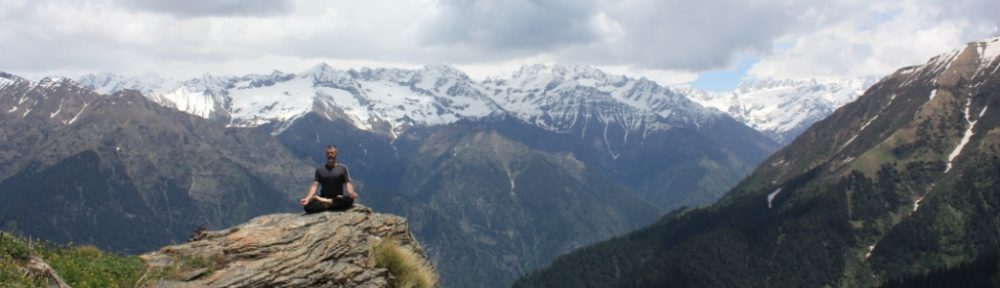
I imagine like it does when I go on long hikes, and have no access to computer or internet. i.e. Mostly blissful with the occasional bleak thought that the world might be ending without one’s awareness.
I’d like to know more about the capabilities and limitations of AI, a rabbit-hole that I have only recently stumbled upon, but which I am tumbling down hard. Particularly, how to best use it for language acquisition as I am currently learning Chinese and would like to increase my literacy so I can open myself up to a whole new world of books.
I’m also curious about pratfalls and physical comedy all of a sudden.
 The Future of Humanity: Terraforming Mars, Interstellar Travel, Immortality and Our Destiny Beyond Earth by Michio Kaku
Nurse. I think it takes a tremendous level of humility and compassion. Also, I suspect it may be among the last handful of human jobs (as we know them now) to still exist once AI-robots start doing pretty much all productive tasks better, faster, and more efficiently than humans. I think long after our doctors are machines, we will have human nurses.
There are flying cars here. I fear my death will be by chucked beer bottle.
In short, I think we need to foster emotional intelligence and not just academic intelligence, and we need to rebuild social interaction in a super-tribal world (i.e. a world too big for everyone to know everyone else.) [But do the latter without the xenophobia.]
To elaborate:
First, I think we need some true coming-of-age experience that facilitates a sense of self-empowerment. This would not just be collecting envelopes of cash and dancing a dance or reciting a prayer, but something more akin to being dropped in the woods for a week. Of course, this would require engaged parenting and skill acquisition and not just leaving kids with video games and social media. It seems like a lot of our present problems result from people with no sense of empowerment or the emotional intelligence that comes therefrom. Such people may have passed all the tests but still have “imposter syndrome” and the like.
Second, we need some sort of way to build tribal-scale groups in which people interact with a small group of others repeatedly — in person and face-to-face. The challenge is that this needs to be done without increasing xenophobia, which is already trending the wrong way. I think there is a problematic tendency to be virtually engaged but not personally engaged with others in humanity. Even in I, who am intensely introverted, the social impulse remains, but we live in a world where people can successfully dropout.
Some people get one or both of these experiences in any number of ways, but it seems like an ever-increasing segment of the population lacks confidence (even if they had a 4.0 gpa the whole way through their formal education,) and lacks human interaction (even if they have 2000 social media “friends.”)
I think humanity has a golden age coming. Unfortunately, a.) as John Maynard Keynes pointed out, “In the long run, we are all dead.” Accordingly, I don’t expect I’ll live to see that great age. And, b.) said great age is likely to come on the backend of a tragic period whose reach and devastation will make the Second World War seem like a puny and short-lived regional skirmish by comparison. [I also think there’s a good chance I’ll miss the worst of this, but there’s no accounting for the rapidity at which it might move (and the process has begun.)]
The root of this combination of relative near-term pessimism and long-run optimism is the observation that we are experiencing a technological revolution that there is no reason to believe won’t end in machines that are both smarter and more capable than we, and we have no plan for what to do in that scenario. We have no conception of what an economy looks like in which machines do everything faster, more cheaply, and more efficiently than human labor. I wouldn’t be so pessimistic if our institutions and legal frameworks were trending better and better, but — in fact — after years of spreading rule of law and democracy, we are starting to see global shrinkage and a rise of a strange populist authoritarianism that I can only imagine being catastrophic under the stress test that is to come.
Why the long-term optimism? Nothing lasts forever, and tough times breed tough and capable people. [Whereas comfort addiction is a major factor in our near-term predicament.] I think the Golden Age will be humans learning not to be defined by production / consumption but by developing the human body and mind to its utmost capacity.
A lot of people are worried about population collapse. I am not so worried about that. I think that: a.) humanity could use some thinning; b.) we do fine with long time scale threats. As pressures rise, the adjustments start and — perhaps with some growing pains — we’ll get where we need to be. The AI / Machine Learning revolution concerns me because I suspect it will happen too quickly to steer the ship (like being in an aircraft carrier as a tsunami comes, there’s no agility to navigate out of the way and no speed to outrun it, you just have to take the damage and try to recover.)
You were probably looking for an answer like flying cars, but I gave up on those long ago.


 Tiger Riding for Beginners