PROMPT: Blog – Change

Daily writing prompt
What change, big or small, would you like your blog to make in the world?

If I’m being entirely honest, everything that’s come out of this enterprise has been of selfish motive — even those activities that seem like they have broader purpose. For example, I started book reviewing because: a.) I found it disheartening how many books I read that I had virtually no recollection of a couple years down the line, and b.) because, while I felt I knew good writing when I read it, I couldn’t really say what it was that made it good or bad without taking a more analytical look into the matter. (And I was pretty sure good writing wouldn’t come to me osmotically — merely by reading good writing — if I didn’t understand why it was good writing.)

I started recording classic poems to get a better sense of the sound quality of well-crafted poetry (and to become more comfortable with the sound of my own voice.)

I guess the honest answer is that I hope to be smarter and more capable as a result of the practice. It is continuing education, a fostering of the Beginner’s Mind.

“Bold” [Poetry Style #11] by Sikong Tu [w/ Audio]

View flowers like a bandit;
Let nature flow through you,
Breathing in the Great Way
As you let your crazy brew.
Wander like the free winds --
Sea and mountain in gray-blue.
Feel true power overflow,
As all nature lives through you.
Before: sun, moon, and stars;
Behind: the one from two.
By dawn, sea turtles have gone,
Soak your feet where they withdrew.

NOTE: The late Tang Dynasty poet, Sikong Tu (a.k.a. Ssŭ-k‘ung T‘u,) wrote an ars poetica entitled Twenty-Four Styles of Poetry. It presents twenty-four poems that are each in a different tone, reflecting varied concepts from Taoist philosophy and aesthetics. Above is a crude translation of the eleventh of the twenty-four poems. This poem’s Chinese title is 豪放, which has been translated to “Free,” “Set Free,” and “Broad-minded” in various English language translations.

Dark Evening Brown [Senryū]

a Dark Evening Brown
flits about the woods on a
bright morning, Brown.

Monkey Hot Tub? [Haiku]

macaques heard,
but not seen, amid the fog
of Winter hot springs.

“I saw a man pursuing the horizon” by Stephen Crane [w/ Audio]

I saw a man pursuing the horizon;
Round and round they sped.
I was disturbed at this;
I accosted the man.
"It is futile," I said,
"You can never ---"

"You lie," he cried,
And ran on.

Snowy Pass [Haiku]

the pass is snowy;
though low country types think it
the cusp of Summer.

BOOKS: “Harlem Shadows” by Claude McKay

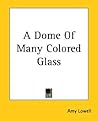
Harlem Shadows (AmazonClassics Edition)Harlem Shadows by Claude McKay
My rating: 5 of 5 stars

Project Gutenberg

This 1922 poetry collection is wide-ranging and beautifully composed. As the title hints, this is a product of that great literary and artistic movement known as the Harlem Renaissance.

The seventy-plus poems include sonnets and various other forms of poems, mostly lyric and rarely more than a couple pages in length. Besides being varied in form, they poems are also diverse of tone — from frank invectives on race to sweet love poems. They take New York as their home and tap into the verve of the day. The collection includes many of McKay’s best-known poems including: “If We Must Die,” “America,” and “Harlem Shadows.” Though bucolic beauties such as “Spring in New Hampshire” and “The Snow-Fairy” are not to be skipped over.

I enjoyed these poems and found them powerful and lyrical.

View all my reviews

“The Clod and the Pebble” by William Blake [w/ Audio]

"Love seeketh not itself to please,
Nor for itself hath any care,
But for another gives its ease,
And builds a Heaven in Hell's despair."

So sung a little Clod of Clay
Trodden with the cattle's feet,
But a Pebble of the brook
Warbled out these metres meet:

"Love seeketh only self to please,
To bind another to its delight,
Joys in another's loss of ease,
And builds a Hell in Heaven's despite."

Willows [Haiku]

willows dangle
over flowing waters:
reaching not touching.

“Long, too long America” by Walt Whitman [w/ Audio]

Long, too long America,
Traveling roads all even and peaceful you learn'd from joys and prosperity only,
But now, ah now, to learn from crises of anguish, advancing, grappling with direst fate and recoiling not,
And now to conceive and show to the world what your children en-masse really are,
(For who except myself has yet conceiv'd what your children en-masse really are?)