“Beggar to Beggar Cried” by William Butler Yeats [w/ Audio]

"Time to put off the world and go somewhere
And find my health again in the sea air,"
Beggar to beggar cried, being frenzy-struck,
"And make my soul before my pate is bare;

"And get a comfortable wife and house
To rid me of the devil in my shoes,"
Beggar to beggar cried, being frenzy-struck,
"And the worse devil that is between my thighs.

"And though I'd marry with a comely lass,
She need not be too comely -- let it pass,"
Beggar to beggar cried, being frenzy-struck,
"But there's a devil in a looking glass.

"Nor should she be too rich, because the rich
Are driven by wealth as beggars by the itch,"
Beggar to beggar cried, being frenzy-struck,
"And cannot have a humorous happy speech.

"And there I'll grow respected at my ease,
And hear amid the garden's nightly peace,"
Beggar to beggar cried, being frenzy-struck,
"The wind-blown clamor of the barnacle-geese."

BOOKS: “Kokoro” by Natsume Sōseki 

KokoroKokoro by Natsume Sōseki
My rating: 5 of 5 stars

Publisher Site – Pushkin Press

I first read this many years ago in college for a course on Japanese culture. I didn’t have a good reading experience then because this novel is too quiet to hold the concentration of a fidgety mind. However, on rereading it, I found it to be an intense and moving reading experience. It’s a brutally realistic piece of literary fiction, featuring quiet and unexpressive characters who are never-the-less experiencing a kind of agony of living.

The book’s beginning revolves around the relationship between a young man just finishing college and an older, somewhat hermetic, man. By “relationship” I’m not talking about a sexual or otherwise intimate interaction. This strange relationship might best be made sense of by the fact that the young man calls the older, “Sensei” (i.e. “teacher.”) So, it is largely an informal mentor-mentee relationship, but the reader may not really understand why “Sensei” is a reasonable honorific for the old man until the end. The latter portion of the book is Sensei’s “confession,” or the telling of formative events of his life. It is in this confession that we learn that Sensei is not so much a teacher by virtue of conveying abstract scholarly information but rather he teaches by showing the young man his own life story as a cautionary tale.

You must be in a quiet state of mind to keep attuned to this book, but – if you can do so – it is well worth reading. I’d highly recommend it for readers of literary fiction.

View all my reviews

“Flood” by James Joyce [w/ Audio]

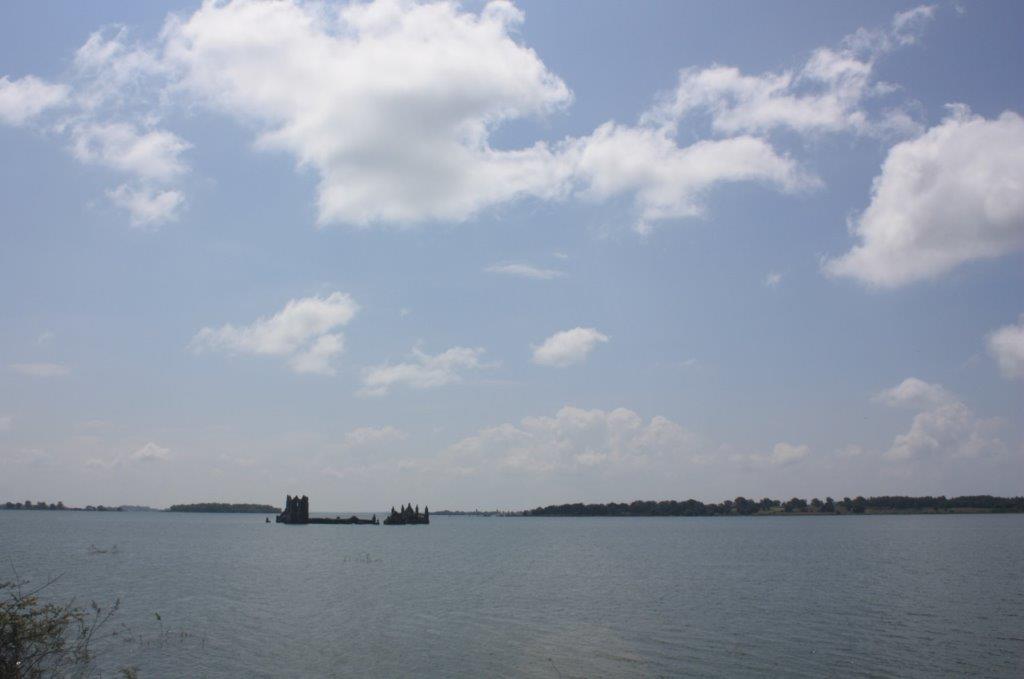
Gold-brown upon the sated flood
The rock-vine clusters lift and sway:
Vast wings above the lambent waters
brood
Of sullen day.

A waste of waters ruthlessly
Sways and uplifts its weedy mane,
Where brooding day stares down
upon the sea
In dull disdain.

Uplift and sway, O golden vine,
Thy clustered fruits to love's full
flood,
Lambent and vast and ruthless as is
thine
Incertitude.

“Fortune-teller’s Song” by Su Shi [w/ Audio]

The crescent moon hangs on a barren tree.
The water clock has stopped and all is still.
Who sees the sad man pace the shore alone?
His shadow slants and curls into a swan.

The startled man stiffens and turns to look;
His grief remains unseen by anyone.
He passes on a seat of fallen log,
And plops down on the wet and cold sandbank.

NOTE: The original title is: 卜算子.

“The Bumblebee” by James Whitcomb Riley [w/ Audio]

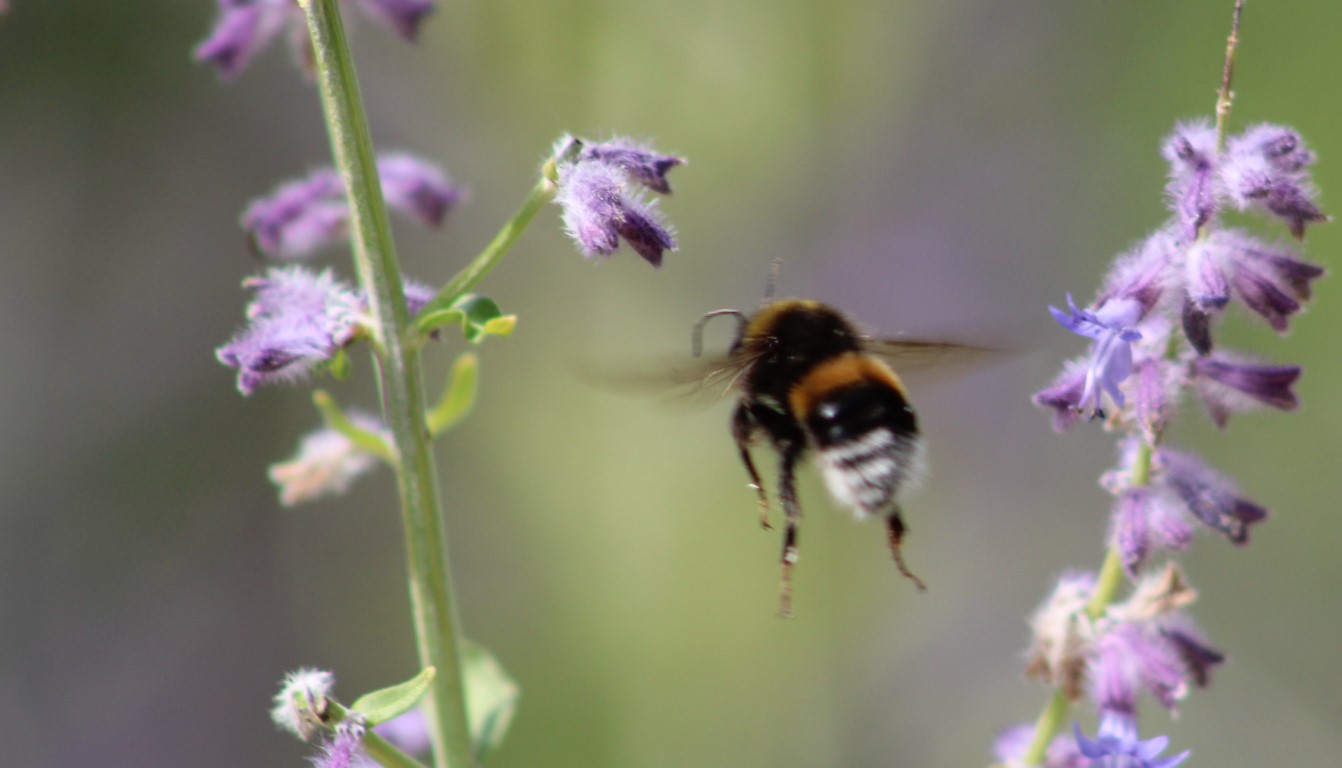
You better not fool with a Bumblebee!--
Ef you don't think they can sting -- you'll see!
They're lazy to look at, an' kind o' go
Buzzin' an' bummin' aroun' so slow,
An' ac' so slouchy an' all fagged out,
Danglin' their legs as they drone about
The hollyhawks 'at they can't climb in
'Ithout ist a-tumble-un out ag'in!
Wunst I watched one climb clean 'way
In a jimson-blossom, I did, one day,--
An' I ist grabbed it -- an' nen let go--
An' "Ooh-ooh! Honey! I told ye so!"
Says The Raggedy Man; an' he ist run
An' pullt out the stinger, an' don't laugh none,
An' says: "They has be'n folks, I guess,
'At thought I wuz prejudust, more or less, --
Yit I still muntain 'at a Bumblebee
Wears out his welcome too quick fer me!"

“Are you the new person drawn toward me?” by Walt Whitman [w/ Audio]

Are you the new person drawn toward me?
To begin with, take warning, I am surely far
different from what you suppose;
Do you suppose you will find in me your
ideal?
Do you think it so easy to have me become
your lover?
Do you think the friendship of me would
be unalloy'd satisfaction?
Do you think I am trusty and faithful?
Do you see no further than this facade,
this smooth and tolerant manner of me?
Do you suppose yourself advancing on real
ground toward a real heroic man?
Have you no thought, O dreamer, that is
may be all maya, illusion?

“Nuns Fret Not at Thier Convent’s Narrow Room” by William Wordsworth [w/ Audio]

Nuns fret not at their convent's narrow room;
And hermits are contented with their cells;
And students with their pensive citadels;
Maids at the wheel, the weaver at his loom,
Sit blithe and happy; bees that soar for bloom,
High as the highest Peak of Furness-fells,
Will murmur by the hour in foxglove bells:
In truth the prison, into which we doom
Ourselves, no prison is: and hence for me,
In sundry moods, 'twas pastime to be bound
Within the Sonnet's scanty plot of ground;
Pleased if some Souls (for such there needs must be)
Who have felt the weight of too much liberty,
Should find brief solace there, as I have found.

BOOKS: “Strange Tales from a Chinese Studio” by Pu Songling [Trans. by John Minford]

Strange Tales from a Chinese StudioStrange Tales from a Chinese Studio by Pu Songling
My rating: 5 of 5 stars

Publisher Site – Penguin

This is a collection of short stories, almost entirely speculative fiction, dating from the Qing Dynasty (specifically, the late 1600’s to early 17oo’s.) Ghosts, folkloric creatures, and Taoist magic all feature prominently in the stories. The stories average about five pages, but with a wide deviation from stories scarcely longer than today’s micro-fiction to extensive pieces. The Penguin edition collects 104 out of a much larger collection of stories.

The best of these stories are clever and highly engaging, and there are many such tales. Being from Qing Dynasty China, the stories offer a perspective different from one’s typical horror and fantasy short stories. Many of the stories prominently feature eroticism, but not graphically so.

As for the weakness of the volume, even though it selects only a portion of Pu Songling’s original, there are many stories that blend together, failing to distinguish themselves. This is most notable among the fox-spirit stories, of which there are just so many. [A number of them are fantastically unique, but others are just variations on the same.] So, the book can seem a bit repetitive in that sense. However, before you get to the point where you feel you can’t read one more fox-spirit story, you’re quite likely to read a tale that blows your mind.

I greatly enjoyed many of the stories herein. Perhaps, the volume could have benefited from further abridgement, but it’s well worth the read.

View all my reviews

“Before I got my eye put out –” (336) by Emily Dickinson [w/ Audio]

Before I got my eye put out --
I liked as well to see
As other creatures, that have eyes --
And know no other way --

But were it told to me, Today,
That I might have the Sky
For mine, I tell you that my Heart
Would split, for size of me --

The Meadows -- mine --
The Mountains -- mine --
All Forests -- Stintless stars --
As much of noon, as I could take --
Between my finite eyes --

The Motions of the Dipping Birds --
The Morning's Amber Road --
For mine -- to look at when I liked,
The news would strike me dead --

So safer -- guess -- with just my soul
Opon the window pane
Where other creatures put their eyes --
Incautious -- of the Sun --

“Under the Trees…” by Ikkyū [w/ Audio]

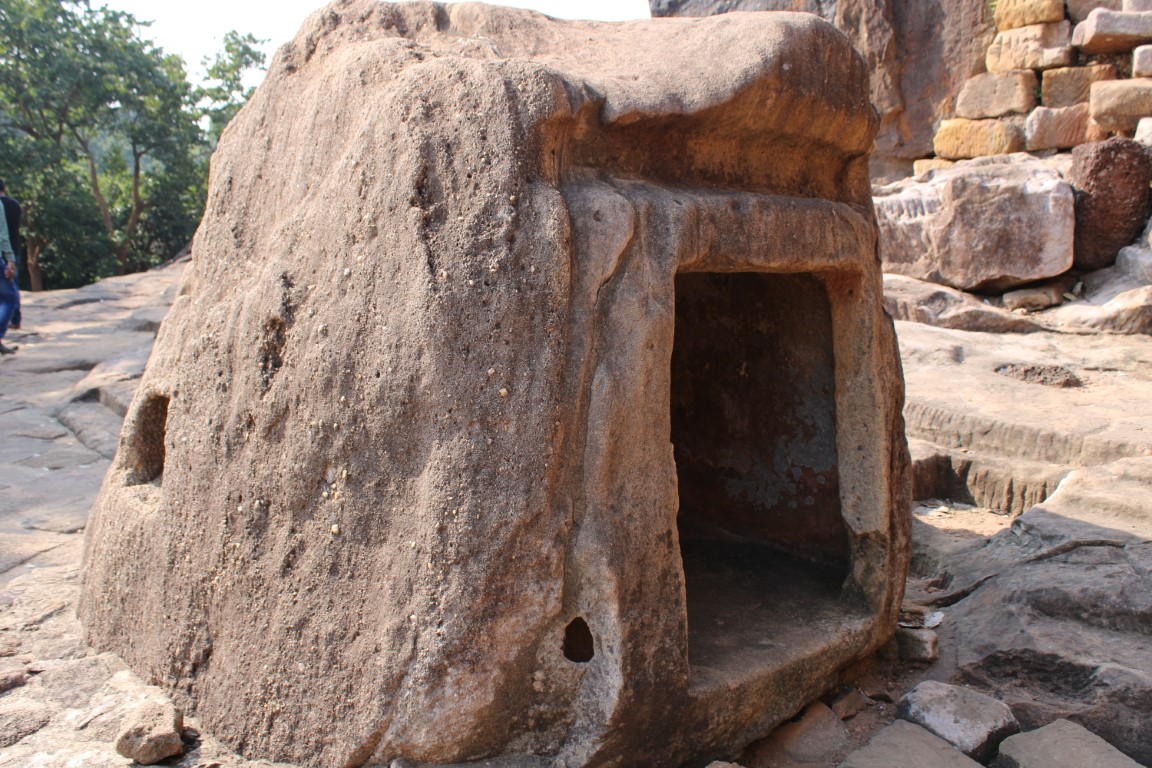
Under the trees, among the rocks, a thatched hut:
verses and sacred commentaries live there together.
I'll burn the books I carry in my bag,
but how can I forget the verses written in my gut?

Translation by Kazuaki Tanahashi and David Schneider in Essential Zen (1994) HarperSanFrancisco.