“The Sick Rose” by William Blake [w/ Audio]

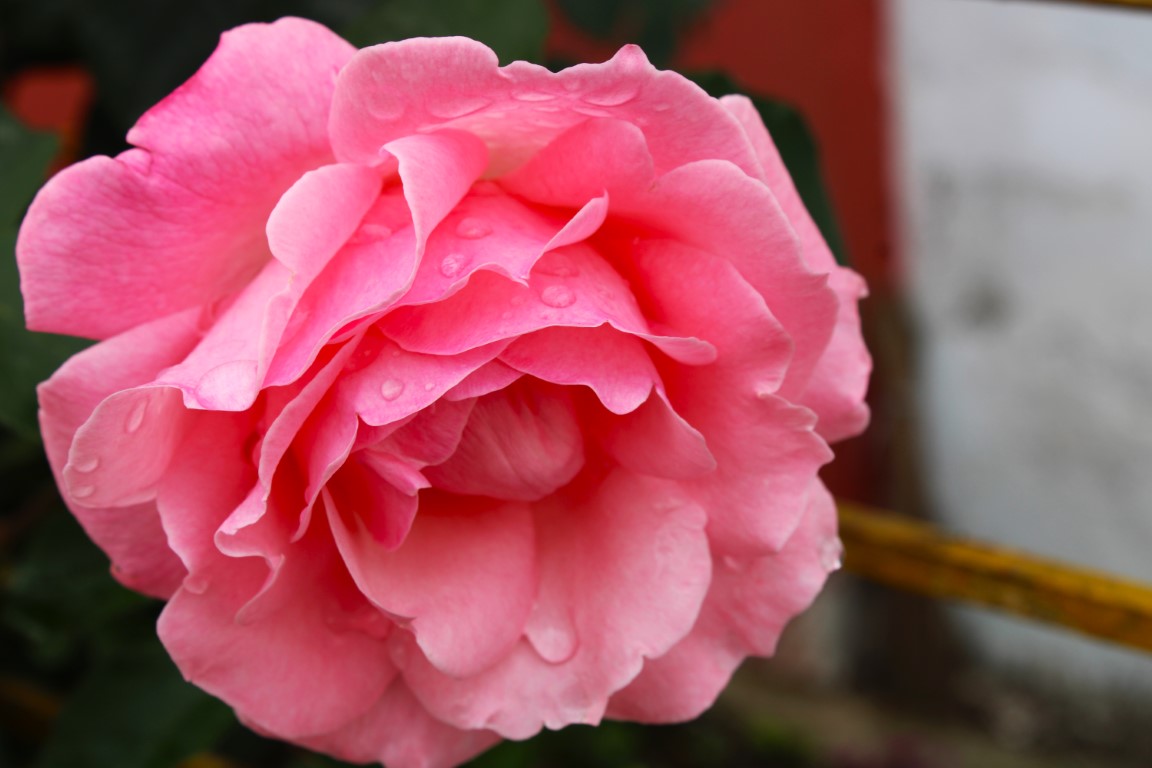
O Rose thou art sick.
The invisible worm
That flies in the night
In the howling storm,

Has found out thy bed
Of crimson joy:
And his dark secret love
Does thy life destroy.

PROMPT: Longevity

What are your thoughts on the concept of living a very long life?

As long as I’m of sound mind and capable body, I’m fine with it, but not at any cost. I’d rather shuffle off this mortal coil than drag out the suffering of immobility and / or dementia.

I think Atul Gawande’s “Being Mortal” is good required reading. Among other things, he talks about the smoke and mirrors of our species’s increased lifespan. (i.e. increased lifespan, yes, but too often at the cost of diminished quality of life through those additional years.)

PROMPT: Physical Activity

Daily writing prompt
What are your favorite physical activities or exercises?

I don’t have a favorite, but there are several that I could not maintain health and sanity without, including: hiking, yoga, calisthenics, taiji / qigong, free movement, and at least one cardio (I currently swim and run.) I’m currently struggling with juggling.

PROMPT: Lazy Days

Daily writing prompt
Do lazy days make you feel rested or unproductive?

Rested. Definitely. I believe one has to think of rest and recovery as part of the process of living. If one thinks of it as just wasting time between “doing things,” then one isn’t going to get the most out of body and mind.

PROMPT: Walk or Run

How often do you walk or run?

Every day. And sometimes I crawl, and – if there are monkey bars – I swing.

PROMPT: Well-Being

Daily writing prompt
What strategies do you use to maintain your health and well-being?

Diet: high fiber / low junk

Movement: frequent and varied (includes: yoga, calisthenics, running, swimming, and functional movement)

Mental: breathwork, yogic dispassionate witnessing, and gratitude awareness

Rest: Build in regular and redundant rest throughout the living process

BOOK REVIEW: Mindfulness in Wild Swimming by Tessa Wardley

Mindfulness in Wild Swimming: Meditations on Nature & Flow (Mindfulness series)Mindfulness in Wild Swimming: Meditations on Nature & Flow by Tessa Wardley
My rating: 4 of 5 stars

Amazon.in Page

Release Date: June 13, 2023

As the title suggests, this is a book about combining mindfulness and swimming in natural bodies of water. It’s part of a large series of “Mindfulness and …” books, and this particular volume is a re-release of a title that came out a couple years back.

While the book does provide an overview the basic methods and considerations for both mindfulness meditation and wild swimming, it’s largely a peptalk or enticement to take up wild swimming as a means to improve awareness (as well as to bolster physical health and mental well-being.) That said, some of this peptalk is artfully, almost poetically, written, and the book is a pleasure to read.

The book discusses solo swims versus those in a group, and it even explores using onshore experiences to bolster mindfulness — e.g. using the sensory experience of the water as a focal point for practicing awareness. The around- (v. in-) water discussions are probably in part because the book uses seasons as a secondary mode of organization, and long and leisurely winter swims in lakes and rivers aren’t an option for people in many parts of the world.

I picked up some interesting food-for-thought in the book, and — as I say — it made for enjoyable reading.

View all my reviews

The Cough [Free Verse]

Remember the days
     when you dreaded
     a scratch at the back
     of your throat --

harbinger of a cough
     that you thought
     would get you rushed off
     to quarantine.

Or, at least, get a footlong swab
    shoved through your nasal cavity.

Best case, it would put all eyes upon you, 
     as the public wondered whether 
     you were their Typhoid Mary --
     (Except Mary was asymptomatic,
       and - clearly - you were not.)

We all learned that the one cough
      that one can never suppress
      is the one that you desperately
      wish to. 

That cough won't be silenced. 

BOOK REVIEW: The Exquisite Machine by Sian E. Harding

The Exquisite Machine: The New Science of the HeartThe Exquisite Machine: The New Science of the Heart by Sian E. Harding
My rating: 5 of 5 stars

Amazon.in Page

Release date: September 20, 2022

Get Speechify to make any book an audiobook

In this book, a renowned heart researcher presents an overview of what we know (and don’t know) about the human heart: i.e. what can go wrong with it and why, how [and to what degree] it fixes itself, and what modern medicine can do to treat or replace a damaged heart. I learned the most from the middle of the book – i.e. chapters five through seven. Chapter five explores plasticity in the heart, plasticity is a concept that most people associate with the brain and its ability to rewire itself to contend with damage or changing needs. The other two chapters look at how the heart can be damaged, specifically as a result of emotional experience. A “broken heart” isn’t necessarily a misnomer.

Chapter four is also intriguing but takes the win for “which one of these things is not like the others.” It deals with big data, though not in a general sense but rather as it applies to gaining a better understanding of the heart. This chapter discusses a common challenge of medical research: that it’s hard to come up with large enough study groups of patients with close enough to the same problem to draw solid conclusions. Four also discusses the potential of the vast amount of data that exists, e.g. Fitbit heart rate figures.

The last couple chapters deal largely with the future of heart repair through genetic / biological means (as opposed to via mechanical hearts and technologies, which are dealt with in Chapter nine.) This is where the book gets to be a challenging read for a readership of non-experts. It gets technical and jargon- / acronym-heavy.

The heart is an astounding entity, relentlessly at work, rarely giving up despite regularly being subjected to intense shocks, an organ tied to our whole being in a way that humans have always felt – if only just begun to understand. If you’re interested in learning more about this magnificent organ, check this book out.

View all my reviews

BOOK REVIEW: The Physiology of Yoga by Andrew McGonigle & Matthew Huy

The Physiology of YogaThe Physiology of Yoga by Andrew McGonigle
My rating: 5 of 5 stars

Amazon.in Page

This is a much-needed book for two reasons. First, while there are a number of fine books on anatomy as it applies to yoga, such books focus on the musculoskeletal system, occasionally venturing into the respiratory system – re: pranayama (breathwork.) However, yoga anatomy books rarely giving an overview of the workings of the body as a whole or describe how yoga influences and is influenced by other bodily systems. This book systematically reviews not only the muscles, bones, and lungs, but offers insight into the less familiar systems, such as the lymphatic, immune, and endocrine systems. Unless you want to know more about yoga and the integumentary system (skin, hair, and nails,) this book has got you covered. The book does an excellent job of avoiding muddling science with mythological beliefs about the body, a common sin among yoga books.

Second, there are many physiology misunderstandings and mistakes that are widespread and have come to be repeatedly parroted by new generations of teachers. These range from ideas that are unsupported by scientific evidence to those that are completely in conflict with well-understood science. This book has text boxes throughout that investigate widely taught physiology myths (e.g. twists detox the liver, shoulder stands stimulate the thyroid & pineal glands, kapalbhati (forced exhalation breathing) stops the aging process, heavy sweating detoxifies the body, and various claims about specific asana / practices curing specific ailments.) These boxes review what studies have been done on each claim, and (in the absence of scientific literature) it discusses whether claims make any sense in light of well-established physiological science.

The book is clear and easy to read, and has well-drawn anatomical drawings and diagrams to help communicate the workings of the body. It also has an extensive bibliography of works referenced.

The book wasn’t perfect. I thought the last chapter, which is a collection of yoga sequences, was out of place and unnecessary, given the objectives of this book. I suspect its inclusion was solely to remind readers flipping through the book that they were reading a book about yoga as well as physiology. (The graphics and headings don’t necessarily scream yoga.) However, I think this could have been more relevantly and effectively by including more graphics throughout that show individuals engaged in yogic practices / asana, or – alternatively – focusing on the physiological aspects of the practices and sequences in the last chapter. There was also a place or two where I wasn’t sure what the authors were saying, not because they didn’t write in a clear and readable style or because what they were saying wholly conflicted with what I understood to be true, but just because there was enough ambiguity that I was left puzzled.

Overall, I’d recommend this book for yoga teachers and practitioners looking to expand their understanding of the workings of the human body, and to liberate themselves from some misinformation that has gained a following.


View all my reviews