What skill would you like to learn?
FREEDIVING.
What skill would you like to learn?
FREEDIVING.
Over the years, I’ve read many books about survival in extreme or unexpected situations. Here are five of my favorites.
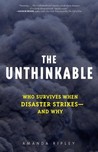
THE UNTHINKABLE by Amanda Ripley [Full Review]
What I like about this book: Ripley focuses heavily on the topic of mindset while exploring a wide range of survival situations from being stranded in a lifeboat to being in the Twin Towers on 9/11. It’s a fascinating – as well as educational – book.
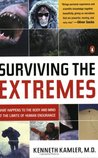
SURVIVAL AT THE EXTREMES by Kenneth Kamler [Full Review]
What I like about this book: This book focuses on surviving in all the places humans are not adapted to, places where one cannot live for long without ongoing technological support. These places include Mt. Everest (with which the author has personal experience,) the ocean, and the harshest of deserts. Kamler is a medical doctor and the book, therefore, does a good job of explaining the limits of human physiology.
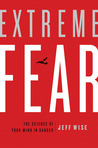
EXTREME FEAR by Jeff Wise [Full Review]
What I like about this book: Wise’s book examines how fear can work against us in challenging situations (e.g. causing one to freeze at the wrong time) and what methods have been developed to overcome such crippling or inappropriate fear responses. This book is not entirely about life-and-death survival, but it does have a lot to say that is relevant to the subject.
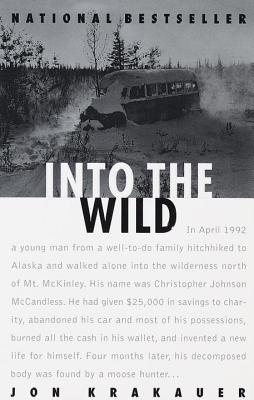
INTO THE WILD by Jon Krakauer [Full Review]
What I like about this book: This book is not like the others. There are no physical or mental techniques for survival described in it, nor discussions of physiology. Rather, it is an extremely well-written cautionary tale about a young man who goes out into the wilderness and gets in over his head. It is highly readable food-for-thought.
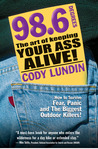
98.6 by Cody Lundin [Full Review]
What I like about this book: This is the closest thing to an actual survival manual on my list. But it’s written in conversational, folksy style that makes it easy to read, despite the daunting subject matter. As the title suggests, Lundin’s central premise is that one must keep the body burning at its appropriate temperature, or else…

After dark —-
A city park —-
There runs the thing
That comes to life
By night.
Caged in stillness
Through sunlit hours.
Its night persona
Is blurred movement
Seen only from the
Corner of an eye.
It stays near deep shadow,
Beyond the lamp lit arcs.
Where is it?
No one knows,
But if one were to
Check the cathedral
Spire, you’d find
Only an impenetrable
Void…
until sunup.
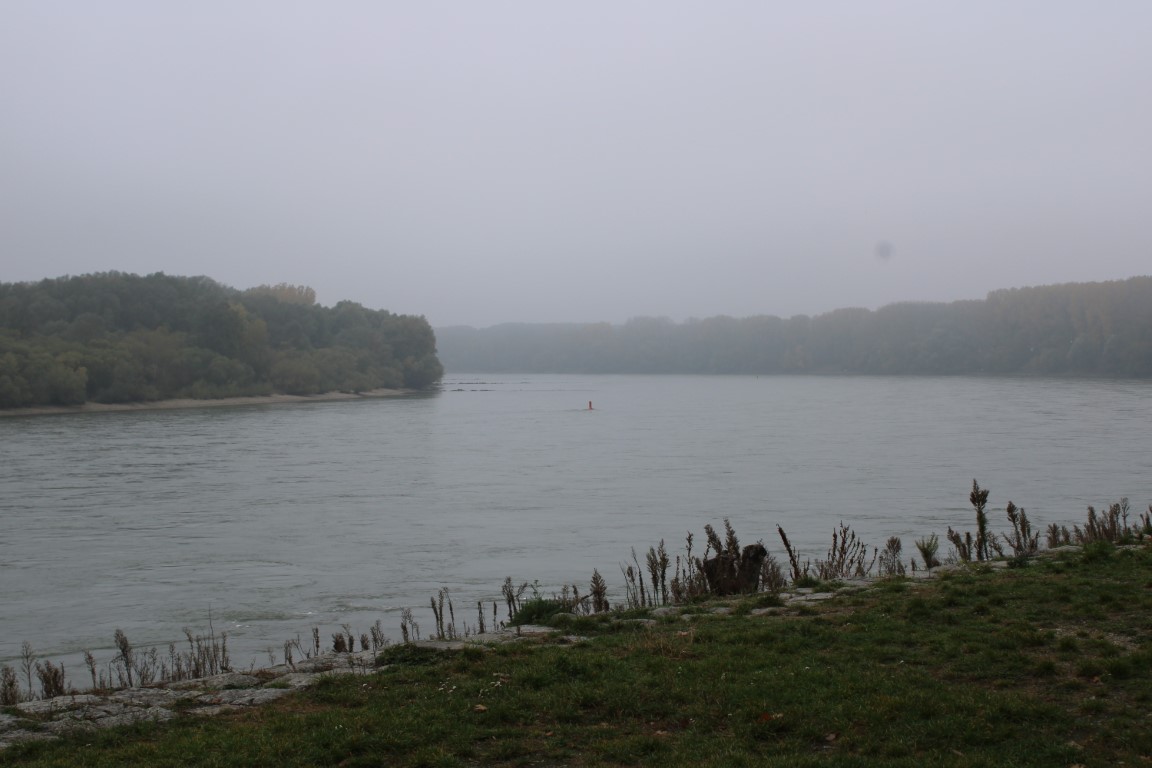
in a flat, wide river:
something juts up
from the water --
far in the distance
for an instant,
i startle:
seeing it as an
extended arm...
like that Stevie Smith
poem, but i discover
it's neither waving,
nor drowning, but
merely protruding...
a dead limb
stuck in the river,
drag & pull balanced,
waiting to be
carried away.
Technology has changed everything, for good and for ill. It’s the source of our vast growth in productivity, but also at the heart of our modern crises (e.g. I’m almost certain that no caveman ever experienced “imposter syndrome.” But like other crises of modernity, I suspect that technological dependence and an ever-continuing trend toward ultra-specialization are its cause.)
I count myself fortunate to be of an age to (probably) miss the (rapidly approaching) day when machines and artificial intelligence do all “productive tasks” better, faster, and with far less energy consumption than a human being. I don’t think most of humanity will be prepared for that day, and it will – in all likelihood – go down catastrophically. [I think we’re seeing the cracks in the dam already.]
I spend more and more time with the only technology-proof sector of which I’m aware: building a more capable human being.
I believe if every person spent some time learning skills like primitive living (sustainable wilderness survival skills) or unarmed martial arts (that train against armed opponents) society would be much better off. I pick these two as examples of skill sets that give practitioners a deep confidence in themselves [not in themselves + technologies that they can’t build, can’t fix, and which they don’t really understand.] I suspect that the core self-empowerment that would result would ease away much of the general shittiness of character we are increasingly prone to see in the world, shittiness that — like all shittiness — is ultimately rooted in fear.
What experiences in life helped you grow the most?
The ones that involved repeated non-catastrophic failures (e.g. martial arts practice.)
Also, the ones that confronted fears (e.g. open sea swimming.)
What’s the thing you’re most scared to do? What would it take to get you to do it?
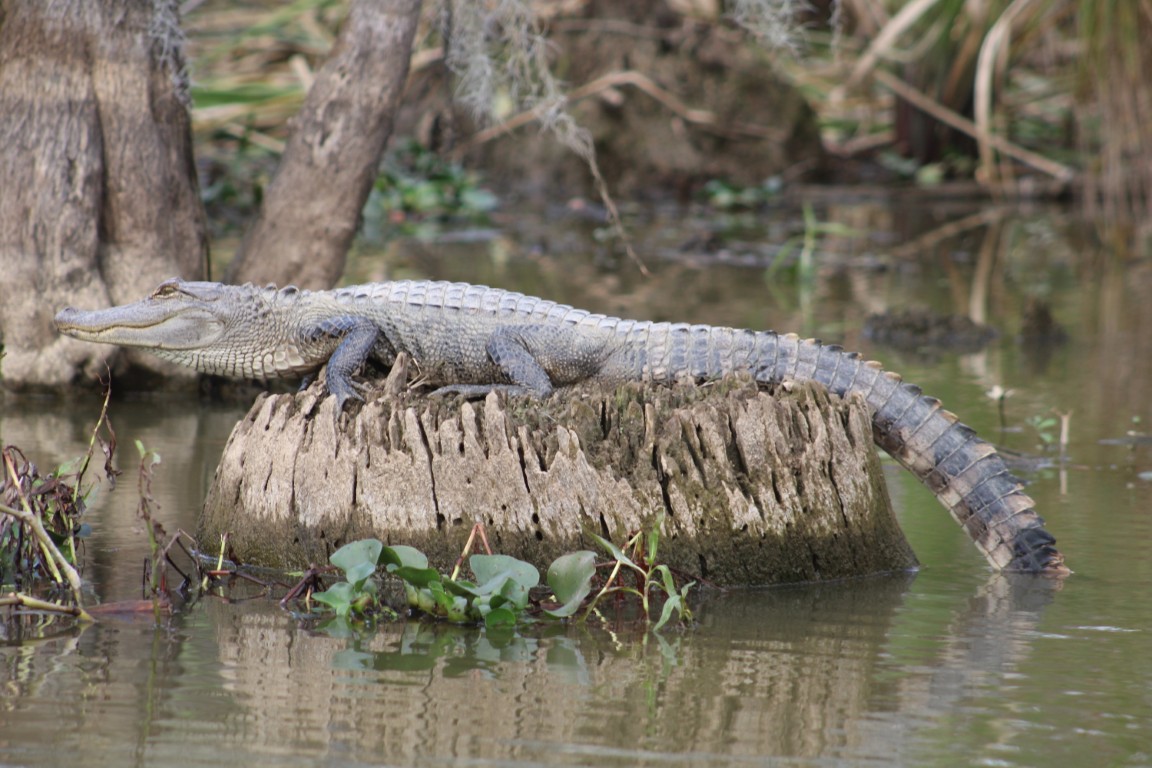
Going to a cocktail party with no one I know in attendance. FYI —Things that would generate less anxiety include: cage-fighting, gator-wrestling, skydiving, and (admittedly with the appearance of irony) giving a speech to a large audience.
A battle-hardened phalanx with pointy sticks.
1.) Changing my mind. This wouldn’t be noteworthy except that there seems to be a stigma attached to adults changing their minds about a thing (even in the face of new, better, or first -time information.) It’s considered “wishy-washy.”
2.) Learning. I love learning and I devote a lot of time to it. Beyond youth, a skill for it requires a capacity for what Shunryu Suzuki called “beginner’s mind” — a state a lot of people seem to run from, rather than toward.
3.) Adopting another’s point of view. Truth be told, I wouldn’t really say I’m good at this, but the bar is quite low.
4.) Operating my body.
5.) Going the places that scare me.
NOTE: I thought I was better at humility, but the fact that I’m willing to answer the question speaks to the contrary.
For example: being punched in the face and swimming in open waters.
As for how, to my knowledge there’s only one way to overcome any fear and that’s exposure to the fearful stimulus. e.g. One loses (at least greatly reduces) fear of being hit by sparring.