That time of year thou mayest in me behold
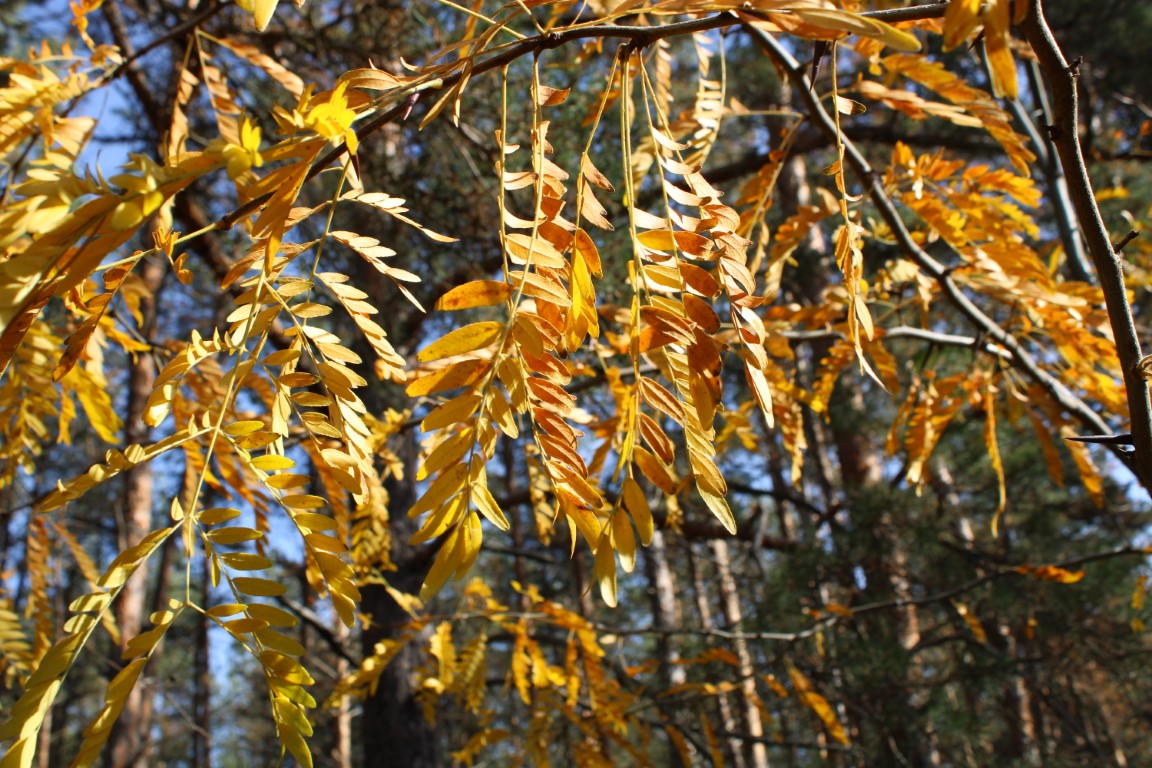
  When yellow leaves, or none, or few, do hang
  Upon those boughs which shake against the cold,
  Bare ruined choirs, where late the sweet birds sang.
 In me though seest the twilight of such day
  As after sunset fadeth in the west,
  Which by and by black night doth take away,
  Death's second self, that seals up all in rest.
 In me thou seest the glowing of such fire
  That on the ashes of his youth doth lie,
  As the death-bed whereon it must expire,
  Consumed with that which it was nourished by.
     This thou perceiv'st, which makes thy love more strong,
     To love that well, which thou must leave ere long.
Skimming lightly, wheeling still,
   The swallows fly low
 Over the field in clouded days,
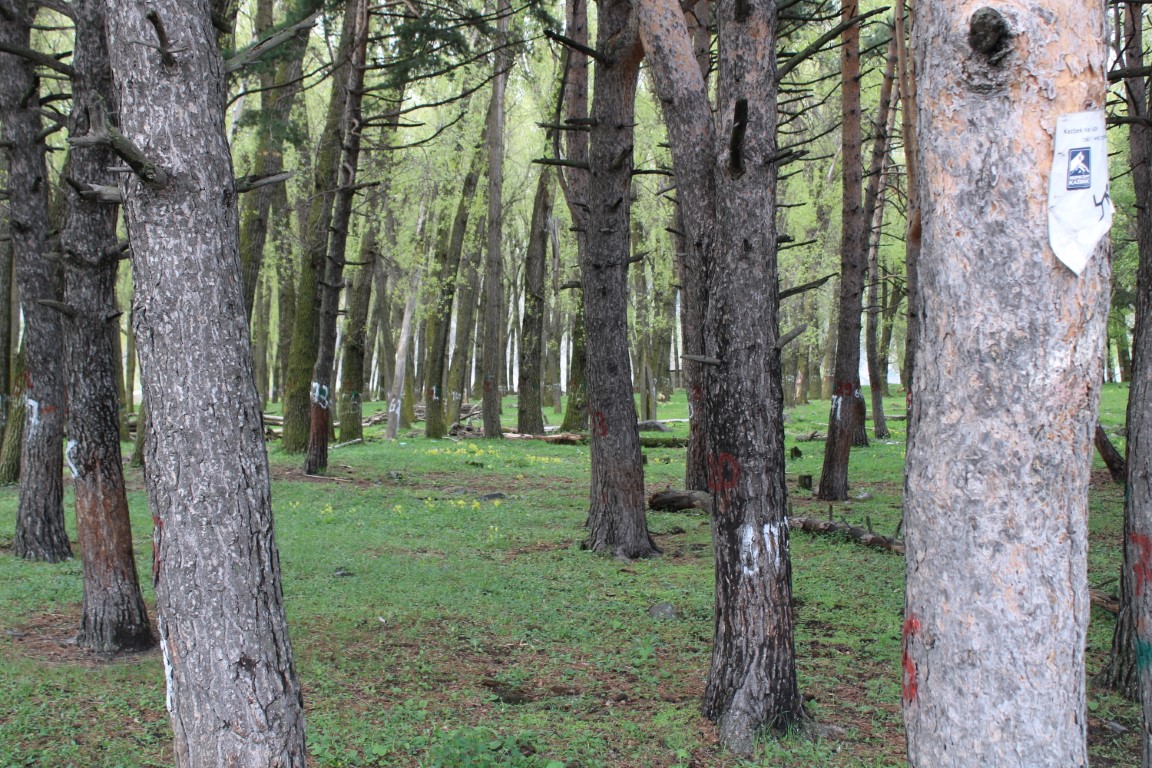
   The forest-field of Shiloh--
 Over the field where April rain
 Solaced the parched ones stretched in pain
 Through the pause of night
 That followed the Sunday fight
   Around the church of Shiloh--
 The church so lone, the log-built one,
 That echoed to many a parting groan
     And natural prayer
   Of dying foemen mingled there--
 Foemen at morn, but friends at eve--
    Fame or country least their care:
 (What like a bullet can undeceive!)
    But now they lie low,
 While over them the swallows skim,
   And all is hushed in Shiloh.
Grown about by Fragrant bushes,
 Sunken in a winding valley,
 Where the clear winds blow
 And the shadows come and go,
 And the cattle stand and low
 And the sheep bells and the linnets
 Sing and tinkle musically.
 Between the past and the future,
 Those two black infinities
 Between which our brief life
 Flashes a moment and goes out.
At the beginning there was a huge drop of milk.
 Then Doondari came and he created the stone.
   Then the stone created iron;
   And iron created fire;
   And fire created water;
   And water created air.
 Then Doondari descended the second time.
   And he took the five elements
   And he shaped them into man.
 But man was proud.
 Then Doondari created blindness,
      and blindness defeated man.
   But when blindness became too proud,
 Doondari created sleep,
      and sleep defeated blindness;
   But when sleep became too proud,
 Doondari created worry,
      and worry defeated sleep;
   But when worry became too proud,
 Doondari created death,
      and death defeated worry.
   But then death became too proud,
 Doondari descended for the third time,
   And he came as Gueno, the eternal one.
     And Gueno defeated death.
NOTE: The Fulani (also known as Fula and Fulbe) are a West African herding tribe that live in Mali, Niger, Nigeria, Guinea, and Senegal.
The shades of night were falling fast,
 As though an Alpine village passed
 A youth, who bore, 'mid snow and ice,
 A banner with the strange device,
     Excelsior!

His brow was sad; his eye beneath,
 Flashed like a falchion from its sheath,
 And like a silver clarion rung
 The accents of that unknown tongue,
     Excelsior!

In happy homes he saw the light
 Of household fires gleam warm and bright;
 Above, the spectral glaciers shone,
 And from his lips escaped the groan,
     Excelsior!

"Try not the Pass!" the old man said;
 "Dark lowers the tempest overhead,
 The roaring torrent is deep and wide!"
 And loud that clarion voice replied,
     Excelsior!

"Oh stay," the maiden said, "and rest
 Thy weary head upon this breast!"
 A tear stood in his bright blue eye,
 But still he answered, with a sigh,
     Excelsior!

"Beware the pine-tree's withered branch!
 Beware the awful avalanche!"
 This was the peasant's last Good-night,
 A voice replied, far up the height,
     Excelsior!

At break of day, as heavenward
 The pious monks of Saint Bernard
 Uttered the oft-repeated prayer,
 A voice cried through the startled air,
      Excelsior!

A traveller, by the faithful hound,
 Half-buried in the snow was found,
 Still grasping in his hand of ice
 That banner with the strange device,
     Excelsior!

There in the twilight cold and gray,
 Lifeless, but beautiful, he lay,
 And from the sky, serene and far,
 A voice fell like a falling star,
     Excelsior!
One may live a century --
 Short span though it may be:
  Joys are bitterly brief
  And sorrows are many.
 You may take a wine jug
  On your wisteria rounds:
   See flowers grow to the eves
   As sparse rains wet the grounds.
 And when the wine is gone,
  One strolls with cane and croons.
   We become wizened with age;
   South Mount, fair through countless moons.
NOTE: The late Tang Dynasty poet, Sikong Tu (a.k.a. Ssŭ-k‘ung T‘u,) wrote an ars poetica entitled Twenty-Four Styles of Poetry (二十四诗品.) It presents twenty-four poems that are each in a different tone, reflecting varied concepts from Taoist philosophy and aesthetics. Above is a crude translation of the twenty-third of the twenty-four poems. This poem’s Chinese title is 旷达, which has been translated as: “Illumed” [Giles,] “Big-hearted and Expansive [Barnstone and Ping,] “Expansive,” and “Open-minded.”
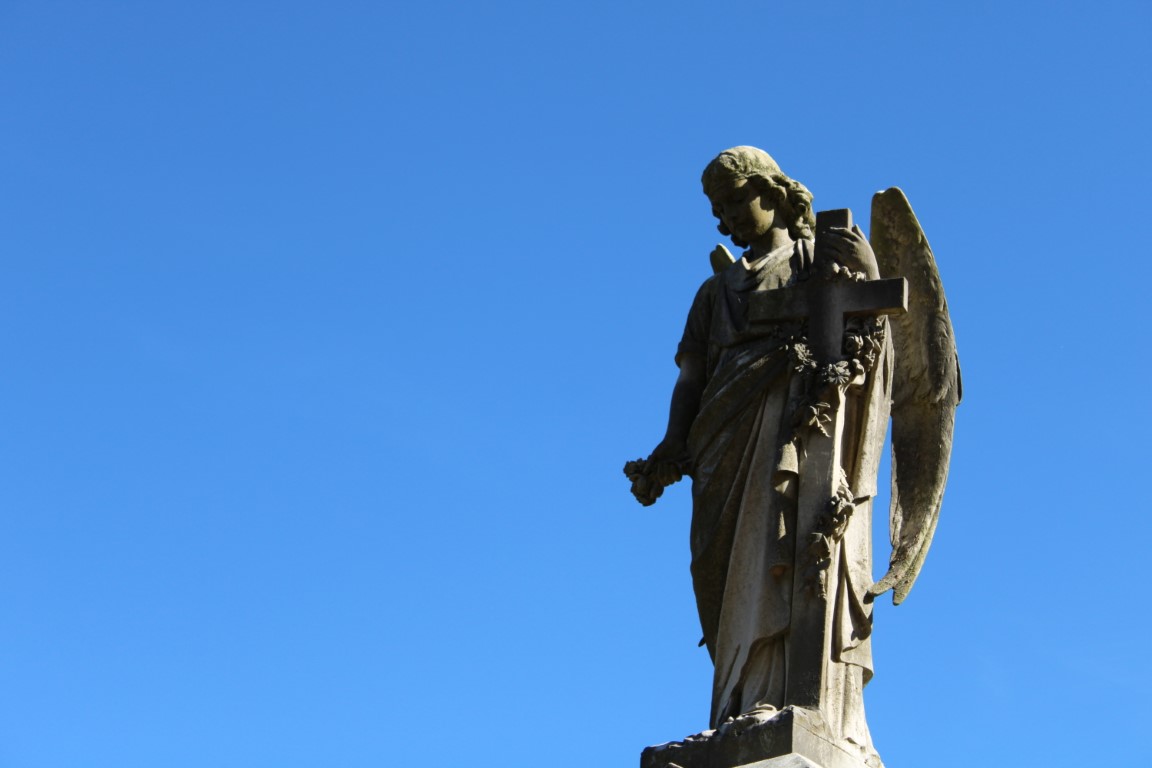
Behold, the grave of a wicked man,
   And near it, a stern spirit.

There came a drooping maid with violets,
 But the spirit grasped her arm.
   "No flowers for him," he said.
 The maid wept:
   "Ah, I loved him."
 But the spirit, grim and frowning:
   "No flowers for him."

Now, this is it --
 If the spirit was just,
 Why did the maid weep?














 Tiger Riding for Beginners