BOOKS: “Strange Tales from a Chinese Studio” by Pu Songling [Trans. by John Minford]

Strange Tales from a Chinese StudioStrange Tales from a Chinese Studio by Pu Songling
My rating: 5 of 5 stars

Publisher Site – Penguin

This is a collection of short stories, almost entirely speculative fiction, dating from the Qing Dynasty (specifically, the late 1600’s to early 17oo’s.) Ghosts, folkloric creatures, and Taoist magic all feature prominently in the stories. The stories average about five pages, but with a wide deviation from stories scarcely longer than today’s micro-fiction to extensive pieces. The Penguin edition collects 104 out of a much larger collection of stories.

The best of these stories are clever and highly engaging, and there are many such tales. Being from Qing Dynasty China, the stories offer a perspective different from one’s typical horror and fantasy short stories. Many of the stories prominently feature eroticism, but not graphically so.

As for the weakness of the volume, even though it selects only a portion of Pu Songling’s original, there are many stories that blend together, failing to distinguish themselves. This is most notable among the fox-spirit stories, of which there are just so many. [A number of them are fantastically unique, but others are just variations on the same.] So, the book can seem a bit repetitive in that sense. However, before you get to the point where you feel you can’t read one more fox-spirit story, you’re quite likely to read a tale that blows your mind.

I greatly enjoyed many of the stories herein. Perhaps, the volume could have benefited from further abridgement, but it’s well worth the read.

View all my reviews

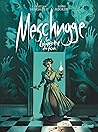
BOOKS: “Meschugge” by Benni Bodker

Meschugge: Le Labyrinthe du fouMeschugge: Le Labyrinthe du fou by Benni Bødker
My rating: 4 of 5 stars

Seller Site

This graphic novel reminded me of “The Alienist” TV series (based — itself — on a popular novel,) particularly the Sara Howard (Dakota Fanning) arc in which a young, upper-class woman becomes a detective in the (turn of the 20th century) world which sees women as too delicate to be subjected to such horrors.

While the lead in this book bears striking resemblance to Sara Howard and the settings are quite similar, the book also features major differences that make it its own unique story. First of all, Kabbalistic Judaism plays a central role in the crimes in this book. Secondly, this story creates the impression that the supernatural might be involved. I don’t believe it is unambiguously supernatural, one could explain things in a rational way as well, but “The Alienist” takes a clear rationalist approach.

I enjoyed the story, and it kept me reading. There were a couple points in the story that didn’t make sense to me, particularly an occurrence in which a character is being pursued and seems to be in a dire situation, and then suddenly is free. This mechanism is sometimes used with characters who’ve been established as being extremely capable individuals because it is as if to say, “I don’t even need to show you this person getting out of this spot because it’s not a big enough trouble to fuss about,” (it’s also often done in poor TV and movies for budget reasons,) but this character is not a master escape artist (being out of her depths is part of what creates such great tension throughout the story.)

An exciting premise and interesting characters, but with a few rough edges in plotting.

View all my reviews

PROMPT: Blog – Change

Daily writing prompt
What change, big or small, would you like your blog to make in the world?

If I’m being entirely honest, everything that’s come out of this enterprise has been of selfish motive — even those activities that seem like they have broader purpose. For example, I started book reviewing because: a.) I found it disheartening how many books I read that I had virtually no recollection of a couple years down the line, and b.) because, while I felt I knew good writing when I read it, I couldn’t really say what it was that made it good or bad without taking a more analytical look into the matter. (And I was pretty sure good writing wouldn’t come to me osmotically — merely by reading good writing — if I didn’t understand why it was good writing.)

I started recording classic poems to get a better sense of the sound quality of well-crafted poetry (and to become more comfortable with the sound of my own voice.)

I guess the honest answer is that I hope to be smarter and more capable as a result of the practice. It is continuing education, a fostering of the Beginner’s Mind.

BOOKS: “Road to Mussoorie” by Ruskin Bond

Roads to MussoorieRoads to Mussoorie by Ruskin Bond
My rating: 5 of 5 stars

Publisher’s Site

This is a collection of essays about Bond’s home of many years, Mussoorie, along with — as the title suggests — the areas one comes through traveling to – and hiking out of – Mussoorie. The book ventures from a straight up travelogue into ghost stories, local gossip, autobiography, and municipal history. It enlightens the reader on the White Woman of Mussoorie, on the death of its cinema, and on the town’s historical involvement in colonial licentiousness.

I enjoyed this short book. It’s humorous and offers one a feel of hill station India.

View all my reviews

BOOKS: “Play” by Stuart Brown

Play: How It Shapes the Brain, Opens the Imagination, and Invigorates the SoulPlay: How It Shapes the Brain, Opens the Imagination, and Invigorates the Soul by Stuart M. Brown Jr.
My rating: 4 of 5 stars

Amazon.in Page

Why does biology encourage play? Why does it stop encouraging play at some point? Should play end, or should one maintain a dedication to play throughout life? These are principal questions addressed by this book.

Brown explores the advantages of leading a playful life, and he doesn’t restrict himself to childhood play. In fact, the book doesn’t restrict itself entirely to human play, but also presents insights derived from the study of other playful species. One of the most profound lessons from the book comes from a story about a sled dog that has repeated playful interactions with a polar bear — a hungry polar bear, at that.

The book is presented more like an essay or a collection of essays than the usual popular science or pop psychology book. That is to say, it is not annotated and lacks a bibliography. The author sites the occasional book or study in the text, but it’s in the manner one would see in journalism or essays. This approach has its advantages, but the flipside of those advantages are the disadvantages. On the positive side, the author is able to communicate more freely, including the ability to discuss more speculative possibilities than one would expect from scientific reporting (with its usual “just the facts” approach.) Of course, the extensive speculation will be frustrating to readers who want to know what evidence has been produced for the proposed benefits. Furthermore, it often feels like the speculation in question is of the “when you’re a hammer every problem is a nail” nature — i.e. when one is a play researcher, one may be inclined to see play as a panacea for all the ills facing humanity (it surely is for some, but probably not all.) [To be fair, the book is almost fifteen years old, and I suspect it was / is probably harder than pulling teeth to get academic funding for play research outside of early childhood development, and so part of what the book was probably trying to do was build enthusiasm for supporting this kind of research, which necessitated talking about possibilities that were outside the known.]

The book does have a chapter on “the dark side of play.” It deals with compulsive behaviors like gambling and video game playing addiction (i.e. not people who like playing video games once in a while, but those who go 48 hours without sleep and who live in cave-like darkness to limit screen glare.) Much of the chapter argues that, while those problems are real and of concern, the activities aren’t play, not as per the definition presented early in the book.

This book does make a sound case for a number of benefits of play and for not abandoning play in one’s youth. If you’re interested in how play can help one to cope in a world of uncertainty, to keep one’s mind and body healthy, and to maintain or grow one’s capacity for imagination, this book is well worth reading.

View all my reviews

BOOKS: “Water Margin” by Shi Nai’an

Outlaws of the marsh (the Water Margin)Outlaws of the marsh by Shi Nai’an
My rating: 5 of 5 stars

Amazon.in Page

Water Margin is one of the four classic Chinese novels. The English language translations of the novel go by many names, but in Chinese it’s called Shui Hu Zhuan (i.e. 水滸傳.) The book tells a tale of war and brotherhood in a world in which a person’s virtue and his station in life are often topsy-turvy. It’s one of the most engaging pieces of fiction I’ve read in some time. While it’s a sprawling epic (close to a thousand pages in the unabridged translation,) it draws the reader in and keeps one reading by way of clever plotting and intense intrigues.

The story revolves around 108 individuals of varied checkered pasts who end up together as a band of outlaws in the Liangshan Marsh (hence, one of the most common translated titles is “Outlaws of the Marsh.”) Under the leadership of an exceptionally virtuous and beloved leader, Song Jiang, these outlaws are united into, first, a band of outlaws and, later, (having been pardoned by the emperor) as an incomparable military force that quells threats to the nation.

About the first half of the book consists of the individual stories of the most central of the 108 outlaw chieftains. The next quarter of the book describes their time together as outlaws and, particularly, how they repeatedly defeated government attempts to crush their band. The final quarter of the book is about the band’s Imperial service: first in defeating Tartar invaders from the North and then in crushing a kingdom that arose in the south by uprising of a self-declared king.

If the reader is thinking that 108 primary characters is too many to contend with, I would say that: a.) there are a small set of characters that are so substantially discussed and developed that you’ll be able to always keep them straight; b.) not all of the 108 are crucial to keep straight to follow the flow of the story, but c.) yes, it is not easy to keep them all straight — particularly for a non-Chinese reader who will find a number of the names quite similar (e.g. Wu Yong and Wu Song.)

I should note that the book can be extremely visceral, too much so for some readers. This intensity largely has to do with the stories involving one of the chieftains, Li Kui. Li Kui is the worst. He has a horrific temper, a blood lust, is completely out of control, and almost always turns anything he touches into a bloody mess. His only saving grace is that he recognizes in Song Jiang’s virtue something that must be followed, such that he does his level best to do anything Song Jiang tells him to and (often more importantly) not do whatever he is told not to do. Many readers will hate Li Kui, finding him completely despicable. However, there is a good chance that thinking about why Li Kui is kept around and tolerated after constantly fouling things up will be a productive thought exercise for those who can get through the gore. One may want to consider that question in relationship to the fascinating fact that Song Jiang, the undisputed leader who all the men insist take the position of head chieftain, is the only member of the band who has no kung fu. The other 107 chieftains are all martial arts masters-extraordinaire, most with specialties in particular weapons or tactics.

I won’t say there aren’t clunky plot devices and repetitive elements, but they didn’t bother me much for a few of reasons. Firstly, this novel is from the fourteenth century, and — given that — the readability and emotional resonance of the book is phenomenal. Secondly, I have no way of knowing how much the cheapening plot devices are a product of the original versus of the translation. Finally, those elements are more than made up for by skilled story crafting.

I’d highly recommend this book for all readers who can feasibly get through an 850-page novel with hundreds of characters. Martial artists and travelers may find it of particular value.


View all my reviews

BOOKS: “The Flowers of Evil” by Charles Baudelaire

Les Fleurs du MalLes Fleurs du Mal by Charles Baudelaire
My rating: 5 of 5 stars

Amazon.in Page

I read the 1909 Cyril Scott translation of Baudelaire’s poetry collection. It consists of 54 poems, including “Condemned Women” but not including others of the six poems that were banned in early editions and which only came to be included in later editions. (I did look up and read a couple translations each for the six poems — because censorship can’t be allowed to prevail. Not surprisingly, they are calm by today’s standards. It should be noted that Baudelaire played in symbolism, and so his poems – while ahead of their time in subject matter – didn’t tend toward explicit vulgarity in the first place.)

The Scott translation is all in rhymed verse, the largest share of it presented as sonnets — though there are some longer pieces (longer, but not long. It’s a quick read.) “The Broken Bell” and “Spleen” were highlights for me, but the whole collection is intriguing, evocative, and readable.

I enjoyed this collection tremendously, even with such an old translation. The hedonism, eroticism, and macabre of Baudelaire’s work creates an intense tone.

I’d highly recommend this collection for all poetry readers.


View all my reviews
BOOKS: “Silk Dragon II” ed. & trans. by Arthur Sze

Silk Dragon: Translations from the Chinese (Kage-an Books)Silk Dragon: Translations from the Chinese by Arthur Sze
My rating: 5 of 5 stars

Amazon.in Page

Release Date: May 28, 2024

Let me begin with a note of clarification: The edition that I read was the “Silk Dragon II” collection, which is due out in May of 2024. I mention this because there is potential for confusion in that this book looks like a sequel (i.e. a completely new set of poems,) but really it is something between a new edition and a sequel. That is to say, while it has a substantial amount of new material, it is built on the original “Silk Dragon” volume. This edition adds eighteen new poem translations, most of which are from poets of the modern era (I mean that loosely, not technically, so 20th century onwards.) I’d recommend readers get this edition, but not both this and the original.

This collection includes a wide range of poems from ancient times through China’s various dynasties to the modern day. It includes translations that are extremely well-known, such as Li Bai’s “Drinking Alone with the Moon” and Liu Zongyuan’s “Snow on the River.” But it also includes many pieces that are likely to be new to most poetry readers, particularly given they will be reading translations (i.e. Non-specialists in Chinese poetry.) As mentioned, the bulk of the new poems are from recent decades and tend to be free verse. [Though there are four new classical poems, as well.]

I found the translations to be evocative and approachable. I am unable to comment on how well Sze captures the feel of the original, but I can say that the translations of poems I’m familiar with were at least on par with other translations that I’ve read. The translations don’t always display the sparseness one sees in classical Chinese poetry, but the challenge of conveying form and meaning and metaphor through translation is immense and, at some level, impossible.

I’d highly recommend this poetry collection for readers of poetry and translated literature.

View all my reviews

BOOKS: Everyday Shakespeare by Ben & David Crystal

Everyday Shakespeare: Lines for LifeEveryday Shakespeare: Lines for Life by Ben Crystal
My rating: 4 of 5 stars

Amazon.in Page

This is like a word-a-day calendar, but with a quotation from Shakespeare for each day (rather than a vocabulary word.) Also, each quote has accompanying text that explains what the quote is from, what it means, why the language says what it does, and the context in which an individual might use Shakespeare’s words today. [Note: while that last bit (i.e. how to employ the Bard’s words today) is a major theme of the book, I wouldn’t recommend it. It will make one look more like a pretentious nincompoop than like a clever wordsmith.] That said, the book still has great value for anyone interested in Shakespeare’s work, specifically, or the evolution of the English language, more generally. In dealing with many phrases that describe workaday activities that were common then as now, the book builds a niche different from books that deal in the grandiose phraseology of war and aristocratic life.

Many people struggle with Shakespeare, and this book helps make clear why some of the statements that were about mundane matters had the meaning they did. I would put people’s difficulties with Shakespeare into three buckets. First, poetic and non-colloquial language in which the reader knows all the words and their meanings, but the poetic / stylistic language and grammar throws them for a loop. This book shouldn’t really need to deal with this one, but it does a little bit. Second, evolutionary language drift, in this case the reader knows the words but is thrown off because they don’t mean what they once did. The book is quite helpful in clarifying these changes. Third, the revolutionary shifts, these involve words and phrases wholly unfamiliar to the reader because they deal in activities and perspectives not present in our daily lives. The book explains these changes, as well, but there aren’t a great deal of them because the selections are supposed to be applicable today.

The book draws from the entire Shakespeare canon, but more heavily from the plays than from the sonnets or long form poems. (Also, not surprisingly, it draws more heavily from the popular plays — i.e. many of the tragedies and the popular comedies — than it does from the more obscure plays (i.e. most histories and a few of the others.) This only makes sense, and I was happy to see references to sonnets, histories, and other Shakespearean poems at all.

All in all, this is an informative book and is recommended for those who are interested in getting into Shakespeare, or who are intrigued by the ever-shifting landscape of the English language.

View all my reviews