Burning Bush [Tanka]

amid buff sands -
bare and blistering -
stands a shrub,
the carroty coned
ephedra bush

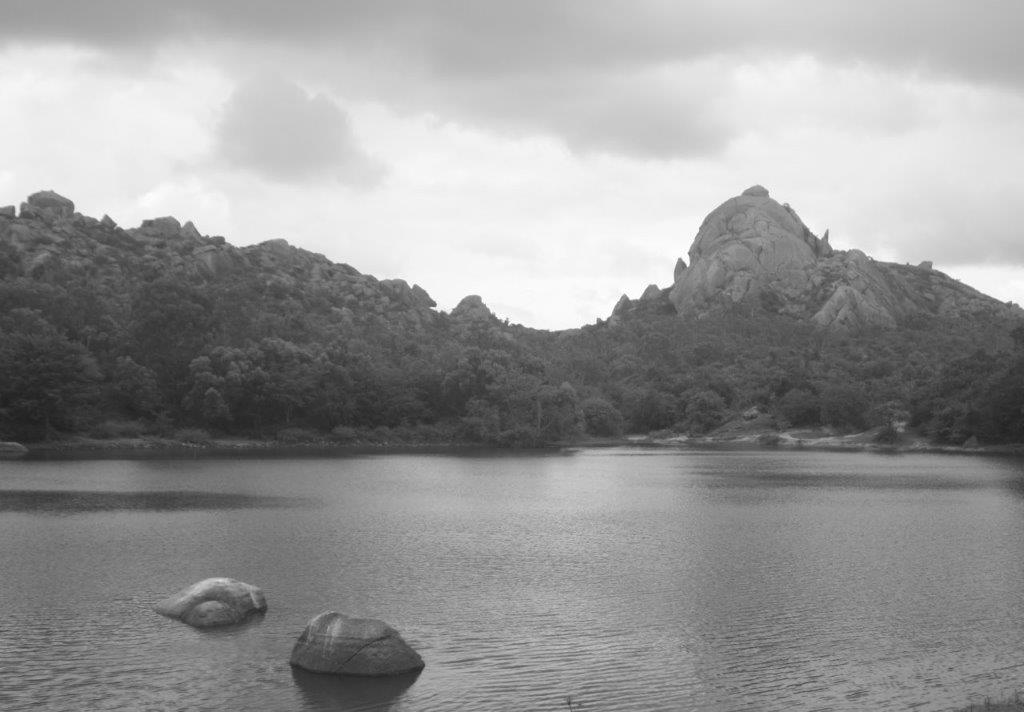
Chiaroscuro Green [Free Verse]

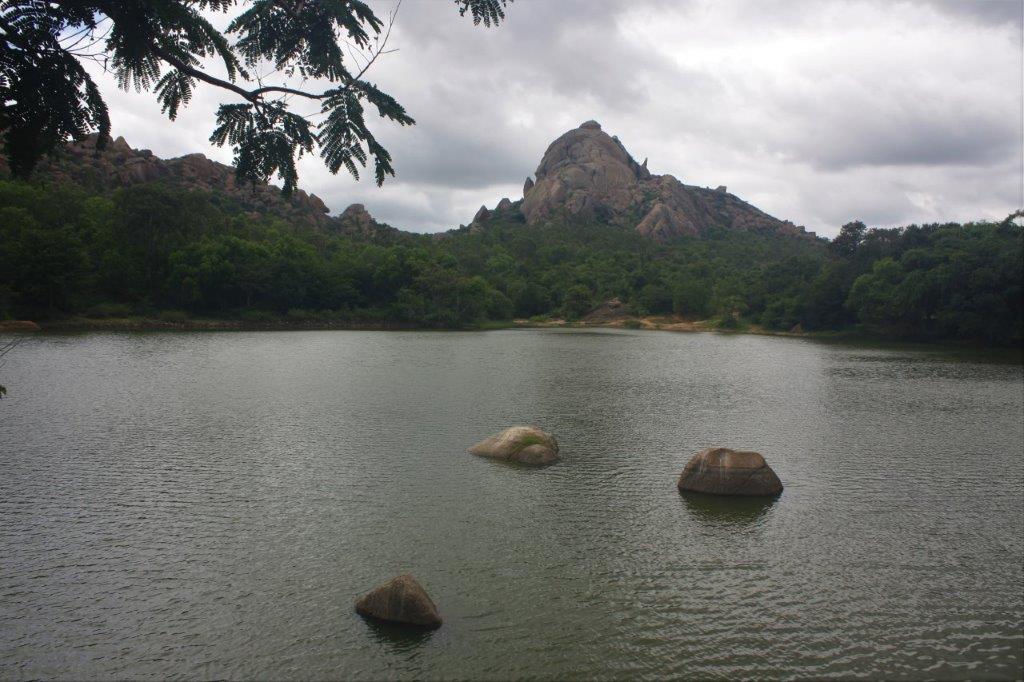
densely packed stands of pine,
the dark green 
insinuating black shadow

set against the verdant
grassy meadows
and shaggy scrubland

it makes the mountain 
look angular,
 with sharp edges
pounded into shape

the pine-writ shadows
steal depth,
suggesting absence,
creating the impression
of emptiness,

a false void...

or so it seems

BOOK REVIEW: Project MK-Ultra: Sex, Drugs, and the CIA, Vol. 1 by Brandon Beckner

Project MK-Ultra: Sex, Drugs and the CIAProject MK-Ultra: Sex, Drugs and the CIA by Stewart Kenneth Moore
My rating: 5 of 5 stars

Amazon.in Page

Out: October 19, 2021

This graphic novel mixes fiction with the historical events, and – in a bizarre inversion of the usual – the most outlandish parts of the story tend to be the history. It tells the story of the CIA’s ill-fated and highly illegal “experiments” with LSD, studies that involved dosing unwitting individuals on American soil. The fictionalized through line of the story involves a San Francisco journalist who stumbles onto the CIA’s illicit activities in 1971, and – even after being discredited – continues to pursue the story with the help of a whistleblower. The book includes a prologue that shows the accidental dosing of chemist Albert Hofmann in his laboratory, an event that marked the discovery of LSD. And it comes to an end showing Operation Midnight Climax, a sub-project of MK-Ultra that was among the most audacious plots because it involved setting up a brothel at which johns were involuntarily dosed with LSD and watched through 2-way mirrors as they did the deed [or freaked out, as the case may be.]


The art is interesting. A lot of the frames are psychedelic, reflecting the fact that one is seeing the world through the eyes of tripping individuals. Most of the rest are retro to give the feel of the time at hand. In most cases, that’s 1971 San Francisco, but some of the story jumps back to events in the 50’s and 60’s. At one point the frames reminded me of Archie and Jughead comics.


I enjoyed how the story was told, using the driven newbie journalist as protagonist. That said, the book may be annoying for individuals who are curious about what is fact and what is fiction. Footnotes are occasionally used to help in this regard, as well as to give information about period references used for authenticity.


I found this book compelling, but – having read a fair amount about MK-Ultra – I had some idea what was true and recognized the names of key figures. If you’re interested in the ridiculous annals of the CIA and aren’t bothered by the fact / fiction mixing, check it out.


View all my reviews

Long Shadows [Free Verse]

long autumn shadows stretch
across the pavement

and it might just be that
everything has stretched out

time and thought and hope
and love and life and mystique

all smeared across the day like
shadows smear across the ground

it's a slowing of the mundane
as the mood grows sadder

winter's melancholy is moving
on the wing 

DAILY PHOTO: The Halls of Hungarian Parliament

Taken in December of 2016 in Budapest

BOOK REVIEW: Three Japanese Buddhist Monks by Saigyō, Chōmei, and Kenkō

Three Japanese Buddhist MonksThree Japanese Buddhist Monks by Saigyō
My rating: 5 of 5 stars

Amazon.in Page

This book collects three essays composed between the twelfth and fourteenth centuries. They are in chronological order, but also in order of increasing length, i.e. Saigyō’s piece is a short excerpt, while Kenkō’s essay makes up the bulk of the book.


An excerpt from Saigyō’s Senjūshō tells the story of the monk’s meeting with a wise reclusive meditator on Mt. Utsu. Saigyō tries to talk his way into living / meditating with the hermit, but the sage convinces him that that wouldn’t be good for either of them. The monk goes away, planning on visiting the hermit on his return, but he wistfully tells us that he took another route.


“The Ten-Foot Hut” is about the benefits of a simple, minimalist existence. It discusses Impermanence, and takes the view that having more just means one has more to lose. A quote that offers insight into the monk’s thoughts is, “If you live in a cramped city area, you cannot escape disaster when a fire springs up nearby. If you live in some remote place, commuting to and fro is filled with problems, and you are in constant danger from thieves.” The author’s solution? Build a tiny cabin in the woods and – in the unlikely event it burns or gets robbed while one is away – what has one really lost?


The Kenkō essay makes up about eighty percent of the book. Its rambling discussion of life’s impermanence delves into morality, aesthetics, and Buddhist psychology. There are many profound bits of wisdom in this piece. Though it’s also a bit of a mixed bag in that some of the advice feels relevant and insightful, while some of it hasn’t aged / traveled well.


I enjoyed this book and found it thought-provoking. Some may be disappointed by finding how little of Saigyō’s writing is included (he being the author of greatest renown,) but I found each author had something valuable to offer.


View all my reviews

Blur [Haiku]

bright pink flowers,
staring 'til they blur -
my mind quiets

DAILY PHOTO: Chicago River

Taken in the summer of 2018

BOOK REVIEW: Stoicism: A Very Short Introduction by Brad Inwood

Stoicism: A Very Short IntroductionStoicism: A Very Short Introduction by Brad Inwood
My rating: 4 of 5 stars

Amazon.in Page

Inwood provides an overview Stoic philosophy as it’s discussed in a scholarly context. To distinguish Stoicism as scholars see it from how it’s viewed by those who practice it as a lifestyle, the author differentiates “large Stoicism” from “minimal stoicism.” The vast majority of books today deal only with minimal stoicism – in other words; they exclusively explore how to lead a good and virtuous life, i.e. ethics-centric Stoicism. Scholars, however, are also interested in the physics (/ metaphysics) and the logic of Stoicism.


There are several reasons for this difference in scope. First, Stoic ethics has aged much better than its other philosophical branches. Much of Stoic logic has been improved upon or superseded, and Stoic physics is [arguably] obsolete. This means that scholars studying Stoic physics and logic are more interested in those subjects as a stage of development or a piece of philosophical history than they are as contenders for understanding those subjects. Second, prominent Stoic philosophers with surviving writings (i.e. Epictetus, Marcus Aurelius, and Seneca) have inspired many people by discussing Stoicism as a way of life – not so much as a navel-gazing endeavor.


After discussing the origins of Stoicism, the major Stoic authors, and how Stoicism relates to other philosophical schools of the ancient world, the book presents a chapter each on physics, ethics, and logic. The last chapter investigates how Stoicism is viewed today and how it might maintain relevance despite challenges to some of its metaphysical and logical underpinnings.


Having read a number of books on Stoicism, I didn’t know whether this concise book would be of much benefit. However, by describing Stoicism’s broader context and how the deterioration of much of that context influences the philosophy’s relevance, the book offered plenty of food-for-thought. If you’re interested in this broader context, you may want to give this book a look.


View all my reviews