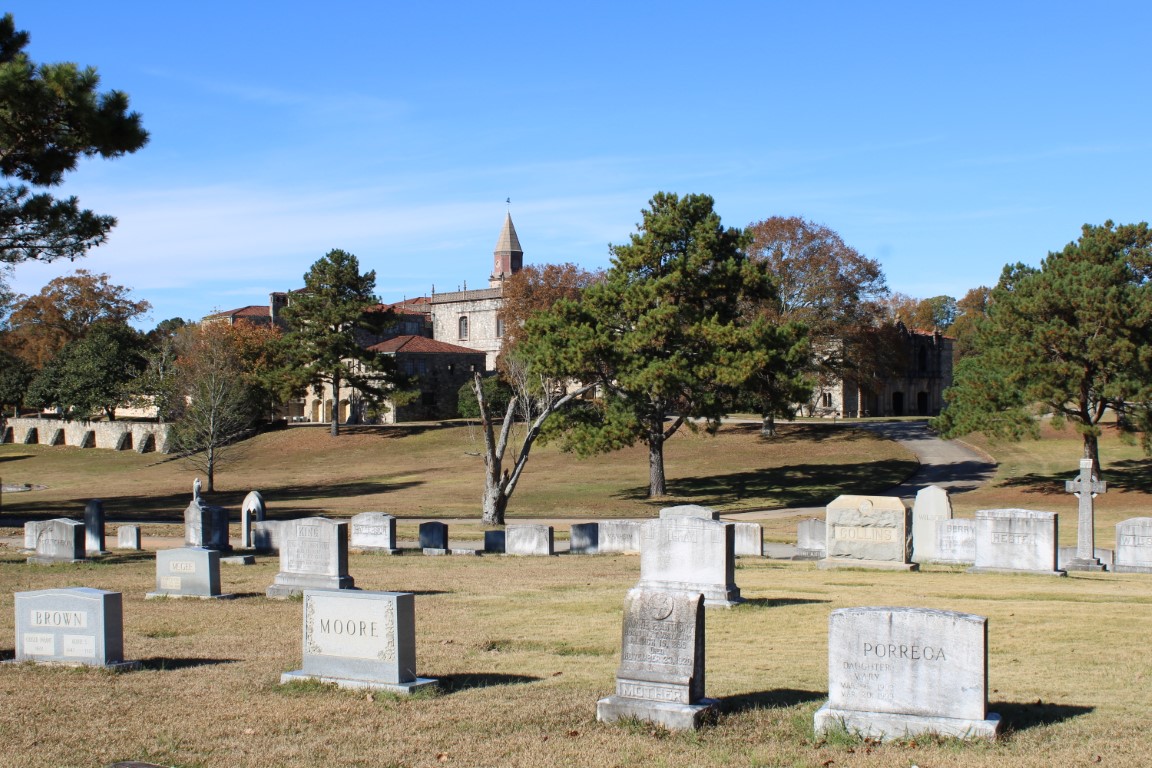
DAILY PHOTO: Hawa Mahal

Taken in March of 2020 in Jaipur

High Tree Hawk [Tanka]

the high tree hawk
scans for prey from lofty heights;
the rat scurries -
unaware of far-flung foes,
but side to wall all the same

BOOK REVIEW: The Beats: A Very Short Introduction by David Sterritt
The Beats: A Very Short IntroductionThe Beats: A Very Short Introduction by David Sterritt
My rating: 5 of 5 stars

Amazon.in Page

This is the most fascinating book I’ve read in the VSI (Very Short Introductions) series, and I read a lot of these books as a means to mainline the gist of various academic subjects. I should point out that the subject matter is more colorful than the average scholarly topic. The Beats were a 1950’s American countercultural literary movement that some may confuse with the hippies of the 60’s, but which was different in many ways. As is emphasized in the book, the Beats were more about revolutions from within than they were about upending society. In that sense, they might have more in common with the Transcendentalists (i.e. Emerson, Thoreau, etc.) than the hippies. That said, some Beats did flow pretty smoothly from one movement to the next, and were both interested in revolution from within and without – most notably, Allen Ginsberg.

The first thing that one finds compelling is the biographical sketches of key Beat figures (i.e. chapters 3 and 4 on Beat novelists and poets, respectively.) A disturbing number of Beats lived tragically short lives, owing to drugs, alcohol (e.g. Kerouac,) and sometimes just being around a violent contrarian. Even the Beats who lived long lives had their share of outlandishness, such as William Burroughs killing his wife, Joan Vollmer, in an ill-fate William Tell imitation. (Those who know Burroughs from later in his career may wonder why he even had a wife, being gay and all. That’s just one of the ways that hidden, latent, and repressed homosexuality plays out as tragedy in the Beat story of the socially conservative 1950’s.)

The second thing I found absorbing was the discussion of how these writers and poets made art. Like the aforementioned Transcendentalists, the Beats drew heavily on Eastern philosophies and psychologies – most notably Buddhism, and Zen, in particular. Beat authors not only looked to the East for subject matter and aesthetics, but also to help them achieve the spontaneity and nowness associated with Zen. However, this wasn’t wholesale conversion to Buddhism, it remained a uniquely American strain, and also sought to draw inspiration from that most American of arts, Jazz.

If you’re interested in the Beats or their approach to writing, I’d highly recommend reading this book.


View all my reviews

Visionary Poets [Free Verse]

Blake had visions of angels
&
Ginsberg had visions of Blake

I'm sure some 
angelheaded post-Hippie hipster 
has had, or will have had,
 visions of Ginsberg,

But who are Blake's angels hallucinating?

Maybe the angels have no eyes
and have
visionless visions 
of visionary poets?
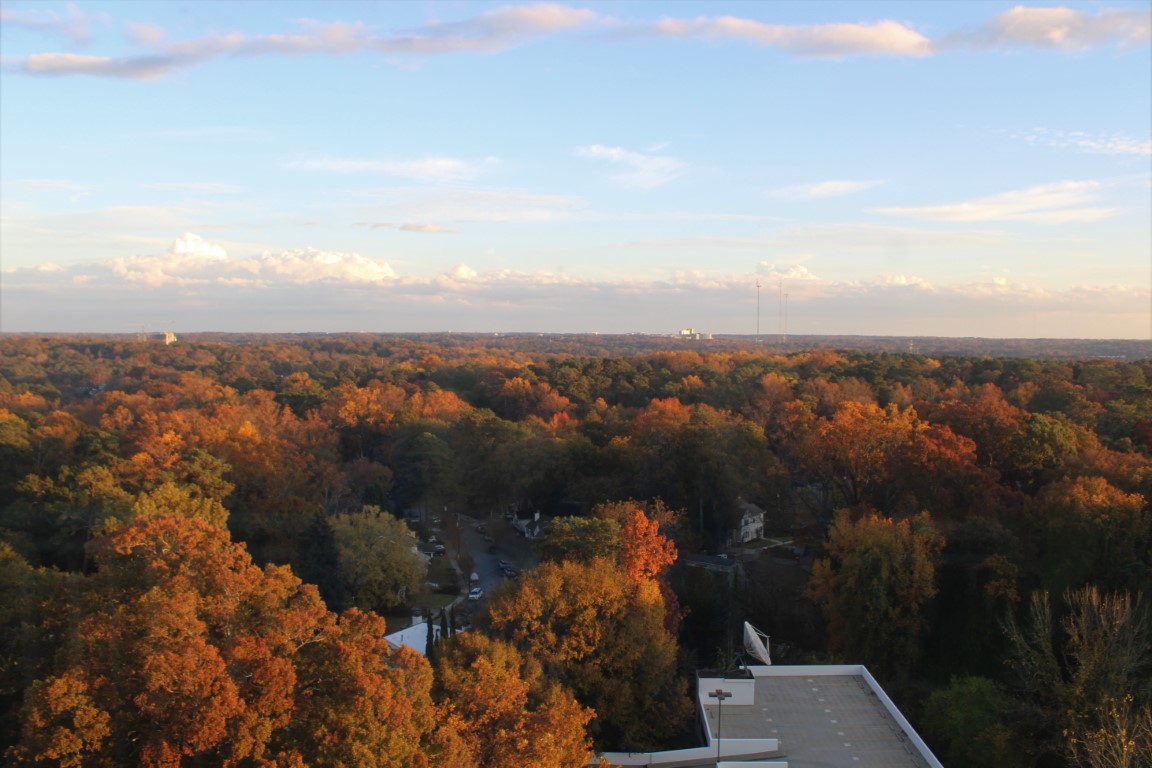
DAILY PHOTO: Warm Light of the Setting Sun on the Autumn Treetops

Taken in the Fall of 2021 in Atlanta

Cemetery Walk [Free Verse]

And in the end,
the dead are still
and the graveyard's quiet
is not so bad.

The monuments weather;
in due time,
letters become less crisp
&
dates become debatable.

A clean read means
there maybe someone 
left to mourn.

And fresh flowers mean that someone
has tracked their melancholy 
through the place,
and the air feels heavier,
and my mind feels heavier.

And I read names:
familiar & not,
popular & not.

I read names to distract me
from thoughts of my own dead --
to avoid tracking my own melancholy
through the place.

For, you see,
I've brought no flowers.
In Medias Res [Free Verse]

Journeys start with a cattle-prod jolt 
& a kick in the soul --
not at an airport,
or a ferry dock,
or a taxi stand,
or at the curb.

By the time you've gotten that far,
you're already traveling.

By the time you've "decided" to go,
you're already traveling. 

Travel begins earlier,
if in the dark,
because travel is not a dream,
&
only dreams start 
in the middle of nonsense.

Real life flows down 
a continuous and unbroken
stream of nonsense, 
drifting at a rate slow enough 
for your brain to make a movie of
rationalizations,
so that your brain can tell you: 
that you're in control,
that you know what's going on,
that you know what will happen next,
&
assorted and sundry bullshit like that. 

Chicory Dance [Haiku]

chicory -
its little blue flowers sway,
 dancing with stems

DAILY PHOTO: Elephants & Cattle Egrets

Taken in May of 2017 in Amboseli National Park, Kenya

BOOK REVIEW: The Transcendentalist by Ralph Waldo Emerson

The TranscendentalistThe Transcendentalist by Ralph Waldo Emerson
My rating: 5 of 5 stars

Amazon.in Page

Free Online: Emersoncentral.com

In this short essay (about ten pages,) Emerson lays out an argument for Idealism over Materialism, and then contends that it’s reasonable to excuse oneself from the economic and civic aspects of society in favor of a simple life of introspection. [e.g. As Thoreau did in his years at Walden Pond.]

Emerson opens by suggesting that Transcendentalism is just Idealism by a different name. Idealism being a philosophical stance which puts consciousness at the fore while proposing that there is something beyond [that transcends] our experience of sensory information. The arguments put forth in favor of Idealism include the fact that sensory illusions exist and the Kantian critique of Locke’s view that there’s no more to the intellect than that which is or was sensory experience; Kant argues that there’s intuition. Kant’s influence is considerable, and Emerson explains that even the term “Transcendentalism” is derived from Kant’s use of the term “transcendental.”

The latter part of the essay echoes Emerson’s masterwork, the essay “Self-Reliance.” It proposes that it’s perfectly laudable to take advantage of the greatest gift one has, one’s consciousness, to introspect and indulge one’s need to better understand.

I may have mixed views on Emerson’s ideas, but one can’t say he doesn’t use language and reason and passion to make compelling claims. I found this brief essay to be both thought-provoking and inspirational, and I’d highly recommend it.


View all my reviews