BOOKS: “A Dome of Many-Coloured Glass” by Amy Lowell

A Dome Of Many Colored GlassA Dome Of Many Colored Glass by Amy Lowell
My rating: 5 of 5 stars

Project Gutenberg Page

This was Lowell’s first published collection (1912,) and my 5-stars notwithstanding, it is not everyone’s cup of tea. I think I understand why this is. If you read some of Lowell’s more popular and highly anthologized poems, you might find that this collection is unlike them in several ways. Many of those popular poems are highly imagist, emulate East Asian sparseness, and are free verse. These poems are by and large metered and rhymed verse and I would not be the first to say that they often feel conventional and pedestrian. As I was reading the final section, “Verses for Children,” I figured out what other key feature of Lowell’s poetry was largely missing from the lyric poetry and sonnets that preceded these Children’s poems — playfulness. [Fortunately, it’s on display in the kid’s poems.]
.
With all that said, there are some spectacularly evocative images presented within these poems. I particularly enjoyed poems like: “New York at Night” and “A Japanese Wood-Carving.” As I don’t have the aversion to metered verse that many poetry readers seem to have today, I wasn’t as dismayed by the collection as some readers seem to be. Though I will admit that the collection doesn’t just play it safe with form, it also infects the tone and content of the poems.

Still, I found the collection readable and pleasant reading. (But maybe this is because I like a good scavenger hunt for golden nuggets of beautiful verse.)

View all my reviews

DAILY PHOTO: Gergeti Trinity Church, Stepantsminda

Image

“Excelsior” by Henry Wadsworth Longfellow [w/ Audio]

The shades of night were falling fast,
As though an Alpine village passed
A youth, who bore, 'mid snow and ice,
A banner with the strange device,
Excelsior!

His brow was sad; his eye beneath,
Flashed like a falchion from its sheath,
And like a silver clarion rung
The accents of that unknown tongue,
Excelsior!

In happy homes he saw the light
Of household fires gleam warm and bright;
Above, the spectral glaciers shone,
And from his lips escaped the groan,
Excelsior!

"Try not the Pass!" the old man said;
"Dark lowers the tempest overhead,
The roaring torrent is deep and wide!"
And loud that clarion voice replied,
Excelsior!

"Oh stay," the maiden said, "and rest
Thy weary head upon this breast!"
A tear stood in his bright blue eye,
But still he answered, with a sigh,
Excelsior!

"Beware the pine-tree's withered branch!
Beware the awful avalanche!"
This was the peasant's last Good-night,
A voice replied, far up the height,
Excelsior!

At break of day, as heavenward
The pious monks of Saint Bernard
Uttered the oft-repeated prayer,
A voice cried through the startled air,
Excelsior!

A traveller, by the faithful hound,
Half-buried in the snow was found,
Still grasping in his hand of ice
That banner with the strange device,
Excelsior!

There in the twilight cold and gray,
Lifeless, but beautiful, he lay,
And from the sky, serene and far,
A voice fell like a falling star,
Excelsior!

FIVE WISE LINES [October 2024]

If any thing is sacred the human body is sacred

walt whitman; Leaves of grass; “I sing the body electric”

Strong in their softness are the sprays of the wisteria creeper;
The pine in its hardness is broken by the weak snow.

Saying of Master Jukyo as Translated by Trevor Leggett in Zen and the Ways

When there is mutual ignorance, confidence indeed is king.

Trevor leggett; Zen and the Ways

Do not see the gate and think it is the house. The house is something which is reached by passing through and going beyond the gate.

YAgyu Munenori’s Art of War (As translated by trevor leggett in Zen and the ways)

Students of the Ways must see clearly that in an untrained man the intellect is like a barrister. It argues clearly and logically, but the aim is not truth, but to reach a predetermined conclusion.

Trevor Leggett; Zen and the Ways

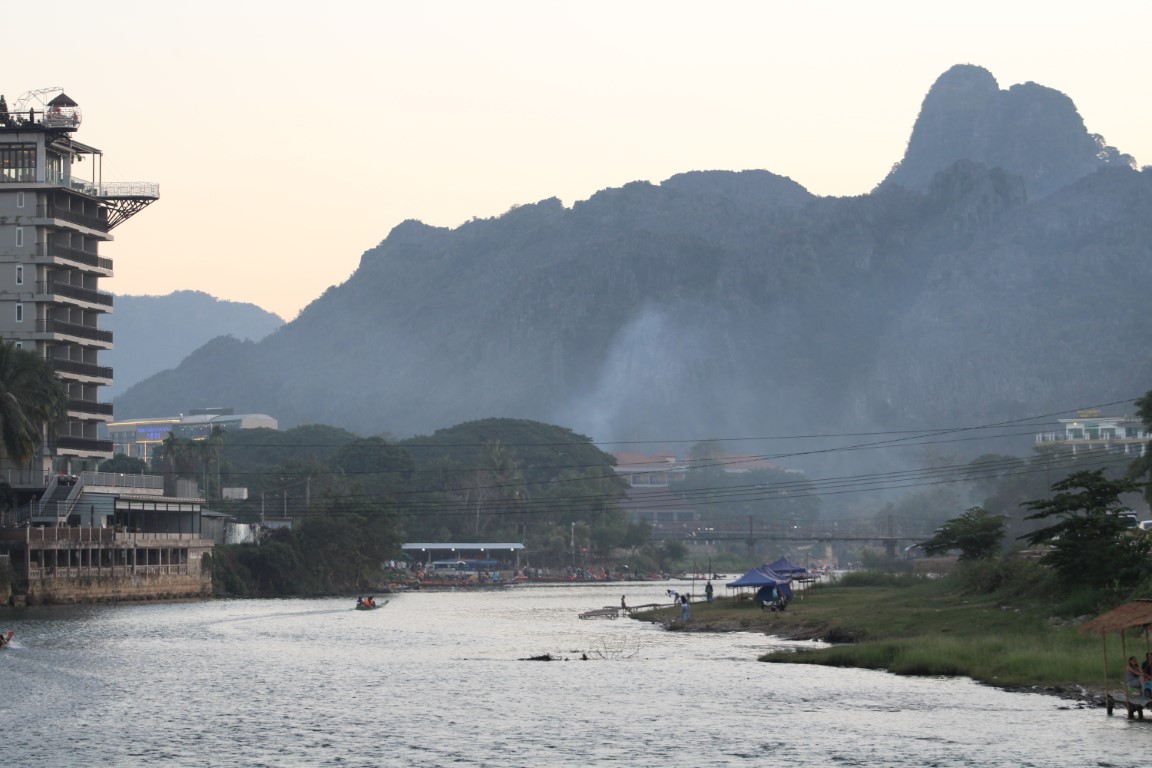
DAILY PHOTO: Kura River Scenes, Tbilisi

BOOKS: “Zen and the Ways” by Trevor Leggett

Zen and the WaysZen and the Ways by Trevor Leggett
My rating: 5 of 5 stars

Open Library Page

This book is the most densely populated with interesting insights that I’ve read in some time. It’s not new, being first published in 1978, but it takes a variety of approaches to give the reader a better understanding of Zen and the application of Zen mind to martial arts and other activities that found benefit in stillness and clarity. By “the Ways,” Leggett is referring to those arts and activities benefiting from Zen, which include: tea ceremony, flower arranging, painting, poetry writing, and all manner of martial arts. [Often represented by ending “do” in Japanese.] (The latter are dealt with most extensively, but not exclusively.)

The book is arranged in six parts, the first half of which focus mostly upon Zen Buddhism and, particularly, the Kamakura school that found a huge following among warriors and other artists. Those first three chapters take a big to small approach, examining Zen from ever finer levels of detail, starting with an introduction to Zen Buddhism broadly, moving on to the Kamakura developments, and then finally focusing on one particular practice — that of Koans (stories that present riddles which the student can only “solve” in a non-intellectual fashion.)

The second half of the book investigates the ways Zen has been applied to various arts. This is where one sees the varied approaches used to explore the confluence of Zen and artistry. Part Four consists of a series of essays explaining concepts such as ri (universal truth) and ji (formal technique,) ki (vital energy,) and isshin (single-heartedness) / zanshin (lingering awareness.) Part Five consists of historic martial arts scrolls and excerpts, including Yagyu Munenori’s Art of War and Chozan Shisai’s “Tengu’s Guide to the Martial Arts.” The final part consists of stories that illustrate crucial ideas in a readable and memorable fashion.

I was extremely pleased to stumble across a copy of this book in a second-hand bookshop. I’d long ago heard a fascinating story about murders in Edo era Japan of high-level martial artists, all killed in the same manner. They never found the killer, but they figured out how the murders were done easily enough. The killer exploited his knowledge of that school’s techniques to lay a fake that exploited their own technique to create an opening. It’s a cautionary tale that drilling muscle memory is not the end-all be-all of martial arts, and that it can create its own problems. At any rate, I’d never been able to find the source… until now. There is a detailed discussion of it in this book.

For readers interested in how state of mind influences artistic performance, I’d highly recommend this book.

View all my reviews

PROMPT: Hardest

Daily writing prompt
What was the hardest personal goal you’ve set for yourself?

To be an ever-better version of myself. It is relentless, requires engaging fears and weaknesses, and it is worth it.

“Broadminded” [Poetry Style #23 (旷达)] by Sikong Tu [w/ Audio]

One may live a century --
Short span though it may be:
Joys are bitterly brief
And sorrows are many.
You may take a wine jug
On your wisteria rounds:
See flowers grow to the eves
As sparse rains wet the grounds.
And when the wine is gone,
One strolls with cane and croons.
We become wizened with age;
South Mount, fair through countless moons.

NOTE: The late Tang Dynasty poet, Sikong Tu (a.k.a. Ssŭ-k‘ung T‘u,) wrote an ars poetica entitled Twenty-Four Styles of Poetry (二十四诗品.) It presents twenty-four poems that are each in a different tone, reflecting varied concepts from Taoist philosophy and aesthetics. Above is a crude translation of the twenty-third of the twenty-four poems. This poem’s Chinese title is 旷达, which has been translated as: “Illumed” [Giles,] “Big-hearted and Expansive [Barnstone and Ping,] “Expansive,” and “Open-minded.”

Rainy Autumn [Haiku]

the leaves are gone,
but the green of moss remains:
rainy autumn days.

DAILY PHOTO: Autumn Glade