BOOK: “Zatanna” by Paul Dini, et. al.

ZatannaZatanna by Paul Dini
My rating: 4 of 5 stars

Publisher Site — DC Comics

Zatanna is a magician, both in the sense of being a professional stage illusionist and in the sense of making real magic offstage. The stories contained herein are about her heroic use of the latter magic, though they are often set to the backdrop of her professional life, i.e. clubs and other entertainment venues. Daughter to a deceased legend of stage prestidigitation, The Great Zatara, Zatanna makes magic through verbal spells.
 
This sixteen-issue run consists mostly of standalone stories. There are a couple story arcs that span three or four issues, but for the most part the stories are wrapped up within an issue. Some of these stories dedicate panels to what’s happening with Zatanna’s long-running nemesis, Brother Night, even when the main story is unrelated to him (presumably so as to keep the readers ready to receive some larger arc.)

The stories are good, light-hearted escapism — even – perhaps – when they don’t mean to be. By that I mean that the subject matter is often dark, dealing in demons and nightmares personified, but Zatanna is usually so overpowered compared to her enemies and the book attempts to maintain a quippy comedic effect, and so the reader never feels their heroine is at risk of true danger. That said, the authors do put Zatanna in dire situations, and so the stories often do hook one into a state of wonder about how she will escape some awful fate (even while not doubting for an instant that she will.) Zatanna does have weaknesses and there is some attempt to suggest that magic has risks and consequences (otherwise, the stories would devolve into lukewarm absurdism rather quickly.)

I enjoyed this run. The art is crisp and imaginative, and the stories are often clever — if rarely taut.

View all my reviews

“Water Dragon Chant” by Ge Changgeng [w/ Audio]

A screen of cloud veils the mountain,
And cold monkeys squawk from green pines.
Fungi abound, but seeds dormant,
Searching for sprouts -- alas, in vain.
Somewhere near there's a fairy cave
Where flutes and lutes are often played.
Its Way is overgrown with moss,
And the old stone gate yields no clue.
Where have all the fairy folk gone?

Looking back, there's an endless plain
Where flowers fall like streaming tears.
It's easy to grow old; Where is
the messenger to bring some news?
To tell who the Golden Phoenix charms?
Waking from a deep, restless dream
What remains are blooms on the stream.

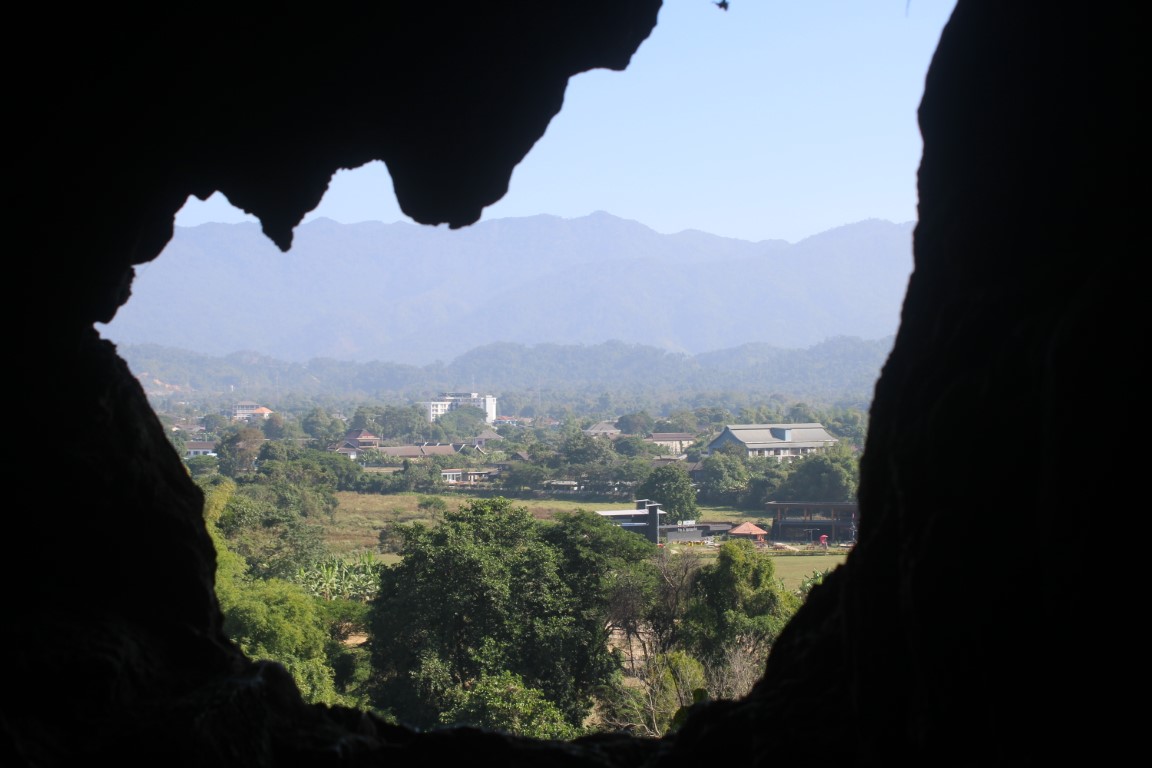
Cave-Framed [Senryū]

my cave view:
fields and buildings;
what did cavemen see?

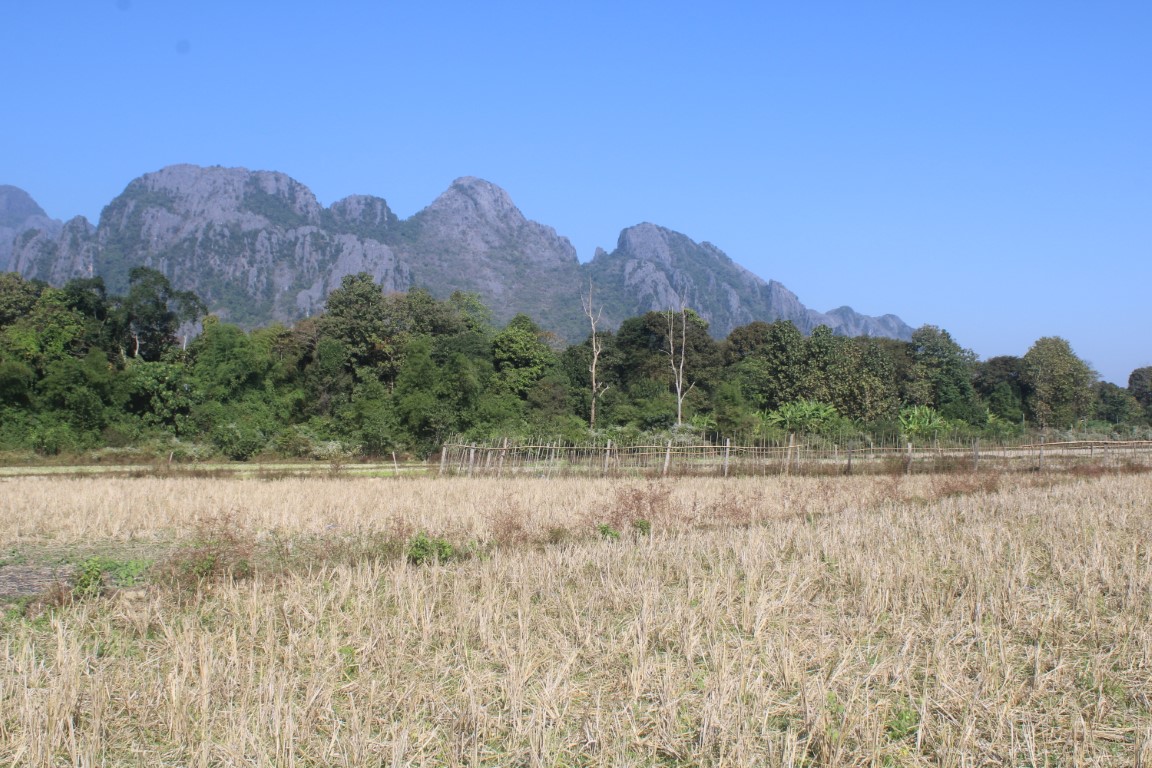
Land at Rest [Haiku]

the land rests
after the harvest;
birds feed on remnants.

DAILY PHOTO: Nam Song Afternoon

BOOKS: “Original Tao” by Harold D. Roth

Original Tao: Inward Training (Nei-yeh) and the Foundations of Taoist Mysticism (Translations from the Asian Classics)Original Tao: Inward Training (Nei-yeh) and the Foundations of Taoist Mysticism by Harold D. Roth
My rating: 5 of 5 stars

Publisher site – Columbia University Press

This book is built around a translation of an old Taoist manual called “Inward Training” (i.e. 内业,) and the book serves not only to elaborate the meaning of the twenty-six poems that make up the manual, but also to put this work in a context with respect to its place in early Taoist mysticism — which raises further questions as to what constitutes early Taoism and early Taoist mysticism. (Just as the earliest followers of Jesus didn’t think of themselves as “Christians” – at least not as we understand that term – it’s an open question as to when people started to think of themselves as Taoists and how that start relates to when people began holding a set of proto-beliefs that formed the basis of the school(s) of philosophy.)

“Inward Training” presents breathwork and meditational exercises that Roth calls “inner cultivation” — or what some have called “inner alchemy.” The book does contain the entire manual both in Traditional Chinese and an English translation, as well as a much more extensive elaboration of the teachings of the manual. The latter is necessary because, like many old manuals, sparse description, archaic language, and assumptions about common knowledge du jour make it difficult for the layman to get any depth of understanding from the manual, itself.

This is a scholarly work, which means that its readability isn’t the highest and it does dive into matters that will be arcana for non-expert readers. That said, particularly as works of academic philosophy go, its readability isn’t bad. The book is heavily annotated and offers and extensive bibliography.

If you are interested in Taoist practices of breath, meditation, and alignment, this book is well worth investigating.

View all my reviews

“A Divine Image” by William Blake [w/ Audio]

Cruelty has a Human Heart,
And Jealousy a Human Face;
Terror the Human Form Divine,
And Secrecy the Human Dress.

The Human Dress is forged Iron,
The Human Form a fiery Forge,
The Human Face a Furnace seal'd,
The Human Heart its hungry Gorge.

Bone Cold [Haiku]

milky moonlight
pulls heat from bone:
winter night.

Hilltop Temple [Haiku]

hilltop temple
comes into view
to a crow CAW!

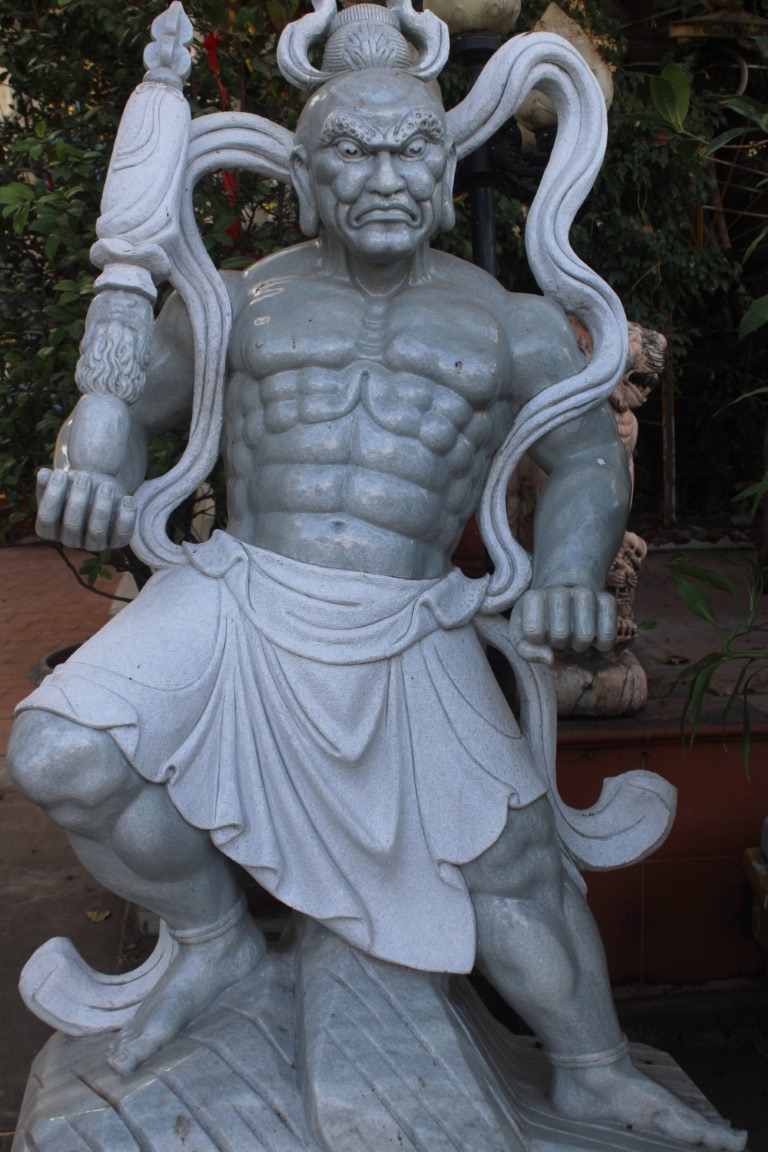
DAILY PHOTO: Wat Phramahathat Rajbovoravihane, Luang Prabang