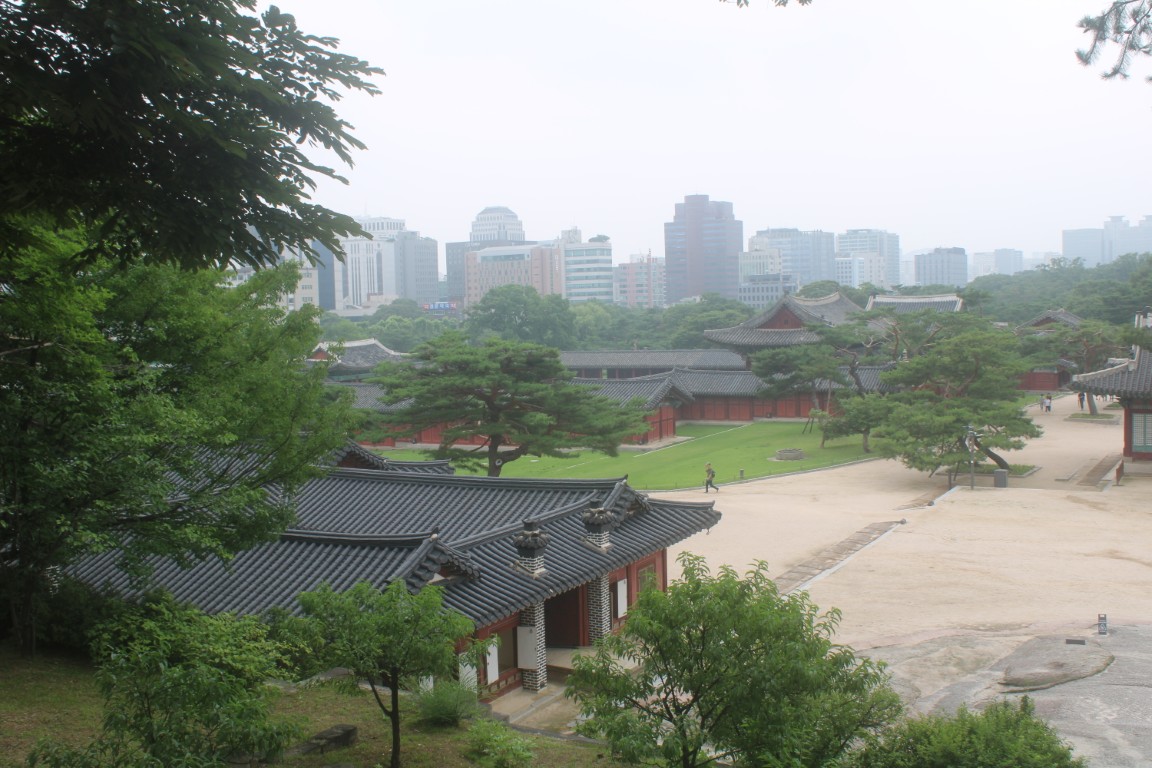
DAILY PHOTO: Gangtian Temple, Hualien

PROMPT: Hated Question

Daily writing prompt
What is one question you hate to be asked? Explain.

Being a traveler who lives abroad, the answer is simple: “Where are you from?”

As a traveler, I can’t grasp tribal / jingoistic people’s obsession with where one fell out of one’s mom, and it always feels a bit xenophobic — as though, noticing one’s foreignness, there is a rush to determine whether one is one of the tolerable foreigners or one of the really bad ones.

As an introvert, the question offends my preference to be talked to by people who have something to say, and to be left alone by people who are just playing out social programming with the objective of breaking silence that they find objectionable (but which I, as a rule, find delightful.) (Even being highly introverted, I can converse for hours with someone who has something to say on a topic that is neither themselves nor me — i.e. I love ideas but hate small talk and interaction for the sake of interaction.)

Plus, it just gets annoying being asked the same question sixty times a day when I’m in more remote parts — a question, the answer to which will be forgotten in three minutes and is merely sound for sound’s sake. In the unlikely event that one hopes to have an actual conversation with me, one must start with something that is not your culture’s default socially programmed question. One must get to at least the second most commonly asked question, a question varies from person to person (in my case, it’s: “Why are you such an asshole?”)

“Night Mooring” by Zhang Ji [w/ Audio]

The moon sets; crows caw below frosty skies.
Boats, moored to maples -- lamps glow like cat eyes.
Cold Mountain Temple, outside Gusu's bounds:
The midnight bell cuts off soft water sounds.

Cold Lilies [Haiku]

water lilies
on a cold, gray day:
half-open, unkempt.

DAILY PHOTO: Colorful Lanterns of Taipei

BOOK: “The Short Story: A Very Short Introduction” by Andrew Kahn

The Short Story: A Very Short Introduction (Very Short Introductions)The Short Story: A Very Short Introduction by Andrew Kahn
My rating: 4 of 5 stars

Publisher Site – OUP

This guide provides an overview of the short story, particularly literary short stories (though it’s not without mention of genre fiction.) The book is well organized and offers some fascinating food for thought, particularly regarding the psychology of character and the distinctions between short stories and novels. (The former are not to be thought of as pared down versions of the latter.)

I will say that, for a concise introduction, the book does occasionally get into the weeds on specific issues, potentially losing the non-specialist reader who this series is ostensibly geared toward.

I found the book’s organization to be logical and productive to its task. After an introduction that explores the advent and history of the short story, most of the chapters deal with structural or compositional aspects of story, including: openings, voice, setting, plot, irony / reversal, and endings. One chapter (Ch. 6) stands out as a bit different in that it zooms in on Chekhov and his influence on the short story as we’ve come to know it. While this could be said to demonstrate the author’s tendency to zoom in the specificity more than is usual for such a guide, I did find the chapter interesting and enlightening.

If one is interested in the short story (as a reader, writer, or both) one will find this guide worth one’s attention.

View all my reviews

“Daniel Boone” by Stephen Vincent Benét [w/ Audio]

When Daniel Boone goes by, at night,
The phantom deer arise
And all is lost, wild America
Is burning in their eyes.

PROMPT: Failure

Daily writing prompt
How has a failure, or apparent failure, set you up for later success?

If one fails and one tries again, one will make course corrections. Keep repeating that cycle, and one is bound to home in on success.

Psychologically, I think juggling is a fantastic skill to practice because one must fail a million times and keep going. Furthermore, one must learn to choose failure over a spastic success (and condition that behavior in on the fly.) By this I mean, one must learn to let the ball drop rather than lunging to make a frantic catch, because if you are always making wild reaches, you’ll never achieve a smooth, natural rhythm. In other words, a catch that keeps the ball in the air for one or two more throws is not truly a success if it trains a wobbly, unsustainable movement pattern. More generally, one must redefine what constitutes success or failure at a fundamental level.

Riderless [Senryū]

riderless horses
race across the pasture:
finish line unknown

Hawkweed [Haiku]

Hawkweed blooms
beside a creek that sparkles
with summer sunlight.