BOOKS: “Southeast Asia: A Very Short Introduction” by James R. Rush

Southeast Asia: A Very Short Introduction (Very Short Introductions)Southeast Asia: A Very Short Introduction by James R. Rush
My rating: 4 of 5 stars

Publisher Site

I’ve been to most of the eleven countries of Southeast Asia, but still my questions are many. This short guide answered some of them. The book takes a largely historical approach, breaking the timeline into periods during which these countries were pre-nation-state kingdoms, then colonies, and then independent countries. While the guide is written by a historian and is organized by governance (i.e. who won the wars,) it does not solely address politics and regimes.

The guide also explores subjects such as religion. This was fortunate for me because a lot of my questions involve this topic. Why is the northern part of the region mostly Buddhist while the southern part is mostly Muslim? Why did Hinduism and other Indian religions (not inclusive of Buddhism, which virtually died out within India) almost entirely give way to other religions in this area, except for spotty exceptions (most notably Bali?) Incidentally, the former question is answered more than the latter, which makes sense as this is small book for a relatively large area, but more importantly for a long history. Southeast Asia has been a strategically and economically important place for centuries.

As a traveler, I found this book well worth reading as a way to gain insight into the region. It doesn’t dive deep into cultural questions (except a bit into religion,) and so there is much more to learn from other books. It does explore who governed these countries and how, and the last chapter brings the question up to date — reflecting on the political and economic changes in the last couple decades. If you’re curious to know more about Southeast Asia, in a way that doesn’t get too deep in the minutiae, this book is worth checking out.


View all my reviews

BOOKS: “Meschugge” by Benni Bodker

Meschugge: Le Labyrinthe du fouMeschugge: Le Labyrinthe du fou by Benni Bødker
My rating: 4 of 5 stars

Seller Site

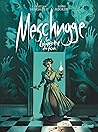
This graphic novel reminded me of “The Alienist” TV series (based — itself — on a popular novel,) particularly the Sara Howard (Dakota Fanning) arc in which a young, upper-class woman becomes a detective in the (turn of the 20th century) world which sees women as too delicate to be subjected to such horrors.

While the lead in this book bears striking resemblance to Sara Howard and the settings are quite similar, the book also features major differences that make it its own unique story. First of all, Kabbalistic Judaism plays a central role in the crimes in this book. Secondly, this story creates the impression that the supernatural might be involved. I don’t believe it is unambiguously supernatural, one could explain things in a rational way as well, but “The Alienist” takes a clear rationalist approach.

I enjoyed the story, and it kept me reading. There were a couple points in the story that didn’t make sense to me, particularly an occurrence in which a character is being pursued and seems to be in a dire situation, and then suddenly is free. This mechanism is sometimes used with characters who’ve been established as being extremely capable individuals because it is as if to say, “I don’t even need to show you this person getting out of this spot because it’s not a big enough trouble to fuss about,” (it’s also often done in poor TV and movies for budget reasons,) but this character is not a master escape artist (being out of her depths is part of what creates such great tension throughout the story.)

An exciting premise and interesting characters, but with a few rough edges in plotting.

View all my reviews

BOOKS: “The Story of Malacca” by Allein G. Moore

Sultans and Spices, Guns and Greed, Race and Religion: The Story of MalaccaSultans and Spices, Guns and Greed, Race and Religion: The Story of Malacca by Allein G. Moore
My rating: 4 of 5 stars

Publisher Website

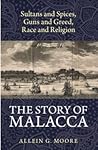
With an upcoming trip to Malacca (a.k.a. Melaka) planned, I decided it would be good to learn something about the city of Malacca besides that it shares a name with the pirate-infested strait that it sits beside. Fortunately, given the tremendous historical import of this town, there were at least a few English-language resources available. I settled on this history and was pleased with my choice. [It’s definitely the most up-to-date work in English that I found.]

The book covers the history of Malacca from its earliest human occupants through to the COVID pandemic [during which it was published.] (Actually, the last chapter is a wishful forecast of what the author hopes for the near-term future of Malacca (i.e. over the next decade or so.)) The core chapters are chronologically oriented and sorted by the ruler of the day (of which Malacca had an impressive sequence: Indian, Chinese, Portuguese, Dutch, British, Japanese, British (again,) and then Independence and a Malay-led government of its own.) Interspersed with these chronological chapters are a few topical ones, beside the aforementioned chapter about the future, these include chapters on the mythology of the city and one of biographical sketches of prominent historical figures.

I found this book to be educational and full of fascinating tidbits. While I appreciated that it brings the reader up to date, the last couple chapters do sometimes veer from “just-the-facts” description of events into a combination city planning rant / wish-list (Pollyanna, in places) regarding the state of the city and its future. I did like that the book touched upon cultural dimensions, from language to martial arts, in addition to a telling of historical events. The book is well worth reading for travelers and / or history buffs.

View all my reviews

BOOKS: “Sweet Tooth, Vol. 3: Animal Armies” by Jeff Lemire

Sweet Tooth, Vol. 3: Animal ArmiesSweet Tooth, Vol. 3: Animal Armies by Jeff Lemire
My rating: 5 of 5 stars

Publisher Site – DC Comics

This is an action-packed entry in Sweet Tooth saga. It’s also a very satisfying story arc for a serialized comic book such as this. We see important events in the character development of Jepperd as well as a secondary character, Johnny (brother to Abbot — the lead antagonist.) Dr. Singh gains some important information as well, though that largely serves to advance the story and extend the mystery, rather than to conclude this segment of the story. That said, this episode is brought to a solid conclusion while leaving one waiting to see what happens next.

I’d highly recommend this series for comic book readers.

View all my reviews

“American Vampire, Vol. 4” by Scott Snyder

American Vampire, Vol. 4American Vampire, Vol. 4 by Scott Snyder
My rating: 5 of 5 stars

Publisher’s Site

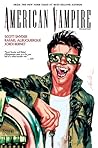
The American Vampire saga enters the 1950’s, at least with two of the three storylines presented in this volume. The central arc takes place in Glendale, California in 1954 and features Fonzi-like vampire hunter, Travis Kidd, against the series’ central villain — Skinner Sweat. But the main story is bookended by two shorter stories. The opener is a cowboys v. indians tale, set in New Mexico Territory in 1871, that provides backstory on Skinner Sweat and James Book. The closing story is also set in 1954 but takes place in Alabama and features a black vampire hunter in the Deep South.

I found all three stories to be compelling and have greatly enjoyed this series.

View all my reviews

BOOKS: “Atlas of Paranormal Places” by Evelyn Hollow

Atlas of Paranormal Places: A Journey to the World's Most Supernatural PlacesAtlas of Paranormal Places: A Journey to the World’s Most Supernatural Places by Evelyn Hollow
My rating: 4 of 5 stars

Publisher Site

While I’m not much of a believer in the paranormal, I am always curious to learn more about the beliefs, folklore, and backstories of various destinations. Such information, even when immensely interesting, often remains hidden from the casual traveler. For example, had a not read this book I wouldn’t have known that Siquijor Island in the Philippines (a place I’ve been to) had a thriving witch market. I read this book not only because of an interest relevant to places I’ve been and also places I intend to go (e.g. Bhangarh Fort,) but — most importantly — to learn about new and fascinating locations that were not yet on my radar. The book did not disappoint.

The almost forty entries in this atlas are divided among six categories (ghosts, witches, sacred, mythic, nature, and cryptid/creatures.) It is a broad and varied selection of locations from around the world and will most certainly offer even vagabonds some new sites for their “to travel” lists.

I appreciated the thoughtfulness of this book. I noticed this with the discussion of Báthori Erzsébet, a Hungarian noblewoman who was accused of mass murder and – literal – blood baths. Many paranormal authors, either out of an intense need to believe strange things or because of a desire to sell more books, would ignore the extensive evidence that Báthori was framed for purely political motives. Hollow presents said evidence despite the fact that it kind of undercuts her argument that Cachtice Castle is a locus of supernatural happenings.

I found this book compelling, well-written, and illustrated with fine maps and photographs. If you’re interested in the folklore and ghost stories of various locations, I’d check it out.


View all my reviews

BOOKS: “A New Interpretation of Chinese Taoist Philosophy” by You-Sheng Li

A New Interpretation of Chinese Taoist PhilosophyA New Interpretation of Chinese Taoist Philosophy by You-Sheng Li
My rating: 4 of 5 stars

Google Books Page

By the author’s admission (and the title, for that matter) this is not so much an overview of Taoist philosophy as a philosophical rendering that attempts to not only be consistent with the Taoist tradition, but also with our present-day understanding of the world. This fact has positive and negative ramifications for readers, and results in a book that will be more useful for the purposes of some readers than others.

The biggest positive is that this interpretation of Taoism is consistent with a modern rationalist worldview. Taoism is a huge system of thought and includes a lot of magical, supernatural, and astrological thinking. In short, a book on Taoist thought could contain a great deal of woo woo, but this one does not. It has not much to say on demons, deities, magic, alchemy (in the narrow, original meaning,) etc., and to the degree these subjects do crop up they do so in a way that is not arcane and doesn’t insist on belief in unsupported ideas. I think this makes this book important, as it fills a niche. Most of the central texts of Taoism were written in times that were different from our own and in which magic and the supernatural were taken for granted. So, if you want a text that draws on major ideas of Taoism but presents them in a way that is consistent with science, you may want to give this book a look.

The biggest negative is that when the book is not explicitly describing the teachings of historical figures, one doesn’t necessarily have a good way of knowing how much Li’s ideas are or aren’t consistent with Taoist tradition. There are extended discussions of ideas such as evolutionary biology and existentialism, and — unless one has a great depth of knowledge of Taoism to begin with — it can be hard to see whether Li’s views on these subjects are in line with Taoist philosophy or whether twists are being made. The most extensively discussed / cross-cutting idea of the book is that of differentiating primary from secondary society and proposing a primacy of primary society in Taoist thought. I can’t say I’ve read much elsewhere that would suggest this was a core idea for Taoists, but the political philosophy of Taoism is not an area with which I’m at all well-acquainted.

I found this book interesting and thought-provoking. I also felt it was much needed to have a scientifically consistent approach to Taoism. If you are looking for such discussion, I’d recommend this book.

View all my reviews

BOOKS: “Idle Thoughts of an Idle Fellow” by Jerome K. Jerome

Idle Thoughts of an Idle FellowIdle Thoughts of an Idle Fellow by Jerome K. Jerome
My rating: 5 of 5 stars

Project Gutenberg Site

This is a collection of fourteen humorous essays on a range of topics related to human existence. Besides the titular topic of living a life of idleness, other discussions include: love, poverty, vanity, attire, eating, pets and babies. (The latter two being distinct topics addressed in different chapters, though not with an altogether different attitude.)

Much of the humor holds up well considering this book originally came out almost a hundred and forty years ago. That said, it must be acknowledged that some of the humor and a number of the attitudes have not aged well and will not necessarily be relatable.

If you’re looking for a collection of essays on life that are humorous, if not contemporary, this book is worth looking into.

View all my reviews

BOOKS: “DC vs. Vampires, Vol. 1” by James Tynion IV & Matthew Rosenberg

DC vs. Vampires, Vol. 1DC vs. Vampires, Vol. 1 by James Tynion IV
My rating: 4 of 5 stars

Publisher’s Site

In this opening volume in a series that pits a set of the DC pantheon of superheroes against a shadowy vampire cabal, we learn that the vampires are preparing for attack and that they’ve infiltrated all levels of society to degrees unknown — even the Justice League. This volume focuses heavily on the extended “Bat-Family” along with Oliver Queen’s smaller Green Arrow team, but includes many more superpowered characters in varied roles. Though it also ignores some of the most powerful characters, a big risk for such a huge ensemble cast. (One wants to save some big guns, but it begs the question of whether Superman is fiddling while the world burns.)

I like how tension was built in this story, and how information is revealed to the reader, allowing one to be gripped by questions of how the characters will learn what one already knows and with what consequences. The volume ends with a big reveal, though not with any kind of resolution. So, it’s not a standalone story in my view.

I found the volume engaging, but feel it suffers from the unavoidable problems of having too many characters, particularly characters of the god-tier variety.

View all my reviews

BOOKS: “Sweet Tooth, Vol. 2: In Captivity” by Jeff Lemire

Sweet Tooth, Vol. 2: In CaptivitySweet Tooth, Vol. 2: In Captivity by Jeff Lemire
My rating: 5 of 5 stars

Publisher’s Site

This volume interweaves the continuing stories of Gus and Jepperd, separated at the end of the debut volume. As outlandish as this story might seem, human-animal hybrid babies and all, the basic forces that drive the story are straightforward and relatable. Jepperd’s is essentially a love story as he attempts to do right by his wife in a post-pandemic dystopian world. Gus, having been motivated by a desire for new adventure in the first volume, just wants to get home now that he has confronted the fundamental crumminess of the human world.

While this volume is largely filling in the backstories of the two main characters, it does so skillfully through a mix of flashback and current timeline events that advance the story. It certainly has me hooked to learn more about these characters.

I found this story to be emotionally moving and compelling and would highly recommend it for comic book readers.

View all my reviews